





 English
  Francês
  Alemão
  Italiano
  Japonês
  Norueguês
  Portuguese
  Spanish
  4 min of reading
  0 comments


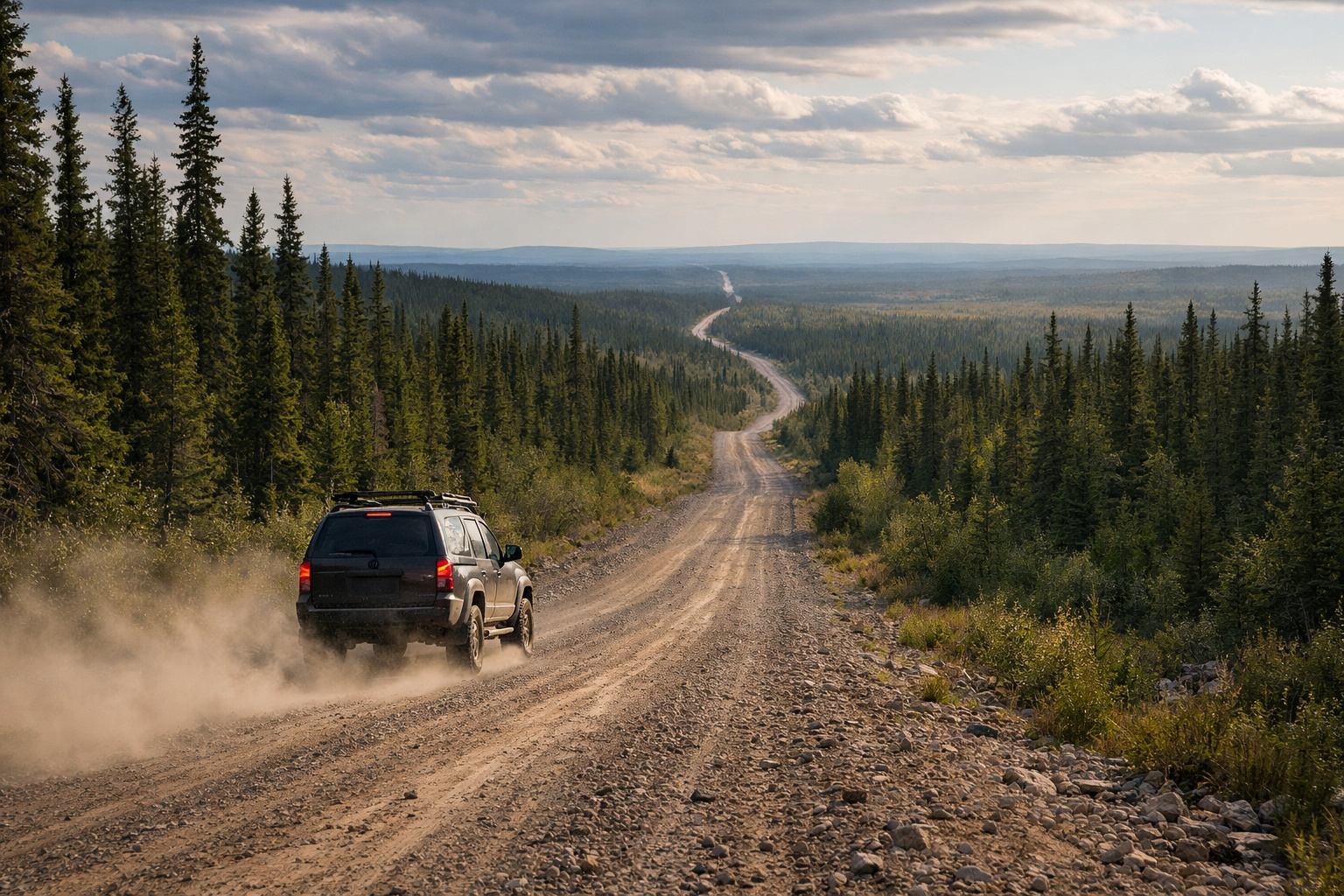
Discover the Trans-Labrador Highway, a remote road that crosses boreal forests and frozen tundras, requires extreme preparation, and reveals rare landscapes with icebergs, wildlife, and total isolation in northern Canada
The Trans-Labrador Highway, with its impressive 1,149 km in length, has become one of the most challenging and fascinating routes on the planet. Located in northern Canada, this highway traverses virtually unexplored regions, connecting remote villages amidst a landscape dominated by tundra, boreal forests, and an unforgiving Arctic environment.
The information was released by various specialized adventure tourism guides and reinforced by official data from the Canadian government, which highlights the strategic importance of the highway for the development and integration of the northern part of the country. However, despite its relevance, what truly stands out is the extreme level of isolation faced by those who choose to travel it.
Along the route, drivers encounter long stretches without any basic infrastructure. In some places, the distance between gas stations exceeds 400 km, while cell phone signal simply does not exist. Thus, the journey requires rigorous planning and detailed preparation.
-
Seen from space, a colossal ‘Y’ cuts through the largest desert in China, blending a jade-filled river, red and white mountains, and revealing the absurd scale of the transformation of the Taklamakan surrounded by a green wall with billions of trees.

-
The Pacific Ocean reveals what the cliffs of Big Sur have hidden for millennia: Pfeiffer Beach, in California, features swirling purple sand formed by garnet crystals and displays a stone arch that is illuminated by the sun in winter for just a few days each year.

-
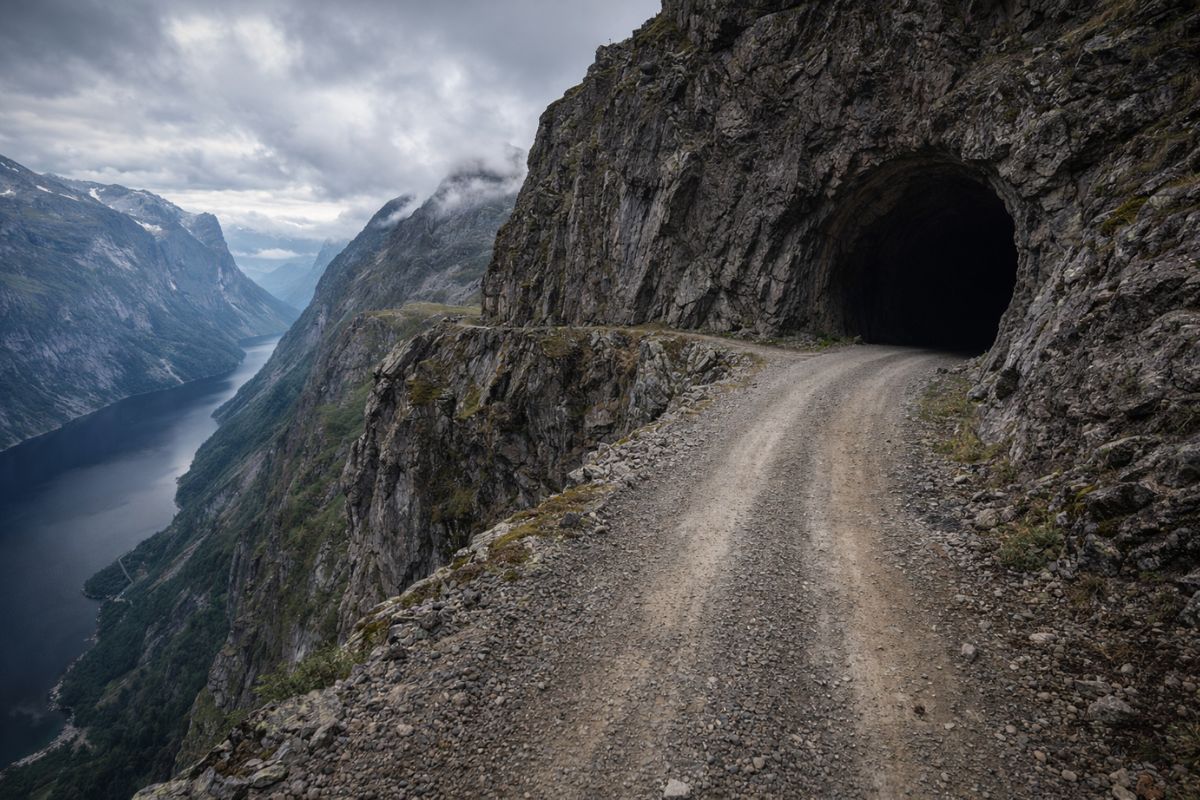
Aursjøvegen in Norway is a 100-kilometer gravel road that crosses chasms and dark tunnels carved into the rock at an altitude of 947 meters in the fjords and is only open for four months a year.
-
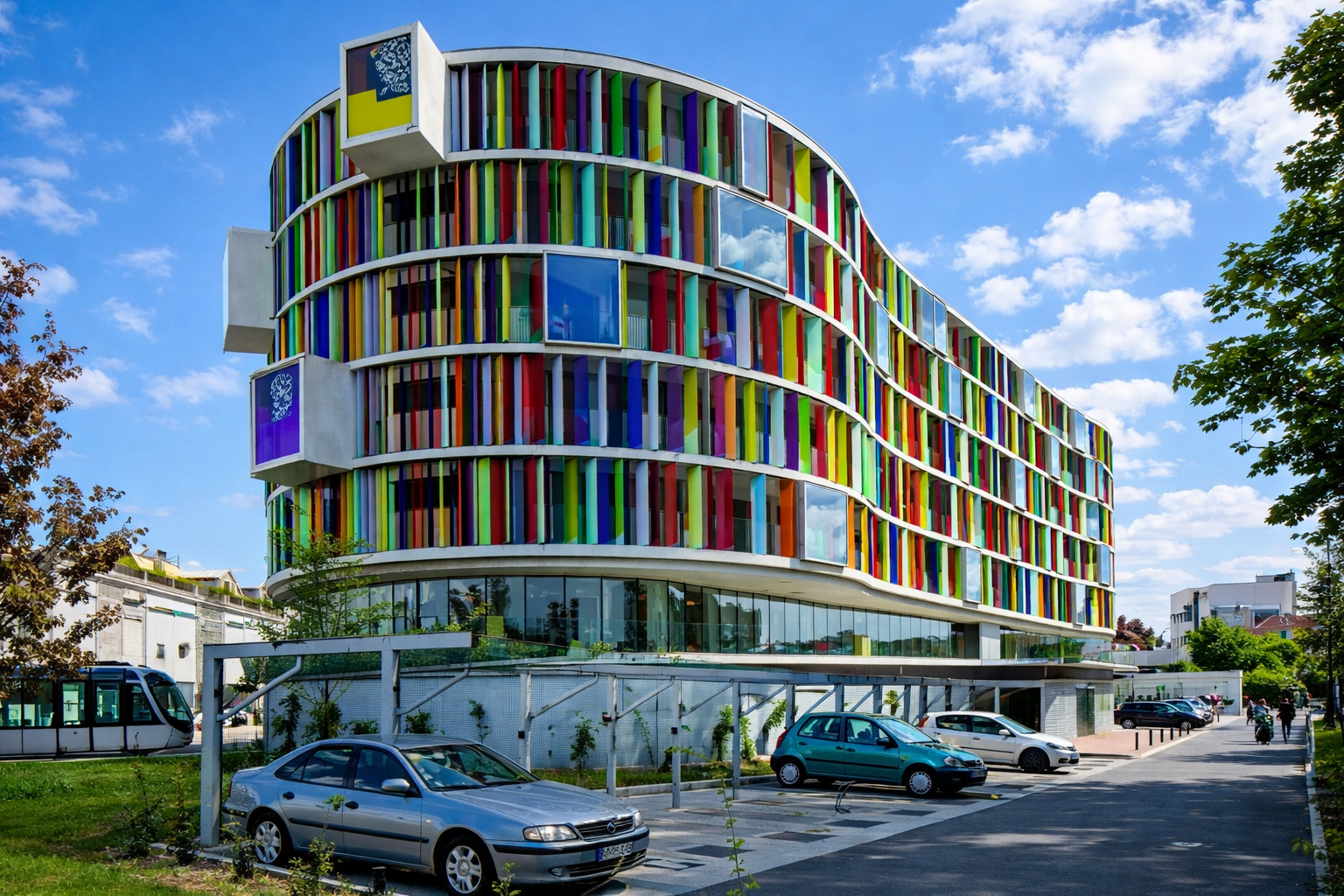
With about 4,000 m², the building constructed in a traditional neighborhood in France looks like a rainbow, has a colorful facade, mixes vibrant glass, and creates one of the most unusual visuals in Bordeaux.


Why the Trans-Labrador Highway is considered one of the most challenging roads in the world
First of all, it is important to understand that the fame of the Trans-Labrador Highway did not arise by chance. The highway became known as the “road to nowhere”, precisely because it crosses extremely isolated regions where contact with civilization is practically nonexistent.
Moreover, until a few years ago, much of the road was made up of loose gravel, which made driving even more difficult. This attracted adventurers seeking intense challenges, facing dust, mud, and unpredictable conditions.
Currently, although most of the route is paved, the highway retains its wild essence. That is to say, even with structural improvements, the scenery continues to be dominated by raw nature, little altered by human action.
As a result, driving on this road is not just an ordinary trip, but rather a survival and adaptation experience. Each kilometer traveled reinforces the feeling of absolute isolation and direct connection with the Arctic environment.

What is the experience of crossing the Canadian tundra and facing extreme isolation
Traveling along the Trans-Labrador Highway is, above all, an exercise in patience and observation. Along the way, it is common to spot wildlife such as black bears and wolves, which roam freely in the region.
At the same time, the landscape impresses with its vastness. There are kilometers of open horizons, untouched lakes, and dense forests that have never undergone significant commercial exploitation. This transforms the journey into a true immersion in nature.
Furthermore, the absence of modern infrastructure reinforces the sense of adventure. Without cell phone signal, nearby cities, and with few support points, the traveler must rely on their own preparation.
Consequently, this journey ends up being much more than a simple displacement. It is a transformative experience, where silence, solitude, and the grandeur of the environment create a unique connection with Canadian territory.
What are the essential precautions for traveling the highway and what is the best time to see icebergs
Given such an extreme scenario, safety becomes an absolute priority. Therefore, experts recommend that every traveler carry essential items such as spare tires, first aid kits, and extra food.
Additionally, fuel planning is crucial. As mentioned, there are stretches with more than 400 km without refueling, which requires precise calculations to avoid unforeseen events.
Another important factor is the choice of travel time. During the summer, especially in the months of July and August, conditions are more favorable. Temperatures are milder, and days can reach nearly 20 hours of sunlight, making driving easier.
It is precisely during this period that one of the most impressive phenomena of the region occurs: the presence of icebergs along the coast of Labrador, visible mainly in the area near Red Bay.
On the other hand, in winter, the highway transforms completely. Covered in snow and ice, it can only be traversed by vehicles equipped and drivers experienced in Arctic conditions. In fact, the official portal Newfoundland and Labrador Tourism recommends avoiding night travel due to the risk of collisions with moose, common in the region.
What to find at the end of the route and why this road is strategic for Canada
Upon reaching the southernmost point of the highway, the scenery changes drastically. The traveler finds Red Bay, a site recognized as a UNESCO World Heritage Site, which preserves remnants of 16th-century whaling.
This transition from tundra to maritime culture is one of the most striking moments of the journey. On one side, wild nature; on the other, human history deeply linked to the sea.
According to data from the Canadian government, the Trans-Labrador Highway plays a fundamental role in sovereignty and economic development in the northern part of the country. In addition to connecting isolated communities, it facilitates access to natural resources and strengthens state presence in the region.
Thus, traveling this road is not just an adventure. It is also a way to understand the strategic and geopolitical importance of Canadian territory.
Finally, facing the 1,149 km of the Trans-Labrador Highway means exploring one of the last strongholds of freedom on wheels. A place where the road, the weather, and nature set the pace of the journey — and where every kilometer tells a unique story.
Source: BM&C News








Seja o primeiro a reagir!