





 Portuguese
  English
  Spanish
  5 min of reading
  0 comments


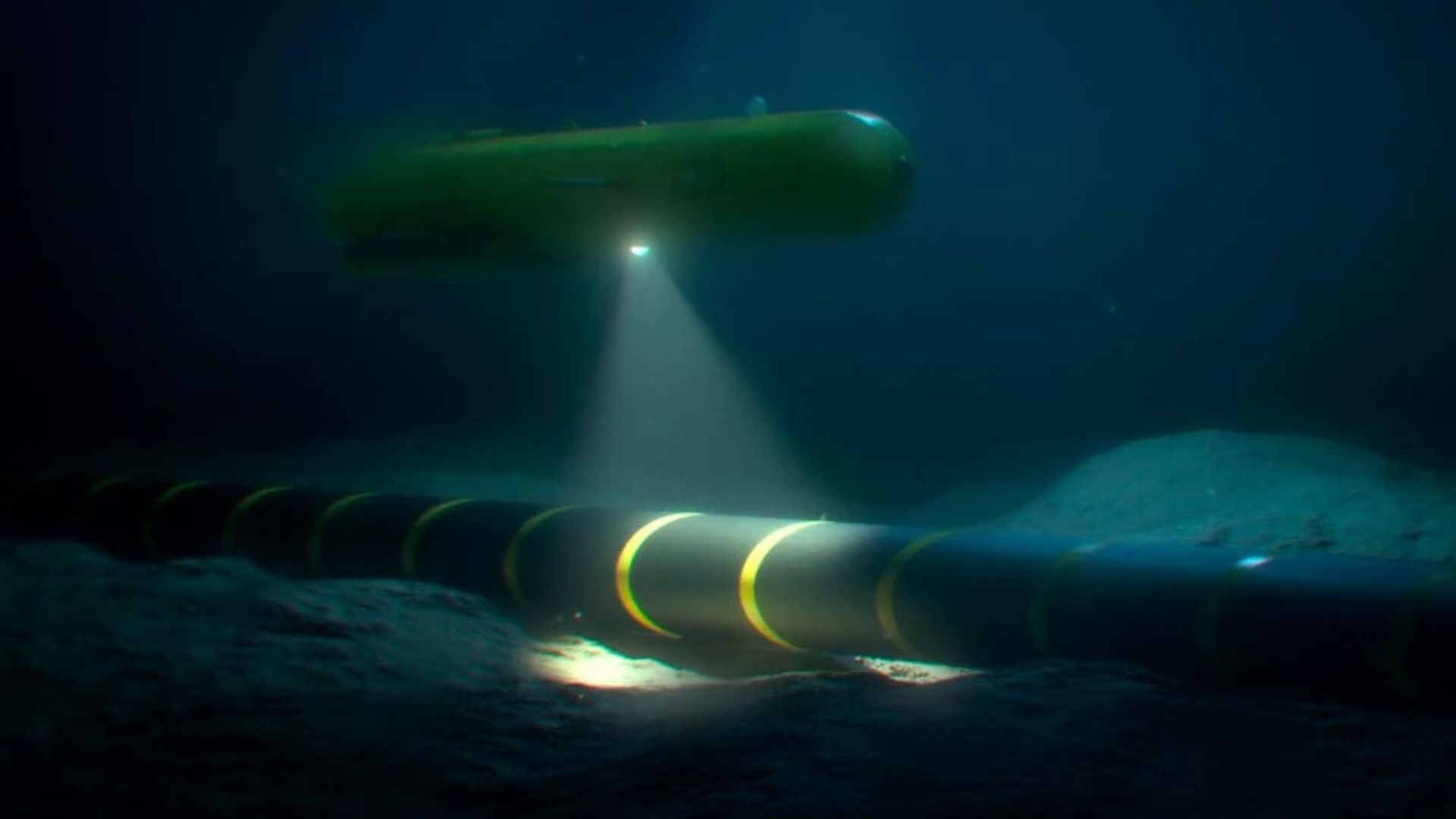
Submarine Mission Combined Nuclear Technology, Extreme Diving, and Silent Espionage in an Area Considered a Strategic Vault by the Soviet Union.
At about 120 meters deep in the Sea of Okhotsk, in an area treated by the Soviet Union as especially sensitive, the United States installed a clandestine device to intercept military communications that circulated along a submarine cable connected to the Pacific Fleet.
Known as Operation Ivy Bells, the mission brought together adapted submarines, divers trained to operate under high pressure, and a recording system designed to “listen without leaving a trace”, without interrupting or damaging the communication line.
Behind the plan was a classic intelligence gamble.
-
Friends have been building a small “town” for 30 years to grow old together, with compact houses, a common area, nature surrounding it, and a collective life project designed for friendship, coexistence, and simplicity.

-
This small town in Germany created its own currency 24 years ago, today it circulates millions per year, is accepted in over 300 stores, and the German government allowed all of this to happen under one condition.

-
Curitiba is shrinking and is expected to lose 97,000 residents by 2050, while inland cities in Paraná such as Sarandi, Araucária, and Toledo are experiencing accelerated growth that is changing the entire state’s map.

-
Tourists were poisoned on Everest in a million-dollar fraud scheme involving helicopters that diverted over $19 million and shocked international authorities.


By considering Okhotsk a “natural vault”, Moscow could have relaxed some of the protections applied to messages circulating in the region, precisely because it relied on the geographical isolation and military control of the surrounding area.
In this context, the American objective was to capture communications between strategic points in the Far East, such as the Kamchatka Peninsula and the Vladivostok area, directly associated with Soviet naval infrastructure in the Pacific.
Submarine Cable Became a Strategic Target of the Cold War


During the Cold War, the dispute between powers was not limited to satellites or agents infiltrated on land.
Submarine lines functioned as vital communication arteries, capable of transporting everything from administrative messages to information with direct operational value.
By focusing on a submerged cable in the Okhotsk, the United States sought to bypass common signal espionage barriers, such as encryption and frequency variations, concentrating efforts on a physical point of infrastructure.
This route, however, raised the level of risk.
Public reconstructions describe the Sea of Okhotsk as an area rigidly monitored by the Soviet Union, with patrols and detection systems aimed at preventing the presence of foreign vessels.
In practice, any approach required silent navigation, extreme precision, and minimal margin for error.
USS Halibut and the Engineering of Listening Without Traces
At the center of the initial phases of the operation was the USS Halibut, a submarine often cited as a platform prepared for missions outside the conventional combat standard.
Among its most relevant capabilities was the ability to maintain a stable position on the seabed, an essential condition for allowing prolonged external work.
Reports from the U.S. Naval Institute describe the installation of a “pod”, a listening module fixed around the cable without puncturing the outer casing.
Based on electromagnetic induction, the method allowed for signal capture without interrupting traffic, reducing the risk of failures that could attract Soviet attention.
Sources indicate that the equipment was installed at about 400 feet deep, a value compatible with the approximately 120 meters mentioned in reports.
At this level, each diving operation required strict control of time, breathing gases, and pressure, allowing no room for improvisation.
Saturation Diving and Logistics in a Hostile Environment

To make continuous work at depth viable, the United States Navy resorted to saturation diving, a technique that allows for long periods under pressure with lower physiological risk.
Public reports describe the use of a pressurized chamber attached to the submarine, through which divers would exit, operate on the seabed, and return without exposing the vessel.
This structure allowed for periodic visits to the site, both for maintenance and for collecting the recordings stored on the device.
As the operation progressed, the design of the clamp also evolved.
A report from the Spanish newspaper El País states that, after proving the concept, American intelligence commissioned Bell Laboratories to develop a more sophisticated system.
Described as a large-dimension cylinder, the new equipment would have the capacity to record large volumes of data on magnetic tapes and operate for long periods with a nuclear power source, based on radioactive material.
Captured Information Spanned Beyond Military Secrets
The true value of the operation lay in the intercepted content.
Public sources indicate that part of the communications was unencrypted, which increased interest in messages considered routine.
Even administrative exchanges could reveal operational patterns, maintenance routines, patrol areas, and submarine movements.
In military intelligence, this type of indirect reading is often valuable, even if not all material had immediate strategic weight.
Reconstructions also indicate that the data flow was heterogeneous, combining sensitive communications with traffic of little operational relevance.
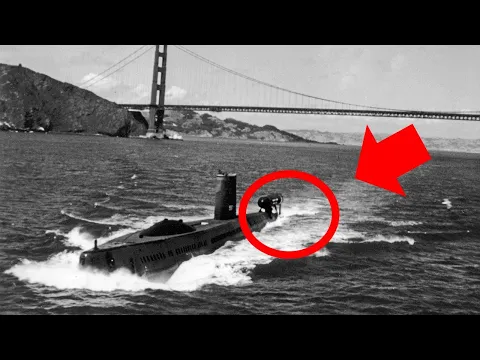
Internal Betrayal Led to the Operation’s Collapse
Despite the risks concentrated at sea, the decisive factor ultimately arose on land.
The fall of Operation Ivy Bells is associated with the case of Ronald W. Pelton, a former employee of the United States National Security Agency, the NSA.
Convicted of espionage, Pelton sold information to the Soviets and received three life sentences plus ten years, in concurrent sentences.
He remained imprisoned for nearly three decades until being released in 2015.
Reports from the U.S. Naval Institute indicate that the investigation gained momentum after information linked to KGB officer Vitaly Yurchenko, who defected to the West.
El País describes Pelton as in financial difficulties and states that he provided enough details to allow the Soviets to locate the submarine clamp.
Soviet Discovery and Equipment Recovery
The effects of betrayal became visible in the Sea of Okhotsk itself.
In 1981, U.S. reconnaissance satellites identified Soviet ships positioned directly over the spot where the device was installed.
Among them were vessels capable of underwater rescue, a clear signal that the operation had been discovered.
In light of this scenario, the submarine USS Parche was dispatched to attempt to recover the equipment.
The attempt, however, occurred too late.
The Soviets removed the clamp beforehand, ending years of interception and turning American technology into a trophy.
Submarine Cables and the Silent Dispute at the Bottom of the Sea
Decades later, Ivy Bells remains a reference in discussions about the vulnerability of submarine cables.
The episode demonstrated that invisible yet essential infrastructures can become strategic targets even in areas considered safe.
It also exposed the limits of reliance on natural barriers and reinforced the importance of the human factor as a critical link in security.
If a cable treated as untouchable was exploited for so long without being detected, to what extent do current communications rely only on the belief that no one is listening?









Seja o primeiro a reagir!