





 Portuguese
  English
  Spanish
  5 min of reading
  4 comments


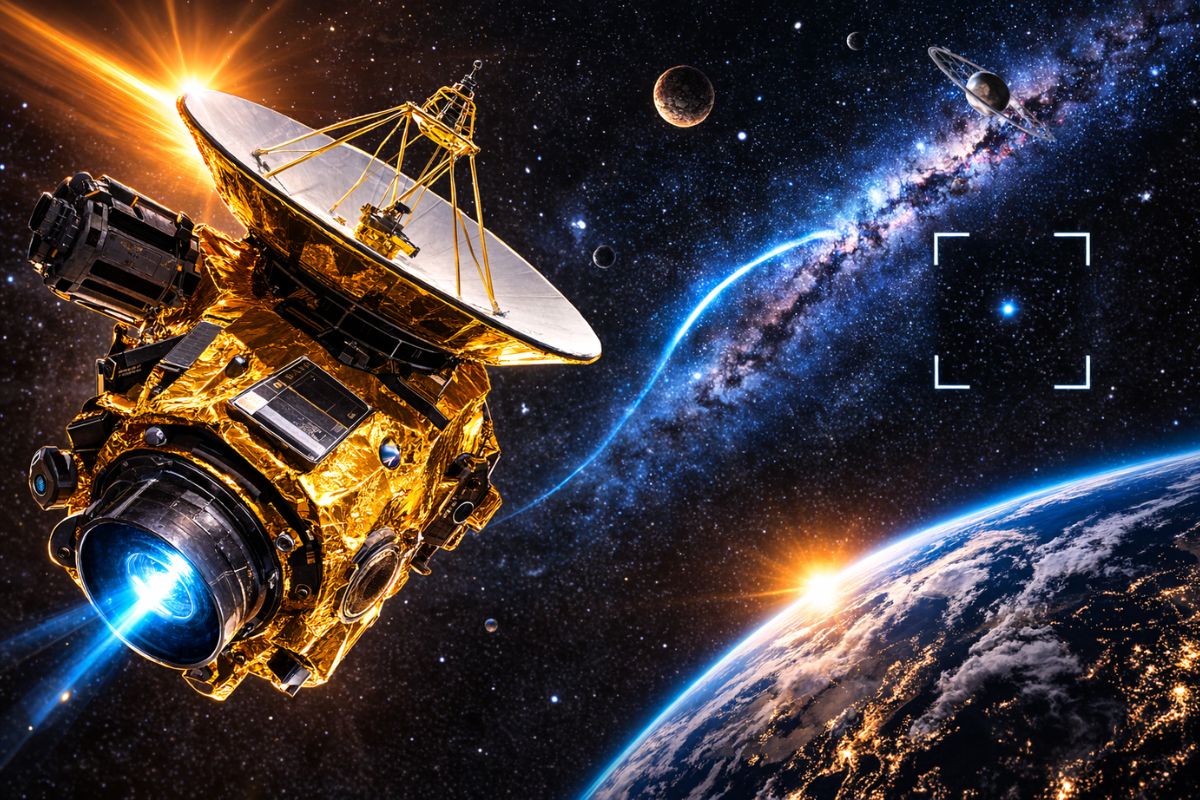


NASA Made History in Deep Space by Turning On the New Horizons Camera, Surpassing Voyager and Capturing the Farthest Image of the Mission.
What makes this moment so remarkable is not just the distance. The image, seemingly simple and sprinkled with stars, symbolizes a technical and scientific limit of visual exploration in deep space. By turning the New Horizons camera back on so far from the Sun, the mission demonstrated that it was still possible to observe and record the universe even under extreme conditions.
The NASA Mission Born to Explore the Outer Reaches of the Solar System
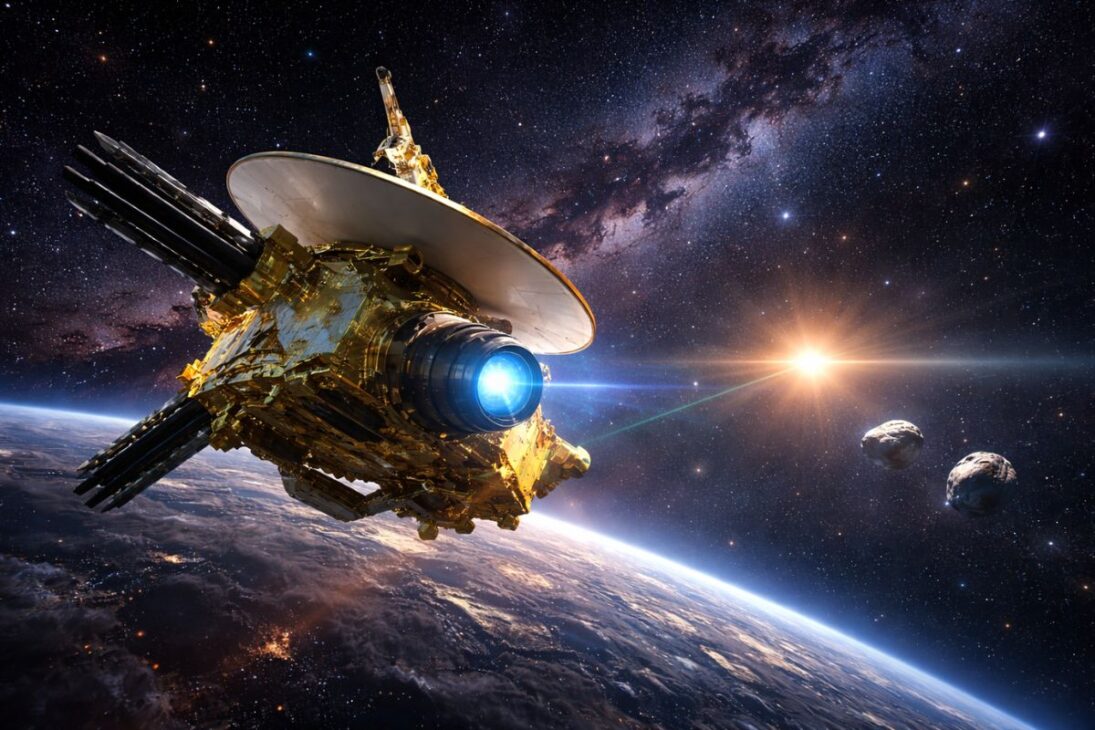
New Horizons was designed to investigate one of the most remote regions of the solar system. Launched as the first mission of NASA’s New Frontiers program, it aimed primarily to study Pluto, its moons, and other bodies of the Kuiper Belt, a vast area beyond Neptune’s orbit that has been preserved since the early days of planetary formation.
-
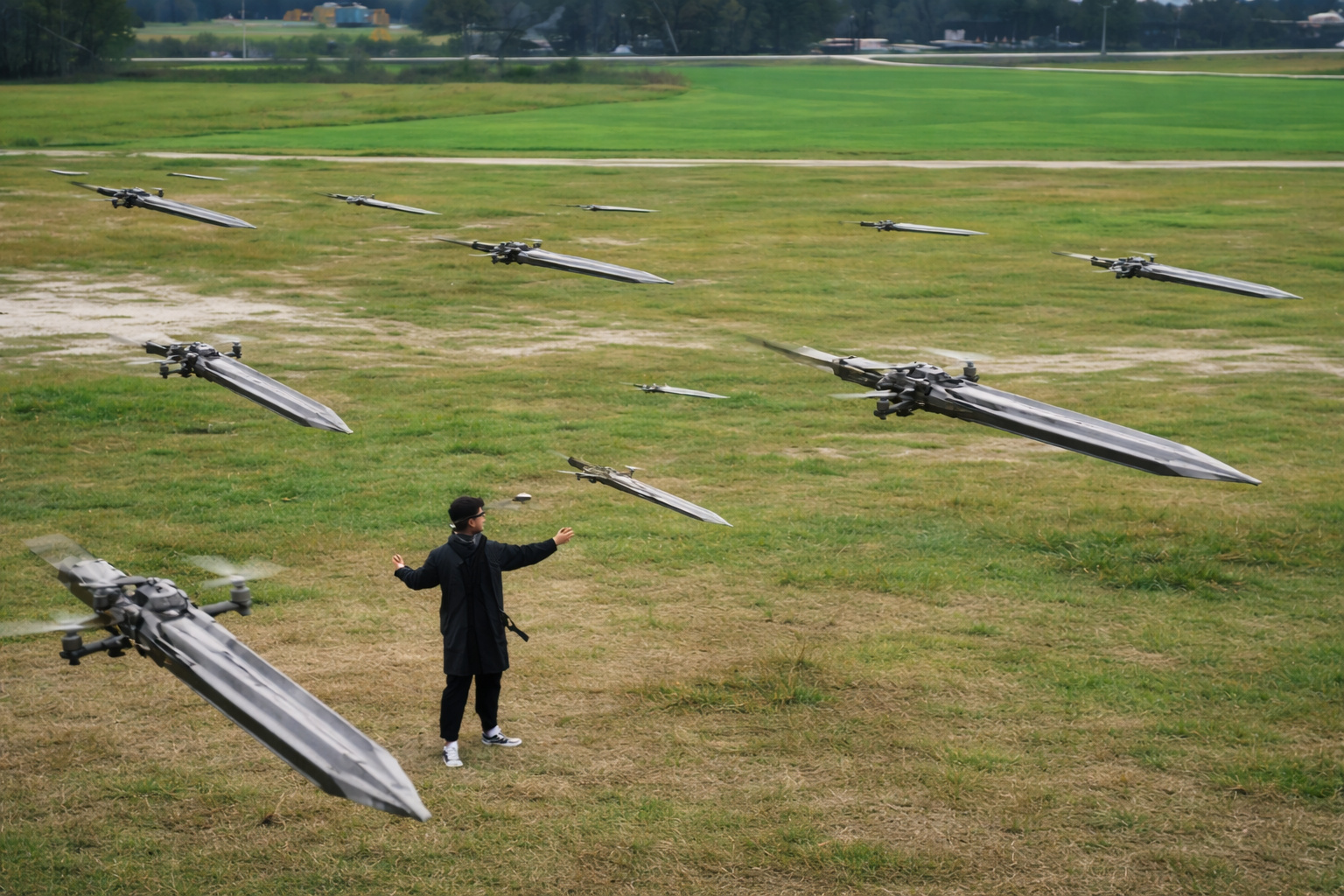
An inventor in China creates flying drones shaped like swords that respond to hand gestures in real time, with technology based on motion sensors transforming interaction into a scene worthy of a movie and redefining the control of machines in the air.
-
100 times less energy consumption: the innovation that could solve the huge energy crisis of AI.

-
Scientists reveal a new method using solar light that transforms plastic into vinegar and could change the game against pollution, converting waste into a sustainable solution with future global impact.

-
3,500-year-old tear discovered reveals a textile technique much more advanced than previously thought in the Bronze Age.


From the beginning, the mission drew attention for its speed and ambition. Powered by rocket stages and later assisted by Jupiter’s gravity, the spacecraft swiftly advanced into deep space.
It was a long, precise journey filled with energy limitations, requiring careful planning for each stage.
The Flyby of Pluto Turned the Mission Into a Landmark
After years of traveling, New Horizons entered the critical phase of approaching Pluto in 2015. Even with a delay of over four hours in communication signal, the spacecraft executed commands with precision and began revealing astonishing details of that icy world.
The historic flyby occurred on July 14, 2015, when the spacecraft passed about 7,800 kilometers from Pluto’s surface.
The data revealed a dwarf planet much more complex than models had indicated, with nitrogen glaciers, signs of recent geological activity, and a dynamic atmosphere. The NASA mission was already historic at that moment, but it had not yet reached its conclusion.
NASA Took New Horizons Even Further
After the encounter with Pluto, the mission was redirected to a new target in the Kuiper Belt. On January 1, 2019, New Horizons conducted the farthest flyby in history by passing by Arrokoth, further enhancing the scientific importance of the journey.
But even before this encounter, NASA had already decided to use the spacecraft for another symbolic and technical test.
With energy still available and stable instruments, New Horizons activated its main camera again in deep space. This choice led to the farthest image ever captured by the agency.
The Farthest Image Ever Captured by NASA

The image was captured on December 5, 2017, when New Horizons was approximately 40.9 astronomical units, equivalent to about 6.1 billion kilometers from Earth.
At that moment, the spacecraft captured a star field using the LORRI instrument, a telescopic camera designed to observe very faint targets at great distances.
Visually, the photo lacks the impact of a planetary landscape or a colorful nebula portrait. Still, its value is immense.
The significance of the image lies precisely in the place from which it was taken, at an extreme distance, in a scenario where operating a camera was in itself a demonstration of technological capability.
How New Horizons Surpassed Voyager
Until then, the record belonged to Voyager 1. In 1990, the spacecraft captured the famous portrait of the Pale Blue Dot at about 6.06 billion kilometers from Earth. Since that moment, no other mission had been able to produce an image at a greater distance from our planet.
New Horizons broke this record by capturing its star field beyond Voyager’s record. And the most impressive part is that this achievement was short-lived, because about two hours later, the spacecraft itself surpassed the mark by photographing even more distant objects in the Kuiper Belt.
It was a symbolic and technical surpassing of one of the most emblematic records in space history.
Why Turning On the Camera So Far Away Was So Important
In long-duration missions, energy becomes an increasingly precious resource. New Horizons depends on a nuclear generator that degrades slowly over time, which forces the team to carefully decide which systems should remain active.
In this context, turning on the camera billions of kilometers away was no trivial gesture. It was a calculated decision by NASA to test the limits of visual exploration in the solar system.
Each image required trust in the spacecraft, precise planning, and patience, as the signal took over five hours to reach the spacecraft and another five hours for the confirmation to return to Earth.
The Image Also Had Scientific Function
Beyond its symbolic value, the record also had practical utility. According to the data sent, the image served to calibrate LORRI’s sensors under extreme conditions, helping to evaluate the instrument’s accuracy before the encounter with Arrokoth in 2019.
This shows that the photograph was not only a record to enter history. It also helped confirm that the optical systems of the mission remained stable and capable of distinguishing points of light in an extremely distant and dark environment.
What This Record Represents for Space Exploration
The farthest image ever recorded by NASA accurately summarizes the logic of long-term space exploration.
It is not just about going far, but continuing to operate, recording, and learning even when the mission has already exceeded almost all conceivable limits at the time of launch.
More than a photo sprinkled with stars, the New Horizons record represents the technological persistence of a mission that had already studied Pluto, ventured into the Kuiper Belt, and still found the energy to set a historic record. It is proof that, even in deep space, we are still capable of looking further.
NASA Showed That Deep Space Can Still Be Observed
Today, this photograph holds a special place as it combines symbolism, engineering, and science in a single moment.
It shows that the darkness of deep space did not prevent New Horizons from continuing to produce knowledge and break records.
By surpassing Voyager and recording the farthest image ever made by the agency, NASA reaffirmed the value of long-duration missions and the human capacity to keep observing the universe even billions of kilometers from home.
It is a technical record, but also a powerful reminder of how far human curiosity can reach.
And you, do you think New Horizons can still deliver new historic achievements even so far from Earth?









La distancia es incorrecta: no son 6.1 millones de kms; son 6.100 millones de kms, para estar en el cinturón de Kuiper. Además la noticia no es actual: esas imágenes fueron tomadas en 2018!
USANDO A ROBÓTICA,E ENERGIA SUFICIENTE CHEGAREMOS LÁ!!!..
Acredito que sim