





 Portuguese
  English
  Spanish
  5 min of reading
  0 comments


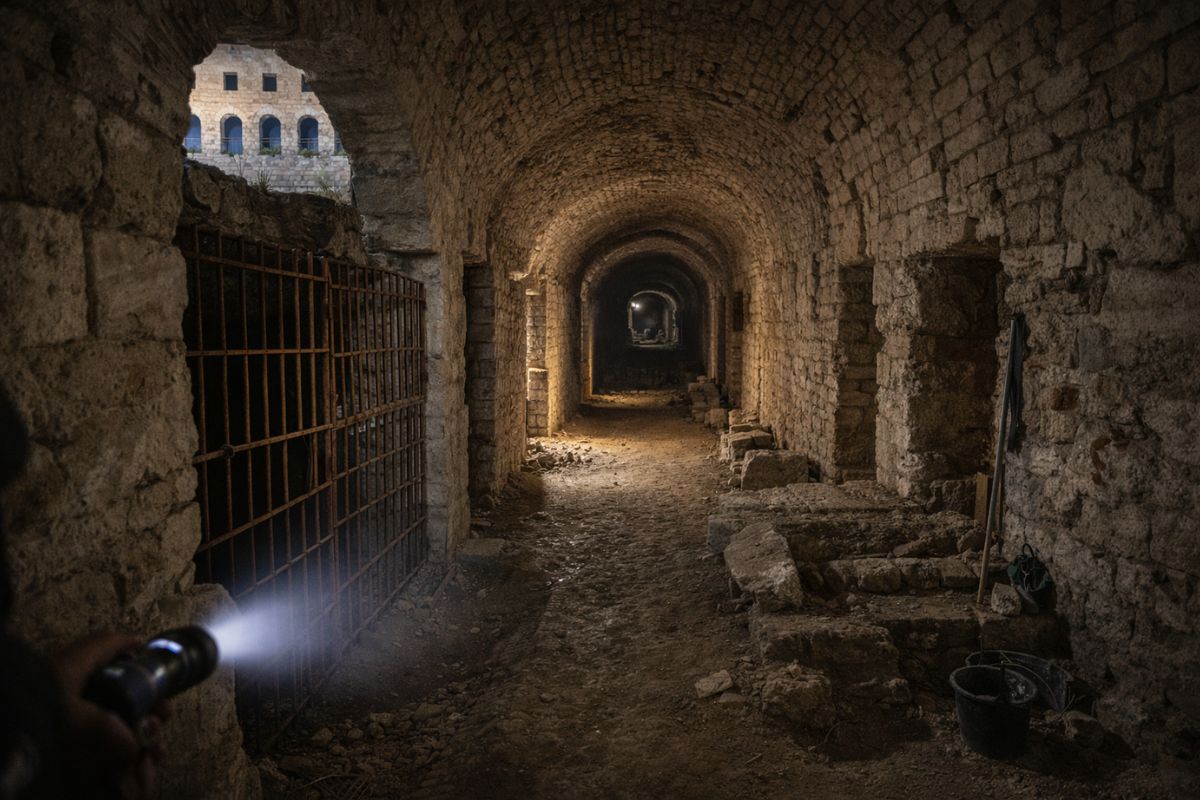
Archaeologists reopened a 90-meter tunnel beneath the gladiator arena of the ancient city of Salona in Croatia, sealed for 2 thousand years, revealing how the Roman Empire operated the logistics of imperial games with hidden chambers, intact original paving, and iron clamps that withstood two millennia.
Under the ruins of a Roman amphitheater in Croatia, a subterranean corridor remained sealed for two millennia until archaeologists reopened it and documented every detail. The 90-meter-long tunnel was located beneath the gladiator arena of the ancient city of Salona, the largest city on the eastern Adriatic and the capital of the Roman province of Dalmatia, which at its peak housed between 60,000 and 100,000 inhabitants. The corridor reveals how the logistics of imperial games functioned invisibly to the public that filled the stands to watch the combats.
The discovery does not happen in isolation. During the same time frame, the Italian capital inaugurated for visitors the Passage of Commodus, a 55-meter corridor in the Colosseum of Rome, designed exclusively for emperors to enter the games without mingling with the common people. The simultaneous excavations in Croatia and Italy highlight that the subterranean architecture of Roman gladiator arenas provided a sophisticated parallel system of social movement and logistics that most spectators never knew existed.
What the archaeologists found in the tunnel beneath the gladiator arena of Salona

According to CNN, specialists from the Archaeological Museum of Split were responsible for clearing and mapping the 90 meters of the subterranean corridor. This sector was designated as the porta libitinensis, a reference to the Roman goddess Libitina, associated with the cult of the deceased in imperial mythology.
-
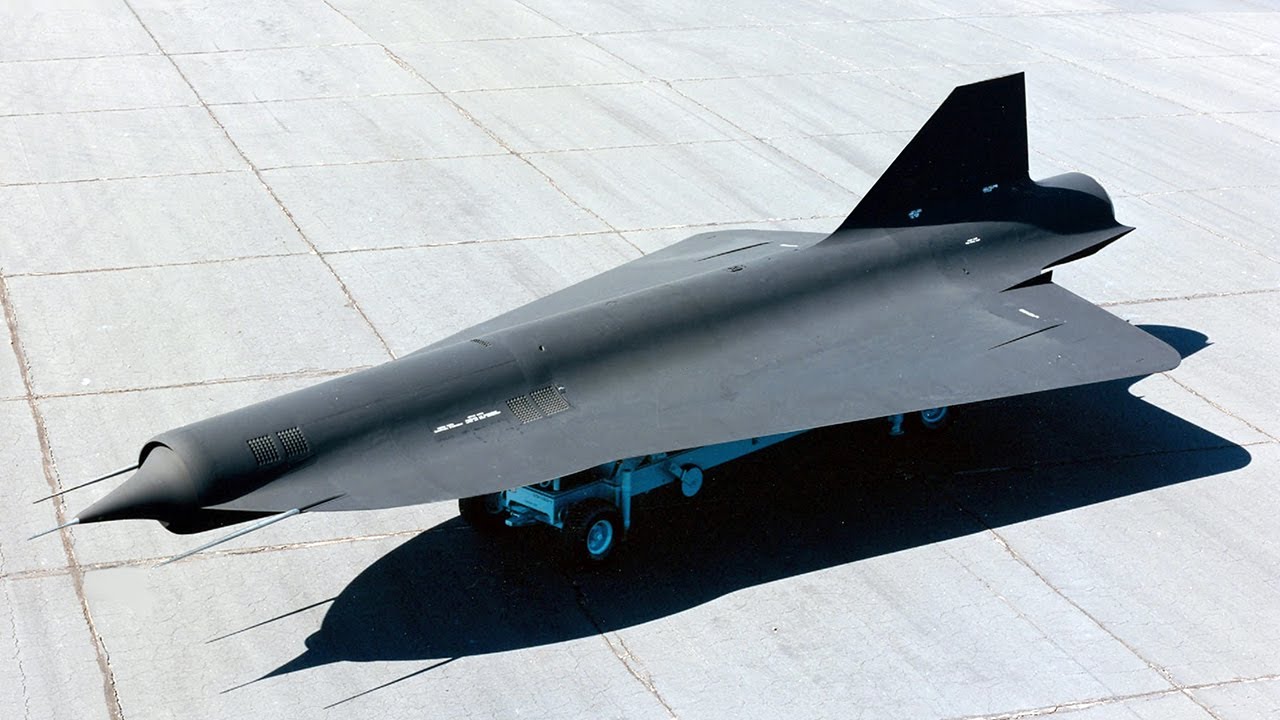
Capable of flying above Mach 3.3 at nearly 29,000 meters altitude and crossing up to 4,800 km without a pilot, the secret drone D-21 was created to invade forbidden territories faster than any fighter jet and disappear before being detected.
-
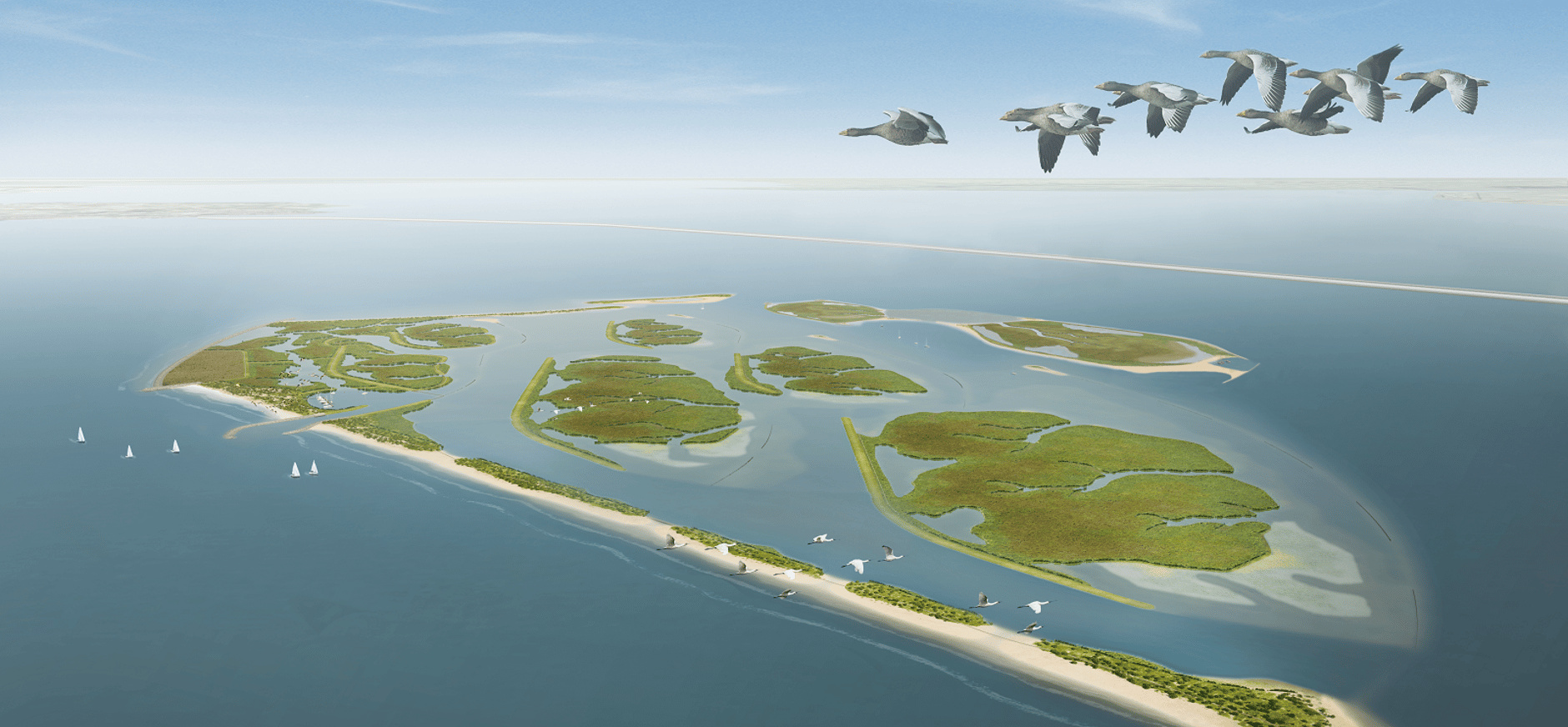
A gigantic project in the Netherlands is using the sediment from a degraded lake to create artificial islands, improve water quality, and restore natural shorelines.
-
After seeing a 100% automated factory in Shanghai, the president of Honda exclaimed, “we don’t stand a chance”; China accelerates electric cars, cuts costs, and exposes the brand’s crisis worldwide.

-
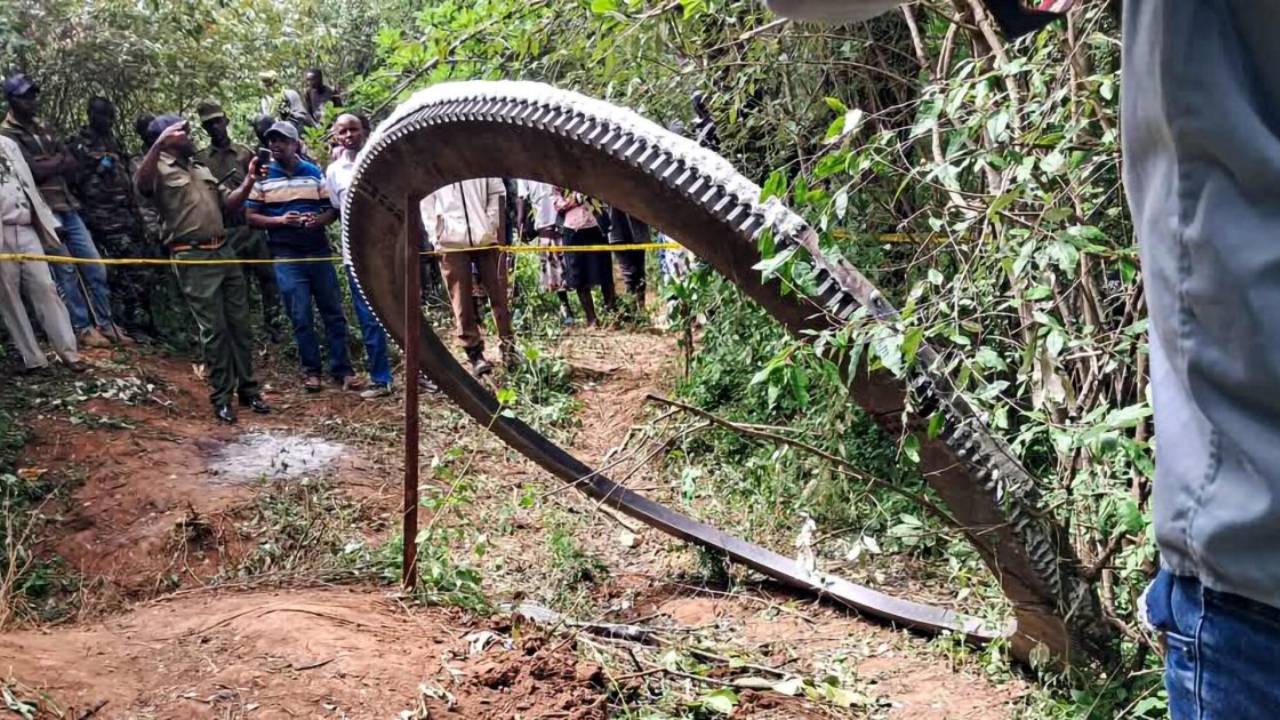
A giant half-ton ring fell in Kenya from space, and more than a year later, scientists still do not know where it came from.
The name was not accidental: through this passage exited the combatants who did not survive the games, discreetly removed so that the spectacle could continue without visible interruptions to the public.
Among the structural elements found beneath the gladiator arena, researchers documented a corridor that connected the center of the arena to a discreet external exit, a central chamber measuring 7 meters by 4 meters hidden beneath the stands, and stone blocks with original iron clamps that, after 2 thousand years, continue to support the structural pressure of the slabs perfectly.
The durability of these materials reinforces the technical precision of Roman builders even in provinces far from the capital.
The door through which gladiators entered alive into the arena

At the opposite end of the complex, teams identified the imposing porta pompae. Unlike the operational corridor through which the bodies exited, this main gate served as the entrance for living gladiators and the festive processions that inaugurated the arena tournaments.
The massive rocks of this entrance still bear original iron clamps that withstood two millennia of structural pressure without losing integrity.
The workers also uncovered a valuable section of intact Roman paving beneath the sediment accumulated over 2 thousand years.
The difference in function between the porta pompae and the porta libitinensis reveals how the Romans organized the human flow in the gladiator arena with industrial logic: the living entered from one side with pomp and ceremony, and those who did not survive exited from the other side in silence, without the public even noticing the transition.
How the subterranean system of the gladiator arena kept the spectacle running
The tunnel was not just a passage. It was part of an operational system designed to solve practical problems that would keep the gladiator arena functioning during hours of continuous spectacle.
The corridor allowed for the handling of bodies and carcasses of animals slaughtered during the games without the public seeing, eliminated the accumulation of blood in the center of the stage between one presentation and another, and provided a discreet evacuation route for important authorities.
The central chamber of 7 by 4 meters discovered beneath the stands functioned as a transition point where bodies were gathered before being taken out of the gladiator arena through the discreet exit. The efficiency of this system meant that the entertainment never stopped.
While one fight ended at one end of the arena, the next was already being prepared at the other, and the remnants of the previous one disappeared underground without the spectators needing to see what happened during the intervals.
The Roman engineering that withstood 2 thousand years beneath the gladiator arena
The displacement of tons of petrified earth required careful effort to avoid collapses in the ancient slabs. The progressive release of sediment revealed the full dimensions of the tunnel and confirmed that Roman engineering in the gladiator arena of Salona followed the same standards of excellence found in constructions in the capital.
The stone blocks were cut with millimeter precision, the cast iron clamps maintain their structural function after two millennia, and the original drainage system remains identifiable.
The durability of the construction reinforces a conclusion that archaeologists frequently document: Roman engineering was not limited to the great capitals.
Even in Salona, a provincial city on the border of Dalmatia, builders followed protocols that ensured structural longevity far beyond what any contemporary civilization designed. The local gladiator arena accommodated between 15,000 and 18,000 spectators, a scale that justified the investment in complex subterranean infrastructure.
What the discovery in Croatia reveals about entertainment in the Roman Empire
The complete mapping of the Croatian corridor proves that entertainment in the ancient world depended on civil engineering invisible to the public. The system of tunnels and gates of the gladiator arena organized the flow of people, animals, and heavy structures with precision that modern metropolises still recognize as a constructive reference.
Each element had a defined function: the porta pompae for the triumphant entrance, the porta libitinensis for the silent exit, the central chamber for the transition, and the corridor for the connection between the visible stage and the hidden backstage.
The simultaneous revelation of the tunnels of Salona and the Passage of Commodus in the Colosseum shows that the Roman gladiator arena was much more than an open space with sand and blood.
It was a logistical machine designed with the same rigor that the Romans applied to aqueducts, roads, and military fortifications. Two millennia of silence beneath Croatian soil were not enough to erase the traces of this engineering, and now the world can finally see how the backstage of the greatest spectacle of the ancient world operated.
What impressed you the most: the 90-meter corridor beneath the gladiator arena, the iron clamps that withstood 2 thousand years, or the system that made the bodies disappear without the audience noticing? Did you know that there was all this hidden logistics beneath Roman arenas? Let us know in the comments. The engineering of the ancient world continues to surprise with every excavation.






Seja o primeiro a reagir!