





 Português
  Inglês
  Espanhol
  8 min de leitura
  1 comentário


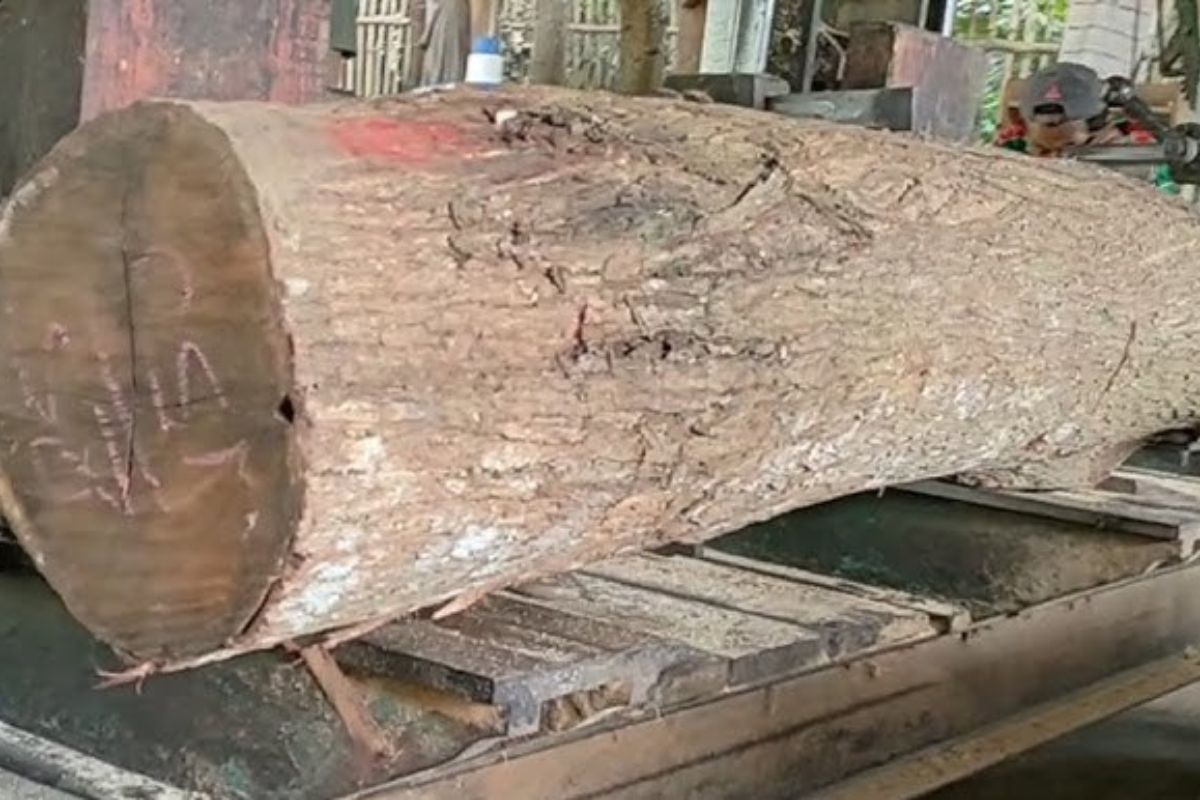


The Black Wattle Combines Durable Wood, High Structural Resistance, and Capacity to Enrich the Soil with Nitrogen, but Lost Space to Treated and Replaceable Woods in a Movement that Favored Industrial Chains Based on Frequent Replacement, Productive Standardization, and Lower Commercial Adaptation.
The black wattle has returned to the center of the debate for gathering characteristics that rarely appear together in the same tree. There are cited records of fence posts driven into the ground since the early 20th century that remained firm for decades, enduring rain, sun, drought, and frost without chemical treatment and without constant maintenance.
Even with this performance, the species has practically disappeared from the most common wood sales chains. The substitution by materials that are easier to plant, cut, transport, and resell helped push the black wattle out of big stores, even though its durability, hardness, and relationship with soil fertility continued to draw attention in the field.
A Wood That Defies Time

The fame of the black wattle did not come from advertising, but from prolonged use. Indigenous peoples of North America have long utilized this wood to make bows and tool handles, combining strength and elasticity in a single piece.
-
For more than 10 years, scientists have observed the ice of Greenland deforming into giant spirals without explanation; they have now discovered that solid ice can “boil” from within like magma, an invisible phenomenon that could alter climate predictions and involves a mass capable of raising sea levels by up to 7 meters.

-
A gigantic freshwater reservoir appears beneath the Great Salt Lake, between 3 and 4 kilometers deep, surprising scientists with an unexpected flow towards the interior of the lake.

-
At over 8,800 meters above sea level, the summit of Mount Everest is made up of rocks that originated at the bottom of an ocean about 500 million years ago and were pushed to the highest point on Earth by the collision of tectonic plates.

-
Japan targets a remote island in the Pacific measuring only 1.51 square kilometers, located 1,900 kilometers from Tokyo, to store nuclear waste for up to 100,000 years, raising alarms at sea.


Later, the species began to be used in fence posts, poles, and external structures because it provided a rare advantage in the forestry sector lasting a long time without relying on artificial protection.
Part of this resistance is attributed to robinin, a natural compound cited as a barrier against fungi and insects. In practice, this means that the wood of the black wattle comes from the tree with a defense that other species can only achieve through industrial treatment.
For this reason, it became known as an unusual solution for contact with the ground, precisely where many woods begin to fail earlier.
The numbers reinforce this reputation. On the Janka scale, used to measure hardness, the black wattle appears with about 1,700 pounds-force, in a range similar to that of woods recognized for high resistance. Treated pine sold on a large scale, on the other hand, falls far below this level.
The difference is not just theoretical; it affects lifespan, maintenance effort, and replacement cost.
Also noteworthy is the resistance to compression attributed to the species, close to 700 kg per square centimeter in references cited in the technical material. This helps explain why the black wattle remained associated with fences, pillars, decks, and structural components.
When a wood withstands load, moisture, and biological action for so long, it ceases to be just raw material and starts functioning as a long-term asset.
The Tree That Produces Wood and Improves the Land

The black wattle is not only distinguished by its wood. The species is also described as a tree capable of fixing nitrogen in the soil, thanks to the association of its roots with bacteria that transform part of the atmospheric nitrogen into forms that can be utilized by the earth.
In practical terms, this means that the tree can enrich poor areas while it grows, something rare among hardwoods.
The cited data on this function point to soils with one and a half to three times more nitrogen under the influence of the black wattle, in addition to an estimated annual deposition of between 75 and 150 kilograms per hectare.
This is not just about planting a durable wood, but about introducing an organism that also helps to recover fertility, reduce land wear, and sustain more stable productive systems.
Another relevant point is its adaptation to difficult conditions. The black wattle can thrive in dry, stony, and poor soil where other species underperform. There are also mentions of roots that can reach deep depths, seeking water in layers where annual crops simply cannot reach.
This behavior helps explain its association with resilience during drought periods.
In agricultural management, this combination opens up space for multiple uses. The black wattle can provide fence posts in about 10 to 15 years, act as a pioneer tree in agroforestry systems, help protect the soil, and also serve apiculture due to its valued flowering.
It is a species that delivers wood, fertility, and environmental coverage at the same time, which alters the economic logic of those who only think about the log sold at the end of the cycle.
When the Industry Began to Prefer Replacement
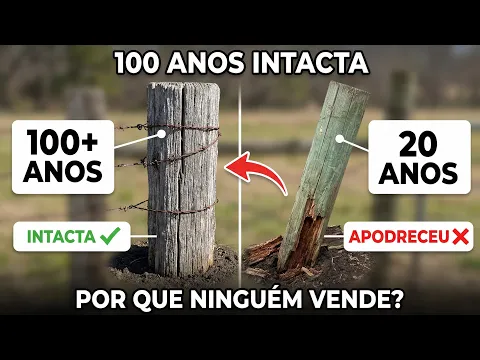

The loss of space for the black wattle is not explained by poor performance but by a change in the industrial model.
From 1933, with the diffusion of chromated copper arsenate, CCA, the market gained a method to prolong the lifespan of pine and other cheaper, quicker-to-produce woods.
The treated material did not come close to the lifespan attributed to the black wattle, but it lasted long enough to sustain a broad sales chain.
This change altered the logic of the sector. Pine grew quickly, was more uniform, easier to saw, simpler to transport, and more predictable in the industry.
Meanwhile, the black wattle, precisely because it lasts too long in the ground and reduces the need for replacement, fit poorly into a model based on recurring purchases.
A fence that lasts generations creates less turnover than a fence that needs to be budgeted for every 15 or 20 years.
In the 1990s, criticisms grew over the effects of CCA, particularly due to the risk of arsenic leaching into the environment. In 2003, the residential use of this treatment was banned in the United States.
Still, the market’s response was not a broad return of the black wattle, but a shift toward other chemical treatments and new preservative combinations applied to shorter-cycle woods.
This shows that the competition was never just between good wood and bad wood. What mattered was the ability to standardize production, fit supply at scale, and keep the industrial chain moving.
The black wattle remained efficient in the field but lost centrality on the shelves because the industry began to favor materials that are easier to repeat, classify, and resell.
The Obstacle Was in the Sawmill, Not in the Field
If the black wattle offers so many advantages, why hasn’t it returned to a dominant space? Part of the answer lies in processing.
Unlike pine, which is cultivated to grow straight and with a uniform pattern, the species can develop twisted trunks, bending in search of light, and what engineers refer to as tension wood. This complicates cutting, drying, and processing in systems designed for another forest logic.
There is also the impact of specific pests, such as the beetle associated with the species in parts of North America, capable of boring galleries in some trunks.
None of this eliminates the value of the wood, but raises adaptation costs for sawmills accustomed to linear and predictable logs. When the entire industrial park is designed for another raw material, the more durable tree may lose space simply for requiring technical adjustments.
This mismatch also affects architecture, trade, and technical recommendations. The seller offers what they know, schools teach what the market already uses, and buyers tend to choose what they find readily available.
In this cycle, the black wattle ceased to be seen as a standard solution and became more of a niche wood, even though it continued to deliver superior performance in various outdoor applications.
The result was a species pushed away from mainstream retail, not due to incapacity, but due to a lack of fit within the dominant chain.
Commercial inertia worked against the black wattle, while treated and more standardized woods solidified as the automatic choice for those needing to decide quickly, at a set price and continuous supply.
Off the Shelves, but Alive in Other Markets
The trajectory of the black wattle has not been the same in all countries. In Hungary, the species has expanded to cover almost 1 million hectares, equivalent to about 20% of the national forested area, according to cited data.
There, it continues to be used in fence posts, honey production, and processed wood for outdoor applications, including export.
In parts of Europe, the black wattle has begun to appear in decks, urban bridges, and weather-exposed structures. This movement shows that, when there is management, a transformation chain, and compatible demand, the species is regarded as a strategic forest resource once again.
The problem, therefore, is not a lack of utility, but the absence of a market structure prepared to absorb it on a large scale.
In the rural environment, the species continues to spark interest because it solves multiple needs simultaneously. It can reinforce fences, improve soil, assist in recovering degraded areas, and reduce dependence on inputs in certain production edges.
For small producers, agroforestry systems, and properties thinking long-term, the black wattle remains relevant precisely because it combines permanence and multifunctionality.
This ensemble repositions the tree in the debate at a time when durability, fertility, and productive autonomy have regained value. Instead of fitting into the logic of recurring disposal, the black wattle represents a permanent solution.
It may not be the simplest alternative for a standardized industrial chain, but it can be one of the most solid for those measuring results in decades rather than just the next buying cycle.
The story of the black wattle exposes a contradiction that the market does not always like to confront. There are materials that vanish not because they fail, but because they last too long, require less replacement, and reduce dependence on artificial solutions.
When this happens, the commercial choice stops rewarding just performance and starts rewarding the machinery that best sustains the circulation of the product.
In the case of this tree, what disappeared from the shelves was not a promise but a rare combination of hardness, longevity, and natural soil fertilization.
The black wattle continued to exist where the field, rural memory, and local management preserved its value. The question now is whether it will remain restricted to niches or regain space in an economy increasingly pressured by cost, scarcity, and real useful life.
Do you think long-lasting woods like the black wattle still have room to return to the market on a larger scale?








Qual e a origem desta arvore “Acacia Negra”