





 Portuguese
  English
  Spanish
  8 min of reading
  0 comments


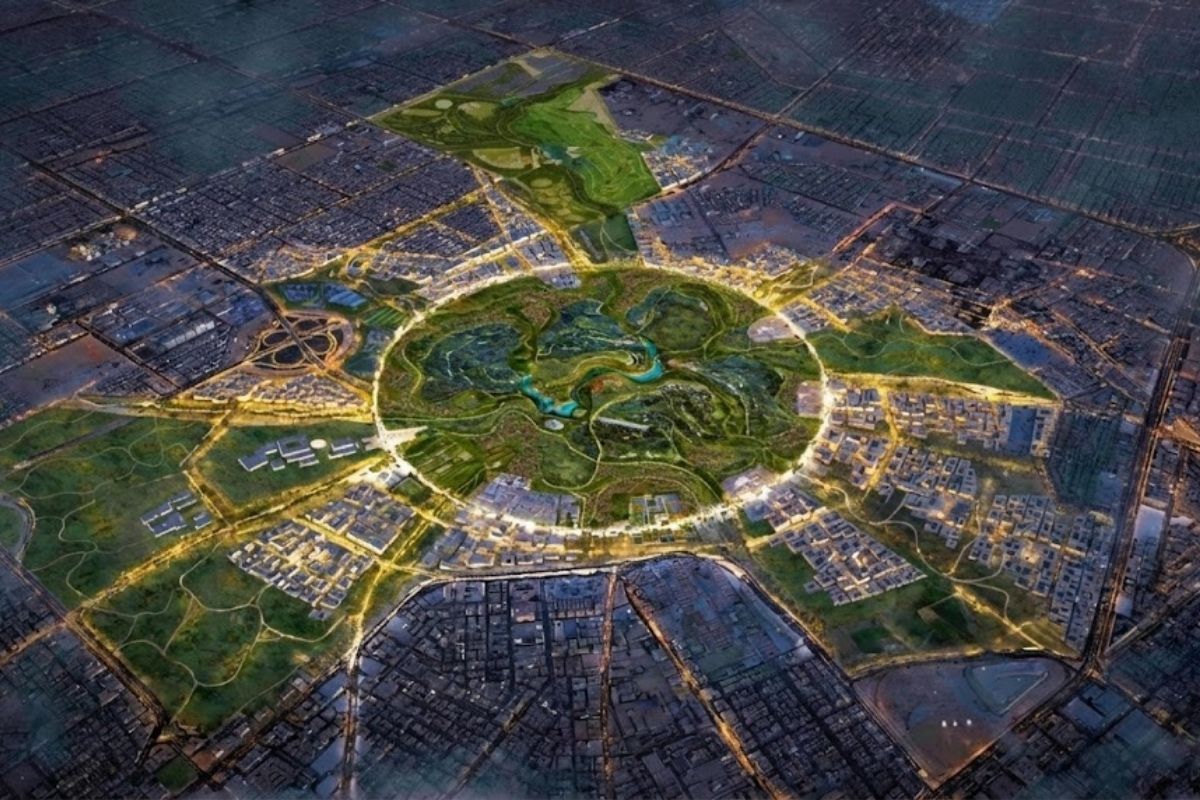
In The Heart Of Riyadh, Saudi Arabia Transforms The Old Airbase Into A 16 Km² Urban Park, With 70% Green Areas, Artificial Valleys, 300 Thousand M² Of Water, A 110-Meter Museum, A Theater For 2,300 People, And An Already Open Underground Tunnel With An Estimated Cost Of US$ 9.4 Billion.
The Saudi Arabia decided to swap concrete and runways for trees, culture, and leisure in the center of Riyadh. Over the old Riyadh Airbase, in the middle of the desert, the King Salman Park is being born, a megaproject launched in 2019 and planned to become the largest urban park in the world, covering about 16 square kilometers.
The scale is designed to impress and transform. The park is presented as an urban oasis five times larger than Central Park, which spans 3.4 square kilometers, but also as part of a broader social and cultural change. The aim is to create a new type of public space, with sports, arts, nature and integrated services, in a city that is growing and seeking a more diverse urban life.
Why Saudi Arabia Bets On A Park To Change The Country

The Saudi Arabia has been associated for decades with a more restricted public life and a conservative social organization, marked by censorship of content and strict limitations on daily life, including public spaces segregated by gender.
-
Made from recycled plastic, plastic wood is gaining space in the construction industry because it does not rot, resists moisture, and reduces maintenance costs over the years.

-
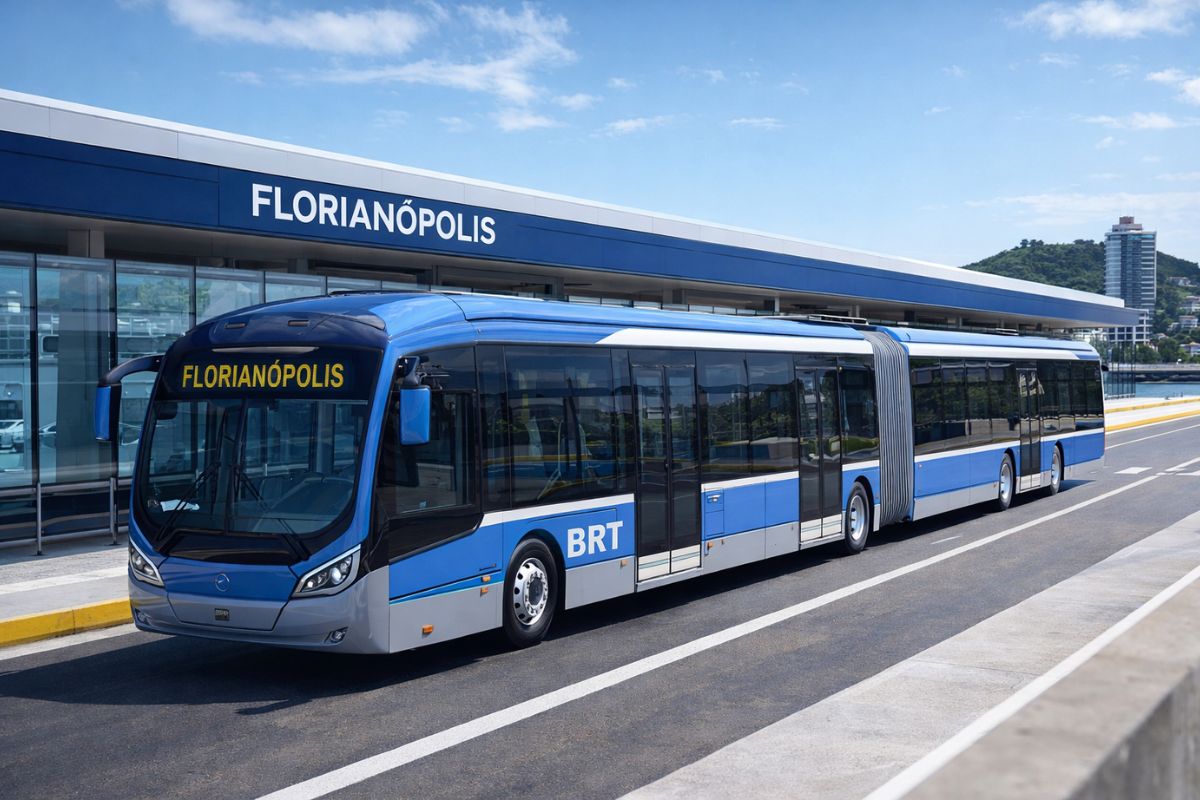
Florianópolis will receive a million-dollar BRT that will begin construction in 2026 with nearly 400 million in funding from the federal government and the Inter-American Development Bank, and the map already shows the routes for the exclusive bus corridors.
-
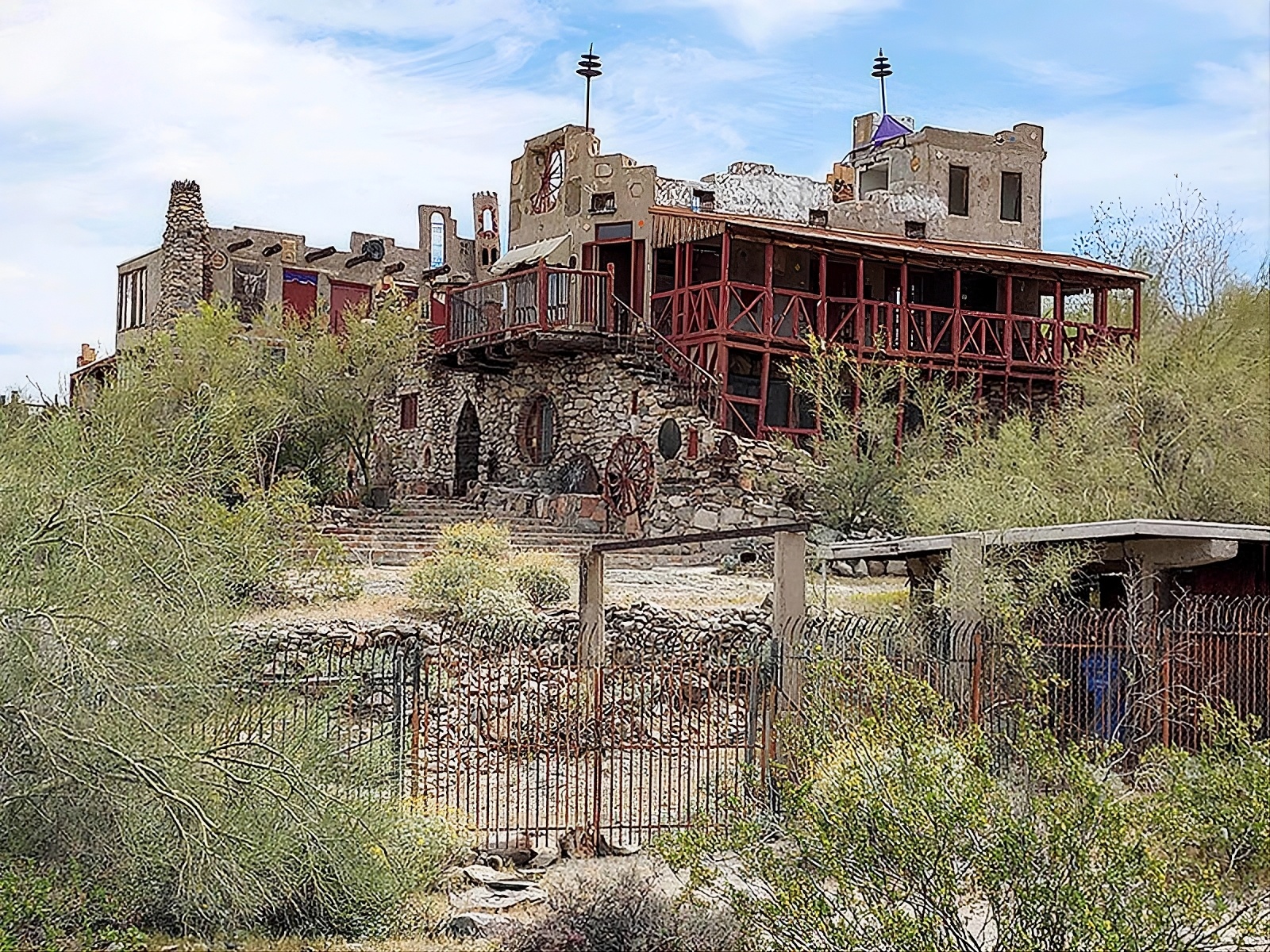
Without a blueprint, without an engineer, and using scrap from the dump, a father spends 15 years building an 18-room castle for his daughter, featuring tram tracks, 13 fireplaces, and over 700 m², which may now be demolished.
-
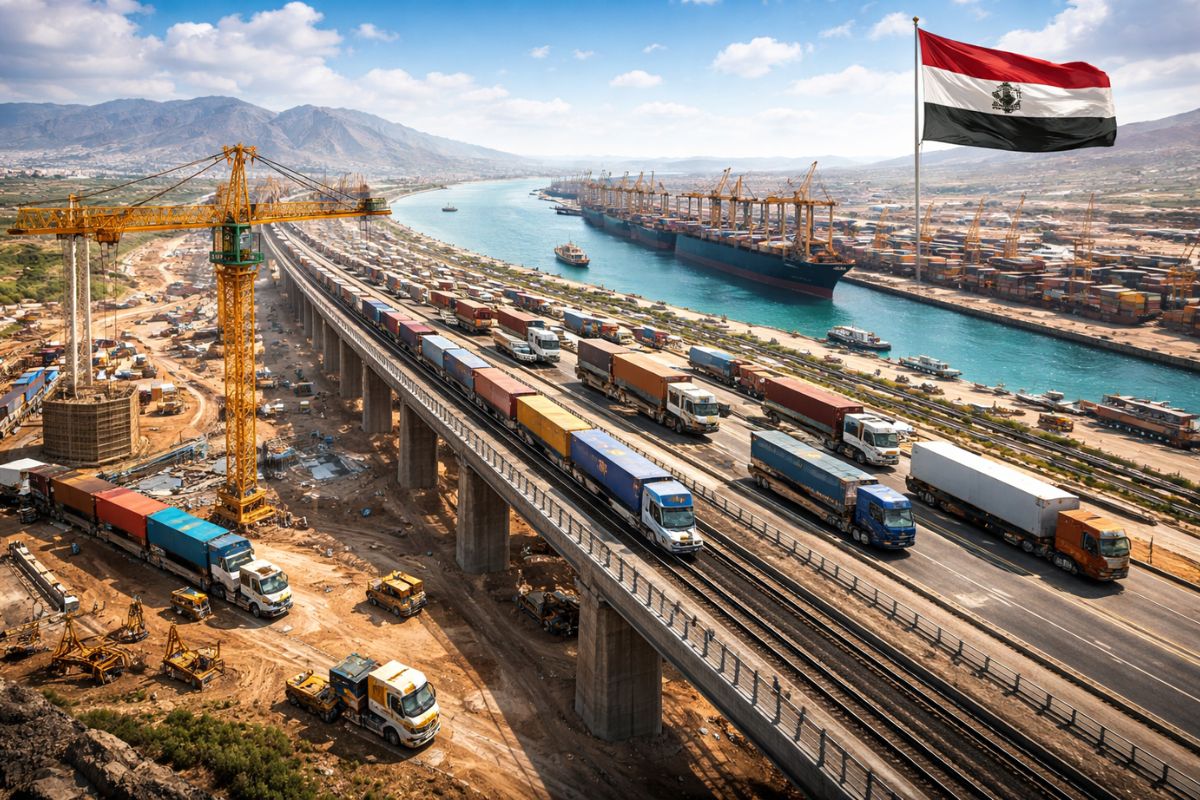
A megaproject worth R$ 89 billion is advancing in Iraq and promises to change the game in global trade by creating a new corridor between Asia and Europe, reducing traditional routes and repositioning the country as a logistics powerhouse.

In recent years, the country has begun a gradual opening, with milestones such as the reopening of cinemas in 2017, after more than 35 years of prohibition, and changes that have increased female participation in society, including the ability to drive, travel without male approval, and work in previously closed occupations.
The percentage of women in the workforce has more than doubled during this period, as part of a process presented as a continuous and complex transformation.
This background helps explain why a giant park is not treated merely as a landscaping project.
The King Salman Park is described as a new center for public life in Riyadh, combining nature with museums, theaters, sports, hospitality, and residential areas.
The idea is for the space to help reshape habits, provide daily leisure, and foster a more open urban culture for events, gatherings, and collective experiences.
King Salman Park In Riyadh: A “Small City” Over The Old Airbase

The project of the King Salman Park is located in the heart of Riyadh, occupying the grounds of the old Riyadh Airbase, repositioning a strategic area of the capital for civilian uses.
The announced size, about 16 square kilometers, pushes the project to a level where “park” almost becomes a simplification.
In practice, the plan works as a new urban centrality, with different use sectors connected by continuous infrastructure.
The comparison with Central Park serves as a direct reference to convey scale.
While the New York park spans 3.4 square kilometers, the King Salman Park is designed with an area close to five times that, with the promise of gathering trails, gardens, cultural facilities, sports, entertainment, housing, and commerce into a single urban set.
Royal Arts Complex: The Cultural Heart Of The Megaproject
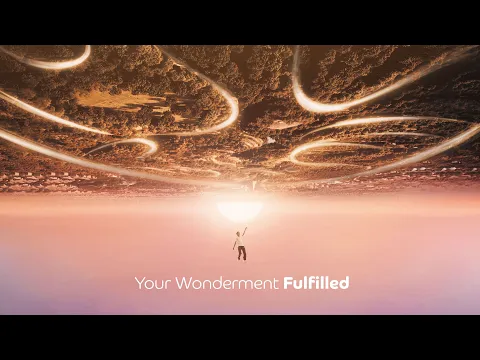

Among the most symbolic elements is the Royal Arts Complex, described as a large cultural hub covering more than 500,000 square meters.
The ensemble includes attractions planned to position the park as a permanent cultural destination, not just a recreational area.
One of the central points is the World Cultures Museum, defined as a triangular monolith that rises 110 meters above the ground.
The museum aims to exhibit artifacts from various cultures, broadening the range of references in a country that seeks cultural diversification. The presence of a museum with this profile is a direct signal of aesthetic and symbolic openness.
In the same cultural nucleus is the National Theater, with a capacity for 2,300 seats, planned as a multipurpose space capable of hosting operas and concerts.
The Royal Arts Complex also envisions an exhibition dome, a large library, as well as studios and galleries, with the declared intention that the place be not only for contemplation but also for creation.
Visitor Pavilion: The Entrance And Architectural Signature
To the south of the Royal Arts Complex, the Visitor Pavilion stands as the main entrance to the park, with an estimated area of 90,000 square meters.
The design is associated with Salmani architecture, described as a blend of traditional techniques and materials reinterpreted in a modern context.
The pavilion includes an auditorium, conference hall, plant nursery, restaurants, shops, and a library. One of the most striking elements is the “sky pavilion” at the top, planned to offer views of the park and the urban skyline of Riyadh.
The logic here is dual: guide the visitor and transform the arrival into an experience, reinforcing the idea of the park as a destination, not just a passage.
Sports And Entertainment: From The Golf Club To The Skydiving Center
The programming of King Salman Park is not limited to culture and greenery. The project also includes a large sports complex with indoor and outdoor facilities, expanding the use of space for regular practices, events, and leisure.
Among the mentioned facilities is the Royal Golf Club, covering 850,000 square meters, presented as a golf club of unprecedented scale in the middle of the city.
For an audience seeking more intense experiences, there is also a plan for a center dedicated to skydiving, reinforcing the intention of making the park a complete entertainment hub.
The desired effect is to transform the park into a routine, offering enough to attract different profiles of visitors throughout the day, week, and year, and not just on special dates.
Housing, Hotels, And Commerce: When The Park Becomes A Neighborhood And Tourist Destination
The King Salman Park was also conceived as a place where people can live and circulate like in a modern urban center.
Multiple residential cores are planned, totaling about 12,000 housing units, integrated into public areas and services.
The plan also includes 16 hotels and more than 500,000 square meters of retail space, featuring restaurants, shops, cafes, and structures typical of contemporary urban centralities.
This combination changes the park’s status: it ceases to be merely a leisure area and starts to function as an urban district, with overlapping tourist movement and daily life.
70% Green, Artificial Valleys, And 300 Thousand M² Of Water To Alleviate The Desert Climate
Saudi Arabia has reserved about 70% of the 16 square kilometers for vegetation and open spaces.
This is not just about empty lawns: the project mentions diverse landscaping, gardens, and a sanctuary dedicated to birds and butterflies, along with features such as Islamic-style gardens, vertical gardens, and a labyrinth garden.
One of the most strategic elements is the systems of artificial valleys, described as structures inspired by the functioning of wadis, natural dry riverbeds common in the region.
These valleys are presented as tools for climate control, capable of channeling wind and retaining cooler air, creating shade and thermal relief in a desert environment.
To reinforce this ambition of an “oasis,” the project envisions more than 300,000 square meters of water areas, combining fountains, streams, lakes, and ponds, connected by a 7-kilometer circular walkway.
The logic is to offer a shaded and continuous pathway, allowing one to cross and explore the park on foot, with a sense of permanence and not a rapid passage.
The 2.4 Km Road Buried Under The Park And The Engineering To Free The Surface
One of the most decisive pieces of infrastructure is the 2.4-kilometer underground road tunnel, built to run directly beneath the park.
The tunnel was inaugurated in February 2024 and is presented as a solution to free up surface space, reducing the conflict between traffic and green areas in the heart of Riyadh.
Burying the road is part of the project’s central concept: relieving the pressure from asphalt and returning the ground level to pedestrians, trees, water, and cultural facilities.
For a park that aims to function as a “small city,” the integration between circulation and permanence depends precisely on this reorganization.
What Has Already Taken Shape And The Timeline For Inauguration
Construction began in 2021. By August 2025, the Royal Arts Complex had already made significant progress, described as being halfway through construction, with structural work completed on some buildings and iconic elements at advanced stages.
The Visitor Pavilion is also reported as an advanced stage, with the beginning of architectural details and internal work.
In the green spaces, implementation has already begun, including modeling of valleys and water features.
The initial phase of the circular pedestrian circuit has been outlined, with contours identifiable even in satellite images, signaling that the main geometry of the park has already been drawn on the ground.
The project is planned to open in phases. Public gardens and smaller recreational facilities might open by the end of 2026.
More complex elements, such as the Royal Arts Complex, water features, and residential areas, follow a completion schedule in the following years, aligned with the pace of construction and finishing.
How Much It Costs And What Saudi Arabia Wants To Prove With This “Oasis” Urban
Estimates put the total cost of the megaproject at around US$ 9.4 billion.
The figure reinforces that King Salman Park is not just urban planning, but a structuring intervention in the center of Riyadh, with effects on tourism, culture, leisure, and urban design.
The project also declares a commitment to sustainability and environmental protection, aiming to increase vegetation and elevate the proportion of green areas per capita.
By connecting culture, sports, housing, and nature in the same space, Saudi Arabia attempts to redefine what “urban life” means in the desert, transforming a military symbol of the past, the airbase, into a showcase of the future.
The projected total completion of the King Salman Park Project in Riyadh, Saudi Arabia, is set for 2030.
Do you believe that a megpark like this really changes daily life, or does it become just an expensive postcard for tourists and events?





-

-

-

-

7 pessoas reagiram a isso.