





 Portuguese
  English
  Spanish
  4 min of reading
  1 comment


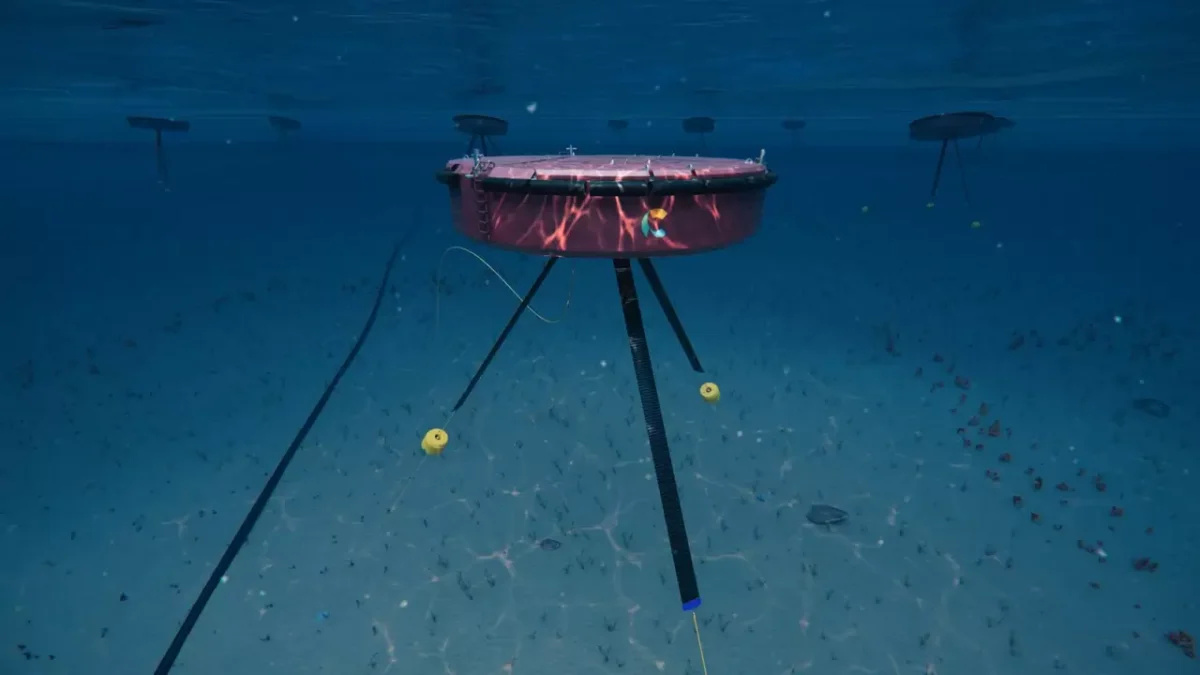


Australia Tests Submarine Cylinders That Generate Wave Energy and Are Already Powering a Naval Base, Attracting Attention from the Renewables Sector for Real Results.
The global race for renewable energy has gained an unexpected chapter in the Southern Hemisphere: giant cylinders installed underwater off the coast of Australia are turning wave energy into real electricity and powering a naval base, something that until recently was treated as a futuristic experiment. The system is part of the CETO project, developed by Carnegie Clean Energy, which has been refining submerged devices since the last decade to harness the power of Australian waves. Unlike floating buoys and other traditional shapes, CETO bets on cylindrical units anchored on the seafloor, connected by hydraulic cables and feeding a coastal power plant.
According to data released by Carnegie and the Australian Department of Defence, the CETO units have already been able to generate enough energy to power part of the Royal Australian Navy base structure on Garden Island, in Western Australia, demonstrating viability in a real environment — something rare in the wave energy sector, which suffers from corrosion, storms, and expensive maintenance.
How Submarine Cylinders Work
Unlike wind and solar turbines, which depend on wind and radiation, CETO works with a less variable resource: ocean swell, a more stable wave component in regions like the Australian coast.
-
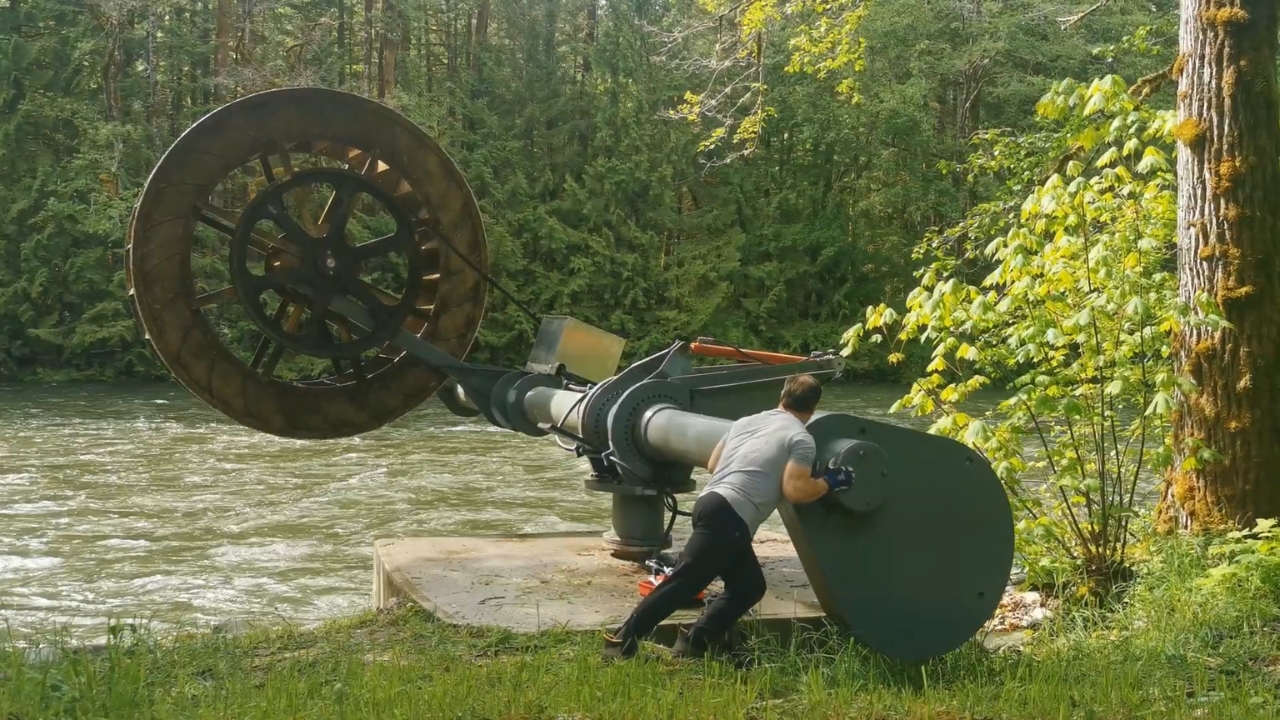
A Canadian retiree creates a hydroelectric system on a real river, generating energy continuously throughout the day and demonstrating how the power of water can supply a house with stability even in a simple structure.
-
Petrobras reaffirms its commitment to the market and ensures that it will carry out the energy transition safely to maintain national sovereignty.

-
Researchers discover a possible hydrogen deposit of up to 46 million tons beneath an ancient coal basin, and the volume could exceed half of the entire global production.

-
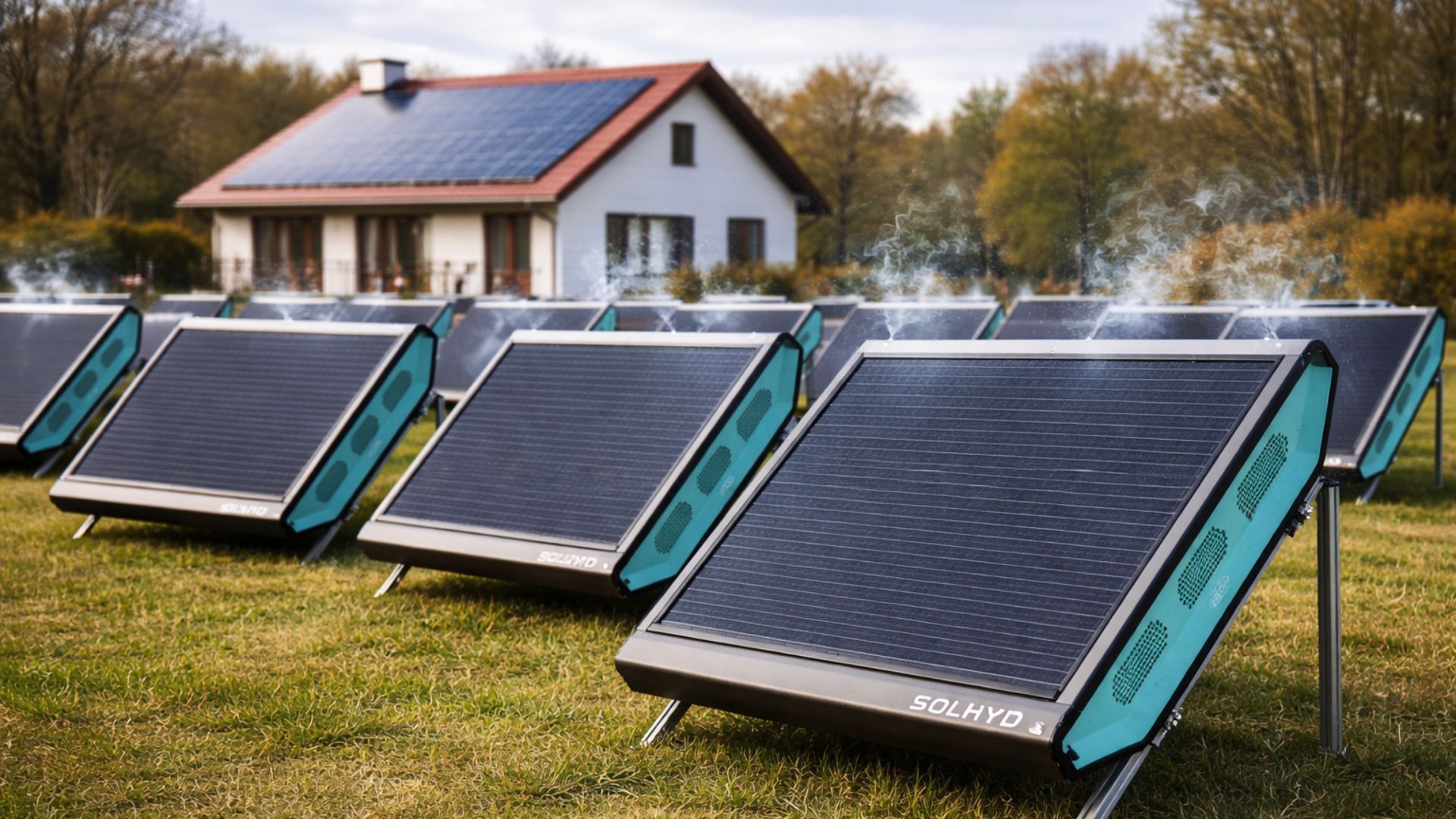
China bets on the Fishery-PV model and transforms fish farms into giant solar plants, covering ponds with panels that generate energy while utilizing the same space for large-scale aquaculture production.


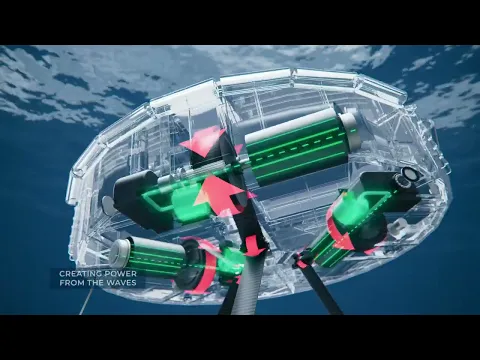

In tests, each submerged cylinder operated a high-pressure hydraulic system, which powered a coastal unit responsible for converting mechanical movement into electricity.
Operating completely submerged, without direct exposure to air, reduces visual impacts, avoids collisions with vessels, and reduces damage during storms.
Additionally, since waves carry a much higher energy density than wind or solar radiation in the same area, the potential per square meter can be significant. Carnegie claims that regions with good incidence can provide more than 20 to 30 kW per meter of wave front, although practical values vary according to weather and ocean conditions.
Why the Naval Base Matters
The tests at Garden Island, linked to the Australian Defence Science and Technology Group, had both symbolic and technical value.
Firstly, because remote military installations are strategic energy consumers, traditionally relying on expensive, polluting, and logistics-vulnerable diesel. Secondly, because it proves that the system works in a real operational environment, with corrosion, biofouling, storms, and seasonal wave variation.

In test cycles, Carnegie reported continuous months of operation, solely with energy generated from the sea. The most recent phase includes CETO 6, which expands the size and power of the cylinders, aiming to reach commercial levels.
Advantages That Attract Attention from the Energy Sector
International interest has grown for relevant technical reasons:
Predictability of Wave Energy
Waves follow swell and ocean wind patterns, which are more stable and predictable than land wind and solar irradiance.
High Energy Density
A field of waves carries dozens of times more energy per linear meter than a wind field in the same space.
Discrete and Submerged Installation
The system does not affect the landscape and reduces collision risk — something that floating turbines or buoys cannot fully avoid.
Possibility of Desalination
CETO can also generate hydraulic pressure for desalinating seawater, without undergoing electrical conversion, very useful in dry regions of Australia and the Middle East.
The Challenges: Corrosion, Storms, and Cost per kWh
The ocean is relentless. Marine energy systems face:
- saline corrosion
- biofouling (barnacles, algae, and mollusks)
- storm impact
- difficulty of underwater maintenance
These factors have raised the cost per kWh in the early phases, making the sector less competitive than wind and solar. However, Carnegie’s learning curve and that of competitors in Europe (such as Swedish CorPower and Portuguese AW-Energy) is reducing costs and increasing project robustness.
What’s Next
Carnegie has announced plans to integrate CETO with coastal microgrids, in addition to seeking contracts for simultaneous energy supply and desalination in remote areas.
Interested countries include:
- Australia
- United Kingdom
- Malta
- United Arab Emirates
- Pacific Islands
Meanwhile, reports from the IEA (International Energy Agency) and the OES (Ocean Energy Systems) already classify wave energy as a complementary baseload potential for ocean networks, especially after 2030, when costs are expected to decrease.
Why This Technology Could Change the Game
If the technological curve follows the path of offshore wind, which has dropped in price in less than 15 years, wave energy could become:
- baseload source for coastal grids,
- alternative to diesel in islands and remote bases, and
- combined source for desalination in arid countries.

In this scenario, Australia has already indicated that it does not want to remain just a laboratory: it wants to be a provider of ocean technology, just as it has done with the battery and green hydrogen sectors.
The ocean has always been seen as a barrier. It is now beginning to turn into infrastructure, and the giant cylinders of the CETO project may be the first chapter of this energy leap.







MEU nome é Alex Ferreira Cabral.
Eu tive essa ideia e usei uma agência da Austrália que produz energia elétrica aproveitável e limpa.
Creio que vão se lembrar do meu trabalho a partir do ano de 2009.
Mas aqui no Brasil o estado persegue de perto muitas pessoas e eu sou uma pessoa que sofri perseguição aqui no Brasil.
Inclusive essas minhas ideias também trouxe a sugestão do pisoeletrica que foi produzido no Japão e no Reino Unido na França.
Exoesqueleto projeto levanta e anda.
Imagem holográficas através da transmissão do software CNC multifusor multipolarizado que trouxe nitidez a definição de imagens de televisão.
Alguns estudos pelo Carbono Pró
Atravéz do contato com Michel Force da Carbono Pró captação do dióxido de caborno e a preservação de reservas florestais.
Meu trabalho também sugeria censores de presença ao redor de veículos para assim previnir colisão em duas de sereno serração ou nevasca etc…
Sistema ANTI COLISÃO da indústria automobilística que por ambição tomaram como opcional e não sistema obrigatório.
O aquecimento global e simplesmente a diminuição da camada de oxigênio na atmosfera SENDO ocupada por dióxido de caborno!!!
Espero que eu possa ser reconhecido e vir a contribuir com desenvolvimento da proteção ambiental do nosso planeta!
Obrigado!