





 Portuguese
  English
  Spanish
  7 min of reading
  0 comments


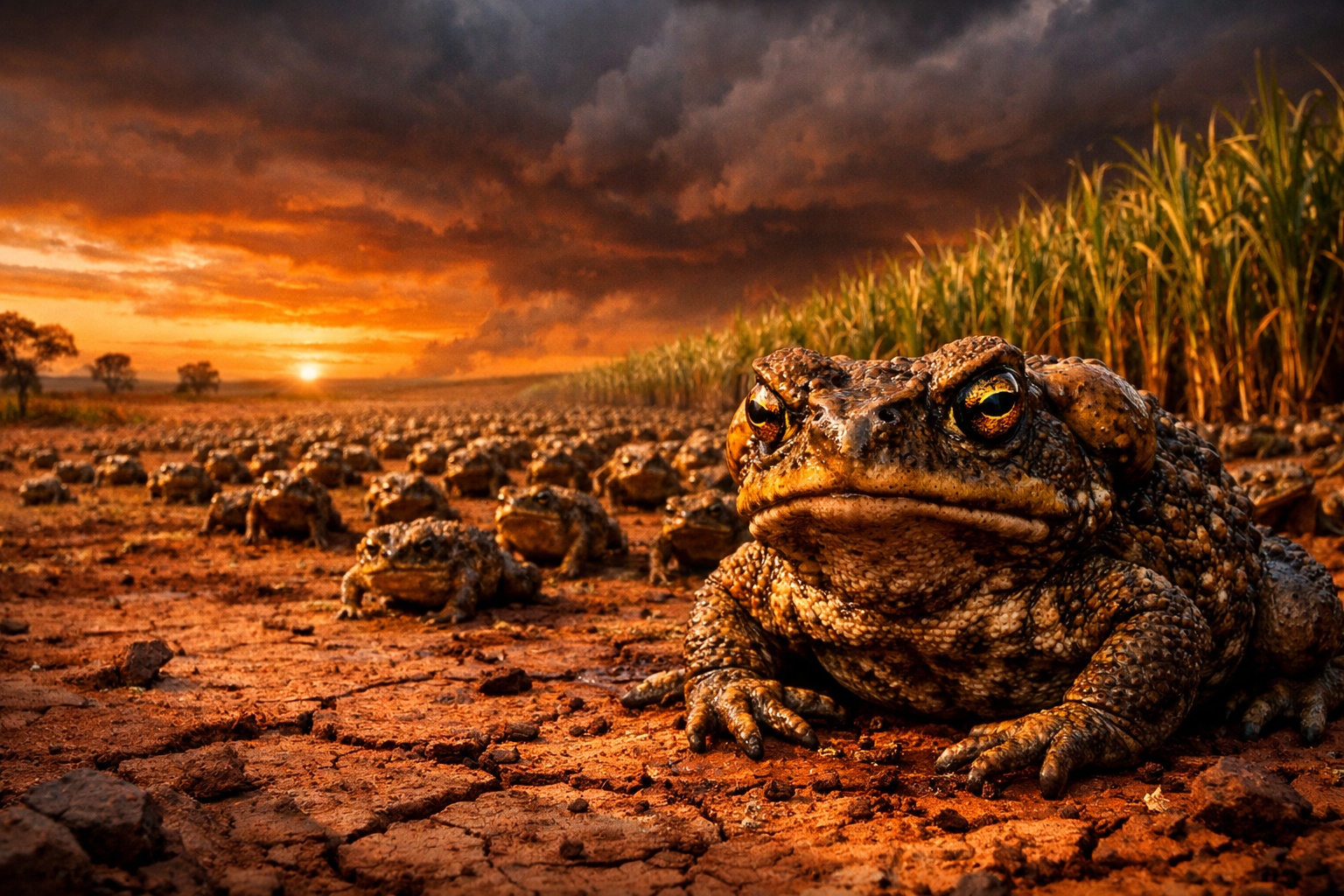
Introduced In 1935 To Combat Sugarcane Pests, The Buffo Toad Turned Into An Ecological Disaster In Australia: Today There Are More Than 200 Million Advancing Up To 60 Km Per Year.
In June 1935, entomologist Reginald Mungomery arrived at the port of Gordonvale in northern Queensland, Australia, bringing with him a box containing 102 live toads captured in Hawaii. During the trip, one of the animals died, leaving 101 live toads that would be used in an agricultural experiment aimed at solving a persistent problem for the Australian sugarcane industry. The toads were initially placed in an experimental enclosure near the Gordonvale area. Within weeks, the animals began to reproduce rapidly. In August of that same year, about 2,400 buffo toads had already been released into the sugarcane fields near the city of Cairns, in northern Queensland.
The initiative seemed promising at the time. However, that decision would trigger one of the greatest environmental disasters in modern Australian history.
The Cane Beetle Plague Threatened The Australian Sugar Industry
Before the introduction of the buffo toad, the sugarcane industry in Queensland faced a persistent problem since the late 19th century: cane beetle infestation. These insects caused significant damage to crops. Their larvae fed on the roots of sugarcane, compromising the growth of the plants long before any damage was visible on the soil surface.
-
The waste that can double a household’s water bill is not in the faucet or the shower; it happens hidden within the walls and can go unnoticed for months, according to sanitation experts.

-
Darkness can surpass light in an optical phenomenon confirmed by scientists, which expands the understanding of relativity and reveals new behaviors of waves in the universe.

-
A Brazilian scientist created a pen that touches human tissue and identifies cancer cells in seconds using a drop of water and artificial intelligence, and Lívia Eberlin’s invention has already been used in over 400 surgeries in the United States and Brazil.

-
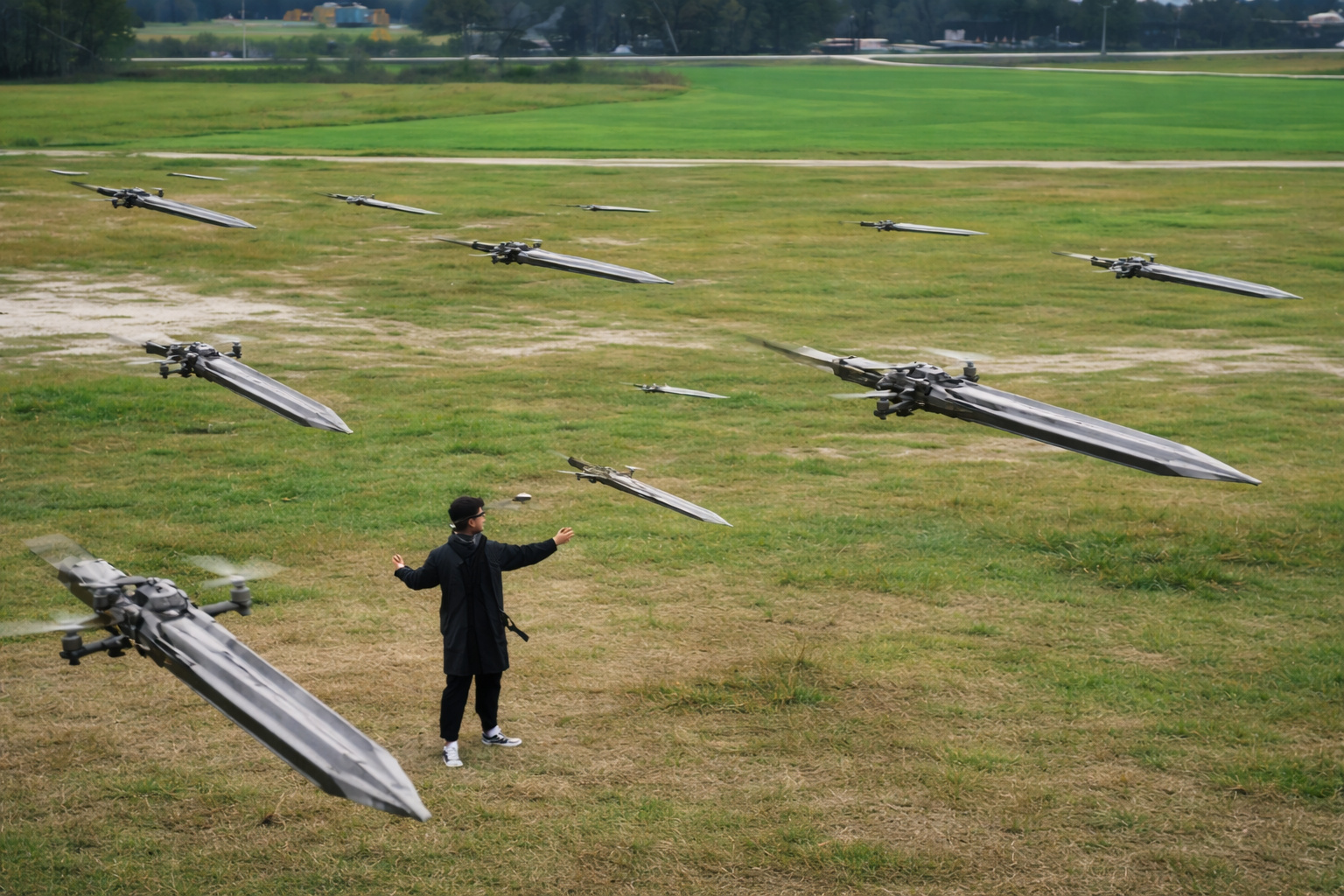
An inventor in China creates flying drones shaped like swords that respond to hand gestures in real time, with technology based on motion sensors transforming interaction into a scene worthy of a movie and redefining the control of machines in the air.

To address the problem, the state government established the Bureau of Sugar Experiment Stations (BSES) in 1900, an institution dedicated to agricultural research focused on sugar production. For over two decades, scientists and agronomists investigated various pest control strategies.
Among the solutions tested were:
- Parasitic fungi capable of attacking the beetles
- Experimental insecticides
- Alternative cultivation methods
- Manual removal of larvae
None of these strategies showed sufficiently effective results to eliminate the problem.
The Idea Of Using Toads As Biological Control Came From Experiences In The Caribbean
In 1932, researcher Arthur Bell attended a scientific conference in Puerto Rico and returned to Australia with an idea that seemed revolutionary. At that time, reports from the Caribbean indicated that the American buffo toad was being used with apparent success to control beetles in sugarcane plantations.

Similar experiments had also been conducted in Hawaii and the Philippines. The logic seemed simple: a large, resilient, and extremely voracious amphibian could consume large quantities of insects, reducing the pest population without the need for chemical pesticides.
The plan seemed to offer a natural and cost-effective solution.
Thus, Reginald Mungomery traveled to Hawaii, captured the animals, and transported them to Queensland.
The crucial detail that no one checked before releasing the toads was whether the Australian cane beetles would actually come into contact with these predators.
Why Biological Control With Buffo Toads Could Never Have Worked
The reason the plan failed lay in the biology of the species involved. The cane beetles found in Queensland were not the same as those observed in the Caribbean.
The main species that attacked Australian plantations were:
- Greyback Cane Beetle
- French’s Cane Beetle
These insects exhibited very different behaviors from the beetles found in Puerto Rico. The greyback cane beetle rarely descended to the ground, staying at the top of the sugarcane plants. The French’s cane beetle was mainly active during the night.
The buffo toad, on the other hand, is a terrestrial predator that hunts on the ground and typically feeds during the warmer parts of the day.
This means that the toads practically never encountered the beetles they were supposed to control. Nonetheless, no in-depth ecological studies were conducted prior to large-scale release.
In December 1935, the Commonwealth Department of Health attempted to prevent further releases of toads. However, political pressure from the sugar industry and the Bureau of Sugar Experiment Stations itself led to the veto being overturned in 1936.
By March 1937, over 62,000 tadpoles had already been bred in captivity and released into the environment.
From 101 Toads To More Than 200 Million: The Explosive Expansion Of The Invasive Species
The buffo toad found ideal conditions to multiply in Australia. Unlike its original habitat, the animal had no natural predators on the Australian continent. Additionally, the toad has an extremely efficient reproductive strategy. Each female can lay between 8,000 and 30,000 eggs in a single spawn, and can reproduce twice a year.
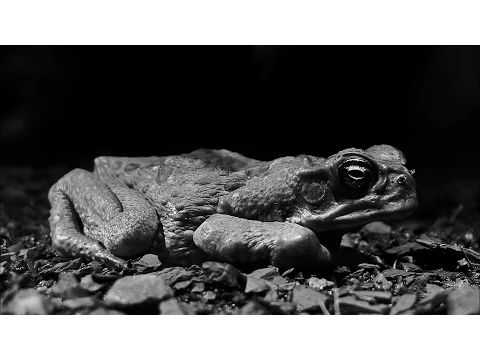
By comparison, many species of native Australian frogs produce about 2,000 eggs per year.
The tadpoles hatch in just 48 to 72 hours, and in tropical climates, the young can reach adulthood in less than a year. With this extraordinary reproductive capacity, the population of buffo toads exploded rapidly throughout northern Australia.
By 1959, the animals had already colonized much of the east coast of Queensland.
- In 1964 they reached the Gulf of Carpentaria.
- In 1978 they hit the border with New South Wales.
- In 1984 they advanced to the Northern Territory.
- In 2001 they reached Kakadu National Park, a UNESCO World Heritage site.
- In 2009 they reached the border of Western Australia.
Today, estimates indicate that there are more than 200 million buffo toads spread across the continent, advancing about 40 to 60 kilometers per year towards the west.
The Venom Of The Buffo Toads Devastated Native Predators Of Australia
The main ecological impact of the buffo toad is not competition for food, but its powerful venom. The animal produces a toxic substance called bufotoxin, secreted by the parotid glands located behind the head.
This venom is present in all life stages of the animal:
- Eggs
- Tadpoles
- Frogs
- Adults
Predators that attempt to eat the toad ingest compounds called bufadienolides, which directly affect the cardiovascular system.
Intoxication can cause arrhythmias, paralysis, and death within minutes. The Australian fauna had never encountered this type of toxin before the species’ introduction. As a result, various populations of predators suffered dramatic collapses.
The northern quoll, a carnivorous marsupial similar to a small wild cat, lost more than 90% of its population in regions invaded by buffo toads. Monitor lizards, native snakes, and lace monitors also recorded population declines of 50% to 90% after the arrival of the toads.
In some areas of the Northern Territory, freshwater crocodiles died en masse after ingesting buffo toads.
Ecological Cascades Altered The Balance Of Several Ecosystems
The death of important predators triggered chain effects in ecosystems. In Kakadu National Park, for example, the reduction of the population of lace monitors — which prey on reptile nests — resulted in increased survival of eggs of crocodiles and turtles.
This phenomenon is known as trophic cascade, when the removal of a predator alters the entire ecological balance of an environment.
After 90 Years, Australia Has Still Not Found A Solution For The Buffo Toad
In 2010, the Australian government officially recognized the gravity of the situation. Environmental authorities declared that it is unlikely that a large-scale control method for buffo toads will be available in the near future. Various strategies have been tested over the last decades.
Among them:
- Exclusion fences in protected areas
- Pheromone traps
- Training programs for predators to avoid toads
One of the most promising strategies involves so-called conditioned aversion. Researchers at the University of Sydney developed baits containing small pieces of toad mixed with substances that induce nausea in predators.
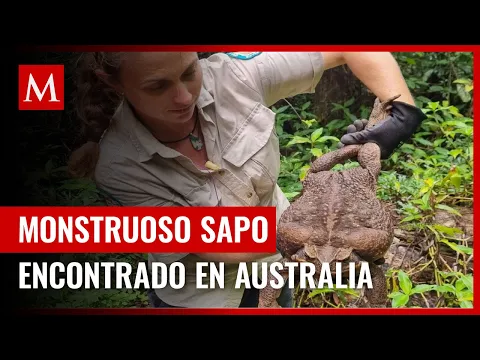
The idea is to teach native animals to associate the buffo toad with a negative experience. The results have been limited. Some species of crocodiles and lizards learned to avoid the toads, but the method did not work with quolls. In 2023, researchers found in Queensland a toad measuring 25 centimeters and 2.7 kilograms, nicknamed “Toadzilla”, possibly the largest ever recorded.
The animal was preserved in the state museum as a symbol of the scale that the invasion has reached.
The Introduction Of The Buffo Toad Did Not Bring Benefits To Sugarcane Production
Despite the initial justification, subsequent studies showed that the introduction of the buffo toad did not increase sugarcane productivity.
Research conducted by ecologist Richard Shine from the University of Sydney demonstrated that the toads not only failed to control the cane beetles but also created new problems. The toads feed on ants that naturally control the larvae of the beetles.
Moreover, the venom killed monitor lizards that also preyed on the insects responsible for crop damage. The result was exactly the opposite of what was expected: the introduction of the buffo toad ended up worsening the ecological imbalance in the plantations.
More than 90 years after the arrival of the first 101 toads at the port of Gordonvale, Australia still coexists with the descendants of this poorly planned introduction.
Today, scientists’ priority is no longer to eradicate the species — something considered practically impossible — but to develop strategies that allow native fauna to survive the permanent presence of an invader that arrived on the continent by human decision and ended up spreading over millions of square kilometers.







-

-

-

-

-

7 pessoas reagiram a isso.