





 Português
  Inglês
  Espanhol
  5 min de leitura
  1 comentário


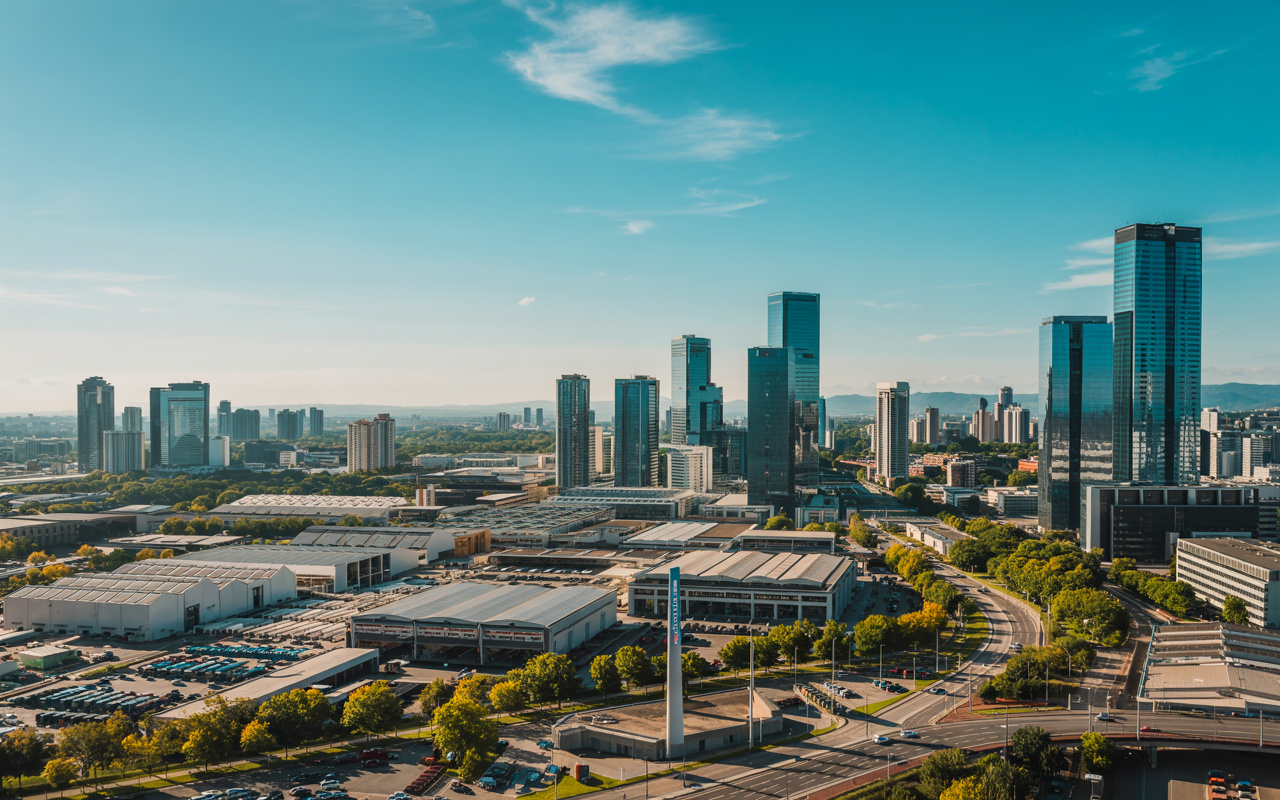


Discover São José dos Pinhais, the “Brazilian Baden-Württemberg”: an automotive and industrial hub with high exports, presence of multinationals like Renault and Audi, and one of the most solid economies in the country.
Few Brazilians know, but in a city at the heart of Southern Brazil lies one of the most sophisticated and resilient gears of the national economy. An industrial hub that mirrors the productive dynamism of Baden-Württemberg, the German region that is home to brands like Mercedes-Benz, Bosch, and Porsche. We are talking about São José dos Pinhais, in Paraná — a city that combines heavy industry, technical qualification, robust exports, and multinational presence in a rare formula of sustained economic development.
While other regions suffer from deindustrialization, São José dos Pinhais stands out for hosting the main automotive hub in Southern Brazil, with modern factories, integrated production chains, and a logistics structure aimed at both domestic and international markets. With just over 330,000 inhabitants, the city boasts indices that resemble European powers: low unemployment, per capita income above the national average, and significant participation in the GDP of Paraná.
A World-Class Automotive Hub
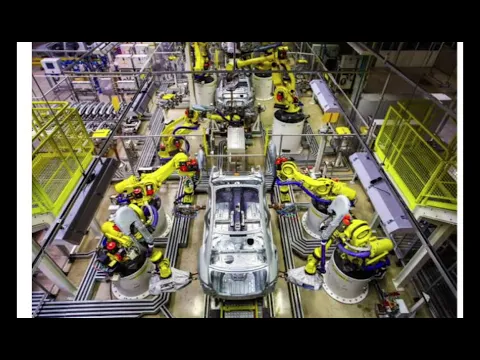
The economic engine of the city is, literally, the engine. Manufacturers like Renault, Audi, and Volkswagen have chosen São José dos Pinhais as the base for their operations in Brazil.
-
The world’s first octopus farm wants to open in the Canary Islands and is already provoking an international reaction: the plan aims to produce 3,000 tons per year.

-
Drought may be creating stronger superbugs in the soil and helping antibiotic resistance reach hospitals, warns a study highlighting a problem that could grow alongside extreme weather.

-
The biggest scam in history: Napoleon’s France deceived the United States by selling them a territory that was Spanish.

-
Why is the Danakil Desert so dangerous? It has unstable terrain and how extreme temperatures and toxic gases turn the region into one of the most hostile environments on Earth.


The Renault plant, for example, is one of the largest for the brand outside France, with a capacity to produce more than 400,000 vehicles per year. The unit also houses the brand’s engineering and development center, turning the city into a hub of innovation.


Audi, on the other hand, maintains its factory there that produces premium models like the Q3 and A3 — focusing on technology, efficiency, and export. Meanwhile, Volkswagen operates in the municipality through strategic suppliers and structures supporting the national production of parts and components.
These manufacturers do not operate in isolation. Around them has formed a supplier ecosystem of auto parts, metallurgy, embedded electronics, and precision engineering, such as Aethra Sistemas Automotivos. This grouping strengthens the so-called automotive chain of Southern Brazil, which goes beyond final assembly: it involves research, testing, robotics, and integrated logistics.
Exports and Logistics: The International Calling
São José dos Pinhais also stands out for its strong insertion in global value chains. Products manufactured in the city are shipped directly to demanding markets like Germany, the United States, Mexico, and countries in Mercosur.
The municipality takes advantage of its proximity to the Port of Paranaguá and Afonso Pena International Airport, the busiest in Paraná, located within its boundaries.
This strategic position enables an efficient logistics cycle to move vehicles, parts, engines, and high-tech components, as well as attract imports aimed at the manufacturing industry. The result is an extremely active local trade balance, with significant surpluses and constant investments in infrastructure.
Not surprisingly, the industrial sector accounts for more than 50% of municipal tax revenue. And according to data from IBGE and FIEP (Federation of Industries of the State of Paraná), São José dos Pinhais ranks among the top 10 cities with the highest industrial GDP in Brazil, even with a population much smaller than giants like São Paulo or Belo Horizonte.
Comparison with Baden-Württemberg: More than a Metaphor
The analogy with Baden-Württemberg, in southwestern Germany, is not just poetic — it is economic and structural. Just as the German state concentrates an ecosystem of engineering, automotive industry, exports, and technical qualification, São José dos Pinhais reproduces these same characteristics on a Brazilian scale.
- Strong and Diverse Industry: Baden-Württemberg is home to brands like Daimler, Bosch, Porsche. In São José dos Pinhais, Renault, Audi, Volkswagen, and Aethra fulfill this role.
- High Technical Level: Both locations invest in vocational training, applied engineering, and innovation.
- Integration with Global Markets: Whether via the Port of Hamburg or Paranaguá, the export logic is in the DNA of both regions.
- High GDP per Capita: Both models ensure quality jobs, stable income, and sustained growth.
This symmetry makes São José dos Pinhais a virtuous exception within the Brazilian scenario — and a case study for public policies aimed at reindustrialization and the global insertion of the country.
Technical Education and Qualification: The Differentiator of the Workforce
Another fundamental pillar of local success is workforce qualification. The city has a broad network of technical schools, SENAI units, and sector-specific training programs, supplying the industry with specialized professionals — from welders to automation engineers.
This investment in training ensures low turnover rates, high productivity, and technological adaptability. São José dos Pinhais is not just a manufacturing hub — it is a center of knowledge applied to industry. And this attracts new investments, even in times of national contraction.
The city also consistently records unemployment rates below the national average, with an average income exceeding R$ 3,500, driven by industrial salaries and technical positions in multinationals.
Urban Development and Quality of Life
The economic dynamism directly reflects on quality of life. São José dos Pinhais combines planned urban infrastructure, well-distributed industrial parks, access to public services, and the growth of the trade and service sector.
The high revenue allows for continuous investments in health, education, and mobility, reinforcing the virtuous cycle of development.
The city also invests in sustainability, with incentives for green logistics, rational water use in industries, and environmental compensation programs for industrial areas. This modern mindset brings São José dos Pinhais even closer to European productive hubs.









Esse pessoal fala de multinacionais como se fossem brasileiras, enxergam mérito onde não existe. Essa viralatisse brasileira cansa!