





 Portuguese
  English
  Spanish
  5 min of reading
  0 comments


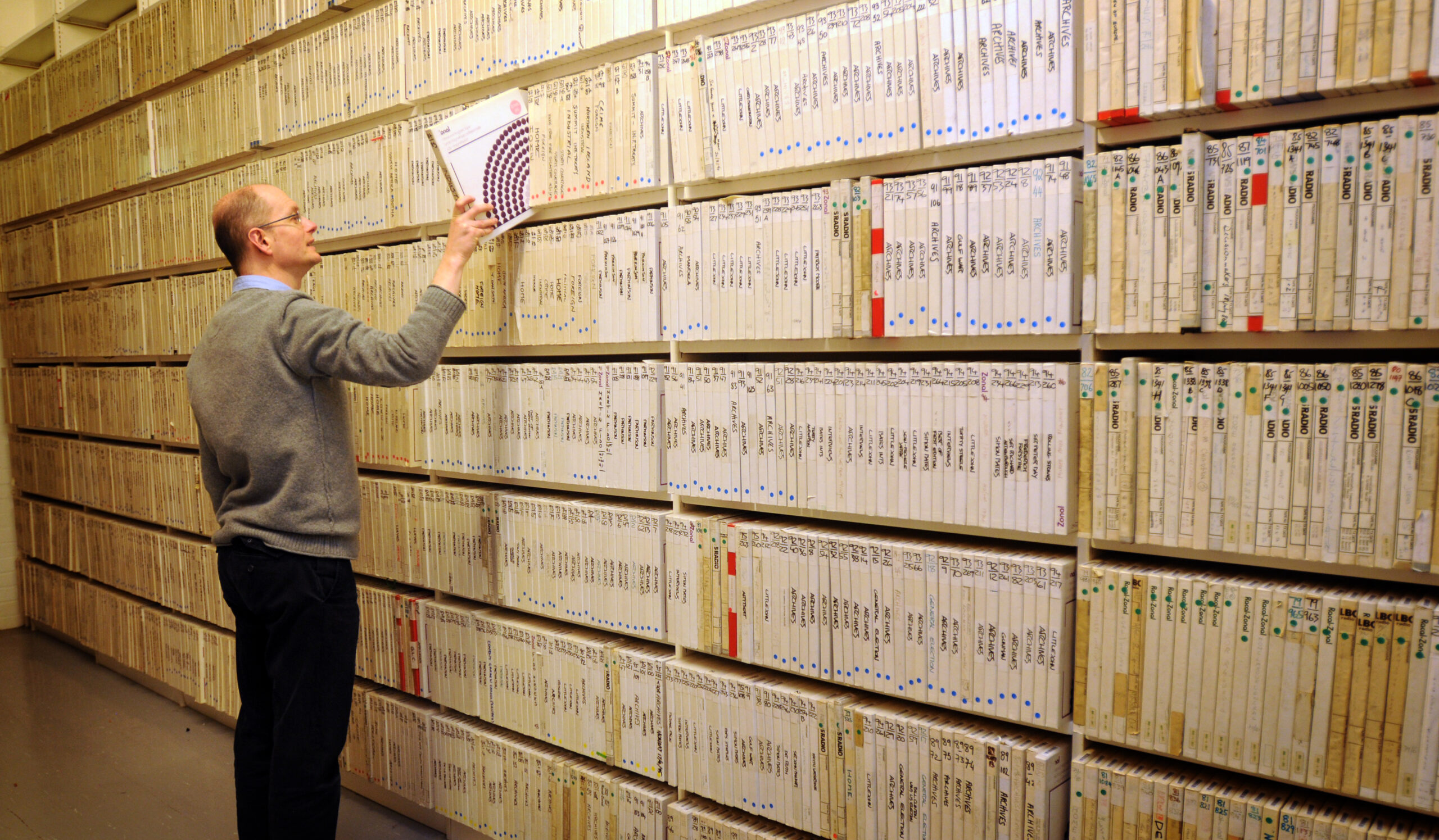
The Largest Sound Archive in the World Holds 7 Million Recordings of Voices, Music, and Extinct Sounds, the Auditory Memory of Humanity.
Few people know that there is a library that does not hold books, but rather sounds — authentic records of life on the planet that range from the roar of a lion recorded in Africa over 70 years ago to the voice of indigenous peoples who have disappeared from the Amazon. This is the British Library Sound Archive, also known as the Global Sound Archive, the largest sound collection in the world, maintained by the British Library in London. The project brings together more than 7 million cataloged recordings from 160 countries, and is recognized by UNESCO as part of the cultural heritage of humanity.
The Collection That Preserves the Earth’s Sound Memory
Officially founded in 1955, the British Library Sound Archive was born from the desire to preserve something that most people ignore: sound as a historical record. Since then, the project has grown to become one of the largest sound collections on the planet, with materials dating back to the 19th century, such as wax cylinders recorded by Thomas Edison, rare vinyl records, magnetic tapes, and digital recordings.
Today, the archive stores sounds of practically all imaginable types, such as animals, traditional music, regional accents, war testimonies, urban sounds, field recordings, and even environmental noises from places like the Arctic and the Amazon rainforest.
-
What the Public House of Julius Caesar was like inside in the Roman Forum: layout, atrium with compluvium and impluvium, tablinium and peristyle, and the scandal of the Bona Dea, revealed in an AI recreation.

-
While digging a trench next to a pool in Germany, workers found more than 1,500 silver coins from 1320 in the rubble, revealing a treasure buried for over 700 years.

-
Flight Helios 522, the “ghost” flight with 121 people: the commercial aircraft flew for more than 2 hours on autopilot after a pressurization failure left pilots and passengers unconscious and only stopped when it ran out of fuel.
-
Researchers have located a nearly intact vessel that disappeared 125 years ago on the bottom of icy waters, with masts still preserved and rare details that impress archaeologists.




It is a true “invisible museum,” where each track represents a slice of the past and a testament to the transformations of the world.
Among the most famous collections are the recordings from the BBC Natural History Unit, recordings of London during World War II, music from African communities recorded by anthropologists, and sounds of extinct bird species captured during scientific expeditions in the early 20th century.
A Global Partnership with UNESCO
The archive is part of an international effort to preserve the so-called “sound memory of humanity”, in partnership with UNESCO and the World Soundscape project. This global program encourages researchers and artists to submit recordings from their countries, from the sounds of street markets and religious rituals to the noise of the wind in deserts and forests.
The idea is simple yet powerful: to document the planet through sound. While photographs and videos show what we see, the sound archive records what we hear — sounds that silently disappear over time.
UNESCO highlights the project as one of the most important examples of cultural preservation in the 21st century, as many sounds recorded in the archive no longer exist. Devastated forests, transformed cities, and extinct languages now live only in the tracks of the digital archive.
From Edison’s Cylinders to the Digital Age
The British Library Sound Archive holds sound collections dating back over 140 years. Among the jewels of the collection are the first phonographic recordings from 1880, created by none other than Thomas Edison, the inventor of the phonograph. These wax cylinders, considered the first sound recordings in history, have been digitized and preserved in high quality.
In the 1950s and 1960s, the archive expanded with the growth of broadcasting and popular music. In the 1980s, it began to incorporate field recordings from researchers and travelers, becoming a global reference for anthropologists and linguists.
Today, the project is fully digitized, with thousands of hours available online on the portal sounds.bl.uk, allowing anyone from anywhere in the world to listen to the recordings for free.
The Challenge of Sound Preservation
Preserving sound is a greater challenge than it seems. Old recordings on magnetic tape and vinyl suffer from physical wear and oxidation. To prevent the loss of material, the British Library performs a permanent digitization process, converting analog media into high-resolution files.
According to the archive itself, approximately 70% of the original recordings would be at risk if not transferred to modern formats by 2030. The goal is to ensure that the global auditory heritage can be accessed by future generations — including recordings of dialects and languages that have completely disappeared.
A World Told by Sounds
The scientific value of the archive is immense. Linguists use the recordings to reconstruct phonemes of lost languages; biologists study singing patterns of extinct birds; historians analyze accents and intonations of political speeches from over a century ago.
There are records of rare sounds such as:
- the song of an Australian lyrebird from 1910, which no longer exists;
- the urban noises of London during the air raids of World War II;
- recordings of the Arctic Ocean freezing, made by scientific expeditions;
- and songs from Amazonians tribes recorded on cassette tapes by missionaries in the 1960s.
These recordings form a living portrait of the planet — not in images, but in vibrations.
A Global Auditory Experience
The archive is today one of the most accessed platforms of the British Library, with over 20 million annual reproductions. The public can search by themes, countries, or historical periods. Each track brings metadata with the location, the author, the equipment used, and the context of the recording.
Among the most listened to are natural sounds — tropical rain, birds, and the sea — which have become popular on relaxation platforms and movie soundtracks.
The project also inspires new sound artists and music producers, who use the old recordings as a basis for modern compositions, transforming the auditory past of the Earth into new creations.
In times of visual excess, the British Library reminds us that listening is also a way to remember. Sound, ephemeral by nature, gains eternity the moment it is recorded.
And in this gigantic archive of 7 million records, are stored the noises, voices, and echoes of an entire planet — sounds that, if not preserved, would disappear forever.
The British Library Sound Archive is, therefore, an invisible monument to the memory of humanity, a space where the past is not read, but heard — and where each recording tells a story that time tried to silence.






-

-

2 pessoas reagiram a isso.