





 Português
  Inglês
  Espanhol
  4 min de leitura
  0 comentários


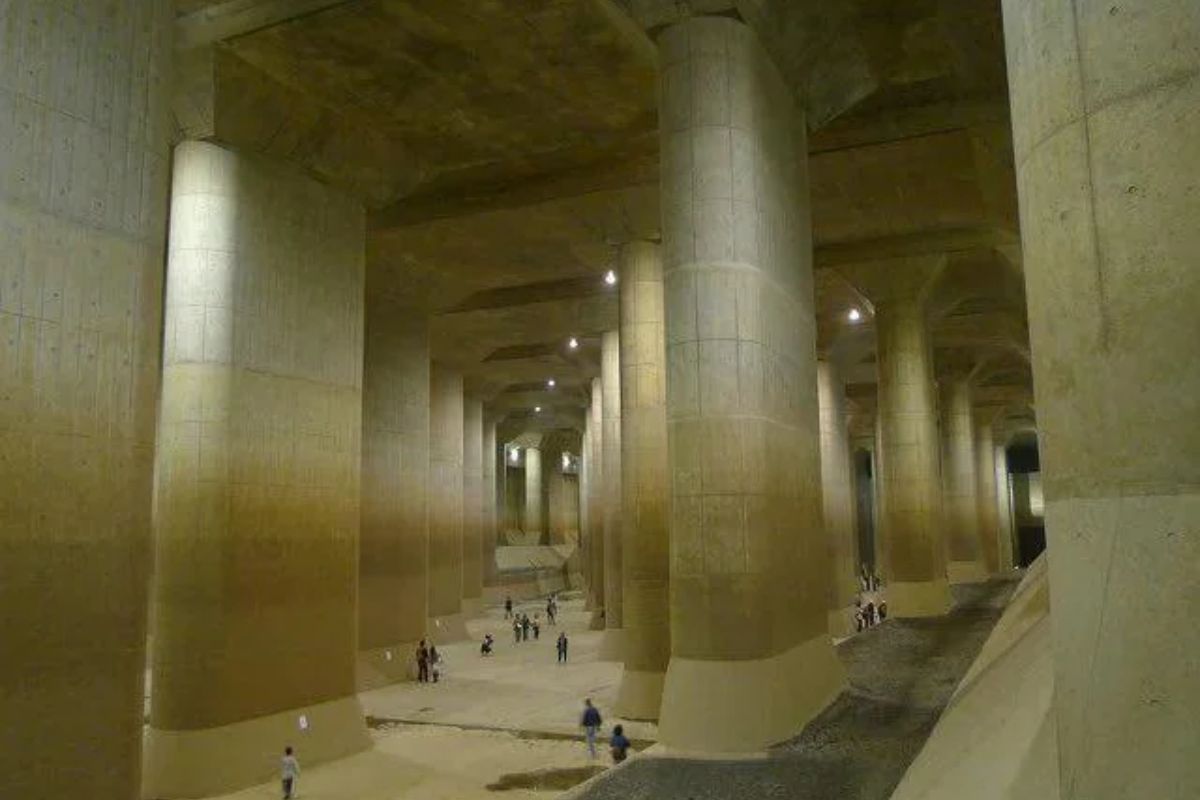
Known as “G-Cans”, the largest flood diversion system in the world is an engineering wonder, the Tokyo flood tunnels were designed to protect the Japanese metropolis from catastrophic floods.
To protect the largest metropolis in the world from catastrophic floods, Japan built an underground fortress. At 50 meters below the surface of Saitama Prefecture, lies one of the most impressive engineering structures on the planet: the Metropolitan Area Outer Underground Discharge Channel, better known as the Tokyo flood tunnels. Dubbed the “Underground Cathedral” for its scale and architectural beauty, this complex is not a temple, but a high-tech fortress against the fury of nature.
Built to protect one of the most flood-vulnerable areas of Greater Tokyo, this system is a testament to the Japanese engineering capacity to create monumental solutions for extreme challenges. This is the story, technology, and performance of this megastructure, an icon of a nation’s resilience.
Why Did Tokyo Need a 230 Billion Yen Project?
The construction of the Tokyo flood tunnels was a response to decades of disasters. The region, a low plain surrounded by rivers, has always been susceptible to flooding. The problem was exacerbated by rapid urbanization in the post-war era. The permeable soil of the rice fields, which acted as natural sponges, was replaced by a carpet of concrete and asphalt, sealing the region’s fate.
-
The world’s first octopus farm wants to open in the Canary Islands and is already provoking an international reaction: the plan aims to produce 3,000 tons per year.

-
Drought may be creating stronger superbugs in the soil and helping antibiotic resistance reach hospitals, warns a study highlighting a problem that could grow alongside extreme weather.

-
The biggest scam in history: Napoleon’s France deceived the United States by selling them a territory that was Spanish.

-
Why is the Danakil Desert so dangerous? It has unstable terrain and how extreme temperatures and toxic gases turn the region into one of the most hostile environments on Earth.


After a series of devastating floods in the 1980s and 1990s, the turning point came in September 1991, with Typhoon Mireille. The worst storm to hit Japan in 30 years flooded 30,000 houses and finally convinced authorities to invest in a large-scale engineering solution. The project, which lasted from 1993 to 2006, had a final cost of 230 billion yen.
The 5 Silos, the 6.3 Km Tunnel, and the “Temple” of Pillars
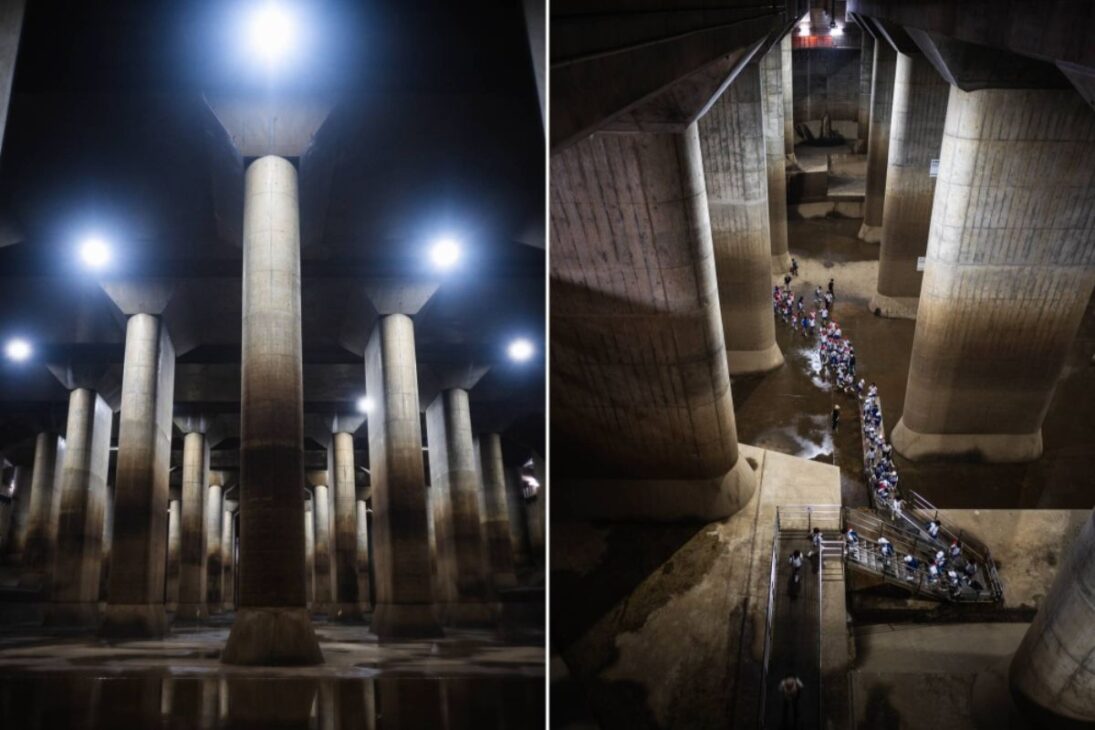
The system is a symphony of civil engineering. Its purpose is to collect excess water from five medium-sized rivers and divert it to the Edo River, which is much larger and can safely drain the water.
The Silos: the process begins with five massive vertical shafts, or silos. Each one, about 70 meters deep and 30 in diameter, is so immense that it could house the Statue of Liberty or a space shuttle inside. They function as gigantic drains, capturing floodwaters.
The Main Tunnel: the silos are connected by a main tunnel 6.3 km long and 10 meters in diameter, built 50 meters deep with the help of Tunnel Boring Machines (TBMs).
The “Underground Cathedral”: at the end of the tunnel is the most famous structure: the pressure adjustment tank. Measuring 177 meters long, 78 wide, and 18 high, its ceiling is supported by 59 colossal pillars, each weighing 500 tons. Its function is to dampen the force of the water before it reaches the pumps.
The Airplane Turbines That Move a River: How Do the Tokyo Flood Tunnels Work?
The beating heart of the Tokyo flood tunnels is its pumping station. The facility houses four giant pumps, powered by modified gas turbines, the same technology used in airplane engines.
The combined pumping capacity of the system is 200 cubic meters of water per second. This volume is so large that it would be enough to empty a standard Olympic-sized pool in just one second. It is this colossal force that effectively creates a new underground river, diverting floodwaters to the safety of the Edo River.
The Effectiveness of the System Against Typhoons and the 90% Reduction in Damage
Since its completion in 2006, the system has been a success. It is activated, on average, seven times a year. Official data from the Japanese government shows that the Tokyo flood tunnels were responsible for a reduction of approximately 90% in the number of houses affected by flooding in the region they protect.
In extreme events, its effectiveness has been tested to the limit. During Typhoon Hagibis in October 2019, the system drained over 12 million cubic meters of water, preventing estimated damages of 26.4 billion yen. Since its inauguration, it is estimated that the project has already saved more than 150 billion yen in damages, a figure that is on track to surpass its original cost and prove that prevention, although expensive, is a high-return investment.
A Tourist Attraction and the Ongoing Fight Against Floods


In 2025, the system continues to be Tokyo’s primary line of defense against flooding, a challenge that is only intensifying with climate change. The Japanese government is already investing in new projects to complement the system, recognizing that no structure, no matter how large, is a permanent solution.
The grandeur of engineering has turned the Tokyo flood tunnels into an unexpected tourist attraction. Outside of rainy periods, guided tours of the “underground temple” are offered, which has even served as a setting for films. The experience, however, requires a guide who speaks Japanese or a translator, but offers a unique view of one of the wonders of modern engineering.







-

-

2 pessoas reagiram a isso.