





 Portuguese
  English
  Spanish
  7 min of reading
  0 comments


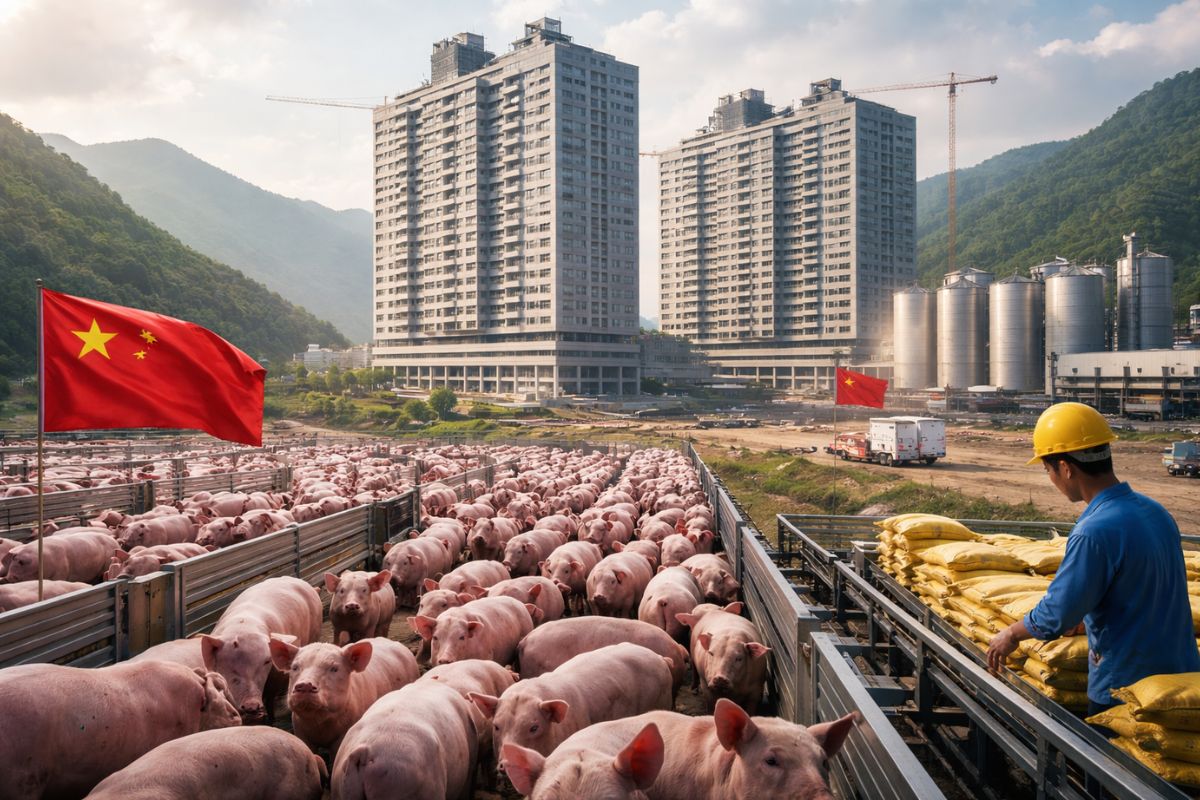
Chinese Farms in High-Rise Buildings Have Stopped Being a Domestic Bet and Are Moving to Tay Ninh, Vietnam, Where Muyuan, in Partnership with BAF, Plans to Invest Over US$ 450 Million in a Farm for 64,000 Pigs Integrated with a Large Feed Factory.
Vertical pig farms, which for years seemed an unlikely solution outside of China, are now beginning to cross borders. The movement is gaining momentum with Muyuan Foods’ entry into Vietnam, in a project that demonstrates how a model born from the pressure for efficiency, biosecurity, and intensive land use is starting to be exported.
The initiative will be implemented in Tay Ninh, in southeastern Vietnam, and combines livestock raising in multi-story buildings with a supporting industrial structure. More than just a simple farm, the project reveals a scale and productive logic change, as it brings to another country a format that China has considered a strategic response to reorganizing its pig herd.
How the Project in Vietnam Transforms Farms into a Vertical Operation
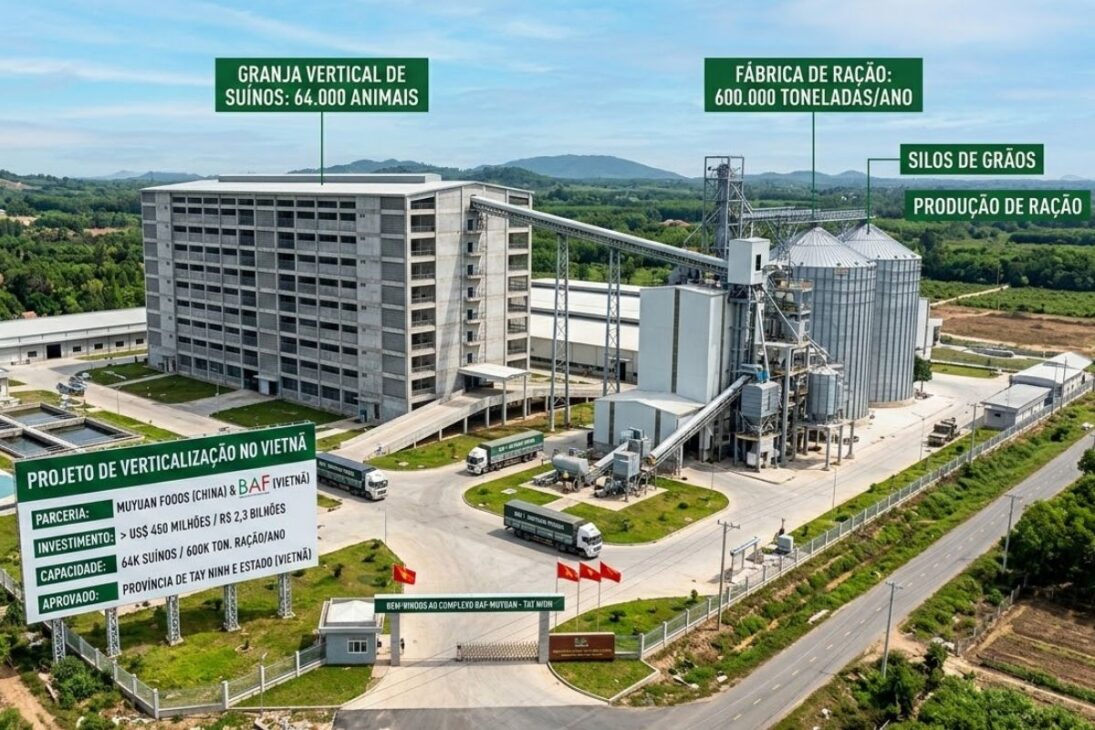
The partnership between Chinese Muyuan Foods and local company BAF foresees the construction of a complex with an investment exceeding US$ 450 million, about R$ 2.3 billion, according to the values reported in the database. The plan brings together two central fronts: a farm with a capacity for 64,000 pigs and a factory able to produce nearly 600,000 tons of feed per year.
-
From 130 producers in the year 2000 to just 15 today: the dramatic decline of passion fruit in Araguari shows how the lack of labor in the Brazilian countryside is killing a decades-old agricultural tradition, even with Brazil being the largest producer in the world.
-
Agricultural drone sprayed poison into the air and destroyed the neighbor’s crops, causing 1 million in damages; 48 cows died from nitrite poisoning in the pasture, and Russia is hiding a possible outbreak of foot-and-mouth disease: the week was brutal for the rural sector.
-
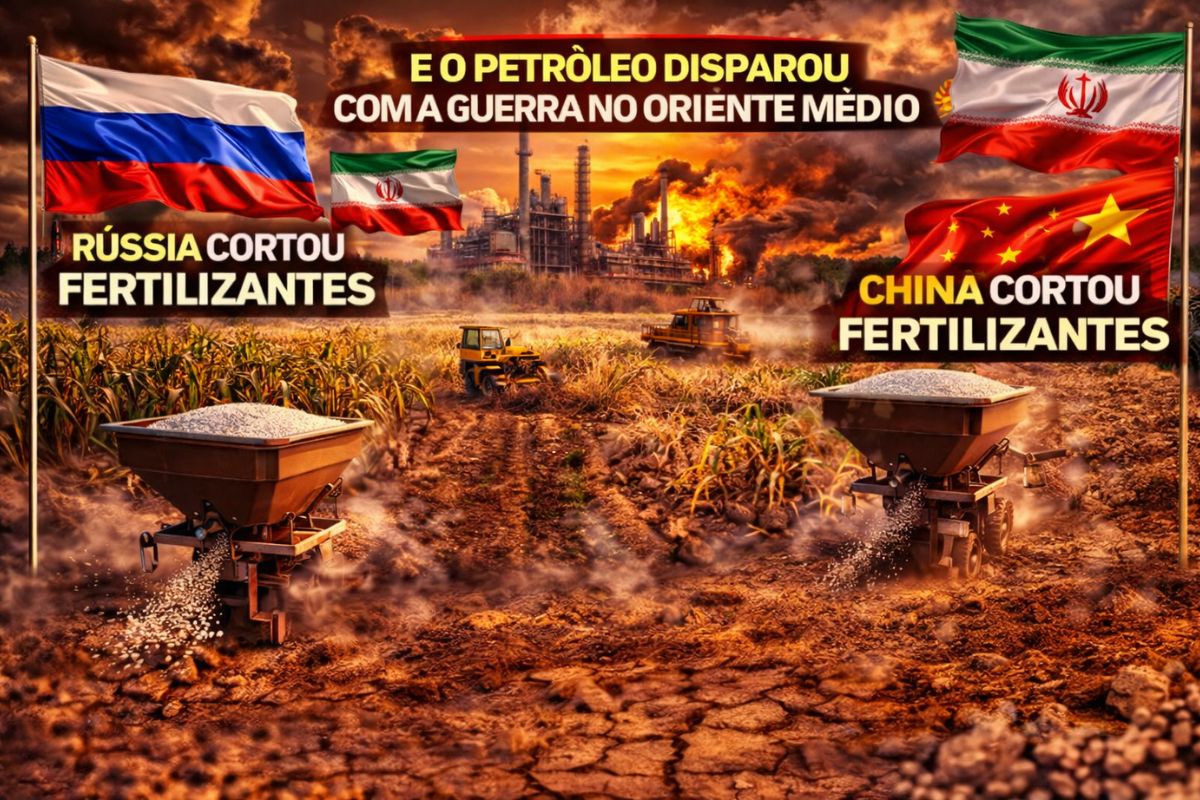
Russia cut fertilizers, China cut fertilizers, and oil prices soared with the war in the Middle East: sugarcane producers in the interior of São Paulo are seeing costs explode from all sides and warn that the effects will take months to be absorbed.
-
It does not come from flowers, is produced only every two years, and more than 90% goes straight to Europe: meet the bracatinga honeydew honey from Santa Catarina, considered one of the rarest in the world and overlooked by Brazil itself.


This design makes it clear that it is not just about erecting buildings to house animals. The objective is to create an integrated operation, where the farms functionally connect to their own feeding base, enhancing control over costs, logistics, and production pace. In this case, vertical integration is not just in the building, but also in the organization of the business.
In September, the project received approval from the Tay Ninh provincial authorities and also from state authorities, which paved the way for its formal implementation. This detail helps to understand why the initiative has gained such weight: it did not remain confined to a business intention but advanced to the phase of institutional recognition.
When implemented in Vietnam, the complex puts into practice an idea that has already been consolidating in China. The difference is that now the model is no longer seen solely as an internal response to Chinese needs but is presented as an exportable solution. This leap makes the project particularly relevant in the sector.
Why China Decided to Take Its Farms Abroad
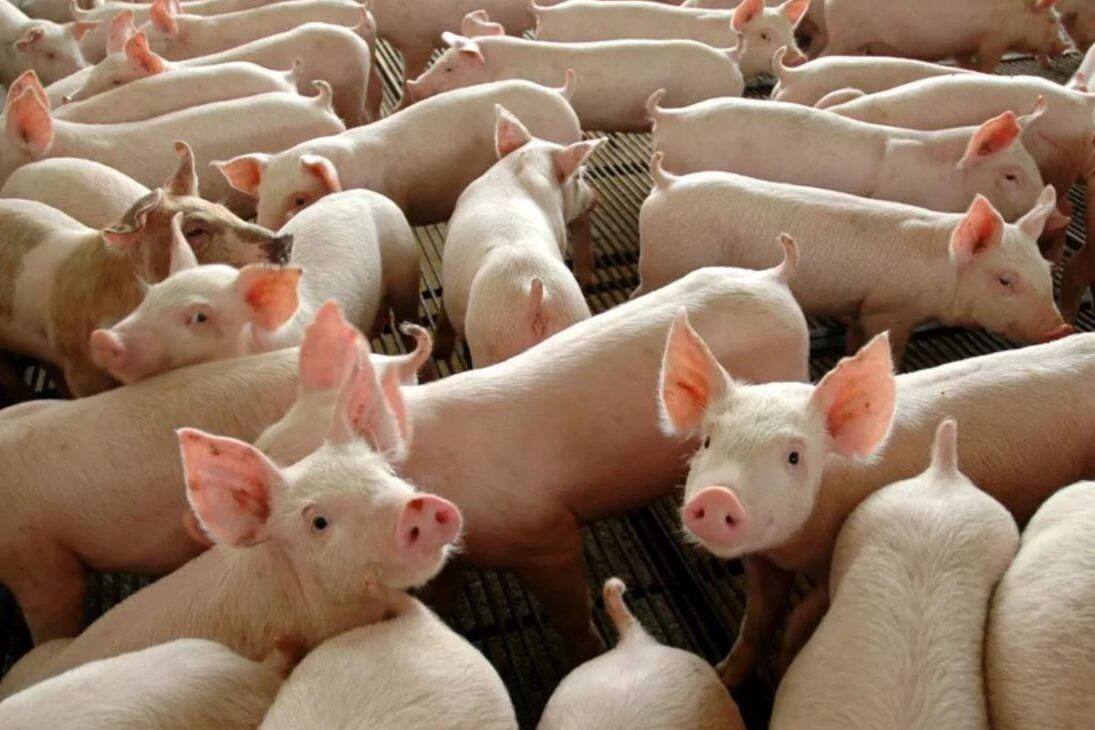
The origin of this strategy lies in the recent journey of Chinese pig farming. In recent years, China has increasingly invested in farms with multiple stories, including structures resembling skyscrapers. One of the most emblematic examples is the two 26-story towers in Ezhou, Hubei Province, with the capacity to raise 1.2 million pigs per year.
This advancement did not come out of nowhere. The country had been rethinking pig farming for quite some time, but the process gained urgency following the impact of African swine fever in 2018. The outbreak devastated herds, led to mass culling, and exposed the fragility of less concentrated and less controlled systems. From there, the reorganization of production ceased to be merely desirable and became strategic.
In 2019, the Chinese government formally allowed the use of multi-story buildings for pig farming. One year later, Muyuan opened a massive complex in Nanyang with about twenty buildings, capable of producing more than two million pigs per year. This shows that the company is not just experimenting with alternative formats but is consolidating a large-scale industrial standard.
By bringing this design to Vietnam, China signals that it believes in the maturity of the model. It is no longer a limited bet to Chinese territory, nor an improvised solution for a moment of crisis. What was seen as an exception is starting to be treated as a replicable formula, with potential to be adapted to other markets.
What Makes Skyscraper Farms So Attractive to the Sector
The main argument in favor of these farms is efficiency. Instead of spreading production over large horizontal areas, the system concentrates raising in multi-story buildings, reducing the need for land and making more intense use of available space. In densely populated areas or those with contested land, this can represent a decisive advantage.
Another important point is biosecurity. According to Muyuan itself, replacing traditional single-story farms with multi-story units improves land use, favors the recycling of manure and waste, and enhances sanitary control mechanisms. This promise of greater control helps explain why the model gained strength after years of losses and instability.
There is also an operational gain in automation. The large Chinese towers associated with this model integrate thousands of automatic feeding points and systems capable of collecting, analyzing, and utilizing animal manure. This indicates that vertical farms do not rely solely on the height of the buildings but on a technological infrastructure aimed at standardizing processes and enhancing productive predictability.
In practice, the pig skyscraper represents an attempt to align animal husbandry with an even more rigid industrial logic. Everything becomes more concentrated, more monitored, and more connected. For advocates of the format, this organization transforms physical and sanitary limitations into a competitive advantage.
Where the Gains and Risks of This Vertical Farm Model Are
The advantages of the system become clear when observing the Chinese context. The country is the world’s largest producer and consumer of pork, and before the 2018 outbreak, housed about half of the world’s pig population. In such a scenario, controlling space, waste, diseases, and productivity ceased to be a secondary issue. Vertical farms emerge as a response to this pressure.
Moreover, China has been gradually replacing a model where pig farming was common in domestic settings with one based on large-scale commercial operations. This transition favors more standardized structures, where environmental control is greater and monitoring can be more rigorous. The skyscraper, in this context, serves as a symbol of more centralized and industrialized production.
However, the format also brings significant risks. The main one is the possibility of faster disease spread through ventilation systems, precisely because the concentration of animals within the same structural set can amplify the impact of a sanitary problem. The greater the integration, the faster the potential speed of failure propagation.
For that reason, the model awakens both admiration and distrust. For some, it represents a logical step towards high-efficiency industrial agriculture. For others, it concentrates too many vulnerabilities in a single structure. The expansion to Vietnam shows that, despite the risks, China believes the benefits still outweigh the advance.
What Muyuan’s Entry into Vietnam Reveals About the Future of Pig Farms
The presence of Muyuan in the Tay Ninh project carries weight because the company is the largest pig producer in China and one of the most relevant in the industry on an international scale. Its participation not only adds financial dimension to the plan but also reinforces the idea that the Vietnamese venture is a direct extension of the experience accumulated in the Chinese market.
This means that Vietnam is not just receiving capital or civil construction. It is receiving a complete production model, tested within one of the largest pork markets on the planet. When a company of this size decides to replicate a structure that helped consolidate in its home country abroad, it is a sign of confidence in the adopted standard.
At the same time, the project reveals a broader movement from China: trying to stabilize its herd, avoid surpluses, sustain prices, and expand the reach of solutions it considers efficient. In this scenario, exporting vertical farms also becomes a way to project technological and business influence over the global pork production chain.
The Tay Ninh case could end up functioning as a showcase. If the operation proves efficient, other similar initiatives could gain traction in markets facing pressures on land, scale, and biosecurity. More than just building buildings, China is trying to export an entire logic of animal production.
The arrival of the Chinese model of farms in skyscrapers in Vietnam marks an important point for industrial pig farming.
The project led by Muyuan, with a farm for 64,000 pigs and a large feed factory, shows that a solution created to respond to internal challenges in China is now beginning to be presented as an international format.
While promising efficiency, better use of space, and greater operational control, this system also raises questions about the concentration of sanitary risks and the limits of increasingly verticalized production.
It is precisely this mix of innovation, scale, and controversy that gives the subject so much strength. In your view, does this type of farm represent an inevitable evolution in food production, or a model that still carries too many high risks to be treated as a benchmark?








-

-

-

3 pessoas reagiram a isso.