





 Portuguese
  English
  Spanish
  3 min of reading
  29 comments


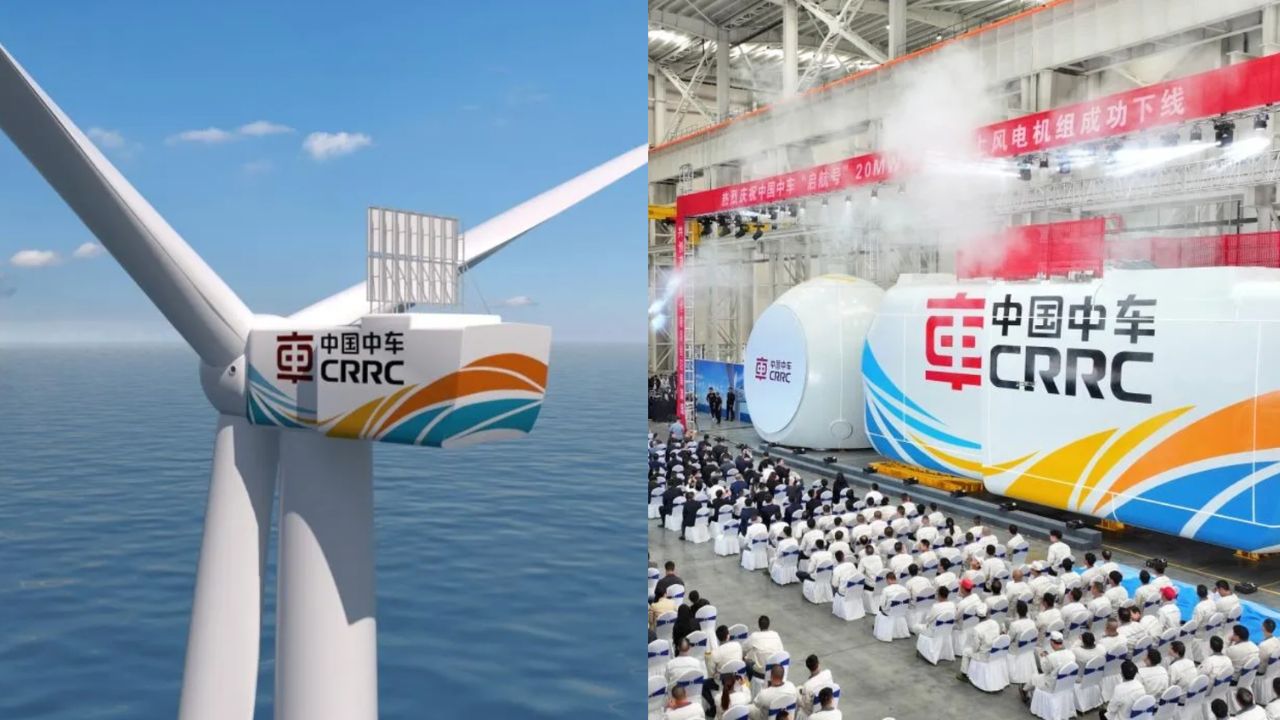


With 260 Meters in Diameter and Capacity to Generate Energy for 37 Thousand Homes, the Qihang Wind Turbine Breaks All Records and Ushers in a New Era in Offshore Renewable Energy.
China has surprised the world again with an impressive achievement: the largest floating wind turbine on the planet, known as Qihang. Manufactured by the state-owned CRRC Corporation, famous for its high-speed trains, the turbine represents a giant leap in offshore renewable energy generation. But why is this turbine so special? Let’s explore.
What Is the Qihang Wind Turbine and Why Is It So Impressive?
The Qihang is a technological landmark. Its tower stands 151 meters tall, and the rotor reaches 260 meters in diameter — this means that Spain’s tallest building, the Torre de Cristal, literally fits between its blades, with 11 meters to spare!
Besides being gigantic, the Qihang wind turbine is also durable. Designed to withstand typhoons and other extreme weather conditions, it is made with advanced materials and has over 200 sensors spread throughout its structures. These sensors monitor everything from the blades to the anchorages, ensuring safety and efficiency.
-
Renewable energy advances over protected areas in Brazil, and a survey by the Energy Transition Observatory reveals silent impacts that challenge environmental conservation and pressure sensitive traditional territories.

-
Rio Grande do Sul accelerates energy transition: State invests in renewable technologies and consolidates decarbonization strategies and pathways to attract billions in new industrial investments.

-
With 160,000 m² of collectors, an area larger than 20 football fields, Silkeborg, in Denmark, hosts a solar thermal plant that heats 19,500 homes and could become the largest solar heating plant in the world.

-
A study reveals the expansion of renewable energy procurement in Brazil and shows how companies are taking advantage of opportunities to reduce expenses, ensure energy efficiency, and strengthen strategic environmental commitments.


Chinese Leadership in Offshore Wind Energy
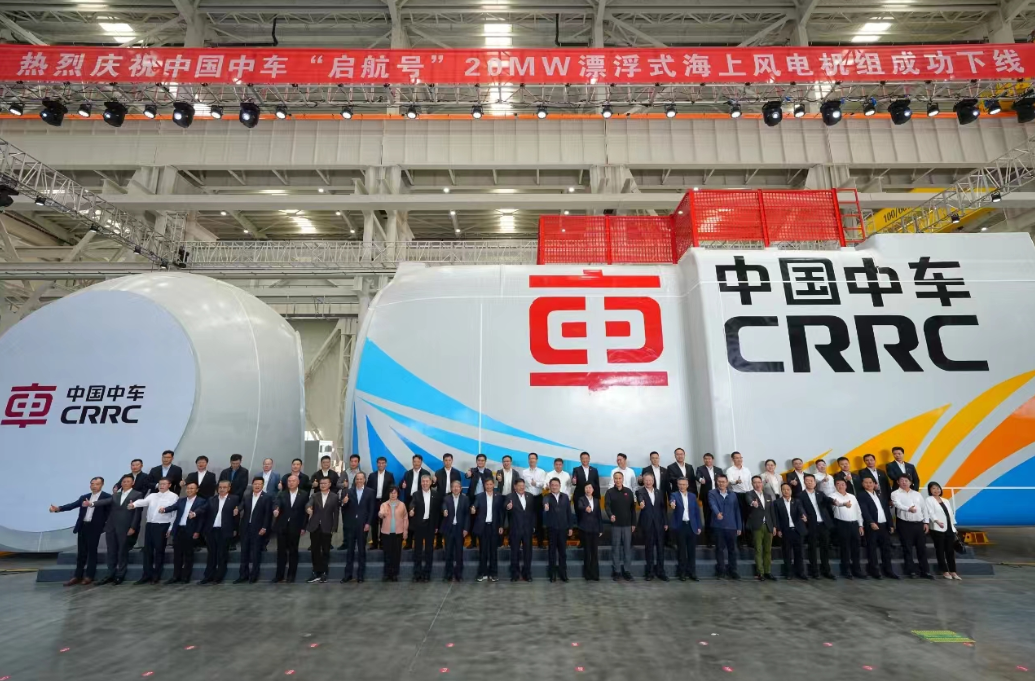
China has not only dominated the offshore wind energy market but has also surpassed major global players like the United Kingdom. With innovative projects like the Qihang, the country is consolidating its global leadership in renewable energy.
But why can only Chinese companies build such gigantic turbines? The answer lies in logistics and technological mastery. Europe faces challenges in transporting and installing turbines of this size due to infrastructure limitations. Meanwhile, China is advancing with a practical approach, developing floating technology that expands energy generation in deeper waters farther from the coast.
Production and Capacity
With an impressive capacity of 20 MW, each Qihang wind turbine can produce up to 62 GWh per year, enough to power around 37 thousand homes. To put this into perspective, it is equivalent to the energy needed to light up an entire mid-sized city.
Moreover, the Qihang is an ally in the fight against climate change. The energy generated by these turbines helps to drastically reduce dependence on fossil fuels, accelerating the transition to a cleaner energy matrix.
The Revolutionary Design of the Qihang
The Qihang is a masterpiece of modular engineering. This means it can be adapted to different floating platforms and anchors, ensuring flexibility in various maritime scenarios. Its ability to withstand storms and extreme winds is a clear example of how technology can overcome natural barriers.
Another differentiator is monitoring. With over 200 integrated sensors, each component of the turbine is monitored in real-time. This allows for identifying problems before they become critical, increasing efficiency and reducing maintenance costs.
Testing and Future of the Qihang
Before reaching the high seas, the Qihang wind turbine went through a meticulous journey. It left the factory in Sheyang and was transported to Dongying on a modular barge. In January, it began testing in Guangli, where it will be certified before operating definitively.
And the future? The next generation of turbines, with even larger capacities, is already on the horizon. Mingyang Wind Power, another Chinese giant, plans to launch a 22 MW model, showing that the limit for offshore wind energy is becoming increasingly distant.







Outro comparativo simples que reflete a grande potência da China, nesse país eles tiram a vida de político ****, no Brasil político **** assume a presidência.
As Estatais na China além de darem lucro elas desenvolvem produtos e ajudam a melhorar a vida da população, no Brasil as Estatais dão prejuízos e quem paga é a população.
A China vai acabar com o planeta com tanta ganância.