






 Portuguese
  Spanish
  2 min of reading
  0 comments


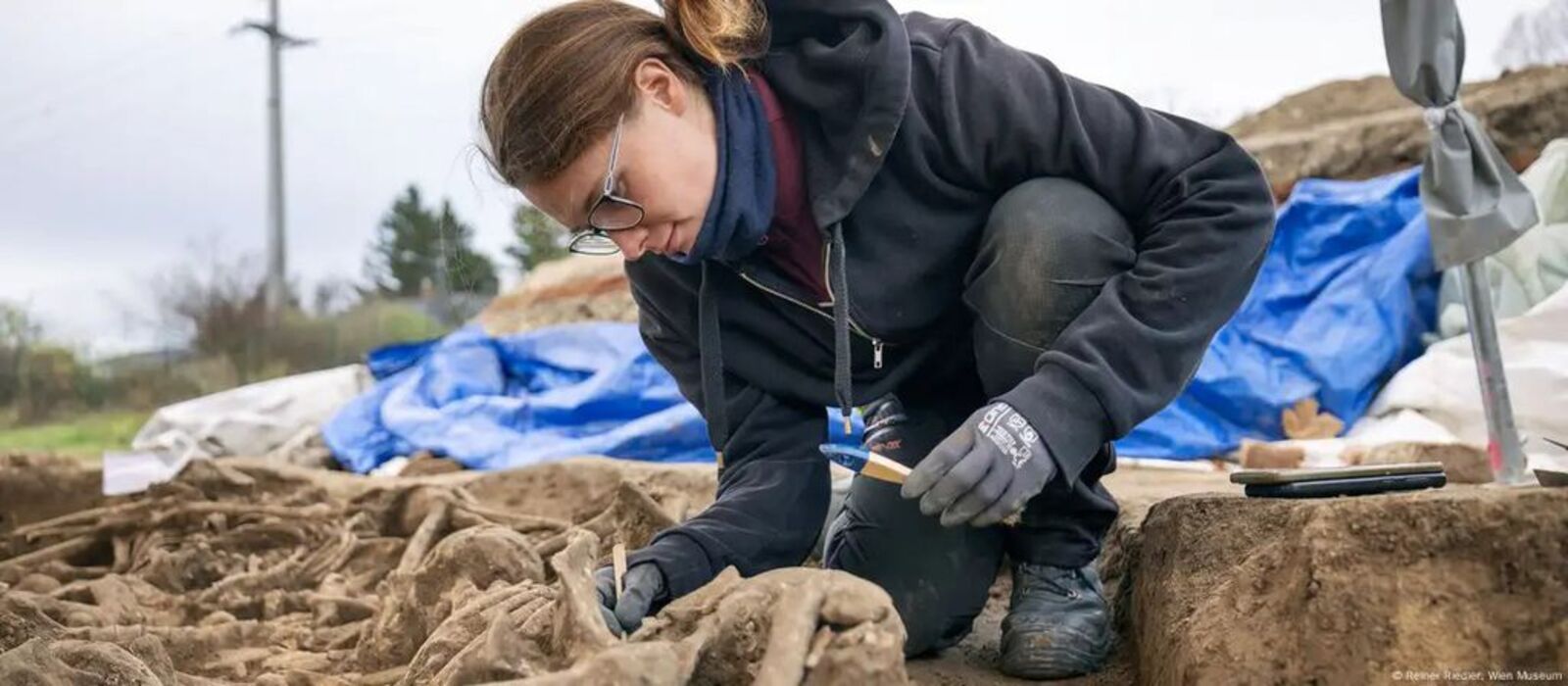
Remains of at least 129 men with battle injuries found under field in Vienna, in rare discovery about 1st century Roman soldiers
Archaeologists from the Vienna Museum discovered, in October 2024, the remains of more than 100 Roman soldiers in a mass grave under a football field undergoing renovation, on the outskirts of the Austrian capital, in a rare find for archaeology.
Roman remains: Found under football field
The archaeological site is located on the outskirts of Vienna, where researchers initially located the remains of 129 men. More bones found at the site indicate that the total may reach 150 or more individuals.
The archaeological information about the find is still preliminary. Nevertheless, analyses already indicate that the skeletons date back to the 1st century, between 80 and 130 AD, placing the discovery in the period of the Roman Empire.
-
Helicopter Drops 180 Tons of Sand and Gravel on Swedish River to Revive Ecosystem Damaged by Decades of Exploitation

-
Brazilian Company Launches Retro Smartphone with 48 MP Camera, T9 Keyboard, and Privacy Features for Social Media-Free Use

-
Self-Taught Chinese Farmer Builds 5-Ton Submarine from Scrap, Launches It in Anhui River
-
Invisible Induction Technology Enables Wireless Power for Blenders, Coffee Makers, and Air Fryers, Reducing Countertop Cables






Injuries and profile of the victims
According to Kristina Adler-Wölfl, director of the Archaeological Department of Vienna, the identified injuries rule out the hypothesis of mass execution.
All the remains analyzed so far belong to male individuals.
The men were between 20 and 30 years old at the time of death. The bodies showed signs of spear punctures, cuts from swords and daggers, as well as impacts from projectiles, such as arrows and bolts.
Scientific importance of the find
Adler-Wölfl stated that, during the Roman period, cremation of bodies was common. Therefore, the preservation of the bones makes the discovery of the Roman soldiers especially relevant to science and enhances the archaeological value of the find.
In addition to the skeletons, the team located fragments of armor, jaw protectors from Roman helmets, and nails from caligae sandals.
The material reinforces the connection between the bodies and a context of ancient battle.
Context of Vindobona
In Roman times, Vienna was called Vindobona and marked the border with territories of Germanic tribes, considered enemies of the Roman Empire.
Therefore, there is a possibility that the Roman soldiers belonged to the 13th legion.
This legion was later replaced by the 14th. So far, only one body has been definitively identified as Roman.
Future DNA and isotope analyses may reveal more about the victims of this ancient battle.
With information from Canal Tech.




Be the first to react!