





 Português
  Inglês
  Espanhol
  5 min de leitura
  14 comentários


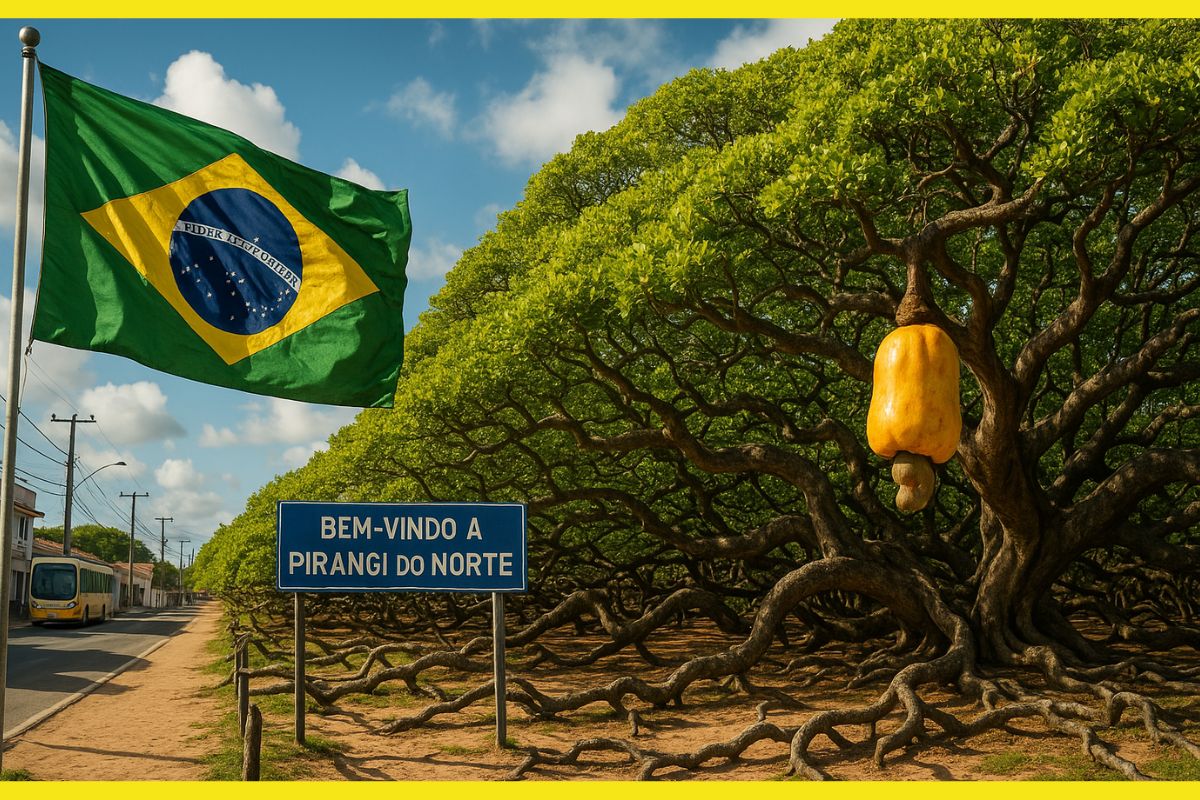


In The Brazilian City Of Parnamirim (RN), The Pirangi Cashew Tree Occupies An Area Equivalent To A Soccer Field A Unique Organism, With Horizontal Growth And Direct Impact On Local Tourism.
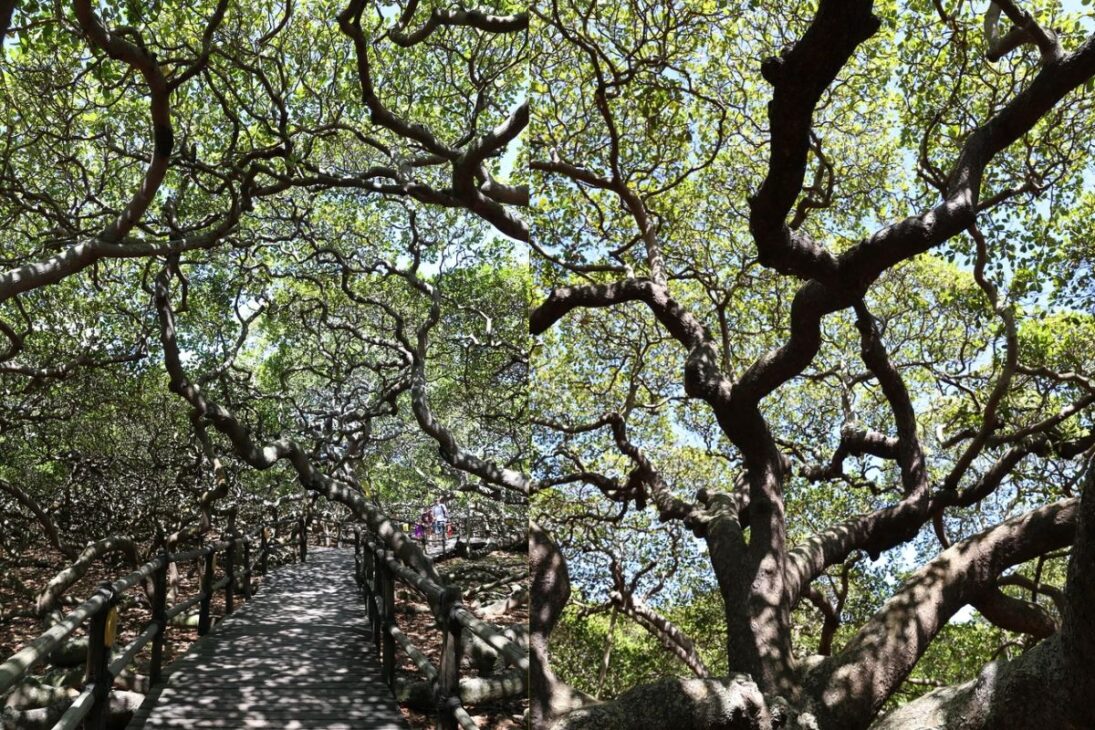
The story of the brazilian city that is home to the Largest Cashew Tree In The World begins in Pirangi do Norte, a coastal area in Rio Grande do Norte, where a solitary tree expanded to form a continuous canopy that occupies about 9,000 m². Elevated walkways, a viewpoint, and a constant flow of visitors help illustrate the phenomenon: walking beneath the canopy is like strolling through a “forest” while remaining within a single individual.
More than just a curiosity, the cashew tree has become an economic asset and an urban symbol of the brazilian city. Recognized by Guinness in 1994 with 8,500 m², it continued to grow later records cite 9,154 m² and over 9,200 m², which explains the variations in size over time. Approximate perimeter of 500 meters and canopy comparable to 70–75 common cashew trees complete the picture.
Where It Is And Why It Impresses
The Pirangi Cashew Tree is not located in the capital, but in the brazilian city of Parnamirim, on Praia de Pirangi do Norte, Rio Grande do Norte.
-
The world’s first octopus farm wants to open in the Canary Islands and is already provoking an international reaction: the plan aims to produce 3,000 tons per year.

-
Drought may be creating stronger superbugs in the soil and helping antibiotic resistance reach hospitals, warns a study highlighting a problem that could grow alongside extreme weather.

-
The biggest scam in history: Napoleon’s France deceived the United States by selling them a territory that was Spanish.

-
Why is the Danakil Desert so dangerous? It has unstable terrain and how extreme temperatures and toxic gases turn the region into one of the most hostile environments on Earth.


The scale is difficult to comprehend at first glance: from the street, a vast canopy is visible; from within, the feeling is of a “forest,” with suspended wooden walkways leading the visitor.
This immersion reveals its uniqueness: everything starts from a mother trunk. It is a unique tree, not a grove.
The experience combines contemplation and spatial orientation the 10-meter high viewpoint offers the best overview of the ensemble and the nearby beach, reinforcing the urban dimension of the phenomenon for the brazilian city that hosts it.
Who Planted It And How Long Ago
The most widely circulated narrative attributes the planting to Luís Inácio de Oliveira in 1888, giving the specimen more than 135 years.
Local folklore records that the fisherman died in its shade, linking the human story to the longevity of the organism.
There are alternative versions, such as spontaneous emergence or planting by Sylvio Pedroza; but it is Oliveira’s figure that dominates the imagination.
National interest grew in 1955, when the magazine O Cruzeiro nicknamed it “The Octopus” for its “tentacular” canopy. The next step was global recognition by Guinness (1994), a watershed moment for the brazilian city.
How A Single Tree Became A “Forest”: The Biology Of The Anomaly
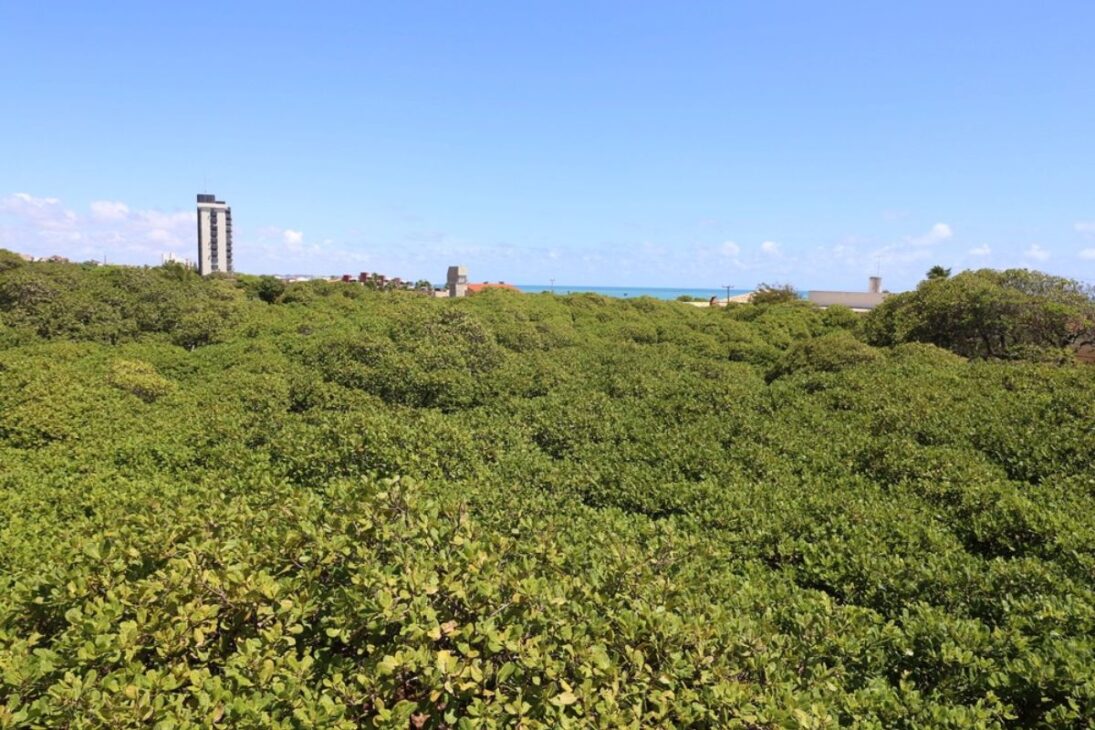
The extraordinary growth results from a rare double genetic anomaly. First, the branches tend to grow laterally (rather than upward), prioritizing horizontal expansion.
Then, when these branches touch the sandy ground, they form adventitious roots and become new trunks, clones identical to the mother trunk.
The internal structure retains a living “control”: the main trunk divides into five primary branches; four exhibit the expansive pattern, one behaves like a common cashew tree and does not root.
The community nicknamed this branch “Minimum Wage”, a popular metaphor for its modest performance.
Tissue analyses confirm a single genetic individual, making the brazilian city the stage for a rare botanical case.
Tourism, Operation, And Economic Effect In The Brazilian City
The cashew tree is the anchor of the Sun Route and receives over 300,000 visitors per year (with peaks of 350,000). Elevated walkways protect the roots, daily hours (approx. 7:30 am–5:30 pm) and admission of R$ 8 facilitate access.
Handicraft fair and commerce in the surrounding area generate direct and indirect jobs, consolidating an economic ecosystem in Pirangi do Norte.
In the past, the tree was also a notable agricultural producer: 70–80 thousand cashews per harvest (≈2.5 tons), from November to January. In 2021, however, production fell to ≈15,000 fruits, attributed to aging branches and water stress.
The value has now shifted from the fruit to the heritage: preserving the living monument is what sustains the tourism economy of the brazilian city.
Growth Without Brakes, Highway, And The Pruning Controversy
The biological success has generated urban conflict: the canopy has exceeded the park limits and invaded sections of RN-063 (Sun Route), with ≈1,200 m² already outside the fenced area and approaching residences and businesses.
Proponents of pruning (residents, traders, and IDEMA) point to road safety and phytosanitary management (termites, fungi).
Environmentalists fear that drastic pruning of such an anomalous organism may bring unpredictable damage.
The impasse has led to a judicial dispute for over a decade; the decision mandated the pruning, with an estimated cost of R$ 200,000 and execution expected within up to six months, postponed at least until February 2026 to avoid interfering with flowering and fruiting.
This is the brazilian city negotiating, in real time, the boundaries between nature and infrastructure.
Rival In Sight: Another Giant And The Politics Of Size
The title of largest cashew tree by area is already contested by a rival in Piauí. The “King Cashew Tree”, in Cajueiro da Praia, presents scientific measurements of 8,800–8,880 m² and has requested recognition from Guinness, currently under review.
The dispute is not only botanical: it affects prestige and tourist flow and, therefore, income for each brazilian city involved.
The record operates as a seal of authenticity and a marketing tool. In Pirangi, it was crucial in turning natural heritage into local economy. The rivalry illustrates how an area datum transforms into a territorial asset.
The Pirangi Cashew Tree holds the record in area, a metric distinct from height, volume, or age. It dialogues with Pando (Utah, USA), a clonal colony that spreads via subterranean roots. The difference is didactic: in Pirangi, “cloning” happens in plain sight, above ground, with branches transforming into trunks; in Pando, “cloning” happens underground, through a single root system.
Alongside giants like General Sherman (volume) and Hyperion (height), the case from Rio Grande do Norte shows another strategy for success: dominating horizontal space, not the sky. It’s the brazilian city connected to a global standard of natural superlatives, but with its own signature.
The brazilian city of Parnamirim hosts a unique, living, and expanding organism, challenging botanical categories and pressing urban management. Between conservation, safety, and economy, the Pirangi Cashew Tree is biological heritage and public debate. Whether maintaining or sharing the title, it remains an exemplary case of how nature and city negotiate boundaries.
Do you agree with the eventual pruning to ensure safety? Do you think the dispute over the title changes anything for local tourism? Leave your opinion in the comments; we want to hear from those who experience this in practice.








Até pode podar apenas o excesso que tiram a força da planta, mais sem barreiras pra planta
Se a poda não for prejudicar a beleza e qualidade da árvore, é aconselhável…
Acho que a poda deve ser feita sim de forma que não não venha atingir sua estrutura e possa até fortalecer e dar mais frutos. Tenho certeza de que não irá afetar ao turismo, de forma alguma, cada um terá sua beleza, sua essência e sua História