





 Portuguese
  English
  Spanish
  4 min of reading
  0 comments


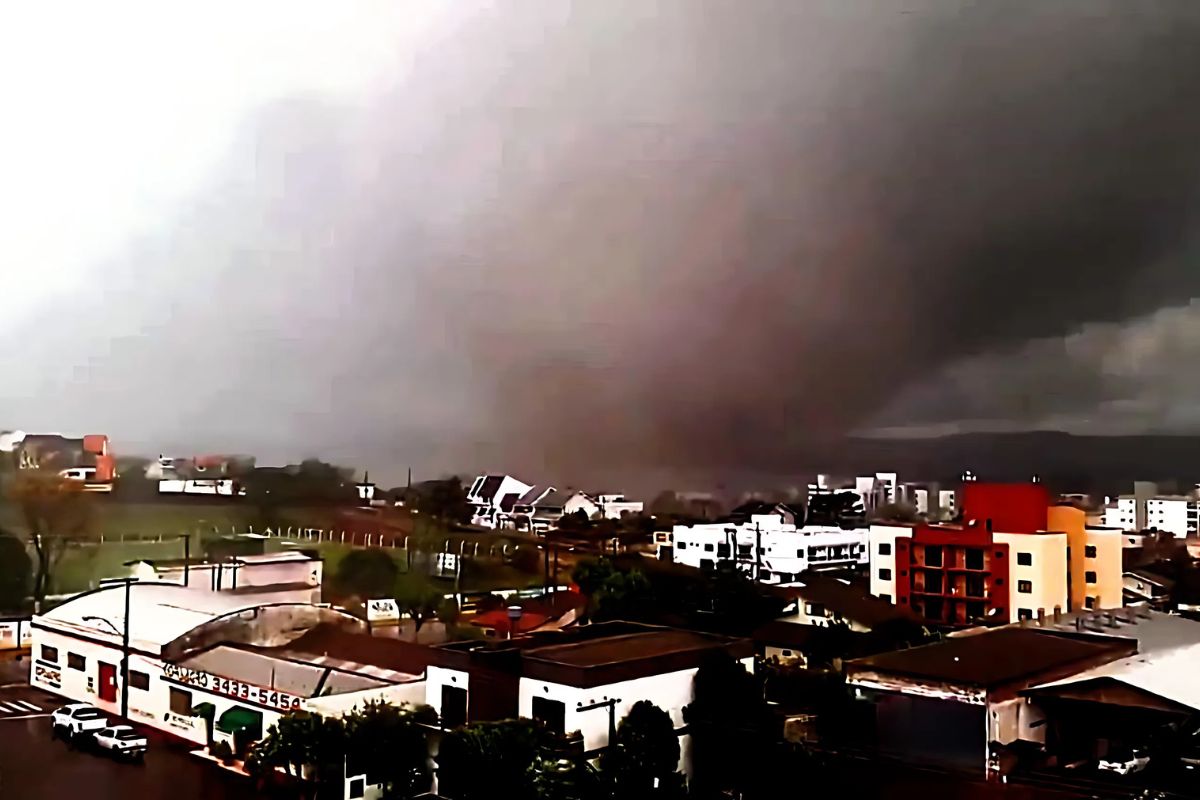
In April 2015, a high-intensity tornado hit the west of Santa Catarina, leaving a trail of destruction in Xanxerê. The event left a mark on the history of this Brazilian city and exposed vulnerabilities.
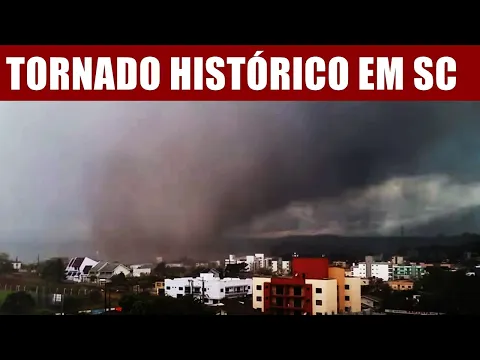
April 20, 2015, was indelibly marked in the history of Xanxerê, a Brazilian city located in the west of Santa Catarina. That afternoon, a force of nature of magnitude rarely seen in Brazil struck the municipality: a tornado of significant intensity, which in just a few minutes left a trail of destruction and desolation.
This extreme weather event not only caused severe human and material losses but also tested the response capacity of institutions and society. The popular expression that the Brazilian city was “split in half” reflects the reality of the tornado’s path, which cleaved through the urban fabric of Xanxerê.
The Unexpected Fury: The Day a Devastating Tornado Hit the Brazilian City of Xanxerê
The tornado that ravaged Xanxerê occurred on the afternoon of Monday, April 20, 2015, with the main impact felt around 3 PM. The National Institute of Meteorology (INMET) officially confirmed that it was indeed a tornado. The funnel’s passage over the urban area lasted approximately 30 minutes, long enough to cause immense destruction.
-
The water that may have gone to the Moon with NASA during the Apollo 11 mission and been consumed by the astronauts springs in a Brazilian city at an altitude of 945 meters, famous for its thermal springs, above-average quality of life, and a natural radioactivity so unusual that it attracted Marie Curie.

-
In 200 days, a Finnish man builds with his own hands an 11-meter boat powered by solar energy with “infinite autonomy,” capable of dispensing with refueling and already used as a floating house.
-
Neurologist Richard Restak issues a severe warning to all people over 65: there is a daily habit he recommends completely eliminating from your life because it is destroying your neurons and accelerating memory loss.

-
With 6.1 meters and 33 steps, the spiral staircase of the Loretto Chapel in the United States gained fame worldwide for making two complete 360-degree turns without a central support.

The formation of the tornado was linked to a specific combination of atmospheric conditions, including a low-pressure system over northern Argentina and Paraguay, intense transport of warm, moist air to southern Brazil, and the influence of a subtropical jet stream at high levels. These factors created a highly unstable environment, with strong vertical wind shear essential for the formation of a supercell, the storm that spawned the tornado. Based on the damages, the tornado was predominantly classified as F2 on the Fujita Scale, with estimated maximum winds around 250 km/h, potentially reaching gusts of 260 km/h.
A City Split by Destruction: The Path of the Tornado and the Scene of Chaos
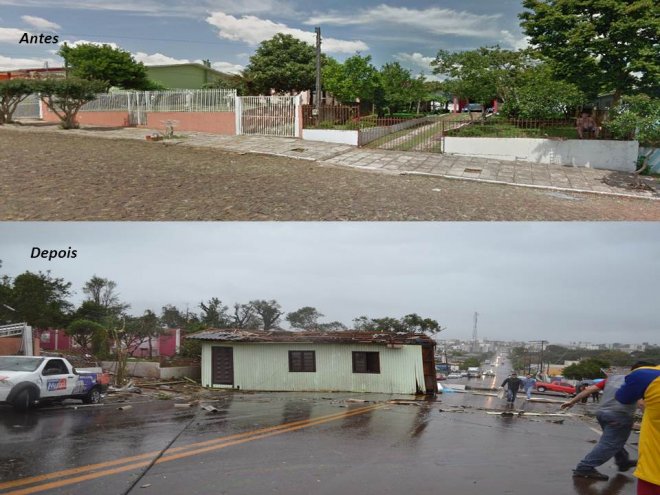
The tornado in Xanxerê carved a well-defined corridor of destruction, moving from west to east-southeast. The main destruction zone had an average width of 500 meters, extending about 3 to 4.8 kilometers within the urban grid. This path effectively “split” the Brazilian city, creating a zone of devastation.
At least seven urban neighborhoods were directly affected, with the most severe impacts in the Esportes, Tacca, Bortolon, São Jorge, and Primo Tacca neighborhoods. Survivors described the rapidity of the destruction, with the sky suddenly darkening, followed by a deafening roar. The immediate scene was one of desolation: impassable streets, debris, uprooted poles and trees, and thrown vehicles.
The Impact of the Tornado in Xanxerê
The fury of the tornado in Xanxerê resulted in four confirmed deaths: Alcimar Sutil, Deonir Conin, Gabriel da Luz Sutil, and Lurdes Lima de Oliveira. The number of injured people was consolidated at approximately 97, many with severe injuries. More than 500 people were left homeless, and an estimated number between 4,200 and 6,000 people were displaced.
The extent of the damage to housing was alarming, with over 2,600 residences damaged or completely destroyed just in Xanxerê. About 40% of the urban area of this Brazilian city was directly affected. The Ivo Sguissardi Sports Gymnasium suffered a catastrophic collapse. Numerous commercial establishments and 38 businesses were damaged, along with 9 public buildings. At least five to seven high-voltage transmission towers were knocked down, causing widespread blackout. The neighboring municipality of Ponte Serrada also recorded 23 injuries and 252 damaged residences. The direct economic losses in Xanxerê were estimated at around R$100 million.
Crisis Mobilization: The Emergency Response and the Wave of Solidarity in Santa Catarina

The Military Firefighters Corps of Santa Catarina (CBMSC) and the municipal and state Civil Defense were quickly mobilized, coordinating search and rescue operations, first aid, and shelter organization. The federal government mobilized Brazilian Army soldiers to assist in the efforts. Then-President Dilma Rousseff visited Xanxerê and announced a financial aid package, initially R$2.832 million for Santa Catarina, and later, an amount of R$5.8 million for Xanxerê and Ponte Serrada.
Measures such as the release of the FGTS for the victims were implemented. Community solidarity was immense, with spontaneous “mutirões” and donations arriving from various cities as well as organizations like Cáritas Brasileira and Mesa Brasil Sesc. One of the biggest challenges in the first hours was the near-total collapse of communication systems, complicating the coordination of rescue efforts.
Reconstruction, Resilience, and the Future of Disaster Preparedness in Brazil
The reconstruction of Xanxerê was a daunting task. The federal government allocated R$5 million for the construction of 102 prefabricated modular homes. Two years after the tornado, in 2017, although much of the physical reconstruction was visible, deep scars remained, such as at the Ivo Sguissardi Gymnasium. The economic and agricultural impact was severe.
The psychological trauma among the population of this Brazilian city was widespread. The Psychological Care Service (SAP) of Unoesc Xanxerê developed a long-term support plan for the victims, envisioned for 10 years. The event in Xanxerê provided valuable lessons: the need to revise construction standards to withstand extreme winds, investment in resilient communication infrastructures, development of specific tornado alert systems, and public education campaigns. The experience of Xanxerê, with its tragic loss of life, propelled greater scientific scrutiny and discussions about preparedness for severe weather phenomena in Brazil.






-

4 pessoas reagiram a isso.