





 Portuguese
  English
  Spanish
  4 min of reading
  0 comments


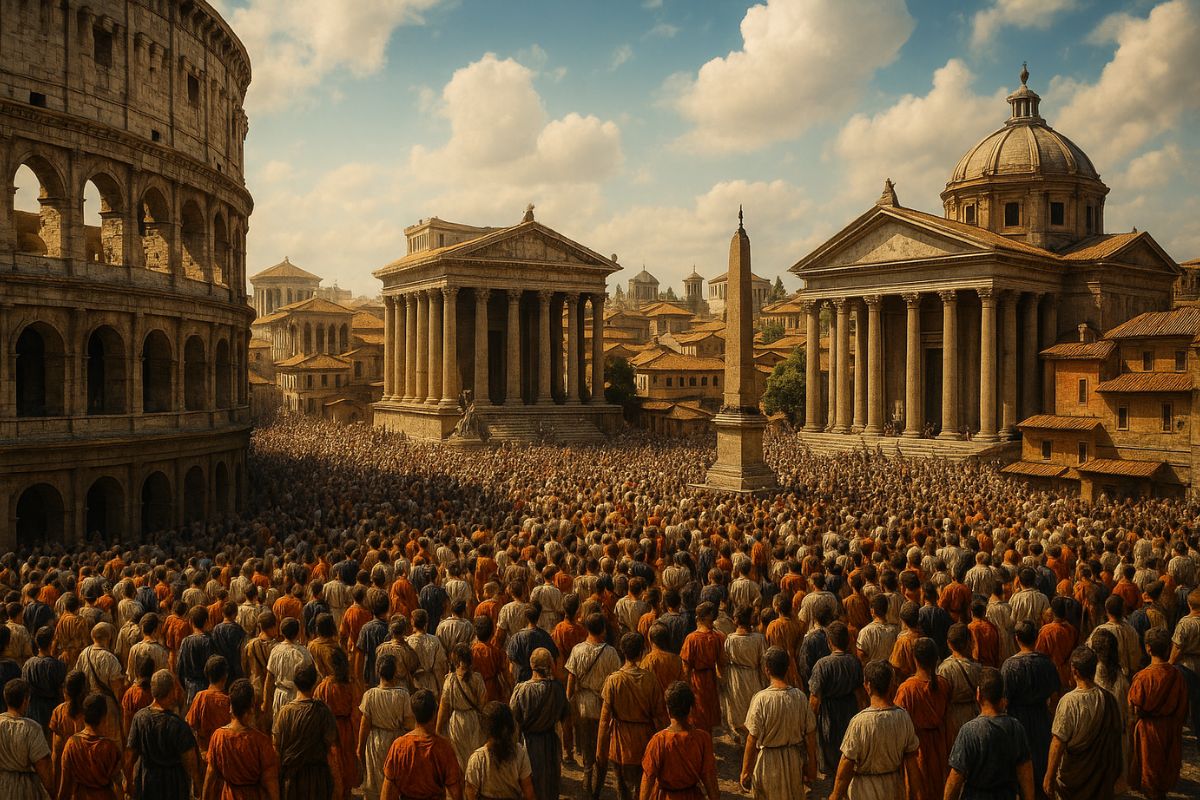
At The Peak Of The Empire, The City Of Ancient Rome Reached A Population Of Up To 1.2 Million People In Just 24 Km², Surpassing In Density Even Large Modern Metropolises And Revealing An Unprecedented Level Of Urbanization For The Ancient World
During the peak of the Roman Empire, the city of Ancient Rome was the largest urban center on the planet and the first metropolis in history to surpass the mark of 1 million inhabitants. This feat, achieved more than two thousand years ago, is so impressive that if the imperial capital existed with the same population today, it would be among the 10 largest cities in Europe, surpassing metropolises like Vienna, Hamburg, and Warsaw.
More than a symbol of political power, Rome was a demonstration of engineering, administration, and urban planning without parallel. The city concentrated, in just 24 square kilometers, a population density of over 40,000 people per km², surpassing even contemporary regions like Manhattan or inner Paris.
The Metropolis Of The Ancient World
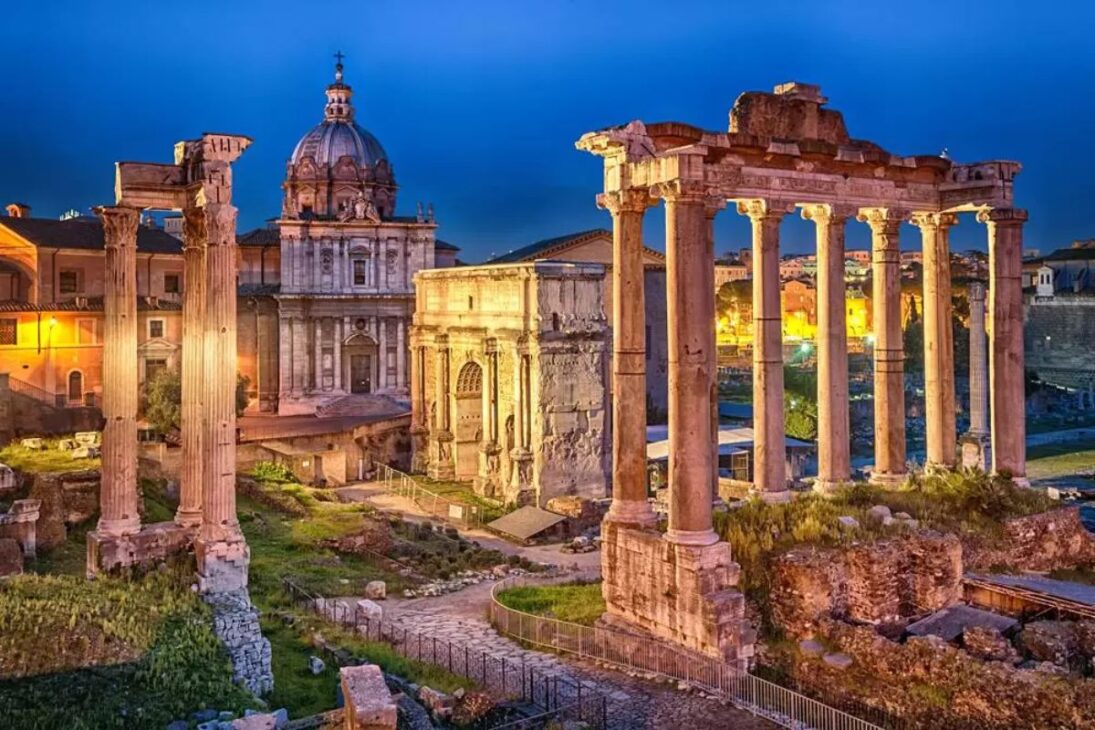
At the height of its power, between the end of the Republic and the beginning of the Empire (1st century BC and 1st century AD), Rome gathered between 800,000 and 1.2 million inhabitants, according to historians’ estimates.
-
A collector bought a black stone in Morocco in 2011 without knowing that he had in his hands a Martian meteorite 4.45 billion years old with ten times more water than any other fragment of Mars ever found on Earth.

-
European cities are building public climate refuges to cope with extreme heat.
-
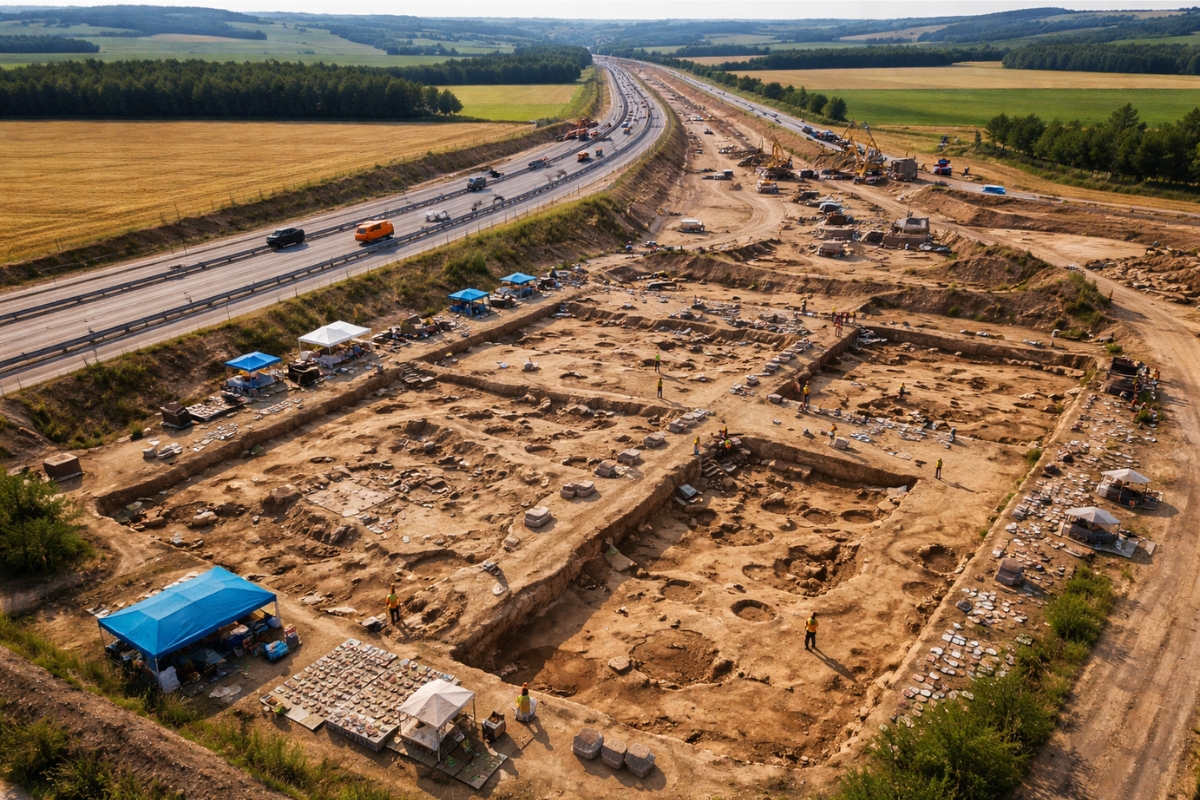
Excavations for a highway uncovered an intact Celtic city with gold, jewelry, and ancient production structures.
-
Every pineapple you eat is actually up to 200 different fruits fused into one: discover the fascinating process in which each flower opens for just one day and produces the pieces that form the whole fruit over the course of 3 weeks.


This number is even more impressive when compared to other cities of Antiquity, such as Alexandria, Antioch, and Carthage, which rarely exceeded 300,000 residents.
For the standards of the time, sustaining a million people in the same urban space was a monumental feat.
The empire had to develop complex systems of supply, transportation, and sanitation to ensure the city’s functioning, which had become the administrative, military, and cultural heart of the Roman world.
Infrastructure That Challenged The Logic Of The Time
The urban infrastructure of Ancient Rome was so advanced that it inspired engineering models still used as reference.
The aqueduct system, which transported millions of liters of water daily, supplied public baths, fountains, and residences, ensuring hygiene and well-being for the population.
Another landmark was the Cloaca Maxima, an underground sewage system that drained wastewater into the Tiber River. This complex network allowed the city to function with relative sanitation, even with an extremely high population density.
Additionally, the insulae, apartment buildings with up to six floors, accommodated the urban population, while the elites lived in spacious houses known as domus.
A Density Comparable To Current Megacities
The population density of Ancient Rome reached around 41,500 people per km², a figure higher than that of many modern metropolises.
For comparison, Manhattan has about 28,000 inhabitants per km², and Paris, 21,000.
This shows that Rome experienced, two millennia ago, an urban experience that would only be matched centuries later with the Industrial Revolution.
Urban life was intense: busy streets, crowded markets, theaters, temples, and public baths formed the city’s daily life.
The local economy revolved around commerce, politics, and entertainment, and the Colosseum, the ultimate symbol of imperial Rome, could host up to 50,000 people at public events.
The Decline Of The Metropolis And Historical Renewal
With the collapse of the Western Roman Empire in the 5th century, the population of Rome collapsed.
The barbarian invasions, political instability, and economic decline reduced the city to less than 50,000 inhabitants, and by the year 1000, fewer than 20,000 residents remained.
The ancient metropolis transformed into a nearly rural town, filled with ruins and remnants of its grandeur.
Even so, the legacy of the city of Ancient Rome remained alive: its engineering techniques, urbanism, and laws profoundly influenced the development of medieval and modern European cities.
Many of the principles of contemporary urban planning and infrastructure have direct roots in the practices developed by the Romans.
What Rome Would Represent Today
If the city of Ancient Rome existed today with the same number of inhabitants it had at its peak, it would rank among the ten largest cities in Europe, ahead of capitals like Berlin, Budapest, and Lisbon.
The number of one million inhabitants, while modest compared to contemporary megacities, remains a milestone of social, technological, and political organization for any civilization.
More than numbers, Rome represents the human capacity to build a functional and vibrant metropolis in a world without electricity, machines, or modern concrete.
Its complex urban structure, its efficient administration, and its architectural legacy make it an enduring example of power, planning, and historical resilience.







-

-

-

-

-

14 pessoas reagiram a isso.