





 Portuguese
  English
  Spanish
  3 min of reading
  0 comments


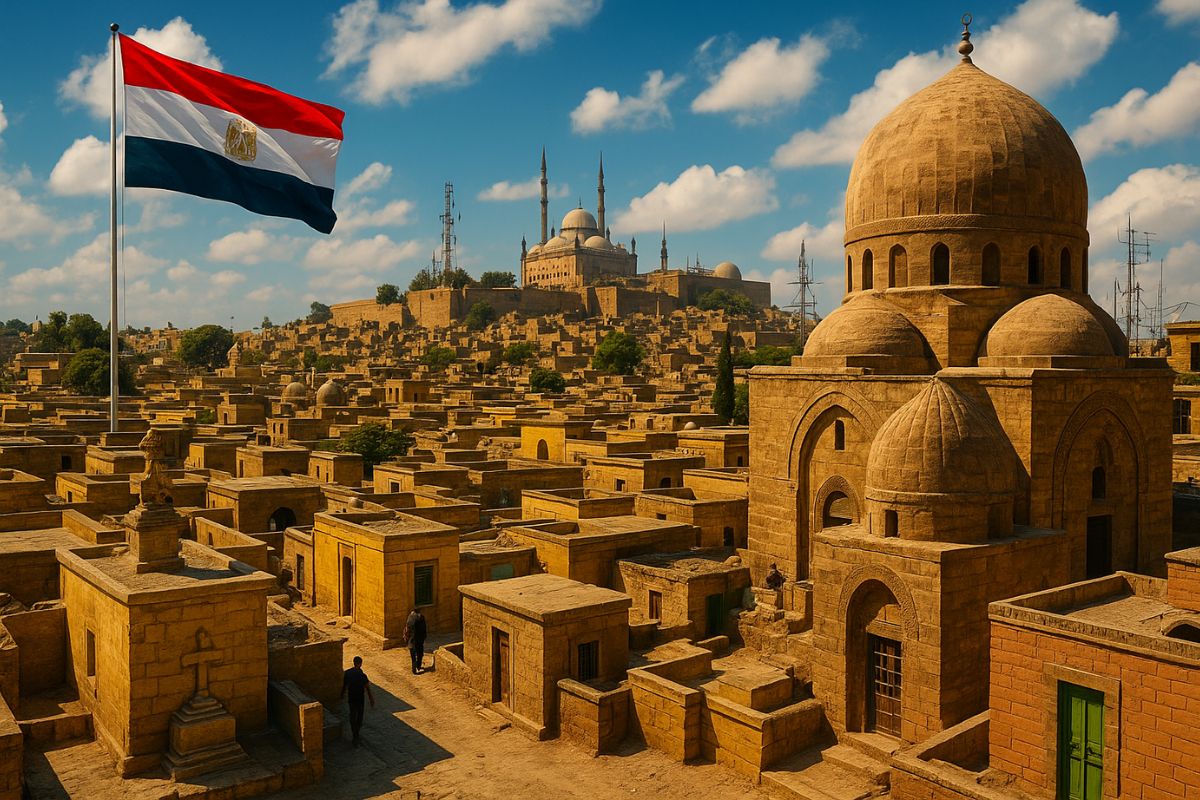
In The Heart Of Cairo, The City Of The Dead, An Islamic Necropolis Over A Thousand Years Old, Has Become Home To Thousands Of Families, Blending Life And Death In One Of The World’s Most Impressive Urban Settings.
The City Of The Dead, officially called Al-Qarafa, is a vast cemetery that stretches for kilometers in Cairo, Egypt. The site, which began as an Islamic necropolis in the 7th century, today is home to between 500,000 and 1 million living residents, who have transformed tombs and mausoleums into permanent residences.
Among the gravestones and mausoleums of sultans, merchants, and Muslim scholars, entire families live, work, and raise children. What was once a space dedicated to mourning and memory has become a popular neighborhood with schools, markets, and even cafés, challenging the traditional logic between the domains of life and death.
How The City Of The Dead Came To Be
The origin of the City Of The Dead dates back to the founding of Islamic Cairo, when sultans and nobles erected grand mausoleums for their families.
-
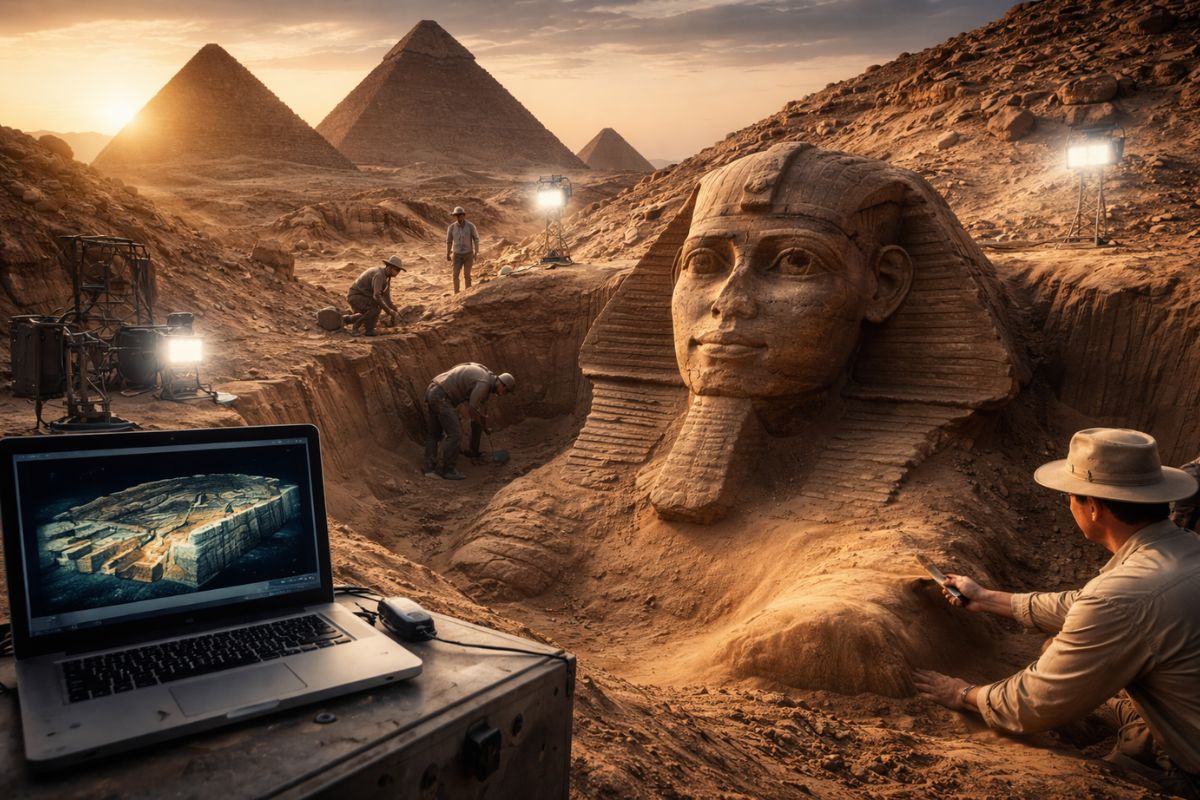
Italian researchers have detected what appears to be a second Sphinx buried under the sands of Egypt, and satellite scans reveal a gigantic underground megastructure hidden beneath the Giza Plateau for over 3,000 years.
-
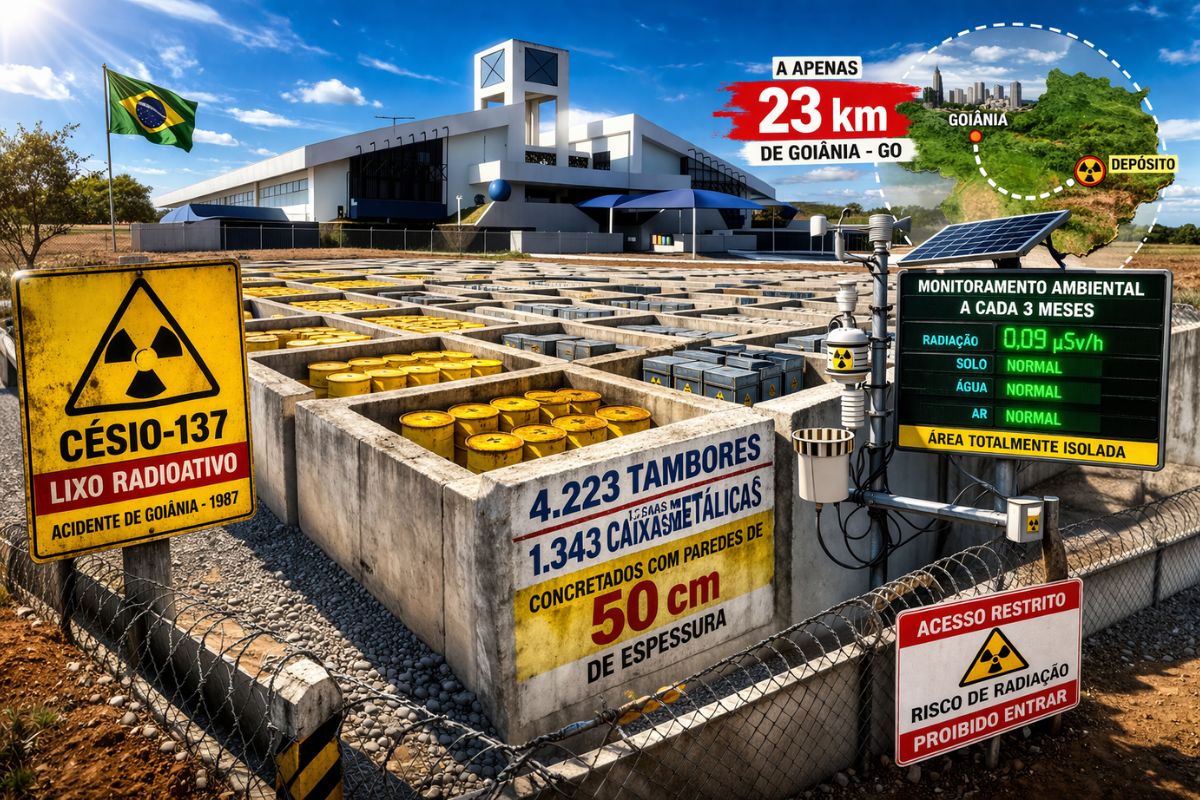
There are 4,223 drums and 1,343 metal boxes concreted with 50-centimeter walls that store the radioactive waste from Cesium-137 in the worst radiological accident in Brazil, just 23 kilometers from Goiânia, with environmental monitoring every three months.
-
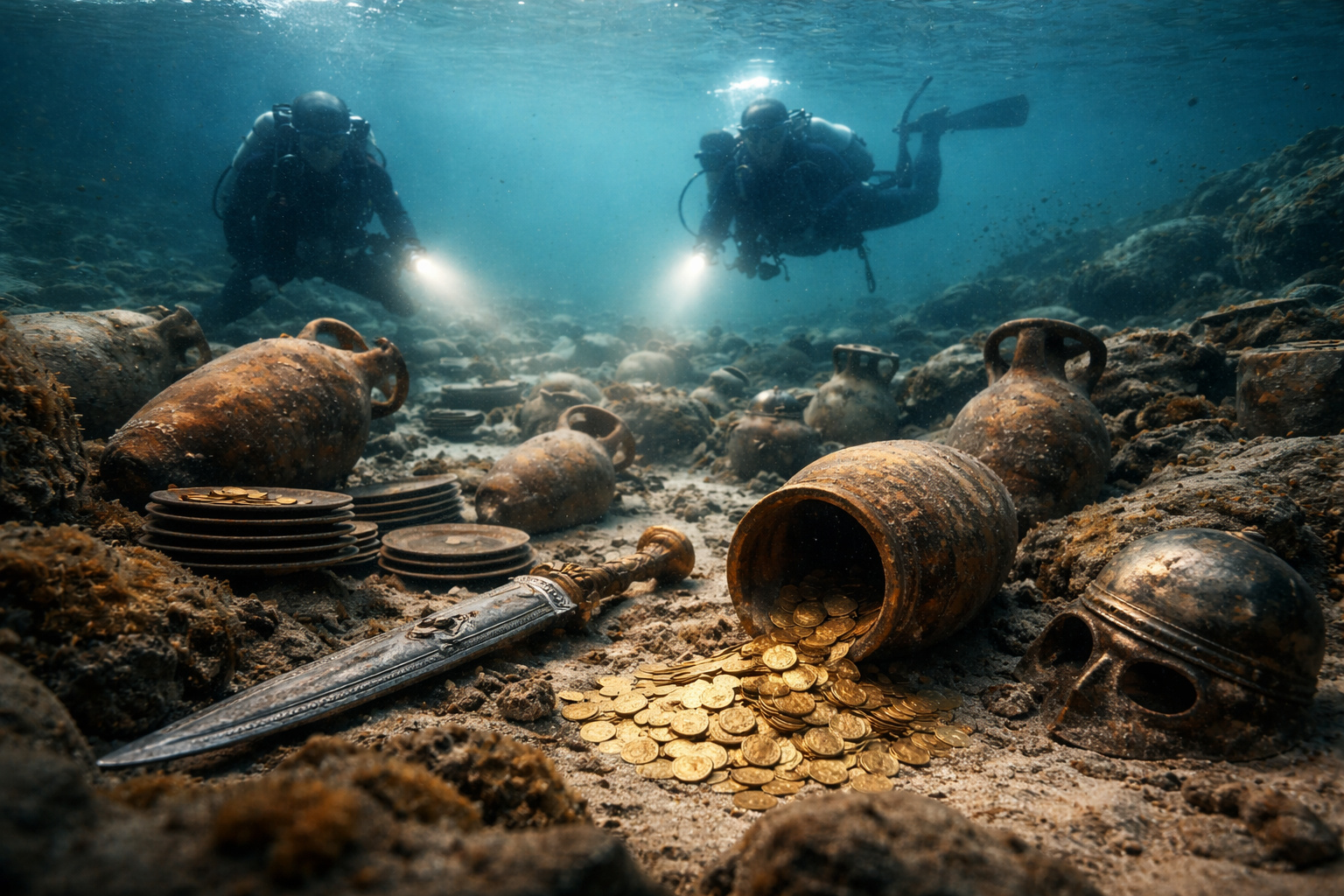
Giant Roman treasure found at the bottom of Lake Neuchâtel in Switzerland reveals an advanced trade system, circulation of goods, and armed escort in the Roman Empire about two thousand years ago.
-
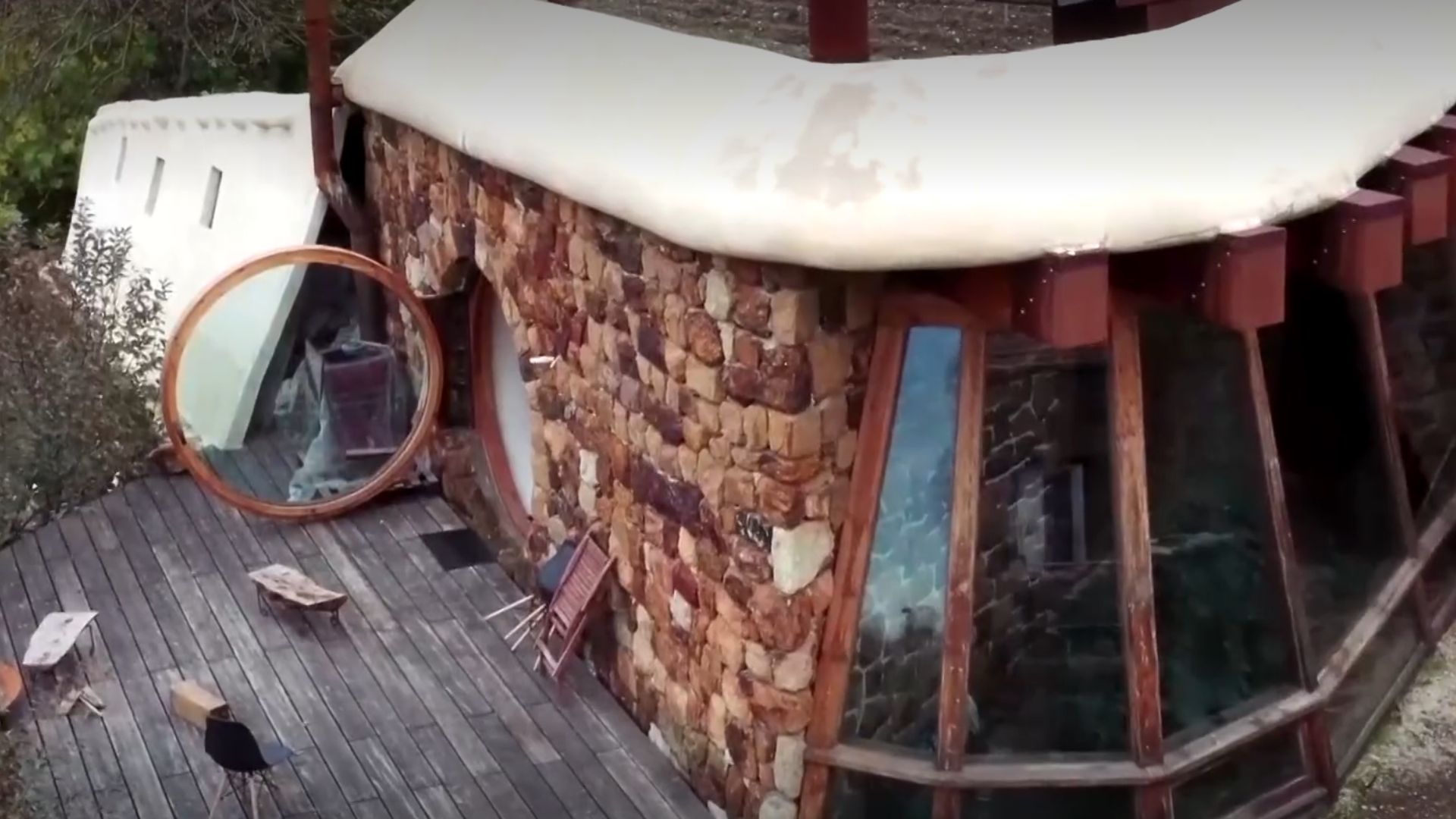
He buried 1,200 old tires in the walls to build his own self-sufficient house in the mountains with glass bottles, rainwater, and an integrated greenhouse.

These locations, often spacious and with internal courtyards, were used temporarily by relatives during mourning periods, a tradition that could last up to 40 days.
Over time, caretakers, gravediggers, and tomb guardians began to live there permanently.
Centuries later, Cairo’s population growth and housing shortages exacerbated the occupation.
From the 1970s onwards, the necropolis began to receive low-income families and rural migrants, who adapted the funerary structures as makeshift homes.
Today, there are houses with TV antennas installed on tombs and children playing next to gravestones, an extreme portrait of the housing crisis affecting Cairo, a city with over 20 million inhabitants.
Daily Life Among The Tombs
Despite the unusual setting, life in the City Of The Dead follows a normal rhythm. Residents coexist with the dead in a natural and respectful manner.
Many claim that the community is calm, supportive, and safer than other peripheral areas of Cairo.
Small businesses, schools, and mosques operate within the necropolis, and there is even an informal neighborhood system and rules of coexistence.
However, the infrastructure is precarious: basic sanitation is lacking, there is irregular access to drinking water, and makeshift electricity in various parts of the neighborhood.
For many families, living among the tombs is a choice of survival, not by preference, but out of necessity.
The low rent and proximity to the city center make the area a viable alternative in a Cairo that has become prohibitive for the poorest.
Modernization Projects And Forced Evictions
Since 2021, the Egyptian government has been implementing urban expansion projects and highway construction that run directly over the area of the City Of The Dead.
The construction works, presented as part of the modernization of Cairo, have resulted in the demolition of historic tombs and the eviction of entire families.
Critics argue that the interventions threaten the millennia-old cultural heritage and have erased part of the Islamic architectural memory of the capital.
Among the affected structures are mausoleums from the Ottoman era and tombs of figures linked to the dynasty of Muhammad Ali.
The government promises to relocate residents and preserve significant monuments, but the process is marked by lack of transparency and allegations of evictions without prior notice.
International heritage preservation organizations have expressed concern about the irreversible loss of a unique historical site in the Arab world.
A Symbol Of Social Contrast In Modern Cairo


The City Of The Dead is, at the same time, a symbol of Egyptian resilience and social inequality.
Amidst centuries-old funerary monuments, families live who represent the most vulnerable face of the metropolis.
The contrast between the luxury of newly constructed avenues and the makeshift homes within the necropolis exposes the tension between urban development and social exclusion.
For many Egyptians, the place is a physical reflection of the inequality that divides the country: the living who have nowhere to live coexist with the dead who still occupy a space in the city.










-

-

3 pessoas reagiram a isso.