





 Portuguese
  English
  Spanish
  4 min of reading
  6 comments


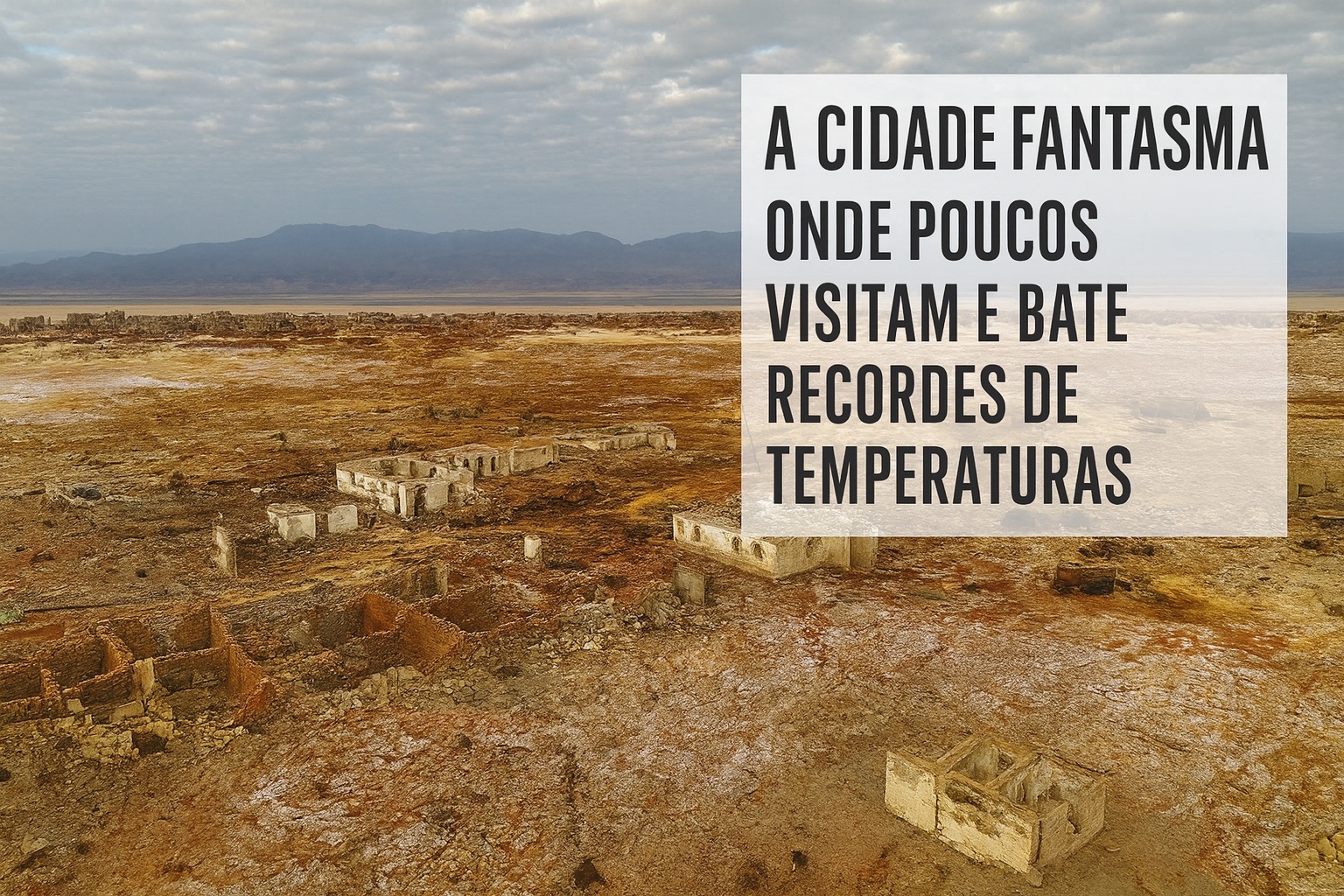


Located in the Afar Depression, the old village combines record heat, historic mineral production, decommissioned railway, and population absence since 2005, becoming a scientific and tourist reference on global natural extremes
Dallol, in the Afar Depression, Ethiopia, 130 meters below sea level, with an annual average of 34.6 °C between 1960 and 1966, a record of 49 °C and mineral production of 51,000 metric tons, consolidates itself as a historic limit of human occupation.
Dallol, in northern Ethiopia, has become a global reference for recording the highest average annual temperature ever measured in an inhabited area, located 130 meters below sea level and gathering extreme economic, climatic, and geological history in the Afar region.
Located in the Afar region, within the Afar Depression, the ghost town is set in one of the most geologically active areas of the planet, marked by volcanism, extensive salt flats, and severe environmental conditions.
-
The Argentine government celebrates the lowest poverty rate in 7 years, but experts warn that the methodology has changed, real wages have fallen, unemployment has risen, and the number of people on the streets of Buenos Aires has increased by 57% since Milei took office.

-
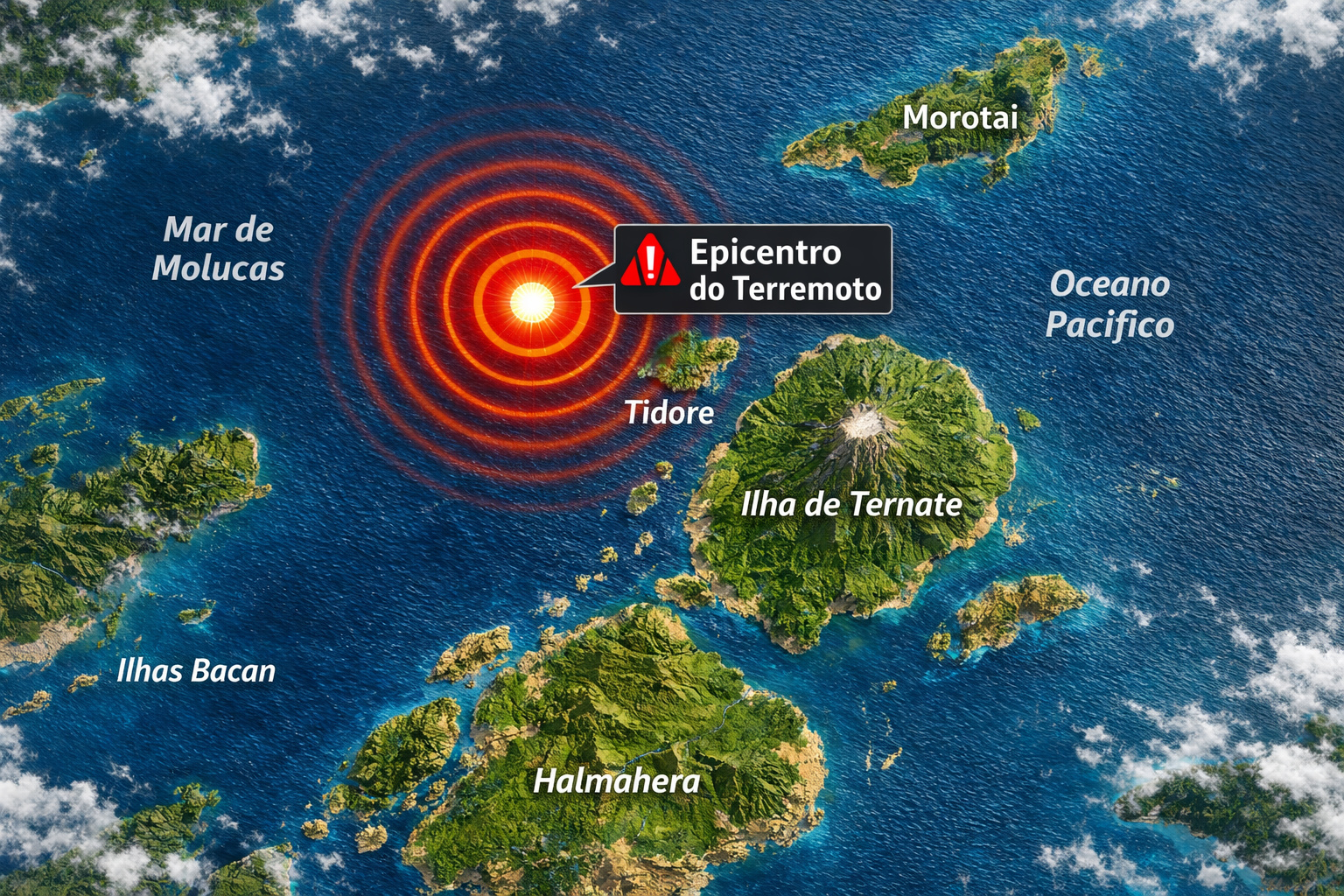
7.8 magnitude earthquake in Indonesia frightens the population, triggers tsunami alert, and hits an island with over 200,000 inhabitants this Thursday.
-
Google will finally let you change that embarrassing Gmail address you created in your teenage years without losing any accounts, logins, or old emails: the feature is already available in the United States.

-
Heading to Brazil in a Bonanza F33 single-engine aircraft: a couple departs from Florida on a visual flight, makes technical stops in the Caribbean to refuel and organize paperwork, and begins the staged crossing until they reach the country.

The coordinates 14°14′19″N and 40°17′38″E position the old village in the Dallol district, in a remote area subjected to persistent heat year-round.


Since 2005, there has been no official population estimate for the locality, according to records from the Central Statistical Agency of Ethiopia, reinforcing its administrative classification as a ghost town.
The prolonged abandonment is directly linked to exceptional climatic conditions, imposing physiological limits on continuous human presence and making the formation of stable urban centers unfeasible.
Between 1960 and 1966, Dallol recorded an annual average of 34.6 °C, consolidating the highest value ever documented for an inhabited area in recognized climatic measurements.
The average maximum temperatures exceed 41 °C, while, in certain months, the average maximum values reach 46.7 °C, increasing thermal stress throughout the year.
The absolute record of 49 °C was registered at the site, evidencing an extreme thermal regime, without significant nighttime cooling and with very limited daily fluctuations.
In addition to heat, the region experiences intense aridity, with very few rainy days throughout the year and virtually no surface water replenishment.
Extreme Climate and Environmental Limits
The negative altitude condition, combined with the tropical position and proximity to the Red Sea, intensifies heat retention and exacerbates the hyper-arid character of the area.
During winter, the maritime influence further elevates average temperatures, keeping Dallol among the hottest monitored environments on the planet.
These combined factors transformed the village into a symbol of the physical limits of human occupation in extreme natural scenarios.
Despite the hostile environment, Dallol played a significant economic role in the early 20th century, driven by industrial-scale mineral exploration.
The extraction of salt and potassium structured temporary occupancy, attracting investments and logistical infrastructure in an otherwise isolated region.
Between 1917 and 1918, a narrow-gauge railway was constructed linking the port of Mersa Fatma, in present-day Eritrea, to a point situated about 28 kilometers from Dallol.
The railway allowed for the transportation of salt to the coast, enabling the continuous operation of mineral extraction areas in the Afar Depression.
During this period, potassium production reached approximately 51,000 metric tons, placing Dallol in the international market for industrial minerals.
The decline occurred after World War I when large global producers began to dominate potassium supply on a competitive scale.
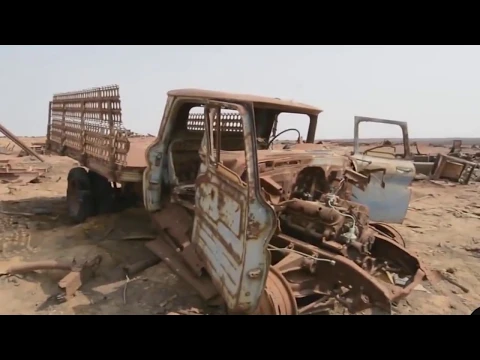
The Ghost Town: Mineral Exploration and Gradual Abandonment
Attempts to resume activity occurred between 1920 and 1941, including operations conducted by an Italian company specializing in mineral extraction.
During this interval, about 25,000 tons of sylvite were extracted, without production reaching lasting economic stability.
After World War II, the railway was dismantled by the British administration, permanently ending the principal industrial infrastructure of the region.
With the end of rail logistics, Dallol lost its central economic function and entered a gradual human depopulation process.
In the following decades, the area remained limited to sporadic activities, such as artisanal salt extraction and occasional scientific surveys.
In the 1960s, an American company conducted thousands of exploratory drillings, seeking economic viability for new mineral ventures.
Despite technical efforts, no permanent operation was established, leaving the locality without continuous productive activity.
Currently, the ghost town of Dallol has no permanent population, being visited only by researchers, adventure tourists, and camel caravans led by Afar people.
Since 2015, paved roads have made access to nearby areas easier, although the final movement still requires off-road vehicles and rigorous planning.
What remains visible are structures made of salt blocks, corroded buildings, and an active hydrothermal system, with fumaroles and multicolored mineral terraces, preserving the memory of an occupation pushed to the environmental limit.
With information from Wikipedia.









Brasil hoje tem lugares com está temperatura, e de forma recorrente. Caminhamos para a desertificação, gradativamente, área por área, nada que conteste o fato!
Sera que esse povo faz pesquisa meteorológica em Cuiaba? Não é possível que lá ganhe daqui em calor aqui ja chegou a fazer 44graus as 8:30 da noite.
Carlos Alberto, eu morei em Porto Velho – RO e presenciei temperaturas de 45°C de noite, ligar o ventilador dava a sensação térmica de abrir o forno do fogão. A única solução para dormir era deitar no azulejo ou usar ar condicionado se você tivesse. Na época 1989, era um luxo de poucos.
Local ideal para usina solar!
Calor ambiente não é útil à produção de energia solar. Uma usina solar montada em montanha de clima ameno produzirá mais energia, já que a camada de atmosfera a ser atravessada pelos raios solares será mais fina.