





 Portuguese
  English
  Spanish
 4 min of reading
  5 comments


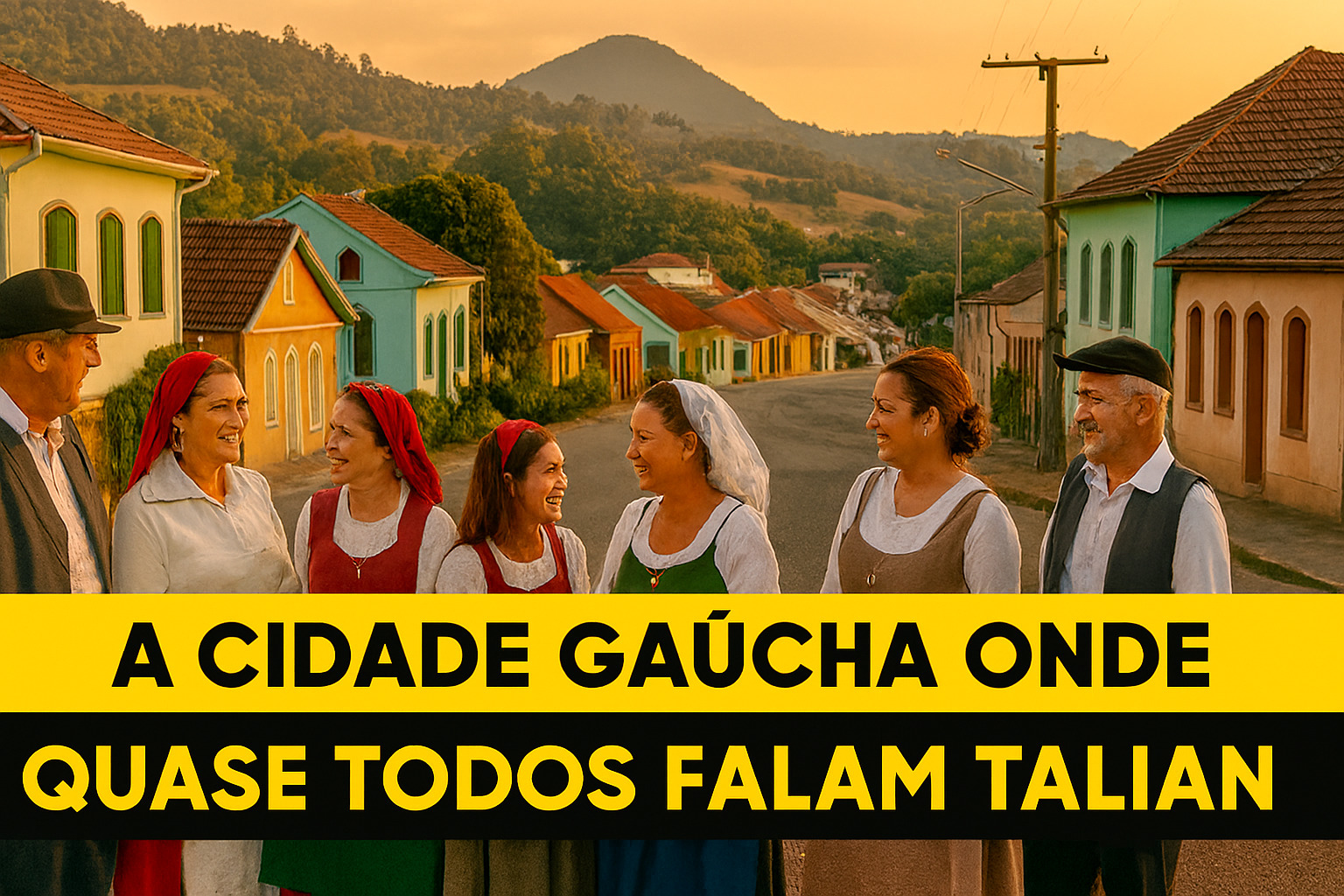


Recognized by IPHAN in 2014, Talian is still spoken by 500 thousand people in over 130 Brazilian cities and preserves the language of Italian immigrants since 1875.
In 1875, the first Italian immigrants arrived in Rio Grande do Sul, bringing with them dreams, simple tools, and the language they spoke in their villages of Veneto, Lombardia, and Trento. More than a century later, in cities like Antônio Prado, Caxias do Sul, and Bento Gonçalves, the language that endured was not modern Italian, but Talian, a dialect that blends ancient Veneto with influences from Brazilian Portuguese.
In 2014, the National Institute of Historical and Artistic Heritage (IPHAN) officially recognized Talian as a cultural reference of Brazil. Today, it is estimated that about 500 thousand people still speak the language in regions of the South, according to a survey published in 2025 by Jornal Semanário.
What Is Talian and How Did It Survive

Contrary to what many think, it is not the modern Italian, the official language of Italy. Talian was born in Brazil, a result of the fusion of dialects brought by immigrants, primarily Veneto, which was already spoken in the 19th century.
-
Friends have been building a small “town” for 30 years to grow old together, with compact houses, a common area, nature surrounding it, and a collective life project designed for friendship, coexistence, and simplicity.

-
This small town in Germany created its own currency 24 years ago, today it circulates millions per year, is accepted in over 300 stores, and the German government allowed all of this to happen under one condition.

-
Curitiba is shrinking and is expected to lose 97,000 residents by 2050, while inland cities in Paraná such as Sarandi, Araucária, and Toledo are experiencing accelerated growth that is changing the entire state’s map.

-
Tourists were poisoned on Everest in a million-dollar fraud scheme involving helicopters that diverted over $19 million and shocked international authorities.


Curious difference:
- The current Italian was standardized from Tuscan in the 20th century.
- Talian preserves expressions and ancient forms that no longer exist even in Italy.
Thus, when visiting cities like Antônio Prado (RS), it is possible to hear residents conversing in a language that sounds Italian but carries unique marks of Brazil. According to a report from the portal Italianismo (2021), about 80% of the city’s population still speaks Talian in their daily lives.
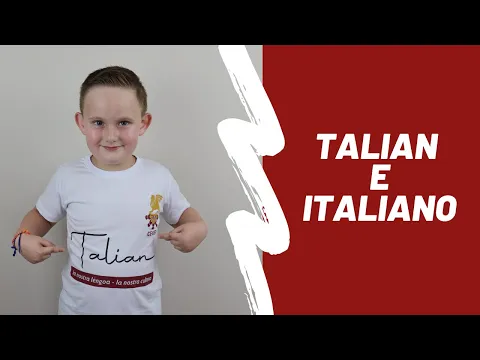
Cities Where Talian Is Still Alive
According to a survey by Jornal Semanário (2025), Talian is spoken in 133 municipalities across six Brazilian states, with a strong concentration in Rio Grande do Sul. Among the main centers are:
- Antônio Prado (RS): city where the dialect is most preserved; 80% of residents still speak Talian.
- Serafina Corrêa (RS): first city to officially recognize Talian as a co-official language by municipal law in 2009.
- Caxias do Sul (RS): largest city in Serra Gaúcha, where the language is preserved in community radios and traditional festivals.
- Bento Gonçalves (RS): a tourist center known for its wine, where Talian is still used by families of descendants.
Besides Rio Grande do Sul, there are also speakers in Santa Catarina, Paraná, Espírito Santo, São Paulo, and Rondônia, a result of the internal migration of descendants.
Cultural and Official Recognition
Talian has ceased to be just a family heritage and has gained legal recognition. Some important milestones:
- 2009: Serafina Corrêa (RS) becomes the first city to adopt Talian as a co-official language.
- 2014: IPHAN declares Talian as Brazilian Cultural Reference, elevating it to intangible heritage.
- 2020: O Globo reported in local articles on the resilience of the language in radios and cultural programs.
This recognition has helped preserve Talian, which now appears in community radios, folklore groups, school programs, and even in religious celebrations.
The Importance of Talian for Gaucha Identity
More than a language, Talian is a symbol of identity. It connects generations of descendants to the stories of their ancestors who came to Brazil fleeing poverty and hunger in 19th-century Italy.
At typical festivals, such as the Grape Festival in Caxias do Sul, or in performances by choirs and theater groups, Talian emerges as a cultural pride expression. Even local community radios broadcast programs in the language, ensuring it remains alive among the young and the elderly.
Despite the resilience, the number of active speakers has declined over the decades. Researchers from University of Caxias do Sul (UCS) warn that the language is at risk of extinction if there are no ongoing policies for its valorization and formal teaching.
Initiatives such as including Talian in municipal schools, digitizing dictionaries, and creating learning apps seek to keep the language alive for future generations.
For Linguists, Talian Is a Rare Case: A Language That Was Born in Brazil, but Preserves the Memory of 19th-Century Italy
Talian proves that Brazil is a nation of multiple identities. In cities of Serra Gaúcha, hearing residents speak the dialect is like stepping into a linguistic time machine, transporting visitors back to the past of Italian immigration.
Officially recognized in 2014, still spoken by about 500 thousand people in 2025, Talian endures as a language of affection, memory, and belonging.
While modern Italian evolved on another path in Europe, Brazil preserved a unique version, rooted in the daily lives of families who made the hills and valleys of the South their new home.










Típico de um povo com baixa autoestima, que não tem amor à própria pátria e fica apegado a um passado que sequer existiu da forma como idealizam.
Brasileiros que acham que são italianos, mas, para a Itália, não passam de uma escória indesejada. Tanto que vetaram a cidadania italiana pra essa gente.
Vc não conhece essa gente! São pessoas maravilhosas! Melhor estar apegado a um passado que a criação era excelente do que o resto do Brasil que só declinam em cultura… Principalmente em músicas como funk, pessoas virando **** e marginais pela falta de uma boa criação em casa… Coisa que os povos descendentes de italianos não tem do que se queixar… Já que os costumes antigos fazem deles cidadãos melhores do que o resto do Brasil!
Ótima colocação
Tenho.orgulho de ser descendente de Italianos … povo forte e inteliente q colonizou o Brasil … e até os dias de hj … ensina como se ter disciplina … trabalho … e valores p a sociedade …. !!!
Isso mesmo Rafael, também sou descendente de italianos. Meus bisavós maternos e também paternos vieram da Itália. Meus irmãos entre eles e eu só falamos talian. Aprendemos o Português na escola. Já falo fluentemente o Espanhol e estou aprendendo inglês.
FALO PORTUGUÊS
PARLO TALIAN
HABLO ESPANHOL
SPEACH ENGLISH
Enquanto esse Ragnar é um típico descendente direto de mula porque não estudou e não entende de pluralidade cultural e não teve uma educação de qualidade como eu tive