





 Português
  Inglês
  Espanhol
  4 min de leitura
  0 comentários


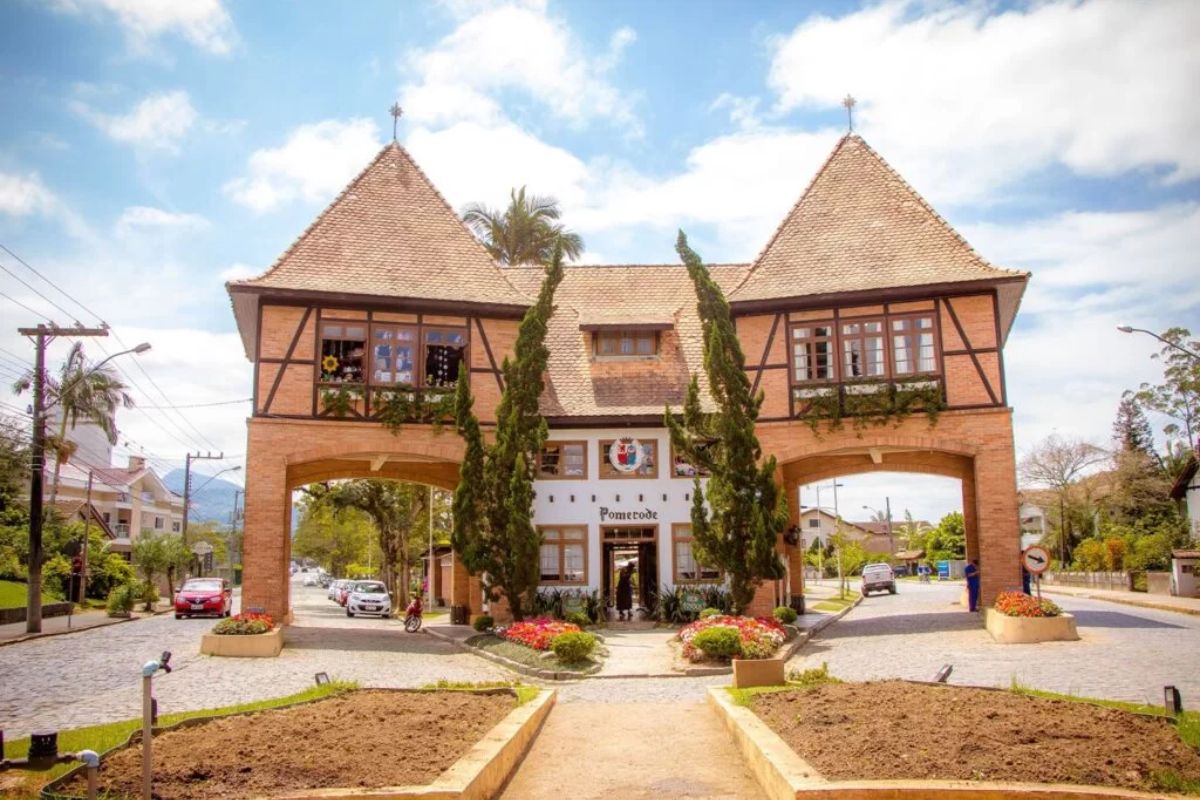
In The Heart Of The European Valley, The Most German City In Brazil Preserves The Architecture, The Language And The Traditions Of Its Founders, Becoming A Unique Destination In The Country.
Located in the heart of the European Valley, in Santa Catarina, Pomerode proudly holds the title of the most German city in Brazil. Founded by immigrants from Pomerania, an ancient region in northern Europe, visiting the city is like traveling back in time, where the culture, architecture, cuisine, and especially the language of the ancestors are lived daily.
This strong cultural heritage, combined with a high-quality tourism infrastructure, has transformed Pomerode into a sought-after destination. But beyond the postcards, the city reveals a story of resilience and a model of development that makes it a unique place to visit and live in 2025.
From Origins In Pomerania In 1863 To Resistance: The Forging Of Local Identity
The story of the most German city in Brazil officially begins in 1863, with the arrival of immigrants from Pomerania, a historical region on the shores of the Baltic Sea. Encouraged by Dr. Hermann Blumenau, the settlers established themselves in the Itajaí Valley, dedicating themselves to agriculture and later to the porcelain industry.
-
The world’s first octopus farm wants to open in the Canary Islands and is already provoking an international reaction: the plan aims to produce 3,000 tons per year.

-
Drought may be creating stronger superbugs in the soil and helping antibiotic resistance reach hospitals, warns a study highlighting a problem that could grow alongside extreme weather.

-
The biggest scam in history: Napoleon’s France deceived the United States by selling them a territory that was Spanish.

-
Why is the Danakil Desert so dangerous? It has unstable terrain and how extreme temperatures and toxic gases turn the region into one of the most hostile environments on Earth.


What made Pomerode’s culture so resilient was the period of World War II. The forced nationalization policy of Getúlio Vargas’ government prohibited the use of the German language and any German cultural expression. Far from erasing local identity, the repression strengthened community ties, which began to see the preservation of their customs as an act of resistance and pride.
The Pomeranian Dialect That Survives And Has Been Co-Official Since 2017

The fame that “90% of the population speaks German” has a background of truth, but the linguistic reality heard in the streets of the city is even richer and more fascinating. The German language heard in the streets of Pomerode is not standard German, but rather Pomeranian, a dialect of Low German. This dialect is the true heart of the city’s identity.
Recognizing the risk of the language disappearing among the youth, the most German city in Brazil initiated a strong revitalization project. The most important milestone came in 2017, when Pomerode co-officialized the Pomeranian language, which began to be taught in municipal schools. This effort culminated in the recognition of the dialect as Cultural Heritage of Brazil, a label that ensures its protection by the State.
The Route Of Enxaimel: The Architectural Treasure Recognized By The UN
The visible soul of Pomerode lies in its architecture. The city boasts the largest concentration of houses built in the enxaimel technique outside of Europe. Enxaimel is a construction method where a structure of interlocking wooden beams supports the building, with the gaps filled with bricks or clay.
To preserve and share this architectural treasure, the Route of Enxaimel was created, a 16 km route listed by IPHAN. The success of the route as an example of sustainable tourism, preserving culture and generating income for the community, earned it the title of one of the “Best Tourist Villages in the World” by the United Nations (UN).
What To Do In 2025: From The 40th Pomeranian Festival To The Zoo And Enchanted Village
Pomerode offers attractions year-round, but its event calendar is a highlight.
Pomeranian Festival: the city’s main event, celebrating German culture. The 40th edition takes place from January 15 to 26, 2025, featuring dozens of traditional bands, parades, and cuisine.
Osterfest: Pomerode’s Easter festival is famous for its Guinness Book records, such as the largest Easter tree (Osterbaum) and the largest decorated egg in the world.
Permanent Attractions: the town features the Pomerode Zoo, the third oldest in Brazil, the Enchanted Village, a dinosaur-themed park, and Alles Park, with attractions such as the Snow Village. In addition, culinary tours include visits to the Nugali chocolate factory and the Schornstein brewery.
The High Standard Of Living And The Challenges Of A Successful Tourist Destination


The most German city in Brazil is not just a tourist destination, but also a place with one of the highest standards of living in the country. Its Municipal Human Development Index (IDHM) is classified as “Very High” (0.815), and its per capita GDP of R$ 81,195.67 is nearly double the Brazilian average.
This prosperity, which attracts new residents, however, creates its own challenges. The cost of living is a concern, and managing tourism, which involves balancing the interests of public and private sectors, is a constant debate. Pomerode’s challenge for the future is to continue to market its culture sustainably, without losing the authenticity that made it famous in the process.









-

Uma pessoa reagiu a isso.