





 Portuguese
  English
  Spanish
  5 min of reading
  0 comments


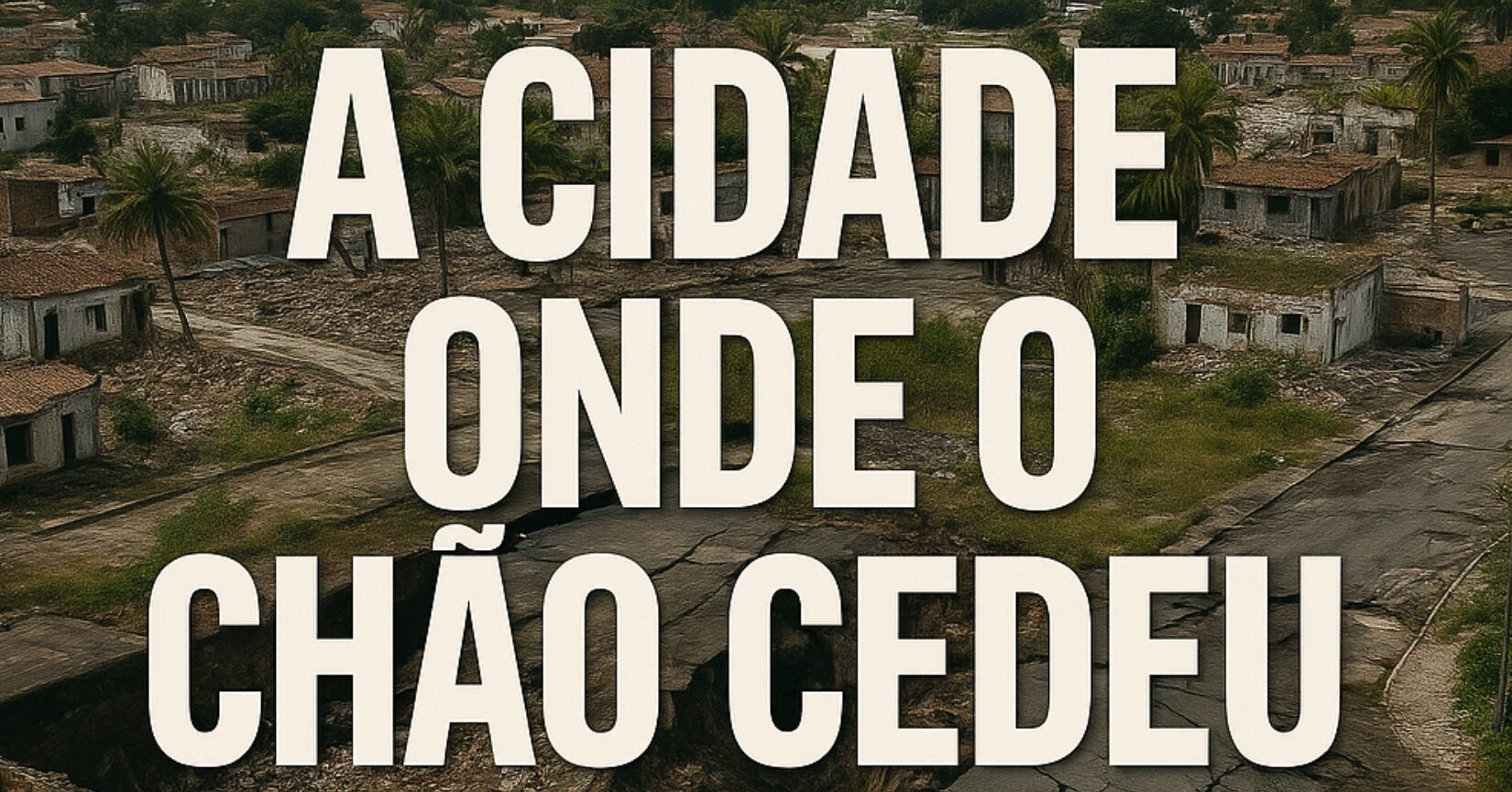
More Than 14 Thousand Condemned Properties, Whole Neighborhoods Demolished, and More Than R$ 4.1 Billion Paid in Compensations. Maceió, Capital of Alagoas, Lives a Silent Tragedy Since Braskem’s Mining Caused Soil Subsidence in Five Neighborhoods, Turning Whole Communities Into Risk Areas.
What seemed unlikely became reality. In December 2023, one of Braskem’s 35 salt mines collapsed under the Mundaú Lagoon in the Mutange neighborhood, accelerating a process that had been unfolding for years: the subsidence of Maceió’s soil. The phenomenon was caused by decades of extraction of salt in urban areas of the city.
The tragedy is described as one of the largest urban and environmental crises in Brazil’s history, with direct impacts on the lives of more than 60 thousand people, forced to leave their homes in five neighborhoods: Mutange, Pinheiro, Bebedouro, Bom Parto, and part of Farol. Also learn about the town in Ceará that was totally abandoned and is now considered a ghost town in the hinterland
The City Where the Ground Sank and the Neighborhoods Disappeared
According to the Civil Defense of Maceió, more than 14 thousand properties were condemned and included in the mandatory eviction zone. Of these, 8,482 have already been demolished. The scenario is one of abandonment, craters, cracks, and unstable structures that make it impossible for the population to return.
-
A new study suggests that the Strait of Gibraltar may disappear because the rocks beneath it are triggering a subduction process that could reshape the entire Atlantic Ocean over the next 20 million years.
-
What is it like to live inside a $13 billion aircraft carrier where 5,000 military personnel eat 17,000 meals a day and spend months sleeping in cramped bunks?

-
Without a button, sensor, or any electronic system, Harvard scientists create a solar device that decides on its own whether to generate energy or heat and could transform energy use in homes and buildings.

-
Neither Brazil nor the USA: China produces over 60% of the world’s farmed fish and accounts for about 40% of all global seafood, using industrial-scale aquaculture megafarms to influence the international market and supply billions of people.

The five affected neighborhoods, which previously housed schools, hospitals, churches, businesses, and thousands of families, have been erased from the urban map of the Alagoas capital. The unstable soil compromised whole streets, destroying not only physical structures but also life stories, community bonds, and family memories in the city in Brazil where the ground gave way.
Braskem: Compensations and Liability
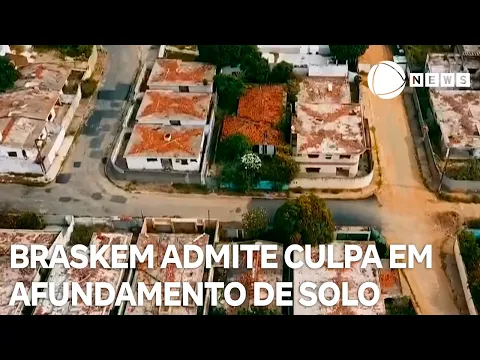

The company responsible for the extraction, Braskem, created the Financial Compensation and Relocation Support Program (PCF). By September 2023, 19,167 compensation proposals had been submitted — 99.9% of the total expected. Of these, 18,944 were accepted, and 18,756 compensations have already been paid, corresponding to 97.8% execution of the plan.
The amount paid in compensations and financial aid exceeds R$ 4.1 billion, according to the company’s own data. The resources aim to allow residents to rebuild their lives in other areas, but do not compensate for the emotional and social loss of those who saw their neighborhood disappear.
An Environmental Crime of Historical Proportions
The Federal Police opened an investigation to ascertain the responsibility of Braskem and the public agencies that supervised the mining activities. The investigation, concluded at the end of 2023, indicted 20 people, including executives from Braskem and public agents.
The accusation is of qualified environmental crime, with permanent damage to the population and urban territory. The case is considered emblematic not only because of the impact but also due to the prolonged omission of the authorities, who allowed mining to continue in densely populated areas.
“It’s Not Just a House. It’s Our History That Was Buried”
For thousands of families, the impact is more than geological: it is emotional, psychological, and social. The collapse destroyed community bonds, paralyzed economic activities, and forced the largest urban displacement in recent history in the country.
“We lost our home, lost the neighborhood, lost our roots. It’s not just a house; it’s a whole life that collapsed,” reports Lúcia Alves, a former resident of Mutange.
Many residents spent months in improvised shelters, hotels, and relatives’ homes, waiting for financial compensation. Others faced difficulties finding new properties, especially given the rise in the rental market in Maceió after the onset of the crisis.
The Geology of Disaster: What is Rock Salt?
Rock salt is a mineral form of sodium chloride (NaCl), extracted for various industrial uses, such as PVC production, caustic soda, and hypochlorite. In Maceió, the underground extraction was done by injecting water into salt caverns, which were then emptied, creating voids in the urban subsoil.
Over time, geological pressure and water infiltration caused the collapse of these caverns, causing cracks in the soil and asphalt. The chain reaction compromised entire buildings, generating a situation of imminent and permanent risk.
How the Crisis Was Detected
The first signs appeared in the Pinheiro neighborhood in February 2018, with reports of tremors, cracks in sidewalks, walls, and sinking streets. In no time, authorities confirmed that the deformations had geological origins.
Studies by the Geological Service of Brazil (CPRM) indicated that the mining of rock salt was the determining factor for the emergence of the failures in the subsoil. In 2019, Braskem announced the definitive halt of activity in all its mines in Maceió.
The Extent of the Damage: Entire Neighborhoods Disappeared from the Map
See the main updated data about the disaster in Maceió:
| Indicator | Number |
|---|---|
| Condemned Properties | More Than 14 Thousand |
| Demolished Properties | 8,482 |
| People Forced to Leave Home | More Than 60 Thousand |
| Compensation Proposals Submitted | 19,167 |
| Proposals Accepted | 18,944 |
| Compensations Paid | 18,756 |
| Total Paid in Compensations | R$ 4.1 Billion |
| Affected Neighborhoods | 5 (Mutange, Pinheiro, Bebedouro, Bom Parto, Farol) |
The Collective Trauma and the Reconstruction of Lives
The tragedy in Maceió left deep psychological marks on the residents. Many have not yet adapted to the new neighborhoods or face difficulties rebuilding their routines. Children switched schools, the elderly distanced themselves from decades-long neighbors, and merchants lost clientele and income.
“You leave, but the pain remains. The fear that everything will sink again goes with you,” says João Henrique, a merchant who saw his business disappear in Mutange.
Mental health organizations and local universities have been providing collective psychological support, but the healing process is long. Besides the physical reconstruction, there is the challenge of rebuilding the sense of belonging and trust in urban security.
What Braskem and the Public Authorities Say
In an official statement, Braskem claims that it is committed to addressing the impacts caused by geological instability and that it maintains a permanent communication channel with residents. The company also states that it operates under the guidance of the Civil Defense and that the compensation program was created to expedite support for families.
The company declared that it continues to cooperate with the authorities and that, since 2019, it has ceased mining operations in Maceió. However, criticisms persist, especially regarding the fact that the extraction was done in densely populated areas, which could have been avoided.
The Federal Public Ministry (MPF) and the Federal Court of Accounts (TCU) are investigating oversight failures on the part of environmental and urban management agencies. The City Hall of Maceió and the Government of Alagoas are also named in lawsuits for alleged omission and complicity.
Furthermore, the National Congress is considering the creation of a Urban Mining CPI, given the severity of the case. The expectation is that the Maceió crisis will serve as a warning to prevent similar disasters in other Brazilian cities with a history of mineral exploitation.






-

Uma pessoa reagiu a isso.