





 Portuguese
  English
  Spanish
  6 min of reading
  0 comments


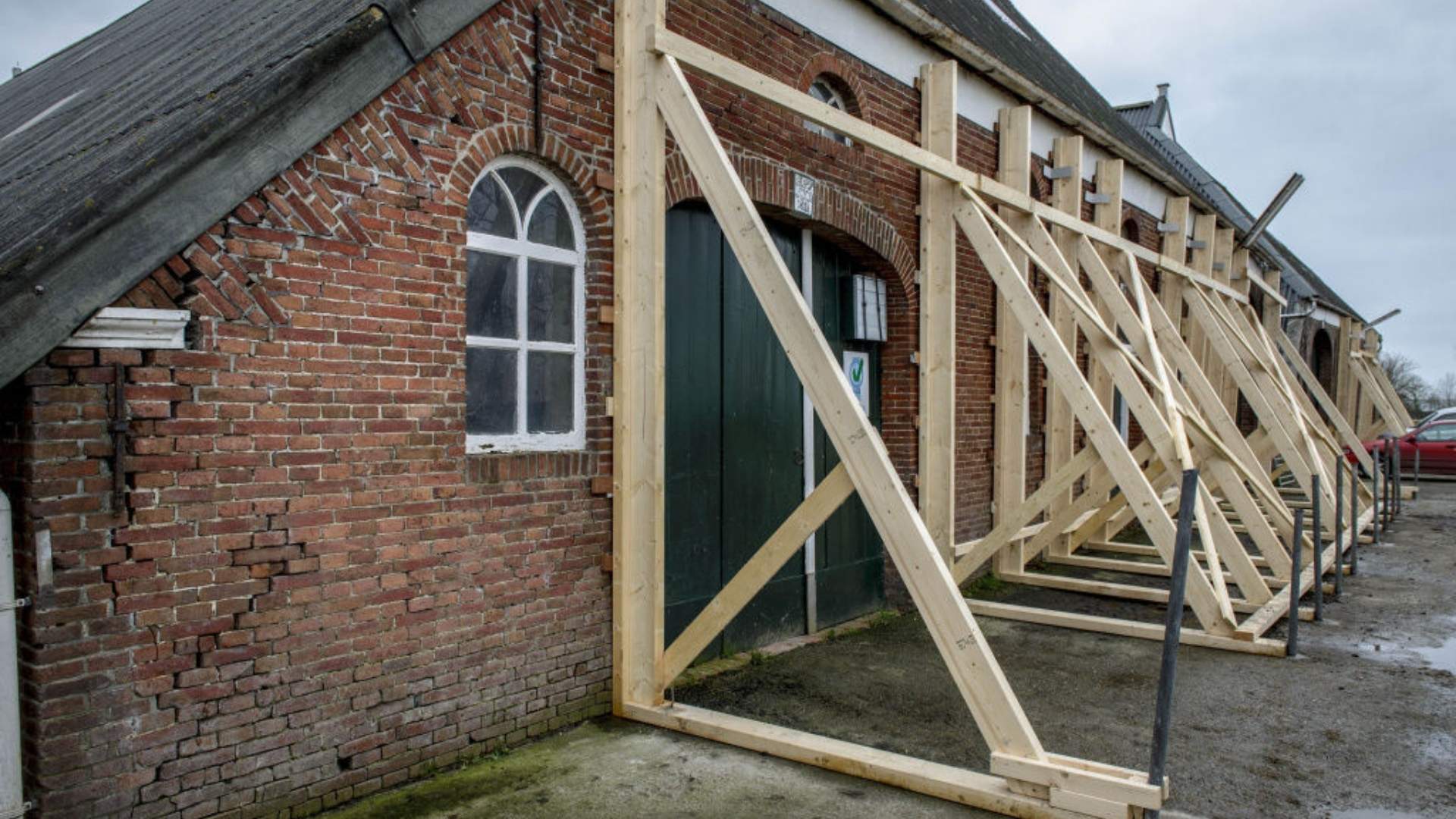
Induced Earthquakes from Gas Extraction Changed Safety and Engineering Rules in Northern Netherlands, with Inspections, Strengthening, and National Decisions on Energy and Housing, in an Area Where Quakes Have Become a Permanent Factor in Daily Life.
In the city of Groningen and surrounding the eponymous province in northern Netherlands, earthquakes have come to be treated as a public safety, engineering, and housing policy issue.
The peculiarity is that the tremors that changed the local routine are not associated with a classic tectonic plate boundary, but rather with the exploration of the Groningen gas field, discovered in 1959 and commercially exploited since the 1960s.
Over time, earthquakes induced by extraction activity ceased to be seen solely as a problem of cracks and began to factor into national decisions on energy, housing, and the stability of buildings.
-
The Argentine government celebrates the lowest poverty rate in 7 years, but experts warn that the methodology has changed, real wages have fallen, unemployment has risen, and the number of people on the streets of Buenos Aires has increased by 57% since Milei took office.

-
7.8 magnitude earthquake in Indonesia frightens the population, triggers tsunami alert, and hits an island with over 200,000 inhabitants this Thursday.
-
Google will finally let you change that embarrassing Gmail address you created in your teenage years without losing any accounts, logins, or old emails: the feature is already available in the United States.

-
Heading to Brazil in a Bonanza F33 single-engine aircraft: a couple departs from Florida on a visual flight, makes technical stops in the Caribbean to refuel and organize paperwork, and begins the staged crossing until they reach the country.


Induced Earthquakes Recorded Since 1991
Technical records indicate that induced seismicity in the area began to be detected in 1991, decades after the field went into operation.

For many years, the public discussion focused on repairing damage and paying compensations, with residents reporting cracks, fissures, and structural problems in properties.
This framing began to change after the Huizinge earthquake on August 16, 2012, described by public authorities as the strongest linked to gas extraction observed in the country to date.
The episode raised the level of concern, expanded the perception of risk, and made it more difficult to argue that the tremors were merely a “matter of damage” without impact on safety.
Report from Dutch Safety Council and Change of Approach
The reevaluation took shape in official reports.
In February 2015, the Dutch Safety Council published an investigation into the decision-making process regarding the exploitation of the Groningen field between 1959 and 2014.
The investigation recorded that, until early 2013, the safety of citizens against induced earthquakes had virtually no influence on decisions regarding the field’s exploitation.
According to the body, the tremors were treated as a risk of limited damage that could be compensated, rather than as a public safety risk, despite scientific uncertainties and increased concerns in the region after 2012.
The report itself describes that the confidence of residents in the safety of the exploitation and in the involved institutions deteriorated over the analyzed period.
Parliamentary Committee and the Report “Groningers Before Gas”
The topic fully entered the parliamentary debate.

On February 24, 2023, the House of Representatives published the conclusions and recommendations of a parliamentary inquiry committee in the report “Groningers Before Gas.”
The document describes the evolution of the problem after the 2012 earthquake and states that the interests of Groningen residents were systematically neglected throughout the analyzed period.
The report also notes that the discussion about reducing extraction entered the political agenda in 2013, but extraction reached record levels that year, intensifying the conflict between energy security arguments and safety and damage concerns in the province.
Quakes in Zeerijp and Westerwijtwerd and the Escalation of Pressure
The timeline cited in public documents also includes quakes associated with locations like Zeerijp in 2018, and Westerwijtwerd in 2019, both with a recorded magnitude around 3.4 and noted in the parliamentary report as milestones in an escalation for tougher measures.
For those living in the province, the repetition of events reinforced the feeling that the risk was not isolated or restricted to a single village.
The city of Groningen, as the main urban center, concentrates services, universities, and regional infrastructure, and the discussion about damage, inspections, and construction has also begun to affect daily dynamics and the real estate market.
Reduction of Extraction and Closure of the Groningen Field

The extraction policy was reduced in stages until the regular production was halted.
On October 1, 2023, normal extraction at the field was halted after years of cuts announced as a response to seismic activity associated with the extraction.
On April 16, 2024, the Dutch Senate approved a law to permanently close the field, establishing October 1, 2024, as the deadline for complete cessation, as reported by international agencies.
These accounts also describe that the field is operated by the NAM company, linked to Shell and ExxonMobil, and that the closure was presented as a measure to reduce seismic risks and prolonged uncertainty for residents of the region.
Reinforcement of Houses and Safety Standards in the Affected Area
The cessation of production, however, does not automatically eliminate the more concrete problem for the population: adapting existing buildings to safety standards.
The Netherlands, in general, is not known for frequent tectonic earthquakes, and much of the real estate in Groningen was built without typical parameters for seismic regions.
When a property is evaluated and considered below the safety standard defined for the affected area, the public response involves inspections, technical analyses, and the determination of interventions compatible with the risk level and construction characteristics.
In practice, this means that the induced earthquake ceases to be merely a “climate” or “natural” fact and transforms into a permanent variable in engineering applied to existing housing.
NCG and the Structural Reinforcement Operation
The coordination of this operation appears in structures created to deal with the problem.
The National Coordinator for Groningen, known by the acronym NCG, describes as its mission to reinforce houses and other buildings so that it is possible to live, work, and study safely in the earthquake zone, in cooperation with municipalities, the province, and the central government.

In public records from the Dutch government regarding the procedures used in the program, it states that when a house does not meet the standard, a “reinforcement scenario” may be recommended that takes into account elements such as cost and feasibility, including options ranging from structural reinforcement to demolition and reconstruction in specific situations.
This institutional design helps explain why the topic has become both technical and commonplace: it’s not just about monitoring tremors, but about transforming assessments into concrete works.
Impact on Daily Life and Relationship with Institutions
For the local population, the impact usually unfolds in stages that go beyond visible damage.
There is the moment of the tremor and the emergence of cracks; then, inspections and classifications; followed by works that may require adjustments in routine, temporary relocation, and prolonged follow-up.
The investigation by the Dutch Safety Council points out that for years, earthquakes were viewed as a matter of damage to be compensated, and that the shift to a security discussion affected the relationship between residents, the field operator, and the government, with institutional wear and increased anxiety in the region.
The 2023 parliamentary report records how the topic has come to involve not only repairs but also governance, accountability, and the ability of the state to respond with predictability.
Energy, Subsoil, and Surface Engineering
With the field closed and reinforcements and repairs still ongoing, the experience in Groningen remains observed as an example of how decisions about subsoil exploitation can translate into concrete demands for what is on the surface, from single-story homes to public buildings.
In other regions that depend on resources extracted from the subsoil, should there be a public risk and reinforcement plan for buildings before the population faces years of tremors, damage, and works?









-

-

-

-

5 pessoas reagiram a isso.