





 Português
  Inglês
  Espanhol
 5 min de leitura
  0 comentários


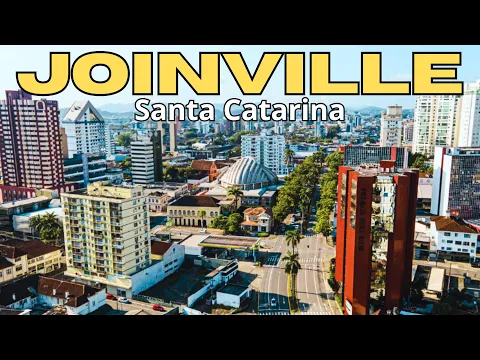
Joinville (SC), Once a Reference as an Industrial Hub Facing Crisis, Now Lives a New Renaissance: New Investments, Modernization, and Economic Growth.
For decades, Joinville (SC) was recognized as the industrial hub of Santa Catarina, thriving in metallurgy, textiles, foundry, and assembly. But in the early 2000s, the global crisis, external competition, and lack of innovation weakened this productive engine. What was once a symbol of strength became remembered for declining factories, closed buildings, and promises of rebirth.
Today, however, something has changed — and notably so. Joinville is experiencing an economic renaissance with new investment fronts: technology, logistics, industrial expansion, and urban infrastructure. A quiet movement has made headlines, and the city has renegotiated its place on the Brazilian map.
From Industrial Decline to Urgent Alert
In the 20th century, Joinville grew with the legacy of German immigrants and a robust industrial structure. Companies like Tupy, Embraco, Tigre, Ciser, and Amanco provided jobs and influence in the state. But from the late 1990s to the mid-2000s, the city faced the impact of international competition, high costs, and lack of modernization — factories closed or slowed down, and industrial brilliance lost its luster.
-
The world’s first octopus farm wants to open in the Canary Islands and is already provoking an international reaction: the plan aims to produce 3,000 tons per year.

-
Drought may be creating stronger superbugs in the soil and helping antibiotic resistance reach hospitals, warns a study highlighting a problem that could grow alongside extreme weather.

-
The biggest scam in history: Napoleon’s France deceived the United States by selling them a territory that was Spanish.

-
Why is the Danakil Desert so dangerous? It has unstable terrain and how extreme temperatures and toxic gases turn the region into one of the most hostile environments on Earth.


The city felt the shock: unemployment rose, revenues fell, and the industrial hub echoed distant memories of the past. Many began to question: would Joinville lose its prominence?
The Comeback Begins with Strategy and Public Investments
The turnaround came with strong collaboration between the city hall, the state, and the private sector. An action plan was put into practice.

Regulation of a new industrial district in the southern zone, expanding the available area for modern factories and startups.
Creation and support for funds and protocols to attract technology and logistics companies.
Partnerships with SENAI, Sesi, and institutions linked to FIESC to quickly train a qualified workforce.
At the same time, the Perini Business Park — already the largest multi-sector industrial condominium in Brazil, with 2.8 million m² of land and 100 companies — has become a magnet for new players, attracted by modern infrastructure, agile regulations, and access to large markets.
The results began to show in indicators: new contracts, recovery of investments, economic dynamism.
Industrial GDP and Exports on the Rise in Joinville (SC)
The recovery is not just a promise: the numbers confirm it. Joinville today accounts for about 25% of Santa Catarina’s industrial GDP, the highest in the state.
In the first quarter of 2025, the Santa Catarina industry advanced 8.5% in production — and Joinville was at the forefront of this growth. Still in 2024, the city finished with one of the highest performances in the sector, driven by metals, auto parts, household appliances, and plastics.
Foreign trade now shows Joinville in another dimension: from January to April 2024, the municipality exported US$419.9 million, focusing on high-value products such as engine parts, compressors, and auto parts — heading to the United States, Mexico, and Argentina.
Technology and Startups: The New Economic Engine
As industries grew, a new prominence emerged: technology companies. Joinville did not hesitate to provide space and structure for startups and innovation centers.
Despite the challenges, the presence of a qualified workforce in computing and investors brought new energy to the local scene.
Large corporations are still keeping an eye on the city. General Motors built a factory in 2012 and plans a new investment of US$1 billion with a planned assembly line.
Hot Real Estate Market
With the industrial and technological recovery, the real estate market has been in a frenzy. Data from Sinduscon-Joinville show an 82.5% increase in apartment launches in the first quarter of 2025 compared to the previous year.
The VGV (General Sales Value) jumped from R$395 million to R$487 million in the same period — a growth of 23.3%. Neighborhoods like Costa e Silva, Glória, and Bucarein turned into hotspots for residential launches.
Joinville, therefore, breathes a new economy — and this directly reflects on the real estate market.
Strategic Infrastructure: Airport and Logistics
Not only industries and technology, Joinville reinforced its geographical position with improvements in logistics.
The Lauro Carneiro de Loyola Airport is preparing to serve more passengers and cargo.
Modernized cargo terminal, with investments of R$20 million for expansion and industrial condominiums.
Proximity to BR-101, an old railway converted for cargo, and easy access to regional ports.
These elements make Joinville a national logistics hub, ideal for carriers, e-commerce, and industrial projects.
Education, Innovation, and Productive Partnerships
The success of the renewals also relies on qualified people. Joinville has invested in:
- Technical qualification through SENAI/Sesi.
- Relations with FIESC, UFSC, and Univille.
- Adoption of technology parks and innovation hubs.
Traditional companies are also working to retrieve their origins — Ciser, founded in 1959, is now a benchmark in sustainability and innovation, with centers and awards.
Challenges and Urgent Attention
The economic renaissance has been impressive, but it also brings challenges:
- Need for urban infrastructure — mobility and public transportation.
- Environmental actions and flood control in flat areas.
- Demand for social housing and services.
- Urban planning will have to progress alongside industrial growth to avoid bottlenecks.
What to Expect in the Coming Years
The recovery curve is already on the rise. What’s coming next?
- Expansion of the southern industrial district and new areas for investment.
- Progress of data centers, startups, and technology.
- Expansion of GM with a complete assembly line.
- New industrial condominiums at Perini Business Park 2.
- Urban services adapted to serve more people and companies.
Joinville lived in the shadow of the 2000s crisis, but it showed that it is still possible to be reborn without losing its identity. The combination of traditional industry, technological innovation, strategic logistics, and qualified education is recreating what many thought was lost.
The landscape is clear: Joinville not only recovered its breath — it has also set its sights high once again. Today, more than as an industrial hub, the city positions itself as a complete development hub in Southern Brazil. The new investments are not just promises: they are being delivered, and with them, the certainty that Joinville has been reborn — in grand style.








-

3 pessoas reagiram a isso.