





 Portuguese
  English
  Spanish
  4 min of reading
  0 comments


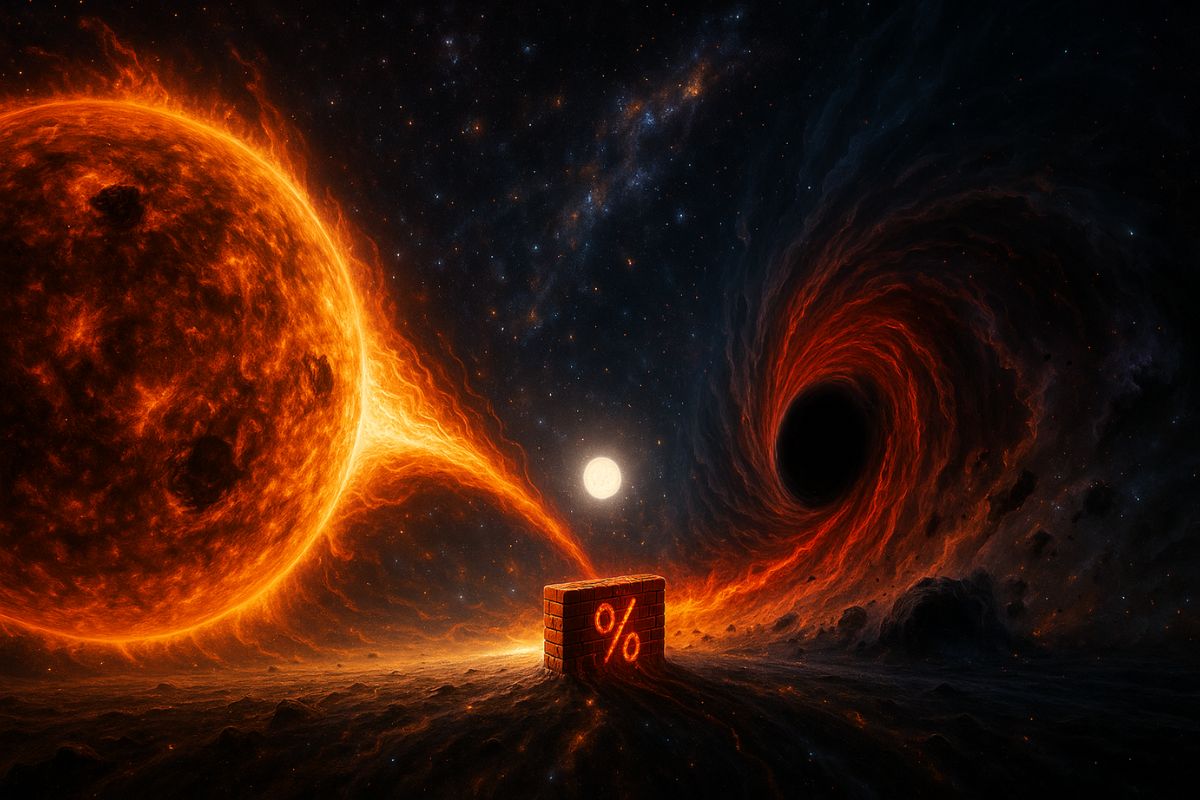
From The Death Of Our Sun To The Evaporation Of Black Holes, Embark On A Journey Through The Deep Future Of The Cosmos And Discover The Possible Destinations Of Our Universe.
Since the dawn of consciousness, humanity has looked to the stars and wondered not just where we came from, but where we are going. Thanks to advances in physics and cosmology, science today can sketch a likely timeline for the future of our planet, our galaxy, and the universe itself. And while the ultimate end is in a future so distant it’s almost impossible to fathom, the cosmic events that precede it are spectacular.
Based on the laws of physics and observations from the most powerful telescopes, we will explore the catastrophic events that await our universe and the three main theories about how everything might end.
Near Future (Cosmic Scale): The Death Of The Sun
The first major event that will directly affect our home has a set date. The Sun, our star, has a finite life cycle.
-
Spain surprises the world by erecting 62 artificial dunes, mixing sand with natural remains of posidonia, and causing the structure to lose only 1.4% of its volume in 1 year.

-
With 16 Bulava missiles, improvements in acoustic stealth, and a design focused on silent patrols, Russia’s nuclear submarine was born to ensure Moscow’s invisible retaliation and has become one of the pillars of its maritime strength.

-
‘Populous’ city in Rio among the worst in Brazil in national ranking and exposes silent development crisis.

-
Couple buys house in the South Zone of São Paulo, opens a hidden door in the garage, and finds a secret wine cellar with dozens of old wines forgotten since the 1970s.


- In 5 billion years: The hydrogen in its core will be depleted. Without fuel for nuclear fusion, the Sun will begin to expand drastically, transforming into a Red Giant. Its size will increase so much that it will swallow Mercury, Venus, and likely even Earth itself.
- The End Of Life: Long before being swallowed, the planet will already have been “cooked.” The intense heat will cause the oceans to evaporate and the surface to melt, making life as we know it impossible.
- The White Dwarf: After the red giant phase, the Sun will shed its outer layers and its core will collapse, transforming into a White Dwarf – a dead star, dense and Earth-sized, that will faintly shine with residual heat for trillions of years.
The Clash Of Titans: The Collision Of The Milky Way With Andromeda
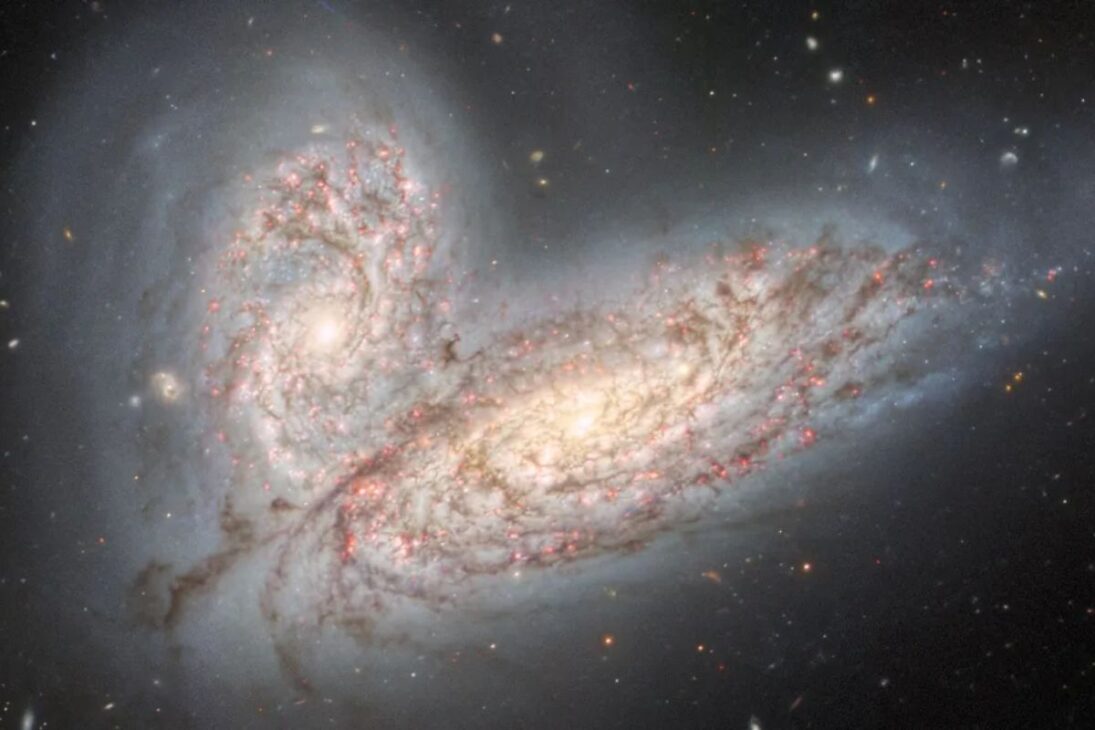
Around the same time the Sun is dying, a galactic-scale event will unfold. Our galaxy, the Milky Way, and our giant neighbor, Andromeda, are on a direct collision course, drawn together by the force of mutual gravity.
In 4.5 billion years: The two galaxies will begin a merging process that will last for millions of years, creating a new giant elliptical galaxy, nicknamed by some as “Milkomeda.”
And Earth? If our planet still exists, the chances of a direct collision with another star are minimal, given the vast space between them. However, the gravitational force of the merger could easily eject our entire Solar System into intergalactic space.
The Distant Future: The Eras Of Degeneration And Black Holes
After the death of stars like our Sun and the merger of galaxies, the universe will enter a new phase.
In 100 trillion years (The Degenerate Era): All available gas for forming new stars will have been consumed. The last stars will have died. The universe will be a much darker place, populated only by the “corpses” of stars: white dwarfs, neutron stars, and black holes.
In 10^40 years (The Era Of Black Holes): In an unimaginable timescale, even degenerate matter will decay. Only black holes will remain, devouring any remaining matter. But even they are not eternal. Through a process known as Hawking Radiation, theorized by Stephen Hawking, black holes slowly “evaporate,” losing mass until they completely disappear.
The End Of Everything: The 3 Theories For The Final Destination


After the evaporation of the last black hole, what remains? Here, scientists are working with three main scenarios, all depending on the nature of a mysterious force called “dark energy,” which is accelerating the expansion of the universe.
Big Freeze: This is the scenario considered most likely by current science. The expansion of the universe continues forever. With all energy dissipated and no new stars to generate heat, the universe will become an infinitely large, cold, dark, and empty place, reaching a state of maximum entropy known as “heat death.”
Big Rip: In this more violent scenario, dark energy is not constant but becomes stronger over time. The expansion would become so powerful that it would overcome all other forces. First, galaxies would be torn apart. Then, solar systems. In its final moments, the force would tear apart stars, planets, and eventually, the atoms themselves would disintegrate.
Big Crunch: This is the opposite scenario, now considered the least likely. If dark energy weakened or if the total gravity of the universe were sufficient, the expansion could someday stop and reverse. The universe would begin to contract, with galaxies colliding until everything collapsed back into an ultra-hot and dense singularity, like a Big Bang in reverse.
Even though the end is in a distant future, science’s ability to sketch these possible destinations offers us a unique perspective on the grandeur and transient nature of our cosmos.
Which of these theories about the end of the universe do you find most fascinating: the frozen silence of the Big Freeze, the violence of the Big Rip, or the restart of the Big Crunch? Comment!








Seja o primeiro a reagir!