





 Portuguese
  English
  Spanish
  5 min of reading
  25 comments


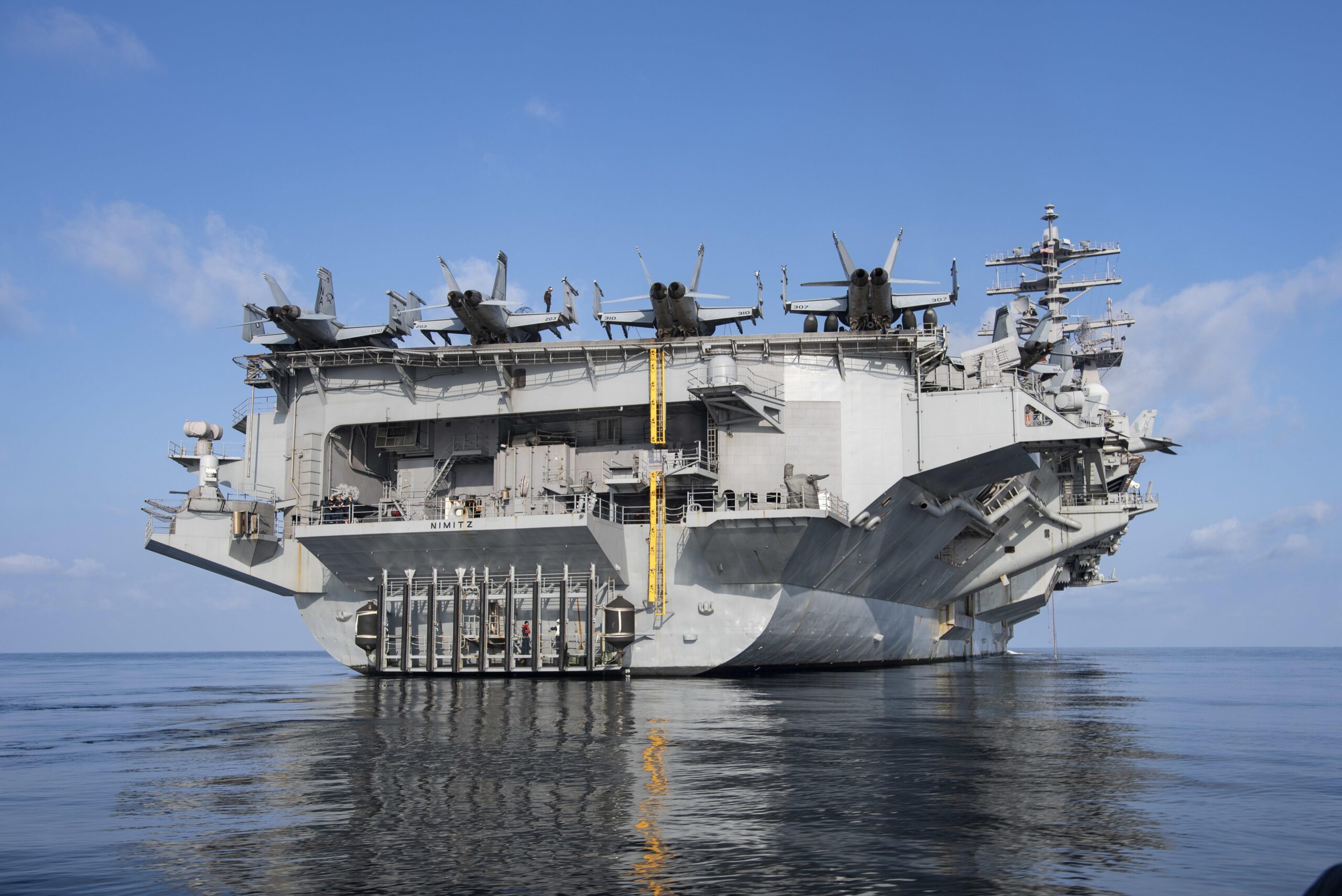


With Over 100 Thousand Tons and Nuclear Propulsion, the Nimitz-Class Aircraft Carriers Are Among the Largest Warships Ever Built and Have Sustained the Naval Power of the USA for Over Four Decades.
The Nimitz class aircraft carriers represent one of the largest expressions of military naval engineering ever built. With a displacement of over 100 thousand tons, a length of approximately 332 meters, and nuclear propulsion, these ships function as mobile air bases capable of operating in practically any ocean on the planet. Since the commissioning of the first ship of the class, USS Nimitz (CVN-68), in 1975, these giants have played a central role in the military strategy of the United States. Over the decades, they have participated in operations in the Middle East, the Pacific, and various international missions, maintaining a constant presence in strategically significant regions.
The Nimitz class consolidated the concept of a nuclear supercarrier capable of operating globally for long periods without relying on conventional fuel replenishment.
How the Nimitz Class Emerged and Why the USA Invested in Nuclear Supercarriers
The Nimitz class design was born during the Cold War, a period marked by intense military rivalry between the United States and the Soviet Union. The U.S. Navy sought to enhance its global power projection capacity, especially in regions far from its land bases.
-
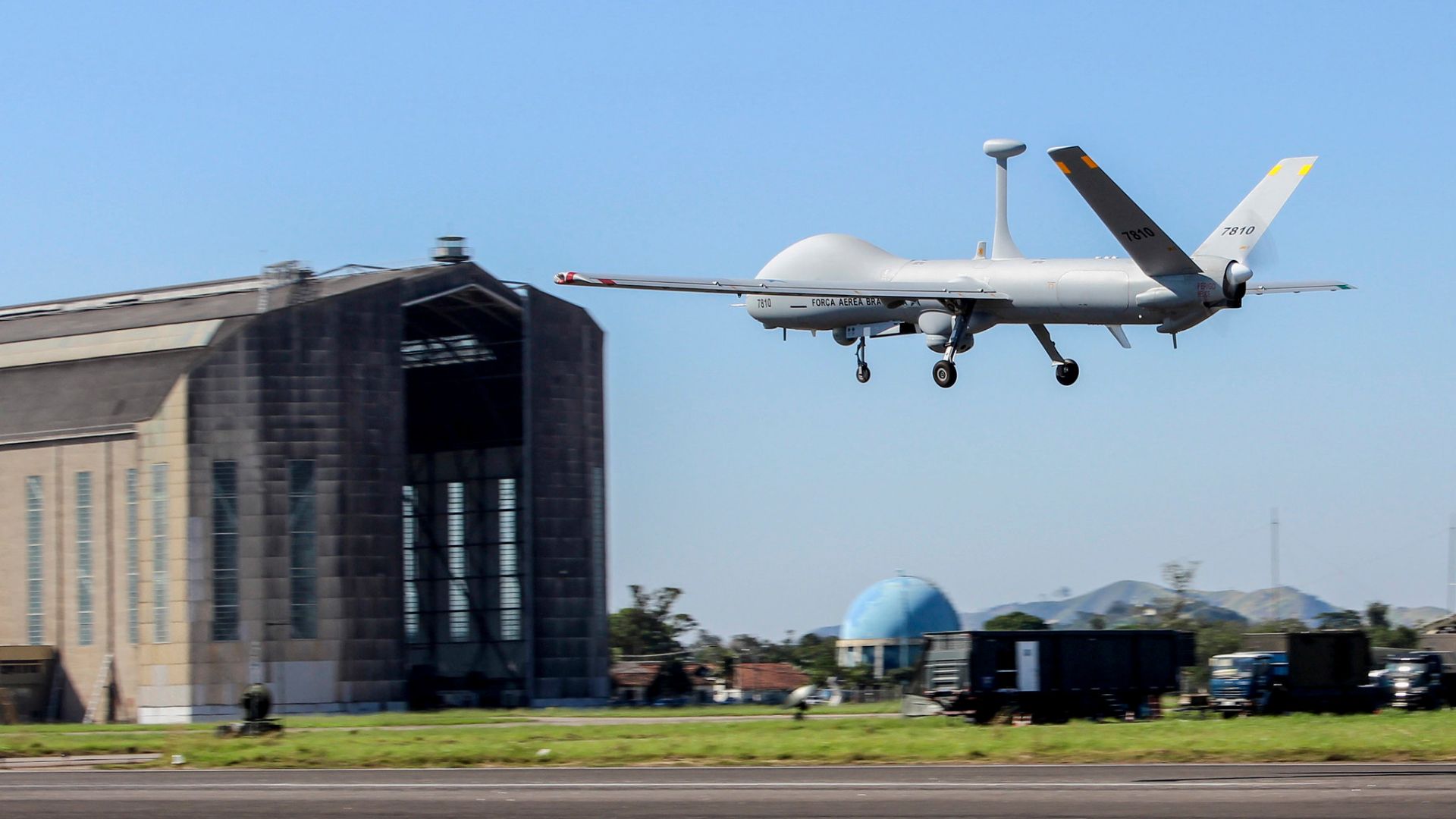
FAB loses Hermes 900 drone during multinational exercise in Mato Grosso do Sul and is left with only one active aircraft, raising concerns about operational fragility and strategic response capability.
-
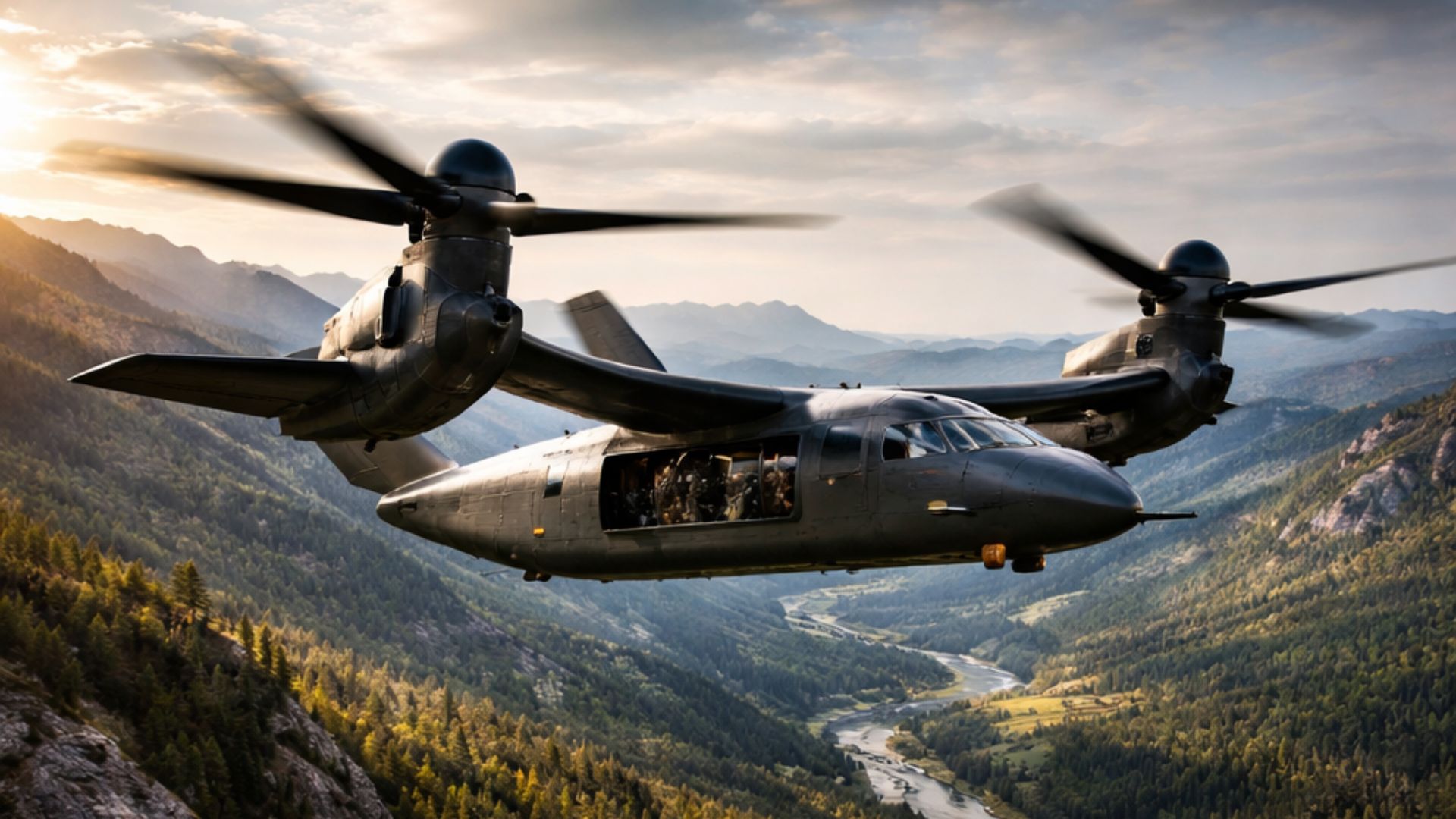
The U.S. Army bets on the multifunctional MV 75 aircraft with cutting-edge technology that promises to revolutionize modern warfare by combining extreme speed, greater range, and unprecedented operational efficiency.
-
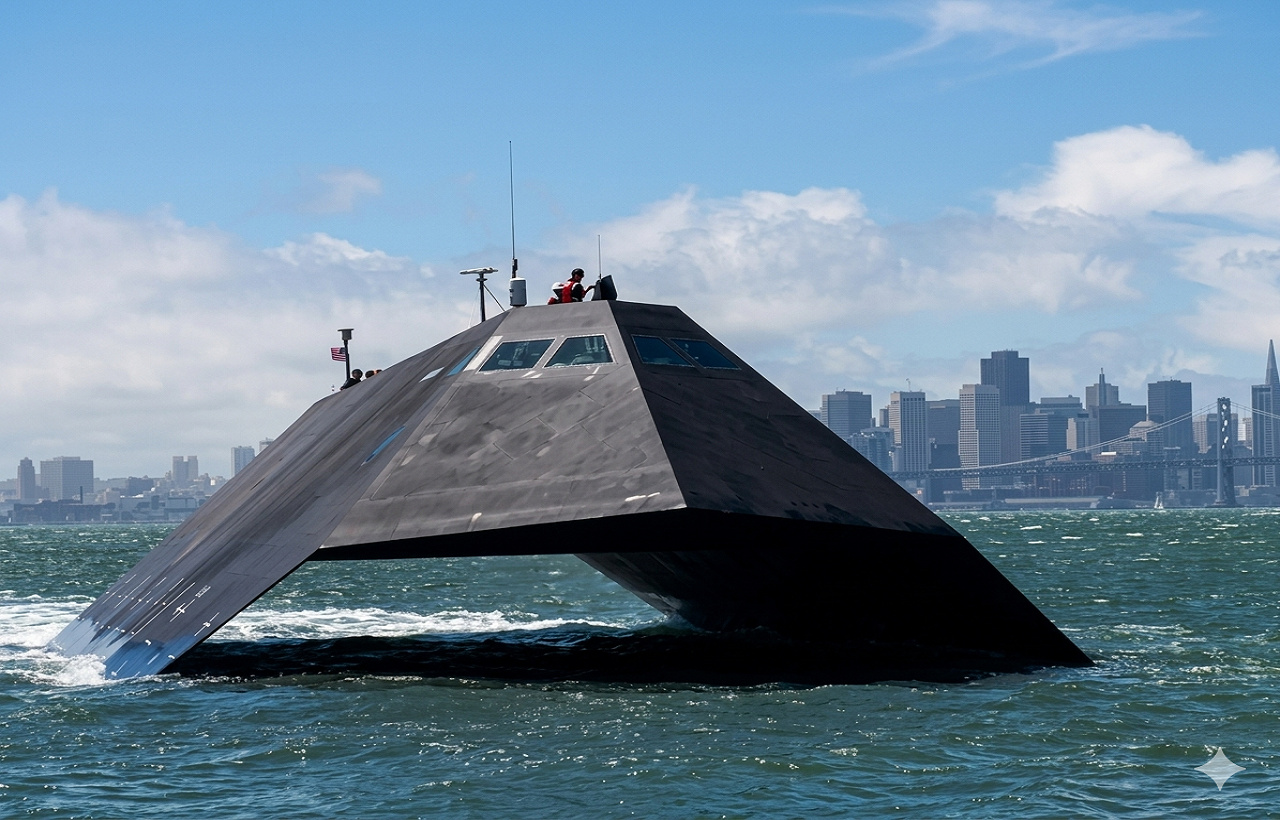
Built in secret inside a barge with a satellite-proof roof, the 49-meter, 560-ton ship with stealth technology deflected radar waves like an F-117 fighter, sailed invisibly for nearly 10 years at night, and, despite costing 170 million dollars, ended up being dismantled and sold as scrap for only 2.5 million.
-
North Korea tests intercontinental range rocket with a 2,500 kN solid fuel engine supervised by Kim Jong Un and advances in a five-year strategic plan.

Until then, many aircraft carriers used conventional propulsion powered by fossil fuels. This required frequent refueling operations and limited mission duration.
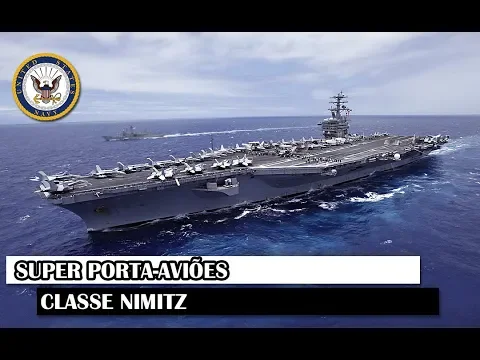

The introduction of nuclear propulsion completely changed this scenario. The concept had been previously tested on the aircraft carrier USS Enterprise, but the Nimitz class was developed to standardize and expand that model.
With onboard nuclear energy, the ships gained significantly greater operational autonomy and logistical independence.
Giant Dimensions Transform the Ship into a Floating Airbase
The Nimitz-class aircraft carriers are among the largest military ships ever built in modern naval history. Their impressive dimensions include:
- displacement of over 100 thousand tons
- approximately 332 meters in length
- flight deck width of over 75 meters
- total crew size that can exceed 5 thousand people, including pilots and technicians
These proportions allow the ship to function as a true floating airbase. The flight deck has sufficient space for launching and landing aircraft virtually continuously. The scale of these vessels allows for intense air operations even at sea.
Nuclear Propulsion Allows Uncommon Oceanic Autonomy
Each Nimitz-class aircraft carrier is equipped with two A4W nuclear reactors, responsible for generating power for the ship’s propulsion and all onboard electrical systems. This technology offers numerous operational advantages.
Among the main benefits are:
- extremely high autonomy
- reduced need for logistical refueling
- ability to remain on mission for extended periods
Nuclear fuel does not need to be replaced frequently. In many cases, refueling occurs only after decades of operation, during major maintenance cycles. Nuclear energy allows the aircraft carrier to cross oceans and remain operational for months without the need for conventional refueling.
The Embarked Aerial Power of the Nimitz Class
The real power of an aircraft carrier lies in its ability to operate aircraft. On the Nimitz-class ships, the embarked air group can consist of between 60 and 75 aircraft, depending on the mission.
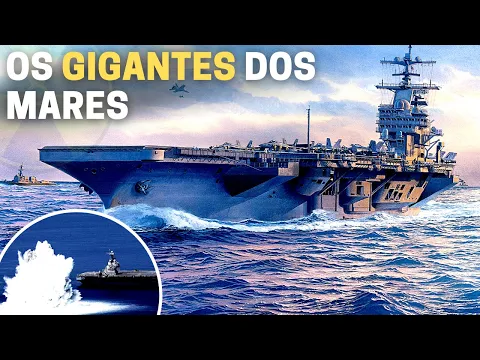
Among the most common models are F/A-18 Hornet and Super Hornet fighters, early warning aircraft E-2 Hawkeye, EA-18G Growler electronic warfare planes, and MH-60 Seahawk helicopters. These aircraft are launched using steam catapults, which accelerate the planes in just seconds to the speed needed for takeoff. Landings are assisted by arrestor wires installed on the deck.
This structure transforms the aircraft carrier into a platform capable of projecting air power over great distances from the coast.
Global Presence and Participation in Military Operations
Over decades of operation, the Nimitz-class aircraft carriers have participated in various military missions and international operations.
Among the main engagements are operations during the Gulf War, missions in Afghanistan, and constant patrols in the Pacific and the Middle East. The presence of an aircraft carrier in a particular region often represents a strong demonstration of military capability and geopolitical influence.
In addition to military operations, the ships have also been used in humanitarian missions, providing logistical support and medical assistance during natural disasters. The mobility of these ships allows for the rapid deployment of an entire airbase to strategic regions of the planet.
Internal Structure Functions Like a City at Sea
Due to their size and the number of people onboard, a Nimitz-class aircraft carrier essentially functions as a small floating city.
The vessel has complete infrastructure to sustain thousands of crew members for extended periods at sea. Among the facilities are hospitals, medical centers, maintenance workshops, industrial kitchens, accommodations, and command centers. This structure ensures logistical and operational autonomy, allowing the ship to remain on mission for months without the need to return to port.
The operational complexity of these ships requires coordination among thousands of specialized professionals.
Defense Systems and Protection of the Aircraft Carrier
Although it is the central element of a naval force, the aircraft carrier also has its own defense systems. Among them are anti-missile systems, advanced radars, close-in weapon systems, and electronic warfare equipment.

Moreover, the aircraft carriers operate accompanied by escort ships, forming battle groups known as Carrier Strike Groups. These groups include destroyers, cruisers, and submarines responsible for protecting the aircraft carrier against aerial, underwater, and surface threats. This escort structure significantly enhances the ship’s protection in combat environments.
How Many Nimitz-Class Aircraft Carriers Exist
In total, ten Nimitz-class aircraft carriers were built between the 1970s and the early 2000s.
Among them are ships known as:
- USS Nimitz
- USS Dwight D. Eisenhower
- USS Carl Vinson
- USS Theodore Roosevelt
- USS Abraham Lincoln
- USS George Washington
- USS John C. Stennis
- USS Harry S. Truman
- USS Ronald Reagan
- USS George H.W. Bush
These ships continue to play an important role in the structure of the United States Navy.
New Generation Starts to Replace the Nimitz Class
Although still operational, the Nimitz-class aircraft carriers are gradually being supplemented by the new generation of supercarriers Gerald R. Ford class. This new class incorporates newer technologies, including electromagnetic catapults, more advanced electrical systems, and greater automation.
Nonetheless, many Nimitz-class ships are expected to remain in operation for decades due to the robustness of their construction and the capability for modernization over time. For over forty years, these nuclear giants have represented the global standard for modern supercarriers.








Tamanho não é documento basta ser atingido por um torpedo que já era vai virar coral para peixe
Já entrei em um desses, USS CVN 65 ENTERPRISE, coisa de outro mundo. Isso em 1990, imagino hoje
Na prática tomou três míssil de raspão do Irã e saiu rapidinho do cenário para não virar uma **** de fogo.
Quer comparar o poderio militar kkkkkkkk
Não, quer comparar a inutilidade desse alvo mostro com a atual guerra de drones e mísseis