





 English
  Francês
  Alemão
  Italiano
  Japonês
  Norueguês
  Portuguese
  Spanish
  3 min of reading


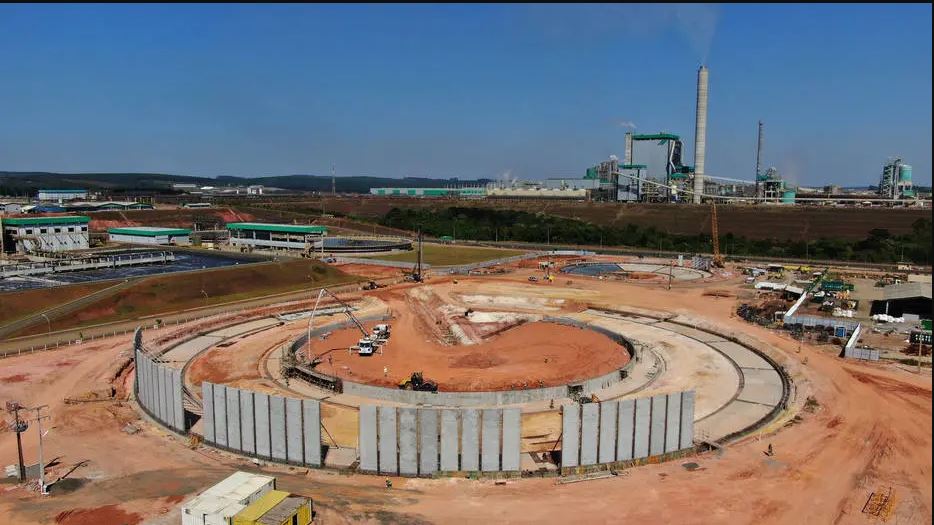
Klabin’s Puma II Project Is the Focus of Investments from the Brazilian Company. Job and Economy Growth in the Region of the Projects
Large Investments confirmed by the major Brazilian paper company Klabin last Friday (22) for 2020. The company projected an amount of R$ 4.7 billion, a sum that exceeds by 80% what was invested in 2019, which was R$ 2.6 billion. At an event hosted by Klabin, investors and shareholders learned that this funding will largely be applied to the Pruma II project, with R$ 3.8 billion of this budget planned for spending.
See Also
- Petrobras Announces 4% Increase in Cooking Gas Prices at Refineries
- Petrobras Will Start Drilling the First Wells of Phase I of the Mero Field
- BASF in Camaçari Is Hiring for Industrial Maintenance Positions in BA
Summary of Klabin’s Puma II Project
Puma II will be implemented in the municipality of Ortigueira, in the central region of the state of Paraná, where Klabin’s first manufacturing unit was inaugurated in 2016. As this new project will integrate 2 additional paper machines for packaging, a total investment of R$ 6 billion is expected by 2021, and by 2022 the total projected investment will reach R$ 9.1 billion.
The scenario is favorable for replacing various plastic-derived products with new, more ecological and sustainable paper options, according to Cristiano Teixeira, president of Klabin: “Substitution of single-use plastic is a reality.” He emphasizes that China and countries in Europe are already making significant progress in this new trend of the sector, but Latin America and the United States are also beginning to work on this process.
-
Government unlocks R$ 554 million for a highway that has been requested for decades and accelerates the duplication of BR.
-
Without bricks, without cement, and without endless construction: the cardboard house that is assembled in modules and can be moved.

-
Billions of barrels on the equatorial margin could lead Amapá to double its oil production in Brazil — the state aims to enter the route of companies in the Campos Basin, attract investments, and boost jobs and businesses in the oil and gas sector.
-
Without bricks, without cement, and without endless construction: the cardboard house that is assembled in modules and can be moved.

According to Teixeira, the plastic trade amounts to around 400 million tons annually: “Of this total, 160 million tons are plastics intended for single-use packaging. This is the focus. For this (the substitution by paper products), we have been investing heavily in research and development.”
After several years of low productivity and sales, the director of the Brazilian company Klabin, José Soares, highlighted that the market is taking steps toward stabilization in the coming months, consequently recovering sales and job generation: “In the second quarter, there is some possibility of a price rebound,” he added. In his view, this recovery will be more noticeable in the second half of 2020.
The Construction Industry Will Strengthen Brazil’s Economy and Klabin’s Revenues
The current scenario favors Klabin regarding a larger market share in Brazil and increased revenues, according to Teixeira. The construction industry will grow primarily due to increased construction activities.
“The national economy is very strong for us,” said Teixeira during Klabin Day. “Our corrugated paper and industrial bags unit set a record in October and November,” said the executive. “And we are receiving orders for December, which is not normal (as year-end orders are usually placed earlier).”








Seja o primeiro a reagir!