






 Portuguese
  Spanish
  5 min of reading
  0 comments


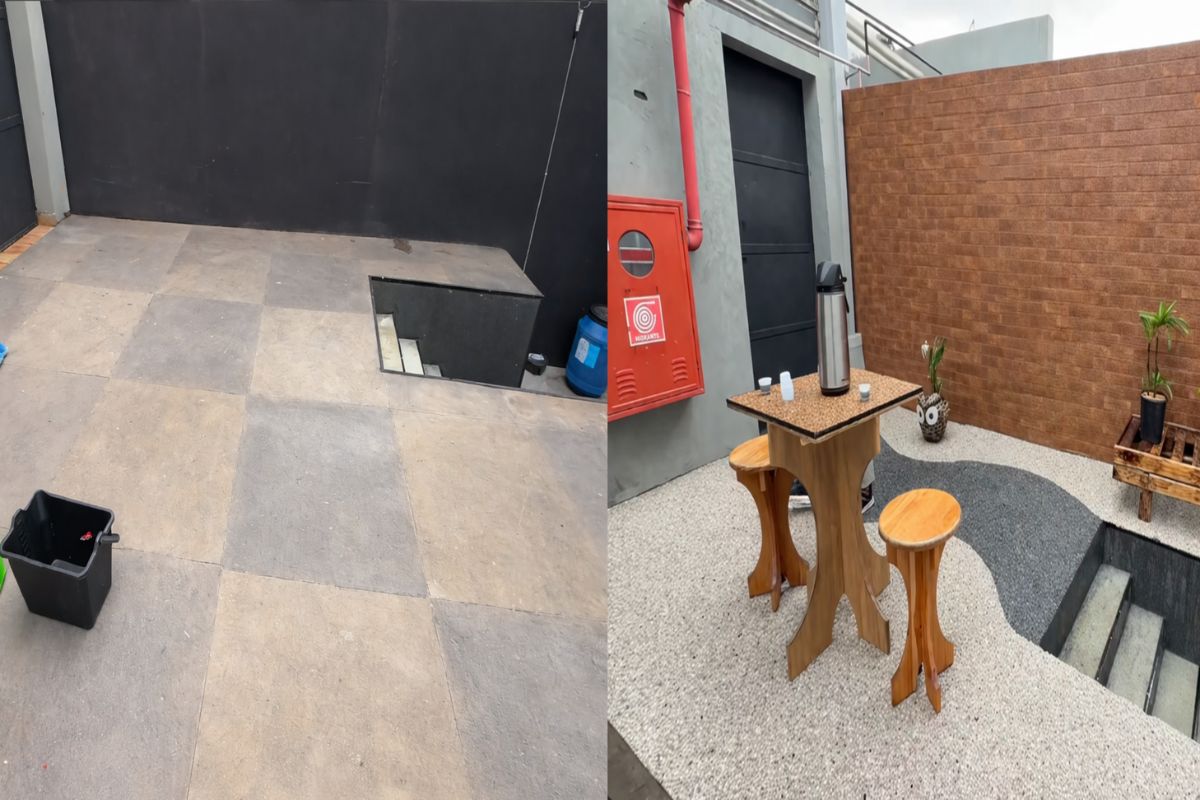
With immediate drainage, natural stone permeable flooring provides a non-slip finish for outdoor areas without standing water and with a sophisticated look
The immediate drainage was the standout feature of the transformation made at the entrance of the house with natural stones and resin. Instead of a common floor, the proposal created an organic pathway with a non-slip finish, a sophisticated appearance, and the ability to drain water without forming puddles, something that changes not only the appearance of the environment but also its daily use.
In addition to the visual effect, the process drew attention for its speed. The complete application, from the conception of the design to the finishing touches, took about three hours of work. The result was a compact, beautiful, and functional permeable floor, with two shades of stone and a surface designed for outdoor areas.
The project started from an area that was already worn out and quite stained. Before any application, an intense cleaning was carried out to remove ingrained dirt, as the adhesion of the material directly depends on this preparation.
-
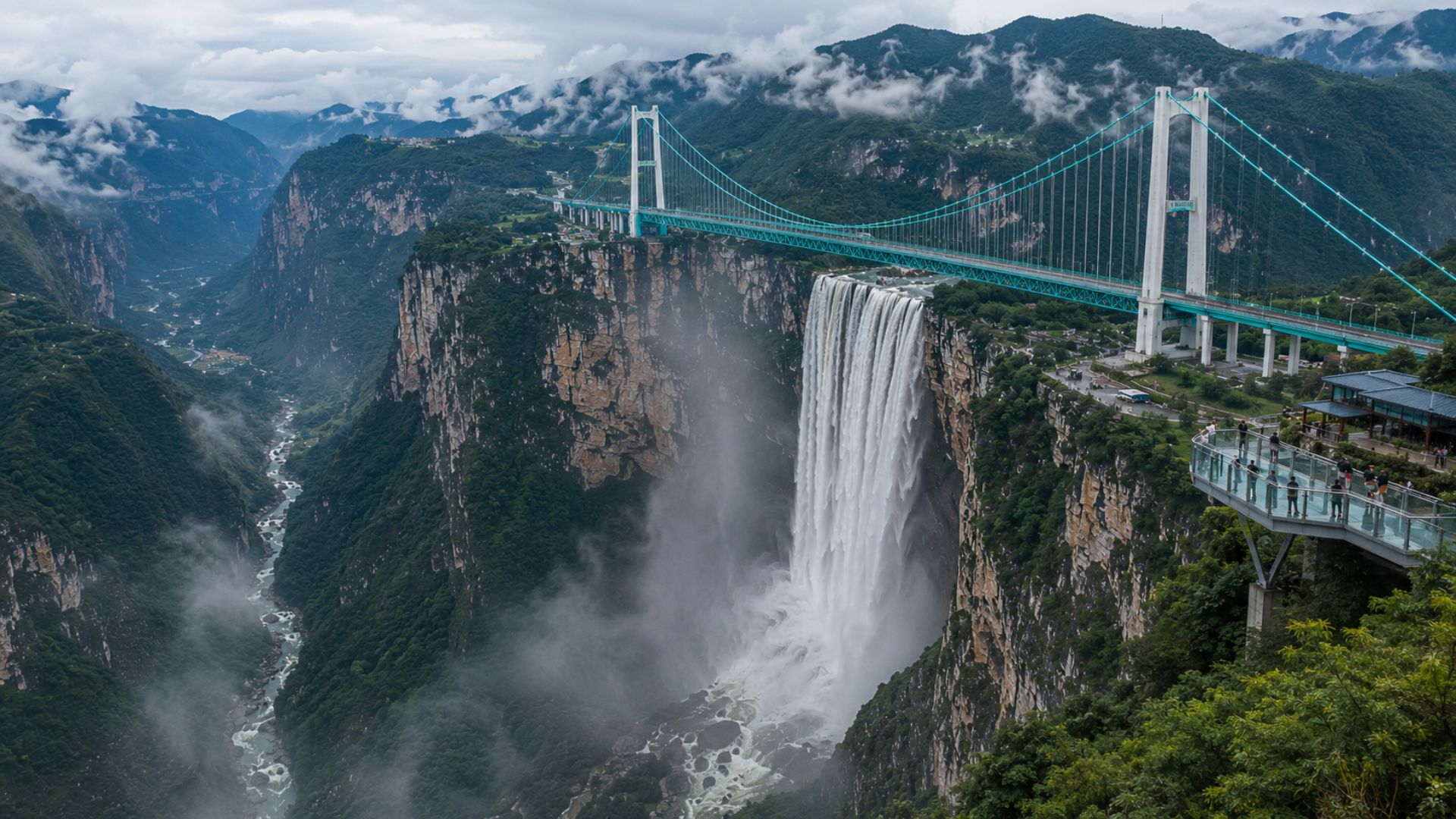
During the construction of the world’s highest bridge, the Huajiang Bridge in China, engineers discovered a giant aquifer and turned what would have been a serious problem into a 625-meter artificial waterfall, an engineering feat that no one had planned.

-
The river rose 15 meters overnight and devastated a village in Vietnam in 2025, and Japan responded with dams that hold back mud and stones, training 15,000 people for evacuation, and a sewage station for 1 million residents.
-
Russia erected the tallest building in Europe on ground as soft as quicksand, on the edge of the Gulf of Finland, with 264 piles of 25 meters, 30 thousand tons of steel, and 16,500 glass panels curved one by one in Saint Petersburg.
-
A mother of four sought a safer family environment, watched tutorials on the internet, built a 325 m² house with her family, and learned foundation, walls, plumbing, and electrical work without any professional experience.




After that, the proposal took shape with an organic design. The central part received a darker stone, while the surrounding area was filled with a lighter stone. This combination created a visually striking pathway, ideal for highlighting the entrance of the house or even the outdoor area of a business.
The preparation of the floor was decisive for the result

Before applying the stones, the surface needed to be cleaned and carefully defined. Tape was used to mark the thickness and shape of the pathway, which helped maintain the design and regularity of the layer.
This step was important because the finish depends on a clean and well-organized base. Nothing adheres properly over dirt, and defining the edges helps control height, fit, and compaction during application.
The mixture of stone and resin requires exact measurements

The central part received a smaller stone, in a dark gray tone, which after the resin takes on an even more closed and elegant appearance. The edge was made with a lighter stone and larger grain, reinforcing the visual contrast.
In the mixture, the resin was applied in the indicated proportion to ensure adhesion without excess or deficiency. According to the shown step-by-step, this care is essential for the stones to be completely surrounded and not come loose later. The correct dosage is what sustains both the aesthetics and the durability of the floor.
Application requires constant compaction and finishing

After the mixture, the material was spread on the surface with a trowel and ruler, always paying attention to thickness and leveling.
Compaction emerged as one of the most important steps, as it is what makes the stones more settled and comfortable to walk on.
During the work, the cleaning of the tool needed to be done constantly to prevent the resin from starting to stick and compromising the finish.
The secret to the uniform appearance lies precisely in this combination of pressure, leveling, and constant cleaning of the tool.
Immediate drainage appears in the water test

After the initial curing, the most important test of the project came. The floor received water directly on the surface and practically demonstrated the immediate drainage promised in the proposal.
In the area with more compacted stone, the water flowed down quickly, albeit a bit slower. In the larger grain stone, the drainage was practically instantaneous.
The main point is that the water did not pool, and this reinforces the value of the system for outdoor areas subject to rain or frequent cleaning.
Floor dries quickly and can be used in a short time
Another strong point of the system is the release time. The application needs a few hours to cure to the touch, and after 12 hours it is already possible to walk on the floor under suitable conditions. In warmer weather, the recommendation is to extend this time for greater safety.
This makes the immediate drainage an even more interesting differential, as the floor not only drains water efficiently but also comes into use quickly. It is a solution that combines speed of execution, practicality, and a sophisticated finish.
The organic effect enhances the entrance of the house


Visually, the composition with two colors and an organic outline was one of the strongest points of the transformation.
Instead of a straight and common path, the design created movement and enhanced the entrance of the house with a more personalized appearance.
The combination of dark stone in the center and light stone on the sides also helped to highlight the outline of the floor.
The finish has a natural appearance while being very well planned, something that reinforces the decorative character of the project.
Cost may vary according to the chosen stone
According to the application shown, the cost was around R$ 190 per square meter, including stone and resin. Still, this cost can vary significantly depending on the type of stone chosen.
This means that the same concept of immediate drainage can be adapted for different budgets.
Simpler stones, such as construction gravel, can also be used, which expands the possibilities for those who want a similar effect while spending less.
The result combines aesthetics, safety, and functionality

In the end, the transformation of the entrance shows how a permeable floor can go far beyond its basic function. The immediate drainage prevents puddles, the texture ensures a non-slip effect, and the design with natural stones completely changes the visual reading of the environment.
It is a solution that delivers beauty, speed, and intelligent use of water, all with a relatively quick application and a finish that stands out right away.
Would you install a floor with immediate drainage at the entrance of your house?





Be the first to react!