





 Portuguese
  English
  Spanish
  3 min of reading
  0 comments


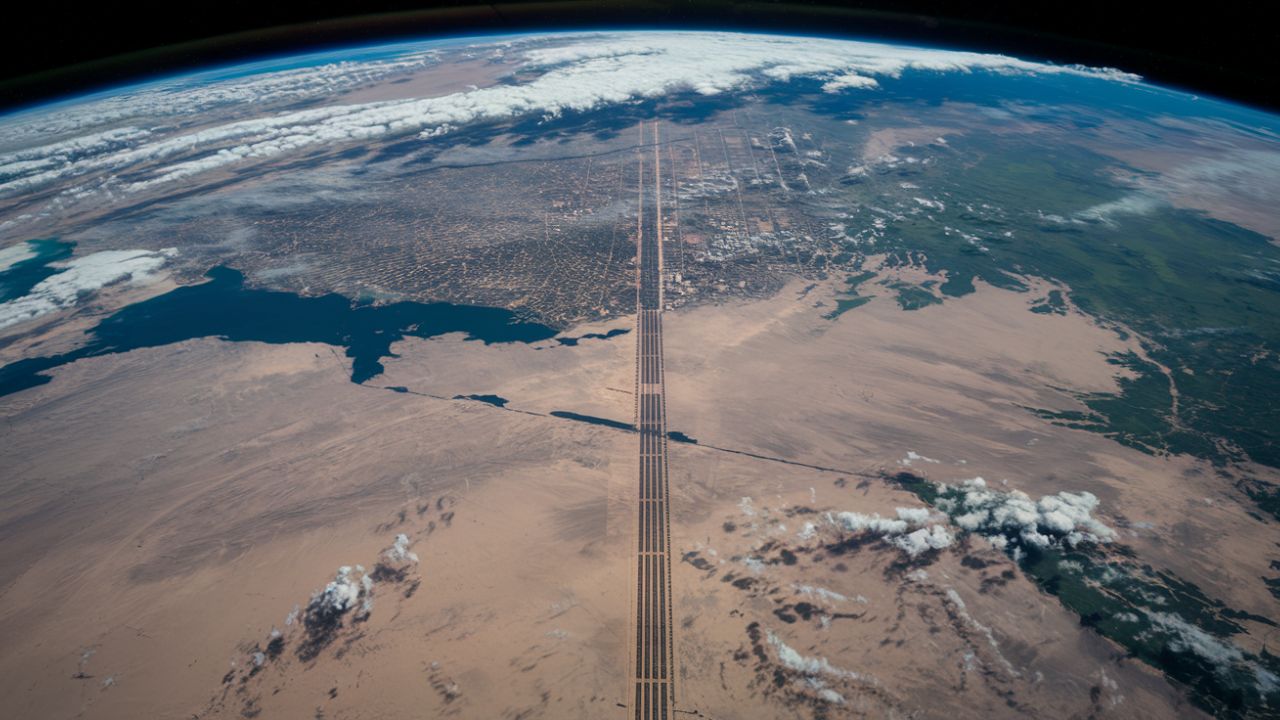
With over 3,200 km of extent, the construction of the wall between Mexico and the United States crosses deserts, mountains, and rivers, costing billions of dollars and dividing not only territories but also families, ecosystems, and opinions around the world.
Imagine a construction so imposing that it crosses deserts, mountains, and rivers, separating two entire nations. This is the reality of the wall between Mexico and the United States, a project that has already exceeded 3,200 kilometers in length. With a mix of high technology and robust engineering, the project raises heated debates about immigration, security, and humanity. But what is really behind this barrier?
What is the Wall Between Mexico and the United States?
The idea of a wall on the border is not new, but it gained momentum in the early 21st century, when issues of national security and immigration began to dominate public debate. The structure was conceived to block illegal immigration and curb drug trafficking, but it also became a symbol of cultural and political division between the two nations.
The wall begins at the Gulf of Mexico and extends to the Pacific Ocean. Along the way, it crosses arid deserts, steep mountains, and areas of dense vegetation, each with its own challenges. For example, some parts of the construction are reinforced with double barriers in urban zones, while others take advantage of natural formations such as rivers and mountains to hinder crossing.
-
New CCR concrete paving technology promises roads up to 3x more durable, less maintenance, and cost reduction in Brazil.

-
Made from recycled plastic, plastic wood is gaining space in the construction industry because it does not rot, resists moisture, and reduces maintenance costs over the years.

-
Florianópolis will receive a million-dollar BRT that will begin construction in 2026 with nearly 400 million in funding from the federal government and the Inter-American Development Bank, and the map already shows the routes for the exclusive bus corridors.
-
Without a blueprint, without an engineer, and using scrap from the dump, a father spends 15 years building an 18-room castle for his daughter, featuring tram tracks, 13 fireplaces, and over 700 m², which may now be demolished.

Why Was the Wall Built?

The main argument for the construction of the wall is security. It aims to reduce the illegal entry of migrants and combat criminal activities at the border. However, critics point out that the structure reinforces social exclusion and harms the welcoming image that the United States has historically cultivated.
In addition to being an expensive project—costing billions of dollars—the wall directly affects diplomatic relations with Mexico. Economically, it also interferes with trade and the lives of border communities, dividing lands and limiting the mobility of cross-border workers.
How Was the Construction?
The construction combines steel and concrete, materials that ensure durability in hostile environments. Additionally, technologies such as drones, heat sensors, and night vision cameras enhance border monitoring. In some areas, the wall is so thick that it is impossible for two people to touch from opposite sides.
Each section of the wall was designed to overcome local challenges. In the Sonora Desert, for example, the extreme climate required corrosion-resistant materials. Meanwhile, at the Rio Grande, the presence of running water and unstable terrains demanded innovative solutions to support the structures.
Impacts of the Wall on Communities and Nature
Thousands of migrants attempt to cross the border in search of better living conditions. However, the construction of the wall complicates not only crossing but also family reunification and access to opportunities. For many, it represents a barrier that is not only physical but also emotional.
In addition to the social impact, the wall affects the region’s flora and fauna. Native species face difficulties in migrating, which harms ecological balance. Not to mention the protected areas and national parks that have had their dynamics altered by the presence of the barrier.






-

Uma pessoa reagiu a isso.