





 Portuguese
  English
  Spanish
  3 min of reading
  0 comments


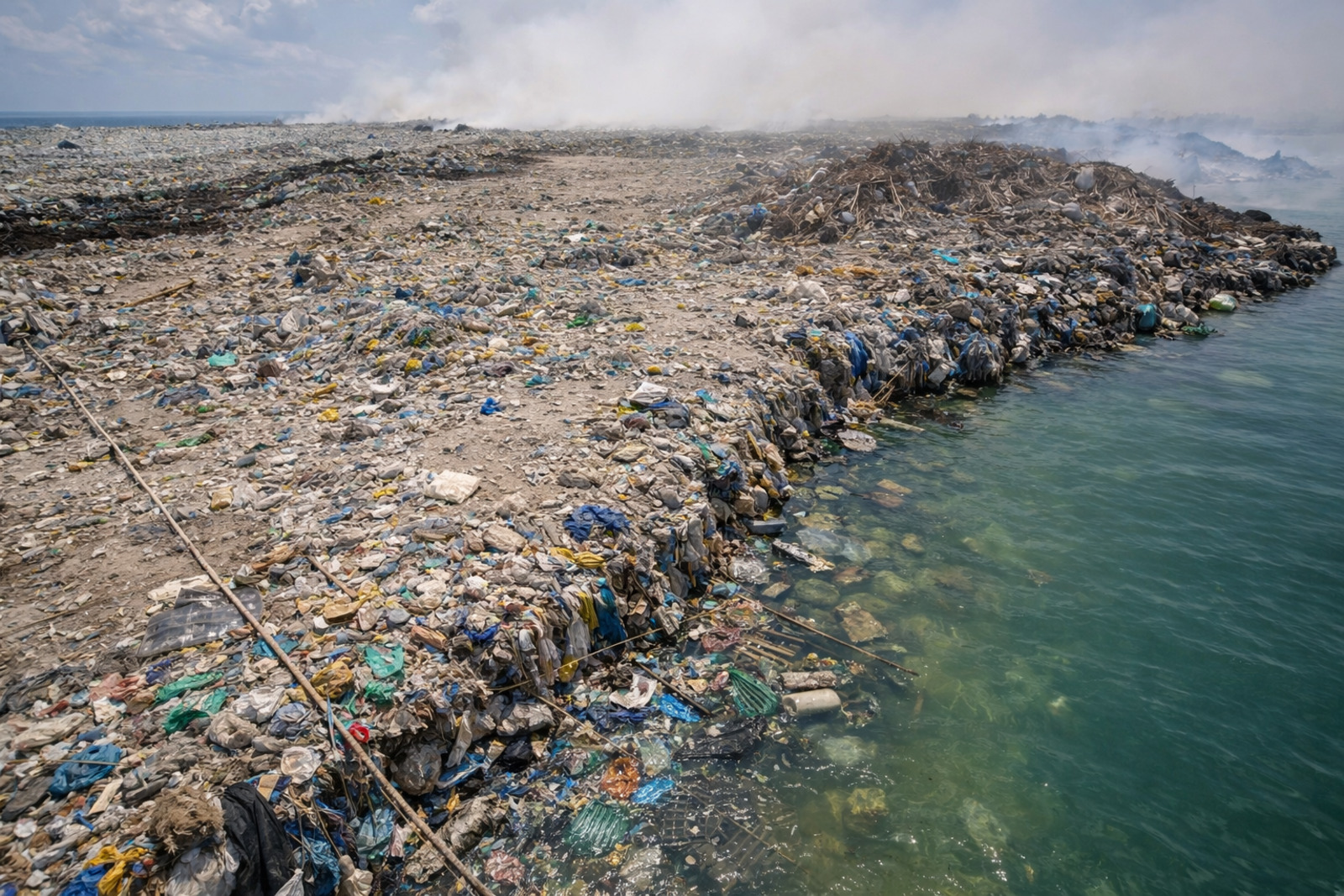
Between California and Hawaii, garbage island in the Pacific reaches 1.6 million km2, concentrates 80,000 tons of plastic and continues growing
The garbage island in the Pacific gathers 1.8 trillion pieces of plastic between California and Hawaii, occupies 1.6 million square kilometers and concentrates about 80,000 tons of waste, being the largest deposit in the world.
The initial alert
The first alert about the garbage island emerged in 1997, when captain and oceanographer Charles Moore was returning from a regatta.
During the crossing, Moore encountered a sea of plastic so extensive that it took him seven days to cross it. The discovery mobilized the scientific community and exposed a symbol of the ecological crisis.
-
Ten undergraduate students received an astronomy homework assignment, began sifting through data on the university’s computer, and ended up discovering the oldest star ever recorded in the universe, a cosmic immigrant that formed shortly after the Big Bang and was wandering alone towards the Milky Way.

-
Scientists reveal that Saturn’s rings may have formed after the destruction of a moon, and a study indicates that the planet’s bright structure is only 100 million years old.
-
A Brazilian who does not work at any space agency calculated a round trip route to Mars in just 7 months using asteroid trajectories as cosmic shortcuts, and the study was accepted by one of the most prestigious scientific journals in the world.
-
Archaeologists in the United States find the grave of a young 22-year-old soldier hastily buried during a hurricane; the discovery reveals how yellow fever killed soldiers over 150 years ago.


Scale and composition
A study published in 2018 by the journal Nature described the patch as a continent of garbage with 1.6 million square kilometers and approximately 80,000 tons of plastic.
The garbage island is three times the size of France. Nevertheless, it remains invisible to satellites because 94% of its composition is made up of tiny fragments.
These microplastics, with a few millimeters in diameter, detach from larger waste due to erosion and spread across the ocean surface, making orbital visualization of the patch difficult.
How the patch forms
The microplastics come from land runoff and abandoned fishing gear, such as nets, baskets, and cages. Maritime traffic and boat waste also contribute to the problem.
When these particles reach the North Pacific Gyre, a circular highway through which water flows, they are grouped together and returned in an agglomerated form by the rotating currents.
The result is a large floating soup of garbage that drifts between Hawaii and California. The garbage island remains concentrated in this oceanic strip.
Scientific evidence indicates that the Asian continent is the main source of the waste and the increase in industrial fishing.
According to the study published by Nature, two-thirds of the objects collected had inscriptions in Japanese or Chinese.
The investigation identified nine languages, and the oldest fragment dated back to the late 1970s.
Environmental damage and health risks
At the Congress of the International Solid Waste Association, held in Bilbao in 2019, Charles Moore expressed pessimism and warned that plastic will invade every cm2 of beaches in the future.
Thousands of marine mammals and aquatic birds die every year by confusing plastic with food or getting trapped in abandoned nets at sea.

In 2016, a report from the Food and Agriculture Organization of the United Nations, FAO, warned about the presence of microplastics in up to 800 species of fish, crustaceans, and mollusks.
Human health can also be harmed by this accumulation. Microscopic plastic ingested by fish and other species consumed by people enters the human body through the food chain.
A study published in 2018 by Greenpeace and Incheon National University in South Korea concluded that 90% of the analyzed salt brands in global samples contained microplastics.
Initiatives to clean up garbage in the sea
The discovery of the garbage island also stimulated actions to reduce the presence of plastic in the sea. One of them is Plastic Free Waters, formed by the public sector, NGOs, and private companies.
According to a recent study by the coast guards of the New York and New Jersey area, at least 165 million plastic particles normally float in the harbor estuary.
Another initiative is 4Ocean. Since 2017, the project has collected 1,930 tons of ocean plastic in 27 countries and promises to eliminate half a kilo of waste for every item sold on its website.
The Seabin acts as a trash can to collect plastic and some oils, detergents, or floating fuels in ports, docks, and yacht clubs, and has removed more than 55 tons of waste globally.
With information from Iberdrola.






Seja o primeiro a reagir!