Portuguese
  Spanish


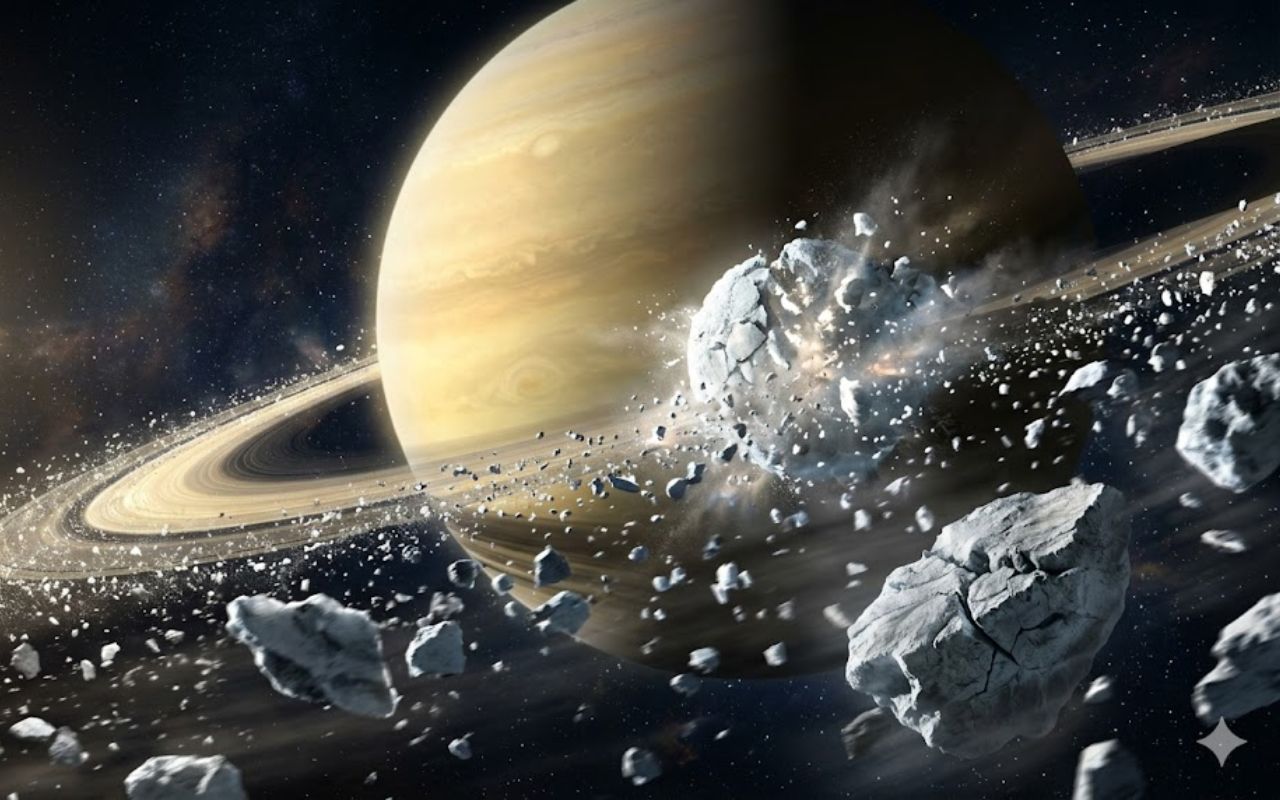

Study indicates that Saturn’s rings formed 100 million years ago from the moon Chrysalis. Ice fragments accumulated in orbit, creating the iconic structure of the gas giant.
Saturn’s rings, which have fascinated astronomers and curious minds for centuries, may have formed much more recently than previously thought. A study presented at the 2026 Lunar and Planetary Science Conference in Texas (USA) indicates that they emerged approximately 100 million years ago, following the destruction of a hypothetical moon called “Chrysalis.”
According to simulations, the ice released during the moon’s fragmentation spread into orbit around the planet, forming the bright structure that now encircles Saturn.
This discovery also reinforces the idea that Saturn’s rings are composed almost entirely of pure water ice, indicating a relatively recent origin and explaining their surprising cleanliness compared to other ancient space formations.
-
Researchers want to change the way of producing rare earth magnets, reducing purification steps and making better use of the elements found in Swedish deposits.

-
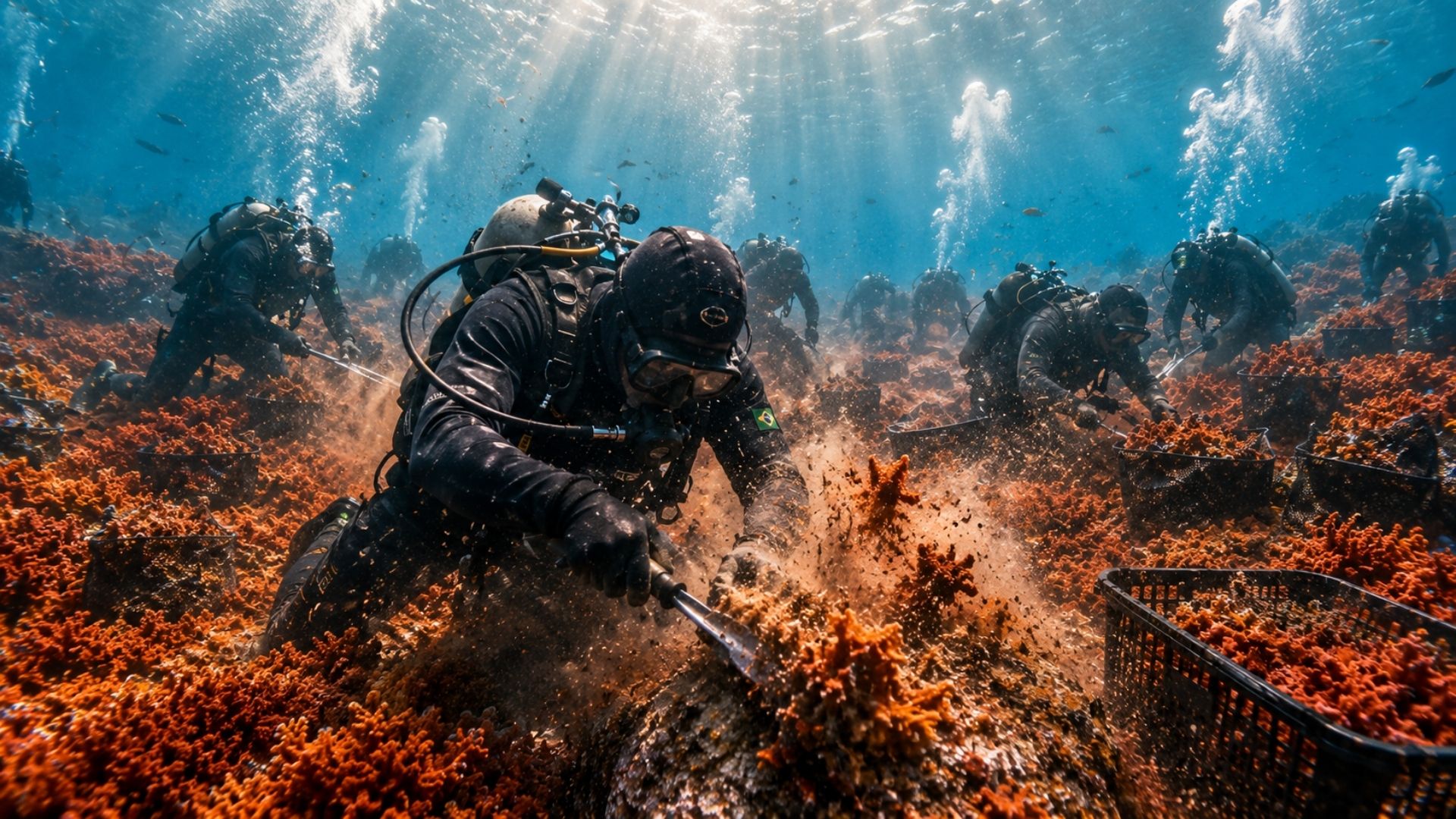
5.5 tons pulled from the seabed: a ‘living carpet’ of invasive coral was suffocating the Baía de Todos-os-Santos until the Brazilian Navy descended with divers, steel brushes, and acid salt to carry out the largest eradication operation of the species ever conducted in the country.

-
A Brazilian project dumped 5,500 concrete blocks and 2 barges into the ocean to block trawling in Paraná, and 25 years later what seemed like a risky intervention turned into an underwater nursery, a diving spot, and a refuge for endangered species.
-
Micron invested $9.3 billion in a factory in Hiroshima to produce the memory that powers the brain of global artificial intelligence.

Initial formation of Saturn’s rings from Chrysalis
The study details that Chrysalis had a rocky core surrounded by an ice mantle. As it approached Saturn too closely, tidal forces — gravitational variations that cause stress on nearby bodies — fragmented the icy mantle, while the core remained almost intact.
The ice fragments began to orbit the planet, forming the first elements of Saturn’s rings. Most of the rocks remained on the remaining moon, explaining why the rings are almost entirely icy.

Surprising composition and purity
Saturn’s rings are composed of about 98% pure water ice, an unusual index for structures exposed to space for millions of years.
This purity suggests that the rings did not form alongside Saturn but have a relatively recent origin, derived from the fragmentation of Chrysalis.
Furthermore, the predominance of ice over rocks reinforces the hypothesis that only the icy mantle of the moon was released, while the core remained intact.
Mass reduction and influence of the moons
After the moon’s fragmentation, not all fragments remained in orbit. Some of the ice particles were ejected into space, while the rest formed Saturn’s rings.
Initially, the rings may have been denser and more extensive, but the gravity of moons like Titan reduced their mass by up to 70%, shaping the appearance we observe today.
This process explains why the rings are relatively thin, even though they are rich in ice and composed of particles that emerged from a relatively recent event.

Traces of the event on Saturn’s moons
Fragments detached from Chrysalis may have been captured by some of Saturn’s moons, leaving traces that indicate the history of the fragmentation.
These traces allow scientists to study the origin of Saturn’s rings and the dynamics of the Saturnian system.
Future missions to the planet and its moons may confirm these traces, providing more details about the composition, density, and dynamics of the particles that formed the rings.
New perspective on Saturn’s rings
The study reinforces that Saturn’s rings are dynamic, young structures resulting from complex processes of fragmentation and mass redistribution.
Understanding their formation helps to better understand the evolution of planetary systems and the interaction between giant planets and their satellites.
This discovery opens new perspectives for future investigations into Saturn, its moons, and the mechanisms that shape planetary structures over time.
With information from Olhar Digital