





 Portuguese
  English
  Spanish
  5 min of reading
  0 comments


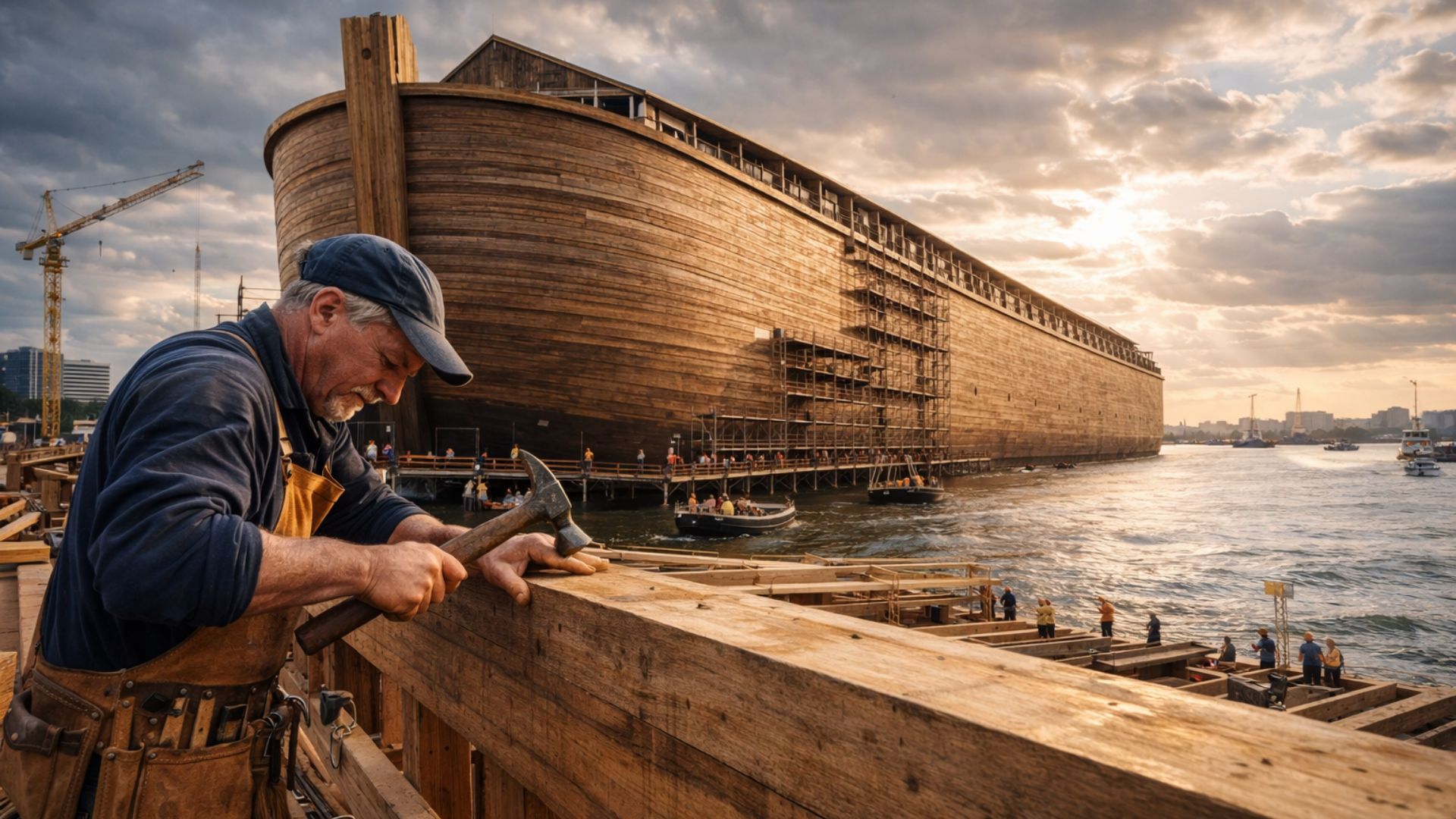
122-meter floating structure returns to the radar after years closed and is set to be transferred to Amsterdam, bringing together unusual engineering, religious symbolism, and a large-scale tourism proposal in the Netherlands.
The floating replica of Noah’s Ark built by Dutchman Johan Huibers, measuring 122 meters long, seven stories high, and featuring spaces for visitation, events, and accommodation, is set to be transferred from Krimpen aan den IJssel to the port of Amsterdam, where it will undergo renovation before being assigned a new purpose.
Closed to the public since 2016, the vessel has returned to the news after plans to send it abroad were abandoned and a new project began to foresee its stay in the Netherlands, with movement along the North Sea coast due to its size being incompatible with internal rivers and canals.
The size of the structure helps explain the impact.
-
She took her first steps on the mat while her father was training, started competing at the age of 4, and now at just 9 years old, she is the world champion in Jiu-Jitsu in Abu Dhabi: meet Tina, the girl from Ourinhos who sells canjica at the traffic light to compete in international championships.

-
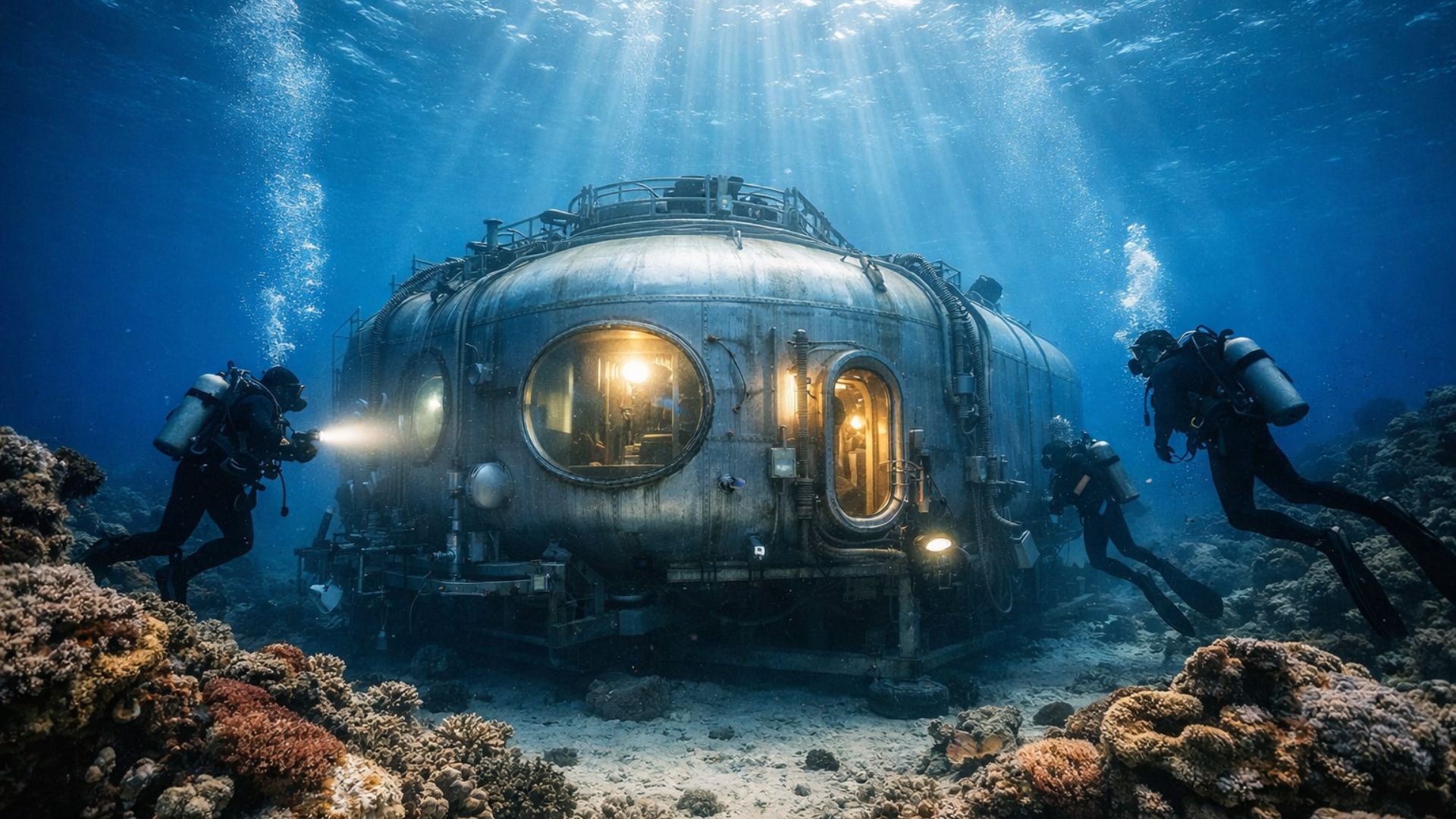
Measuring 13 meters in length, weighing 82 tons, and installed 19 meters below the surface, the Aquarius is the only operational underwater laboratory in the world, allowing scientists to live for days on the ocean floor surrounded by reefs in Florida.
-
China has erected a colossal scientific observatory at an altitude of over 4,400 meters, designed to operate with thousands of detectors, track jets from black holes, and investigate the origin of the most energetic cosmic rays in the Universe.

-
A Brazilian inherits a farm with a century-old mansion and 150 years of coffee tradition in Minas Gerais, restores the main house with water-powered machines, creates a new chalet, and transforms the historic property into a space that blends memory, nature, and culture.
The ark measures 122 meters long, 29 meters wide, and 27 meters high, figures that place it among the most unusual floating replicas ever built on the continent and make it visible from afar in the Dutch port landscape.
Engineering of the floating ark and use of barges
The full-scale project began to take shape in 2008 when Huibers decided to build a much larger version of the first ark he had launched years earlier and purchased 25 LASH barges, welded in Sliedrecht to form the floating base that would support the entire construction.

On this steel platform, the vessel received a covering of cedar and pine wood, a combination chosen to give the exterior the appearance of a large ark inspired by the biblical narrative, although the structural core was designed with modern solutions to ensure stability and buoyancy.
The idea did not arise suddenly.
In a report published by the official Ark van Noach website, Huibers states that the project was fueled by years of interest in the biblical story of Noah and by a recurring dream of floods hitting the Netherlands.
Before the monumental version, he launched a smaller first ark, launched in Schagen on April 29, 2007, measuring 70 meters long, 9.5 meters wide, and 13 meters high, designed to navigate locks and pass under Dutch bridges.
This smaller vessel traveled to over 20 stops in cities like Rotterdam, Arnhem, Texel, and Sneek, serving as a test for logistics and public reception, as well as paving the way for the next, much more ambitious construction in scale and cost.
Internal spaces with cinema, restaurant, and accommodation
When the larger version was completed and opened to the public, the internal space began to gather elements of exhibition and entertainment.
According to the project released by its organizers, the ark houses themed areas about the biblical narrative, two cinemas, a restaurant on the upper deck, and a large event hall.

Additionally, the ship features accommodations described in local reports as four apartments, which expanded its potential use beyond tourism and reinforced the proposal to transform the structure into a multifunctional facility capable of hosting diverse audiences in a single operation.
The internal layout was designed to suggest life aboard a vessel inspired by the Genesis account.
There were areas related to food storage, spaces associated with the presence of animals, and activities aimed at families and school groups, focusing on immersive experience.
During the years it operated as an attraction, the replica attracted visitors interested in both the size of the construction and the physical adaptation of a widely known religious reference.
However, the operation lost momentum when the vessel had to leave Dordrecht due to a new residential project in the area.
Transfer to Amsterdam and logistical challenges
Since the move to Krimpen aan den IJssel in 2016, the ark has remained unused and closed to visitation.
In the meantime, various plans for sale, restoration, and transfer emerged, including proposals involving other countries, but none of them advanced definitively at that time.
The new plan foresees taking the vessel to the port of Amsterdam, in an operation considered delicate precisely because the ark cannot navigate through the country’s canals and rivers.

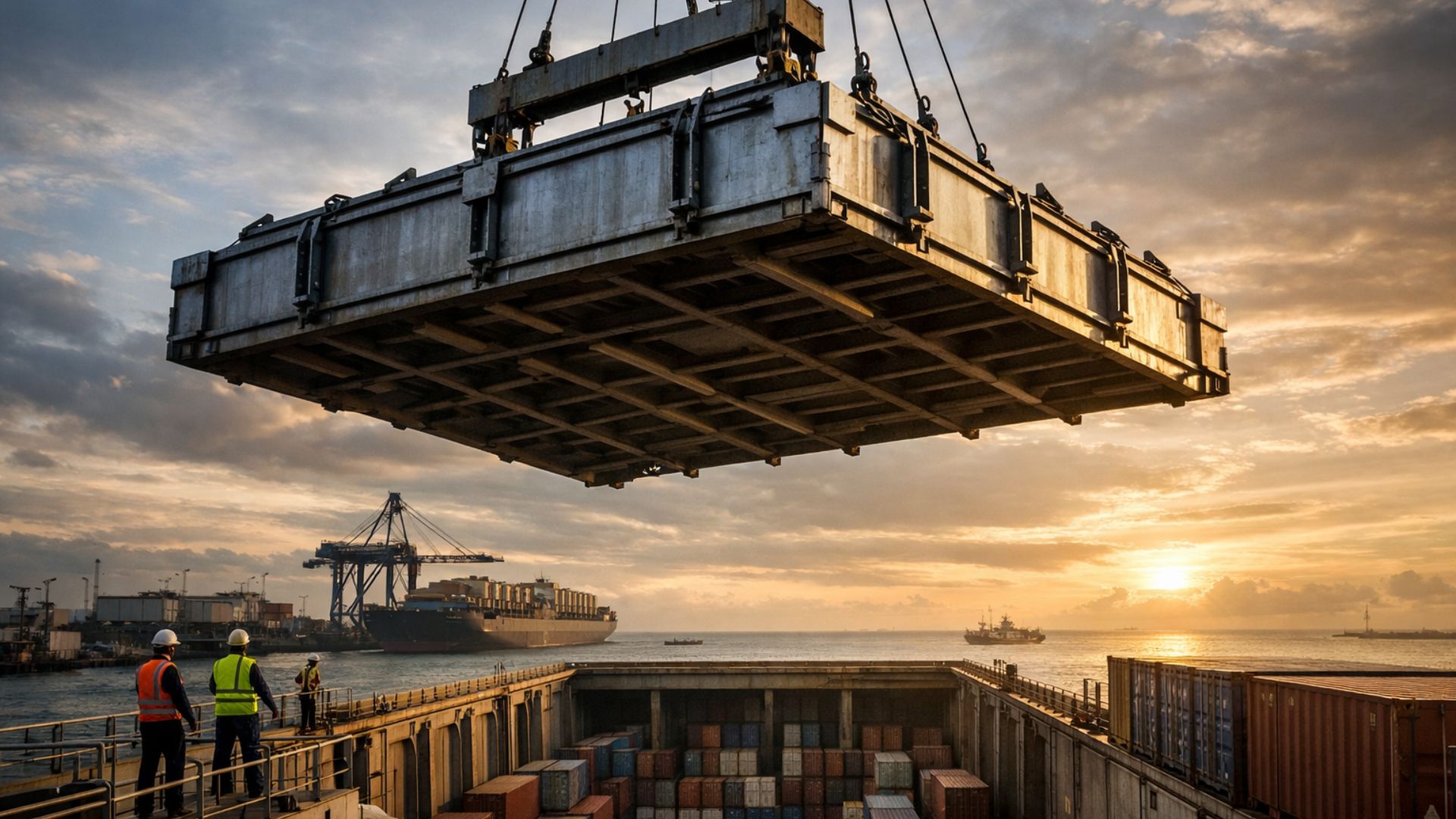
The alternative under discussion is transport via the North Sea, possibly with the support of a special platform.
The complexity lies not only in the movement.
Upon arriving at the new destination, the structure will need to undergo renovation, as parts of the wood show wear after years of exposure and a long period of inactivity.
The transfer also represents a concrete attempt to restore function to a vessel that, from the outset, was conceived to attract adults and children through a physical, visual, and walkable experience.
Instead of remaining an extraordinary yet stationary piece, the ark can return to operating as a exhibition, event, and visitation space, now inserted into another urban context and linked to a new port occupation project in the Dutch capital.
The return to the spotlight occurs because the vessel combines, at the same time, an uncommon scale, strong visual recognition, and a business story marked by advances, interruptions, and successive attempts at relaunching.
There is also a rare element in this case.
Unlike other large replicas inspired by Noah’s Ark installed on solid ground, the structure built by Huibers was designed as a floating construction, capable of being towed and repositioned, although it is not a vessel prepared for conventional navigation in open sea.
With the move to Amsterdam and the planned renovation, the replica enters a new phase after nearly a decade of inactivity, reintroducing a project that mixes engineering, wood, biblical appeal, and tourism vocation in proportions hard to ignore in the port landscape of the Netherlands.



Seja o primeiro a reagir!