





 Português
  Inglês
  Espanhol
  4 min de leitura
  0 comentários


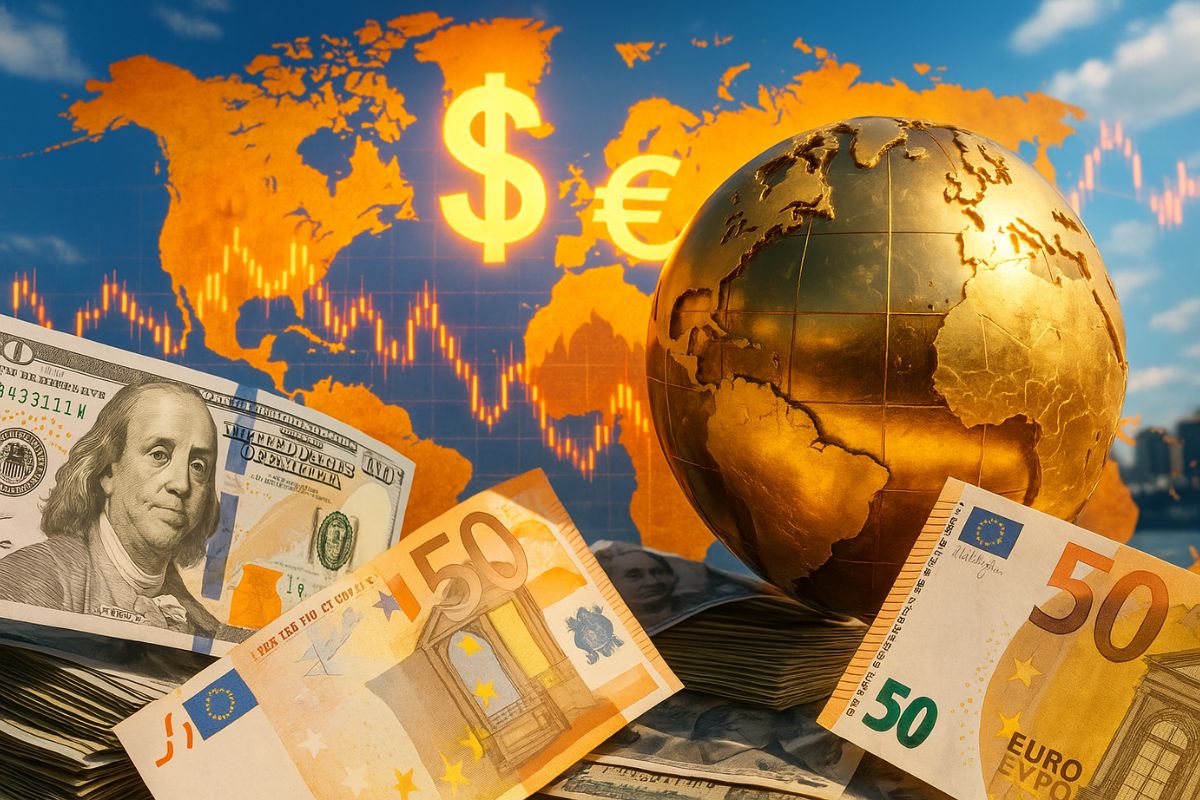
The Daily Volume of the Currency Market Shows How the Global Economy Works Even Without Producing a Single Physical Good: Liquidity, Hedge, and Speculation Support Trade and Increase Risks for Countries and Companies
The global economy revolves, every day, over US$ 7 trillion just in currency transactions. It’s money that changes hands without producing a single product, but it lubricates vital gears: international payments, protection against volatility, and price formation between currencies.
This movement is concentrated in the Forex market, the most liquid in the world, whose daily trading exceeded US$ 7.5 trillion in 2022. Most of this amount is not directly linked to goods shipment; it arises from financial strategies such as hedge, arbitrage, speculation, and operations among large banks (dealers), with a focus on currency swaps, which account for a dominant slice of the volume.
What Happens in a Currency Transaction
A currency transaction is, essentially, exchanging one currency for another.
-
In a silent race, Shopee signs a mega contract in Guarulhos and accelerates the e-commerce war with faster deliveries, pressured shipping, and a new threat to rivals in Brazil.

-
Oil surged to $115 a barrel due to the war in the Middle East, and diesel in Brazil has already risen to R$ 7.45 per liter, while the United States…
-
Brazilian city bets on the business environment to generate jobs and attract investments in the energy sector — secretary reveals strategy at Macaé Energy 2026.

-
50 viaducts, 4 tunnels, 28 bridges, and 40 kilometers of bike paths: BR-262 in Espírito Santo will receive 8.6 billion reais for the largest engineering project in the state’s history, inspired by the Immigrant Highway in São Paulo.


Exporters, importers, funds, and banks do this all the time to settle contracts, adjust positions, and manage currency risk.
The dynamics are continuous, 24 hours a day, crossing time zones and financial centers.
The main actors are the global dealers, who quote prices and “pair” buy and sell orders; companies that reduce uncertainty with hedge; and traders who try to anticipate price movements.
Arbitrageurs seek cents of difference between markets, while swaps allow “swapping” currency flows and terms to calibrate cash and exposure.
Why the Volume is So Large Without Producing Physical Goods
The trade of goods and services requires currency exchange, but represents only a fraction of the total traded.
The bulk comes from financial operations: banks close positions, refinance, and hedge for clients and themselves.
Each dollar in the real world can “turn” multiple times in contracts and repurchases in the same day.
This “financial layer” creates liquidity and continuity, reducing spreads and allowing that when the real economy needs it, conversion occurs instantly.
Without this liquidity, international trade would stall, raising the costs of imports, financing, and credit insurance.
For What They Are Used: The Macroeconomic Benefits of Currency Exchange
Even without generating a tangible good, the currency market enables international trade.
Exporters lock in future rates to ensure margins; importers plan costs; governments and companies roll over debts in different currencies.
Moreover, exchange rates influence domestic prices, inflation, and competitiveness.
A stable currency facilitates investment and reduces uncertainties, while the possibility of hedge allows for long-term decision-making without being hostage to short-term shocks.
The Costs: Volatility, Leverage, and Effects on Emerging Markets
The same engine that provides liquidity can amplify movements.
In times of stress, leveraged positions accelerate declines, spreading volatility and pressuring the currencies of emerging countries.
Currency shocks raise the costs of imports, fueling inflation and tightening financial conditions.
For exporters and importers, abrupt fluctuations can wipe out margins.
Hence the importance of risk management policies, governance of hedge, and cash planning that consider scenarios of rapid rate changes.
Brazil in This Global Board
Since 1999, Brazil has operated with a floating exchange rate, with the Central Bank acting to smooth disorderly movements.
The country modernized its exchange and international capital legislation in 2022, reducing bureaucracy and aligning local practices with global standards, and created a committee to improve the governance of the FX market.
The effects of the exchange rate in daily life are direct: between 16% and 18% of the consumption basket has imported or dollarized items; depreciations of the real pressure inflation, while appreciation improves terms of trade but can tighten the exporters’ lives.
Brazil also benefits from high foreign direct investment and strong participation of international investors in the stock market, which increases integration and sensitivity to external winds.
How Companies and People Navigate This Sea of US$ 7 Trillion
For companies, clear hedge policies are essential: defining “how much, when, and how” to protect, with risk metrics (VaR, sensitivity) and limits on leverage.
Forward contracts, NDFs, and swaps are useful tools when connected to the reality of cash flow.
For individuals, avoiding leverage and misunderstood risk products is the golden rule.
Reserves in strong currency can diversify assets but require a long-term view; trying to “time the exchange rate” in the short term is often a game of probabilities against the investor.
What to Watch Going Forward
Global volatility is likely to remain high when international interest rates change levels, and this reprices currencies.
Countries and companies that combine stable rules, transparency, and good hedge instruments will be better prepared.
In Brazil, the continuity of regulatory modernization, the depth of the domestic derivatives market, and fiscal discipline will be key to reducing risk premiums and attracting productive capital, making the exchange rate less pro-cyclical in times of stress.







-

-

-

-

-

-

17 pessoas reagiram a isso.