





 Portuguese
  English
  Spanish
  4 min of reading
  17 comments


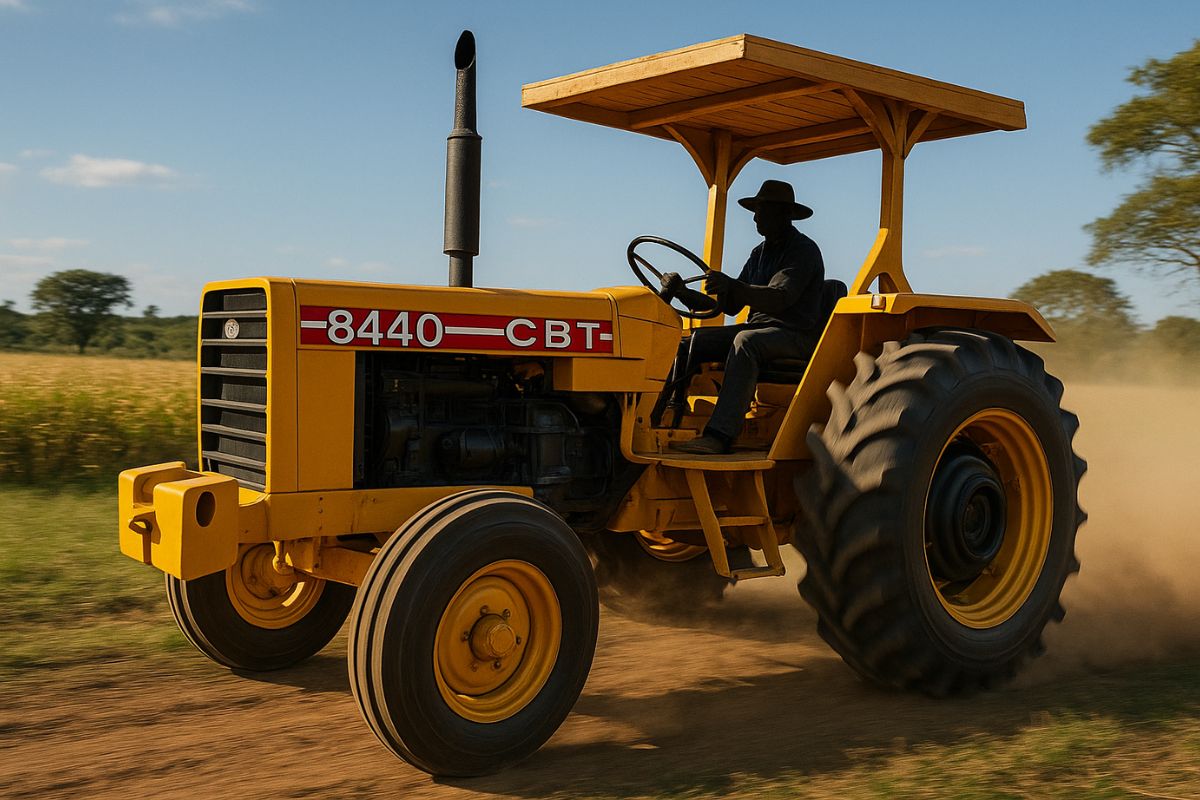


Discover the Journey of the Brazilian Tractor Company (CBT), from Its Foundation and Its Iconic Brazilian Tractors to the Attempts at Diversification, the Challenges That Led to Its Bankruptcy, and the Legacy That Endures in the Field.
The Brazilian Tractor Company, better known as CBT, has a history intertwined with the development of the national industry. It marked decades of innovation and quality in Brazilian agriculture. CBT left an indelible mark on the history of Brazilian tractors.
This article explores CBT’s journey from its inception to its bankruptcy. We will remember its fabulous tractors, such as the 8440 and the 2105, and its attempts at diversification, like the Javali jeep and the agricultural airplane Tarpan. Get ready for a trip through the machines that powered Brazilian agriculture.
The Birth of CBT: Boosting the Brazilian Tractor Industry
The story of CBT began in the late 1950s. During that time, various foreign brands were arriving in Brazil, driven by the growth plans of President Juscelino Kubitschek’s government. The GEIA (Executive Group of the Automotive Industry) was created to promote the nationalization of automotive products. The Brazilian fleet was mostly composed of imported vehicles.
-
A rural producer from Urubici cries as he shows 50 tons of plums thrown on the ground because no one wanted to buy them, and in desperation, he records a video asking anyone to come to the property to pick the fruits before they rot.

-
Unable to pass through Hormuz, Brazil activated a plan B that uses Turkey as a gateway to the Middle East: the route through Gibraltar and the Mediterranean is longer and more expensive but ensures that chicken, beef, and corn continue to reach Arab markets.

-
You grew up hearing that the good coffee from Brazil goes all abroad and the bad coffee stays for Brazilians, but this story has completely changed, and the numbers show that in the 1980s, thirty percent of the coffee sold here was adulterated with corn and barley.
-
Engineer creates reforestation method that transforms small plots into dense forests in a few years using local biomass and can reduce environmental recovery costs.

As part of the National Plan for Agricultural Tractor Industry, the American manufacturer Oliver applied in 1959. The goal was to establish a production line for heavy agricultural tractors in Brazil. Thus, in November 1960, the Brazilian Tractor Company (CBT) was founded, with shareholding from Indústrias Pereira and the Oliver Corporation. The factory was built in São Carlos, São Paulo, and production began in 1961. Its first tractor was the Oliver 950 model, with a significant nationalization rate of 78%, a fundamental milestone for Brazilian tractors.
Brazilian Tractors That Conquered the Field
CBT produced a variety of tractor models, marking its presence in the national and international markets. Some of the best-known include:
CBT 8440: Considered one of the most emblematic models, the CBT 8440 quickly gained a reputation for robustness and versatility. It was a high-power machine suitable for heavy tasks such as plowing fields and harvesting operations. Its reliability and durable construction ensured that it could handle the most adverse conditions.
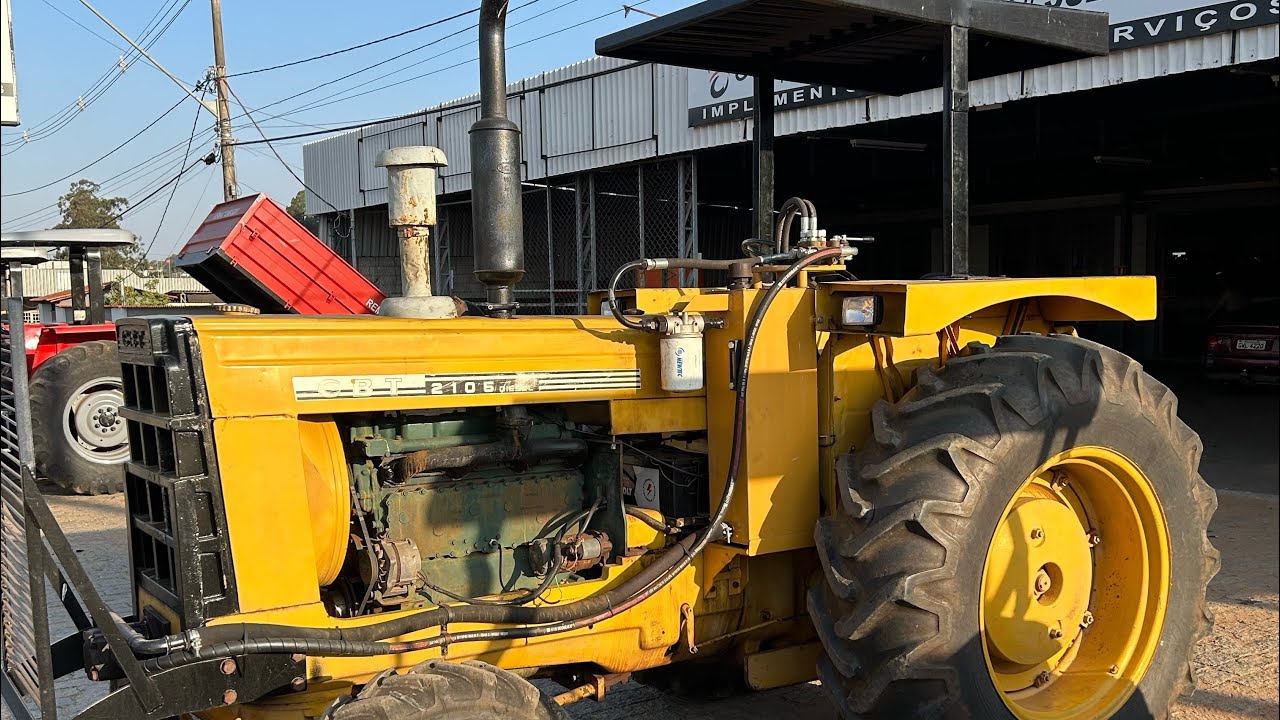
CBT 2105: This model stood out for its efficiency and reliability, meeting the needs of medium-sized rural properties. The CBT 2105 was ideal for a variety of tasks, from plowing to load transportation. Its popularity was also due to its durability, ease of maintenance, ergonomics, and comfort.
CBT 2500: A robust and powerful tractor, made for heavy-duty work and demanding agricultural operations. The CBT 2500 was widely recognized for its traction capacity, easily tackling rough terrain. Its construction with high-quality materials ensured durability.
CBT 8060: A compact and agile tractor designed to operate in smaller terrains and tasks requiring high maneuverability. The CBT 8060 was ideal for tight spaces, such as small properties and greenhouses. It offered good power for its category and was known for its efficiency and fuel economy.
CBT’s Bold Forays into Other Markets
In addition to the renowned Brazilian tractors, CBT also explored other segments. A notable attempt was the development of the Javali Jeep. This vehicle was designed to be robust and agile, for use in the field and on roads, tackling difficult terrains. Its turbo engine increased power, and its reinforced suspension and four-wheel drive made it suitable for off-road adventures. Despite expectations, the Javali faced challenges such as production costs and competition, resulting in limited production and not achieving the expected success.
CBT also showed interest in airplane manufacturing. The agricultural airplane project known as CBT Tarpan was conceived for crop spraying and other applications in the field. The Tarpan had the potential to provide uniform and effective distribution of agricultural pesticides. However, the company faced technical, logistical, and financial challenges, preventing the project from being realized in mass production. CBT ultimately focused on its line of tractors.
The Challenges and the End of an Era for CBT’s Brazilian Tractors
Throughout its journey, CBT faced various difficulties that culminated in its closure in 1995. One of the main issues was intense competition with foreign manufacturers. The opening of the Brazilian market in the 1990s allowed international companies to offer tractors at competitive prices, often with more advanced technology.
Changes in government policies and the lack of consistent support for national production also affected the company. Another significant challenge was the financial issue. CBT faced capitalization and financing problems, limiting investments in modernization. Internal management and governance problems also contributed to the difficult scenario. In 1995, after years of difficulties, CBT ceased its operations, marking the end of an era in the Brazilian tractor industry.
The CBT Brand in the History of Brazilian Tractors and in the Passion of Farmers


Despite the closure, the legacy of CBT remains alive. The company played a fundamental role in the development of Brazilian agribusiness, producing robust, reliable tractors adapted to the needs of farmers. CBT garnered a legion of dedicated fans. Many farmers who purchased Brazilian tractors from CBT became loyal to the brand.
The CBT fan community remains active, sharing stories and knowledge at collector gatherings and online groups. One example was an exhibition in Concórdia do Oeste, Paraná, where dozens of farmers brought their relics. This demonstrates the affection and admiration for CBT tractors. CBT’s legacy lives on in the machines still in operation and in the passion of the community, reminding us of the importance of innovation and solid management.








Era o Volkswagen dos tratores. Até hoje roda em algum lugar.
Bom dia meu avô trabalhou anos aí o senhor falecido João Isaac
A CBT sucumbiu por insistir em seguir sozinha, tal qual a Gurgel. Se ela tivesse seguido o exemplo da gaúcha Agrale, que em nome dos empregos e da sua sobrevivência não hesitou em fazer boas parcerias com empresas estrangeiras, tava firme e forte até hoje. Em nome dos negócios e em respeito aos trabalhadores, tem momentos em que precisamos por o orgulho de lado e isso a Agrale fez com marstria