





 Portuguese
  English
  Spanish
  3 min of reading
  0 comments


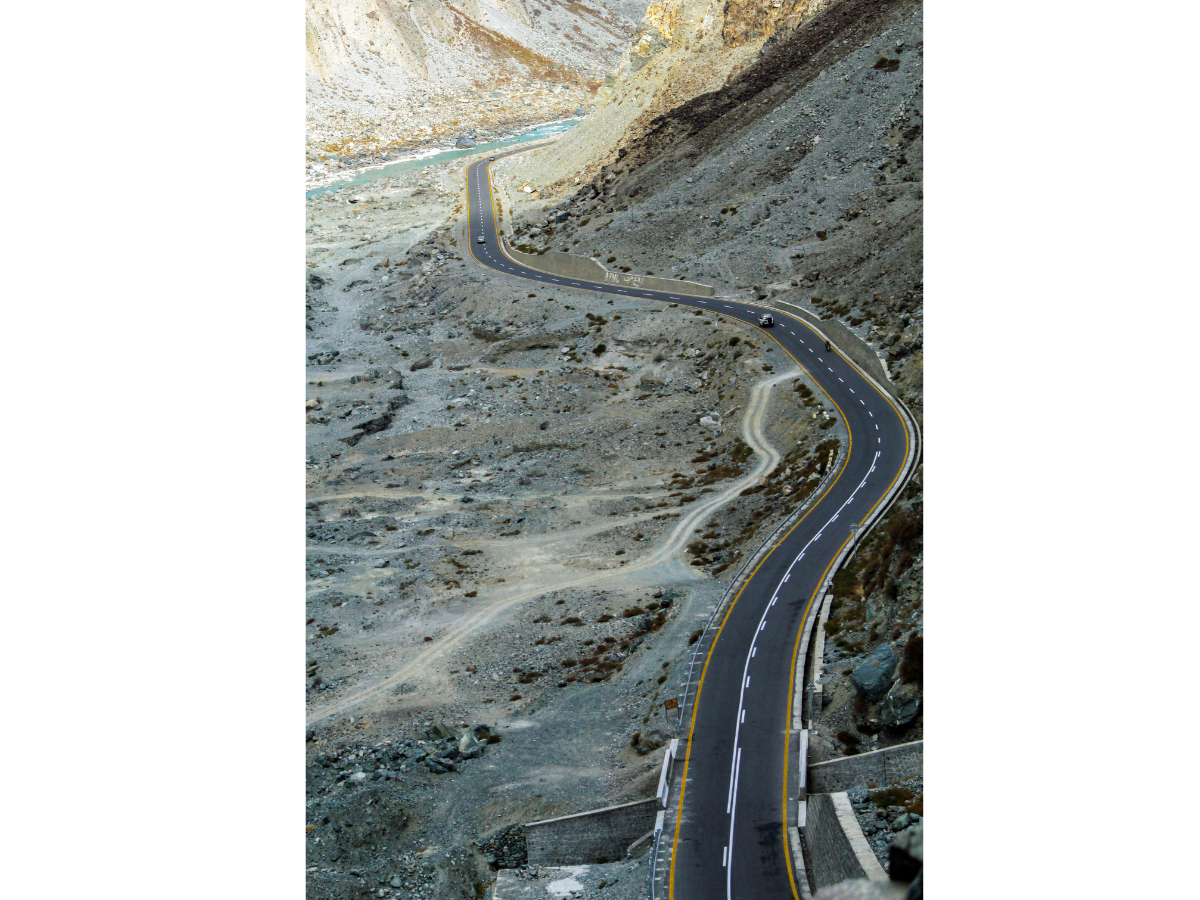
Known as the “Eighth Wonder of the World,” the Karakoram Highway (KKH) is the highest paved road in the world on an international crossing, connecting China and Pakistan for 1,300 km of surreal landscapes and extreme challenges
The Karakoram Highway, or KKH, is a legendary odyssey that winds through some of the planet’s most spectacular and unforgiving mountain landscapes. This monumental highest paved road in the world (at border crossing) is an icon of adventure, a test of endurance, and a symbol of human ability to overcome nature.
Explore the fascinating history of the KKH, its iconic layout, scenic wonders, crossing challenges, and its growing geopolitical importance, offering a guide for those dreaming of traversing this legendary artery in the heart of Asia.
The History of the Construction of the Highest Paved Road in the World
The roots of the Karakoram Highway delve into the history of the ancient Silk Road. Recognizing the strategic potential of this connection, the governments of Pakistan and China embarked on the ambitious project of paving a route through the Karakoram mountain range.
-
Italian researchers have detected what appears to be a second Sphinx buried under the sands of Egypt, and satellite scans reveal a gigantic underground megastructure hidden beneath the Giza Plateau for over 3,000 years.

-
There are 4,223 drums and 1,343 metal boxes concreted with 50-centimeter walls that store the radioactive waste from Cesium-137 in the worst radiological accident in Brazil, just 23 kilometers from Goiânia, with environmental monitoring every three months.
-
Giant Roman treasure found at the bottom of Lake Neuchâtel in Switzerland reveals an advanced trade system, circulation of goods, and armed escort in the Roman Empire about two thousand years ago.

-
He buried 1,200 old tires in the walls to build his own self-sufficient house in the mountains with glass bottles, rainwater, and an integrated greenhouse.


Construction officially began in 1959 and extended over two decades, being inaugurated in 1986. The undertaking, a joint effort, involved more than 24,000 workers from both nations.
The engineering challenges were colossal, dealing with sharp peaks, deep valleys, and unstable terrain. Tragically, severe conditions and constant landslides resulted in the loss of more than 1,000 workers. The KKH today is the backbone of the China-Pakistan Economic Corridor (CPEC), a key piece in China’s “Belt and Road” initiative.
The Route of the KKH from Pakistan to China
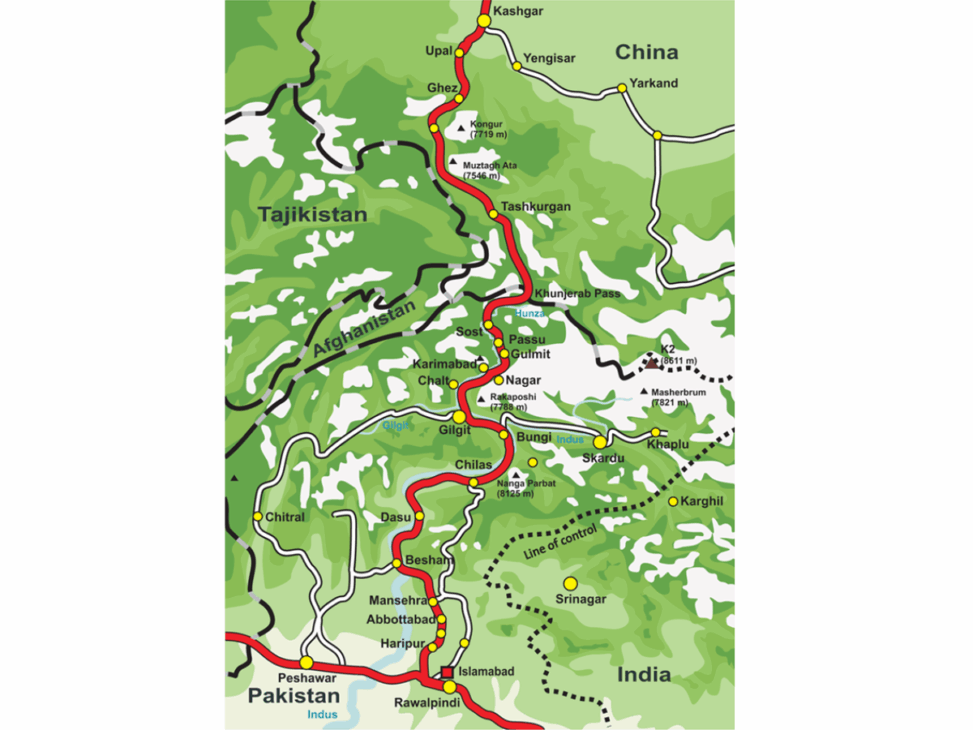
The KKH stretches for approximately 1,300 kilometers, starting in Hasan Abdal, Pakistan, and ending in the historic city of Kashgar, China. On the Pakistani side, the road passes through cities such as Abbottabad, Chilas (access to Nanga Parbat), Gilgit, and Karimabad, in the famous Hunza Valley.
The geographical climax is the Khunjerab Pass, the highest international paved border crossing in the world, at nearly 4,700 meters altitude. After crossing into China (where the road becomes CNH 314), the route passes through Tashkurgan before reaching Kashgar, an ancient oasis of the Silk Road.
The Natural Wonders Along the Highest Paved Road in the World
The Karakoram Highway is an open-air gallery of natural wonders. The Hunza Valley is the crown jewel, often described as the inspiration for the mythical Shangri-La, with its orchards, the imposing Baltit and Altit Forts, and views of peaks like Rakaposhi (7,788 m).
Another iconic landscape is the Attabad Lake, a turquoise beauty born from a landslide in 2010. Further north, the Passu Cones, sharply pointed peaks, dominate the scenery. Along the route, the presence of giants like Nanga Parbat (8,126 m), the “Killer Mountain,” is an imposing constant.
Driving on the Karakoram Highway
Driving on the highest paved road in the world is an experience of thrill and tension. Although largely paved, the conditions can vary. The road features steep curves, narrow sections, and the constant feeling of proximity to the edge.
The greatest danger comes from landslides and rockfalls, a constant threat in a geologically active region. Altitude is also a challenge, with mountain sickness (soroche) being a real risk at Khunjerab Pass. Proper acclimatization and preparation are essential.
The Future of the KKH, Between Adventure Tourism and Strategic Modernization


The Karakoram Highway is now a coveted destination for adventurers from around the world, including cyclists and motorcyclists. In response to the growing flow of tourists and its importance in the CPEC, modernization projects are underway to transform sections of the KKH into a four-lane motorway.
This increase in traffic and tourism, while economically beneficial, presents the challenge of balancing development with the preservation of the fragile environment and unique local cultures. The future of the highest paved road in the world will depend on careful planning that ensures the safety and sustainability of this legendary adventure route.










-

-

3 pessoas reagiram a isso.