





 Portuguese
  English
  Spanish
  5 min of reading
  0 comments


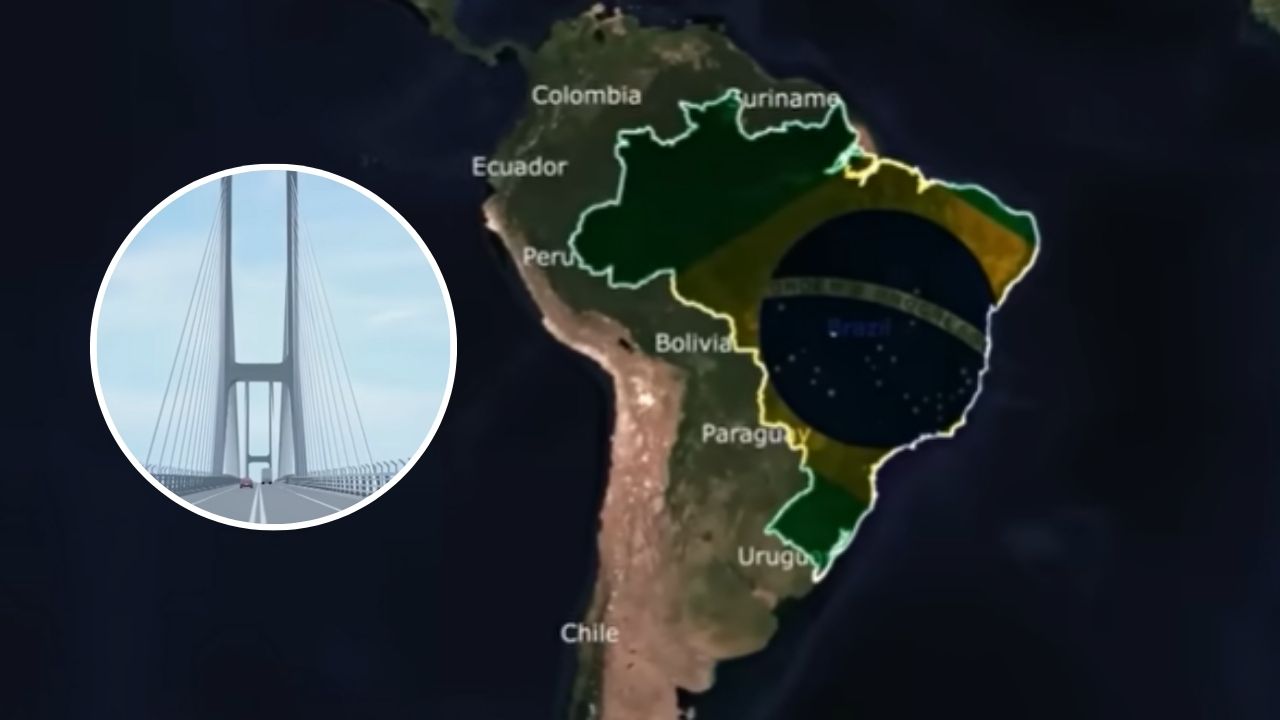
2,396 Km Logistics Corridor Will Connect Mato Grosso do Sul to Ports in Chile, Promising to Reduce Costs and Travel Time to Asia and Revolutionize the South American Economy.
The awaited bioceanic route, a mega infrastructure project that will connect the productive heart of Brazil to the Pacific Ocean, is in its final stages of completion. The initiative, which crosses four countries, promises to be a game changer for national logistics, reducing the transit time for goods to China by up to 17 days and cutting freight costs by approximately 30%. This corridor is the strategic answer to a historical bottleneck that concentrated Brazilian exports solely on the Atlantic Ocean.
With a route stretching 2,396 kilometers, it starts in Campo Grande (MS) and crosses Paraguay and Argentina until reaching the northern ports of Chile. The expected impact goes beyond time and money savings. As detailed by Canal Urbana, the project is designed to function as an “industrial conveyor belt,” featuring fewer transshipments and fewer kilometers of empty returns, optimizing working capital flow and increasing the competitiveness of key agricultural and extractive industry products in Brazil.
The Economic Impact and Brazilian Competitiveness
The main objective of the bioceanic route is to strengthen the position of Brazil in global trade, especially with the Asian market. In 2024, Brazilian exports, led by the trio of soy, oil, and iron ore, amounted to about 337 billion dollars, with China being a key trading partner, with a bilateral flow reaching approximately 188 billion dollars. The new route directly addresses the “Brazil Cost,” which increases transportation costs and pressures profit margins.
-
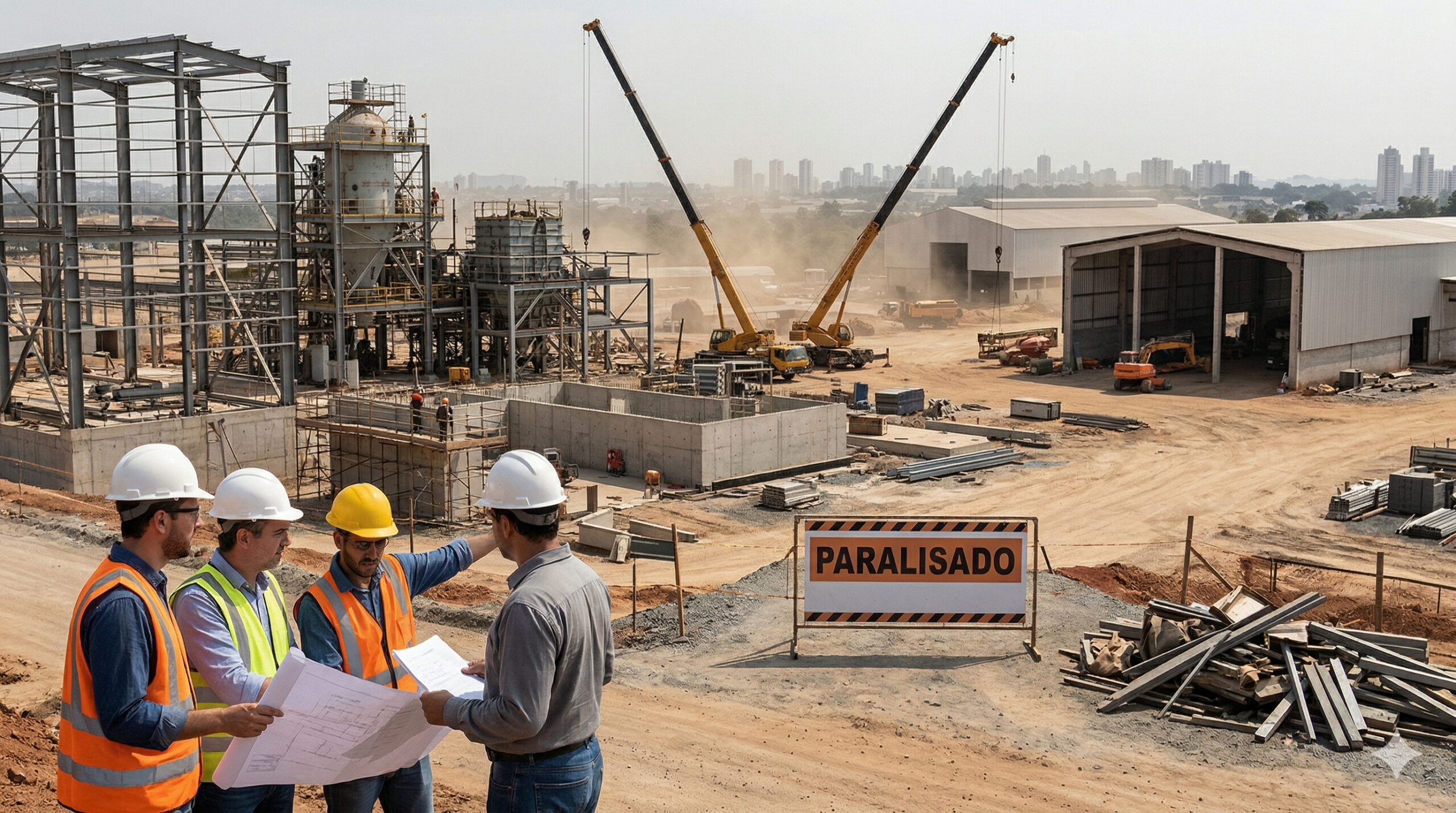
The lack of welders, electricians, and operators becomes a structural threat in 2025, with the construction industry and manufacturing already suffering from delays, cost pressures, and labor shortages in Brazil.
-
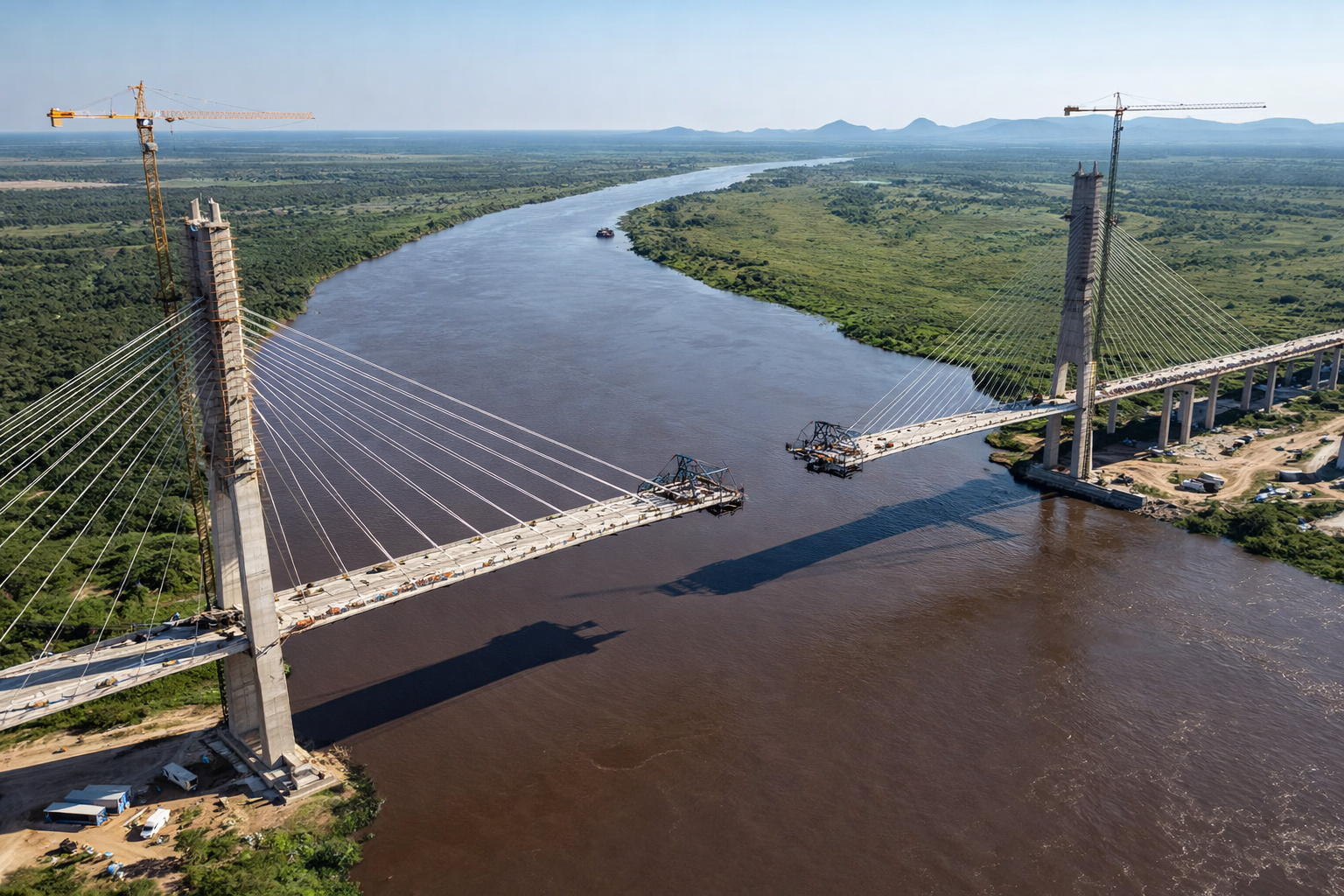
Brazil and Paraguay are just 46 meters away from a historic union on the bioceanic bridge that promises to revolutionize trade between the Atlantic and the Pacific.
-
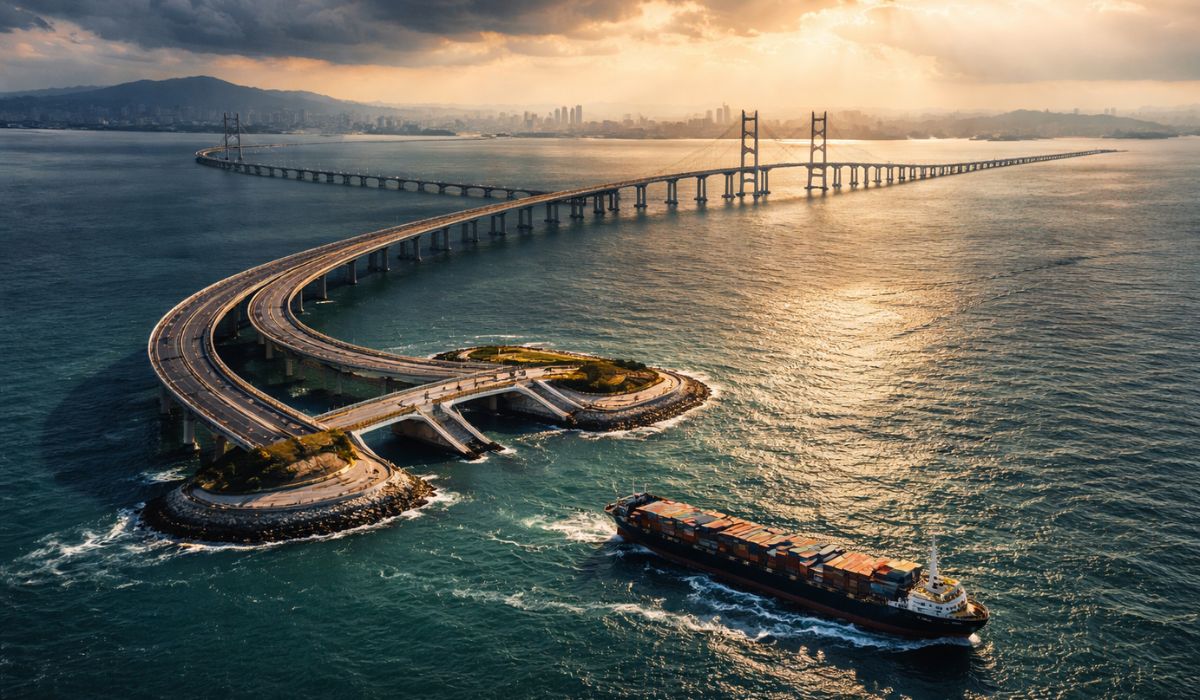
With 55 km over the sea, a cost of US$ 20 billion, and enough steel to build 60 Eiffel Towers, China’s largest project has connected Hong Kong, Zhuhai, and Macau in a colossal bridge that defies the logic of engineering.
-
A trick with joint compound transforms a Styrofoam ceiling into a plaster-like ceiling: leveled panels, wires and mesh at the joints, sand, paint, and change the environment while spending little today.


According to information from Canal Urbana, the reduction of freight costs by up to 30% and the reduction of travel time by more than two weeks represent an immense competitive advantage. Products from the Midwest and Southeast, such as grains, meats, cellulose, sugar, and cotton, which currently compete for space in the congested Atlantic ports, will have a more efficient alternative. This means that the same goods will arrive at their destination earlier and at a lower cost, a decisive factor in a commodities market where margins are tight.
The Strategic Route: Who and Where?
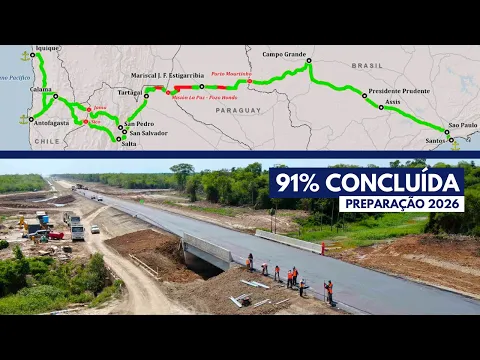

The bioceanic route is a collaborative effort between Brazil, Paraguay, Argentina, and Chile. The project has been meticulously planned in four logistical stages. The first begins in the Brazilian Midwest, with the collection and pre-processing of cargo that converges to BR-267 in Mato Grosso do Sul, towards Porto Murtinho. This city, as noted by Canal Urbana, is becoming a “road freight hub,” with a growing infrastructure of hotels, workshops, and warehouses to meet new demand.
The second stage involves crossing the Paraguay River via an international bridge linking Porto Murtinho to Carmelo Peralta in Paraguay. From there, the corridor continues along Highway PY-15, cutting through the Chaco region. Finally, the fourth stage consists of climbing the Andes Mountains through northern Argentina to the Chilean ports of Antofagasta, Iquique, and other terminals that are expanding to accommodate the increase in container and bulk volumes.
The Progress of Works in Each Country
The project’s execution is advancing simultaneously but with particularities in each nation. In Brazil, the focus is on modernizing BR-267, with over 100 km of pavement restored and reinforced to support the traffic of heavy convoys, especially during harvest season. Additionally, an integrated customs complex and 13 km of access to the bridge, with overpasses and wildlife crossings, are being constructed to prevent the new crossing from creating its own bottlenecks.
On the Paraguayan side, Highway PY-15, considered the heart of the corridor, has advanced works, with simultaneous work fronts to ensure the delivery of a resilient lane. In Argentina, the challenge is the Andes Mountains, with works on Route Nacional 51 (RN-51) to ensure operation during winter. In Chile, preparations are evident in the ports, which are expanding yards, modernizing equipment, and creating logistics zones away from urban centers to optimize cargo flow.
The International Bridge: A Symbol of the Project
The most emblematic piece of the bioceanic route is the cable-stayed bridge over the Paraguay River. With a total length of 1,294 meters, a main span of 350 meters, and 125-meter masts, the structure is designed to allow the navigation of vessels without obstacles. According to Canal Urbana, construction, which is already in an advanced stage (between 70% and 80% in the superstructure), utilizes complex engineering, assembling the structure piece by piece toward the center of the river.
The bridge not only physically connects Brazil and Paraguay but also symbolizes the logistical integration of the continent. Its construction considered the variations in the Pantanal’s water level, with elevated accesses to ensure traffic even during floods. The project represents a landmark in South American engineering and guarantees that the flow of goods will not be interrupted by seasonal factors.
Is It Worth It? The Future of South American Logistics
The completion of the bioceanic route represents a paradigm shift. By creating an east-west logistics axis, the project breaks Brazil’s historical dependence on Atlantic ports, diversifying options and increasing the resilience of the supply chain. The initiative not only benefits large producers but also boosts local economies along the entire route, generating jobs and attracting investments in support services.
It is clear, based on Canal Urbana‘s analysis, that the corridor is more than an infrastructure project; it is a regional development project that will transform the economic dynamics of four nations. The route is the realization of a strategic vision that positions South America more competitively on the global stage, shortening distances and strengthening trade ties that will define the future of the region.
Do you agree with this change? Do you think it impacts the market? Leave your opinion in the comments; we want to hear from those who experience this in practice.








-

Uma pessoa reagiu a isso.