





 Portuguese
  English
  Spanish
  6 min of reading
  0 comments


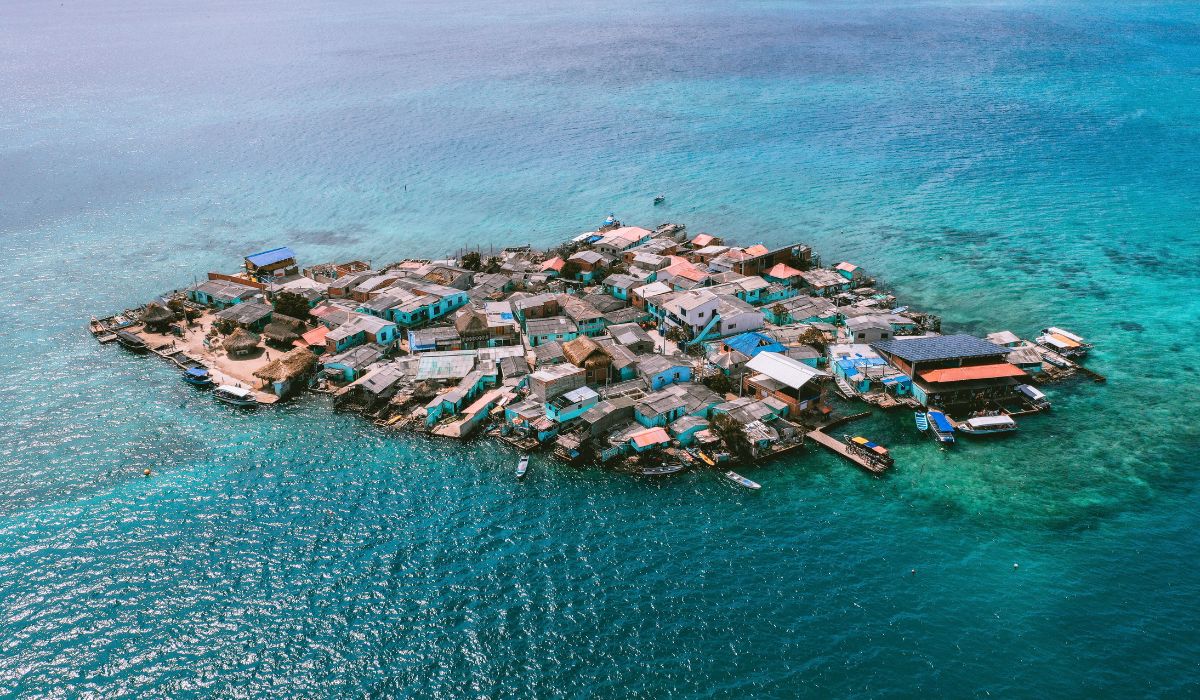
A Tiny Island in the Colombian Caribbean Concentrates Residents, Limits Basic Services, and Attracts International Attention for Gathering, in Little Space, Challenges of Infrastructure, Community Coexistence, Tourism, and Environmental Pressure in a Routine Marked by Extreme Proximity.
Santa Cruz del Islote and High Density in the Colombian Caribbean
Santa Cruz del Islote, in the San Bernardo archipelago in the Colombian Caribbean, is known for its high population density in an area of just over one hectare.
The image of very close houses, narrow passages, and a routine concentrated in a small territory is based on journalistic and institutional records.
The number of residents, however, varies depending on the source and the period consulted: there are surveys with about 491 inhabitants, estimates of 779, and reports that mention up to 1.2 thousand people.
-
More than one million North Americans were ordered to close their windows and stay indoors because the air in the southern United States became so toxic that pollution levels reached 18 times above the World Health Organization’s safety limit.

-
China has accumulated up to 1.4 billion barrels of oil in strategic reserves, invested 25 years in renewable energy, and purchased 80% of cheap Iranian oil: how Beijing has prepared for decades for the crisis that is now shaking the world.

-
A single lake holds 20% of the planet’s non-frozen freshwater and is also the deepest and oldest on Earth.

-
How 5,000 Indian dabbawalas manage to deliver around 200,000 lunchboxes a day in Mumbai for over 130 years using bicycles, crowded trains, and a manual system that continues to operate with impressive accuracy.


Therefore, the density attributed to the islet should be treated as an estimate, not as a unique and definitive data point.
Even with this variation, the condition of congestion is one of the most cited traits about the island.
Santa Cruz del Islote has been expanded over time on a coral base and has been mentioned in reports and studies as one of the most densely populated areas in the world in proportion to the size of the territory.
With no space for cars, wide roads, or significant horizontal expansion, the local dynamic is organized in a limited space where housing, movement, and coexistence occur just a few meters apart.
What It Is Like to Live on a Small Island
The comparison to a soccer field is frequent in reports about the island, although there are descriptions that indicate slightly larger dimensions, depending on the measurement criteria adopted.
In any parameter, the available space is limited.
The houses were built side by side, often with no setback, forming narrow corridors and an occupancy marked by adaptation to the terrain and the need to accommodate more residents in a small area.
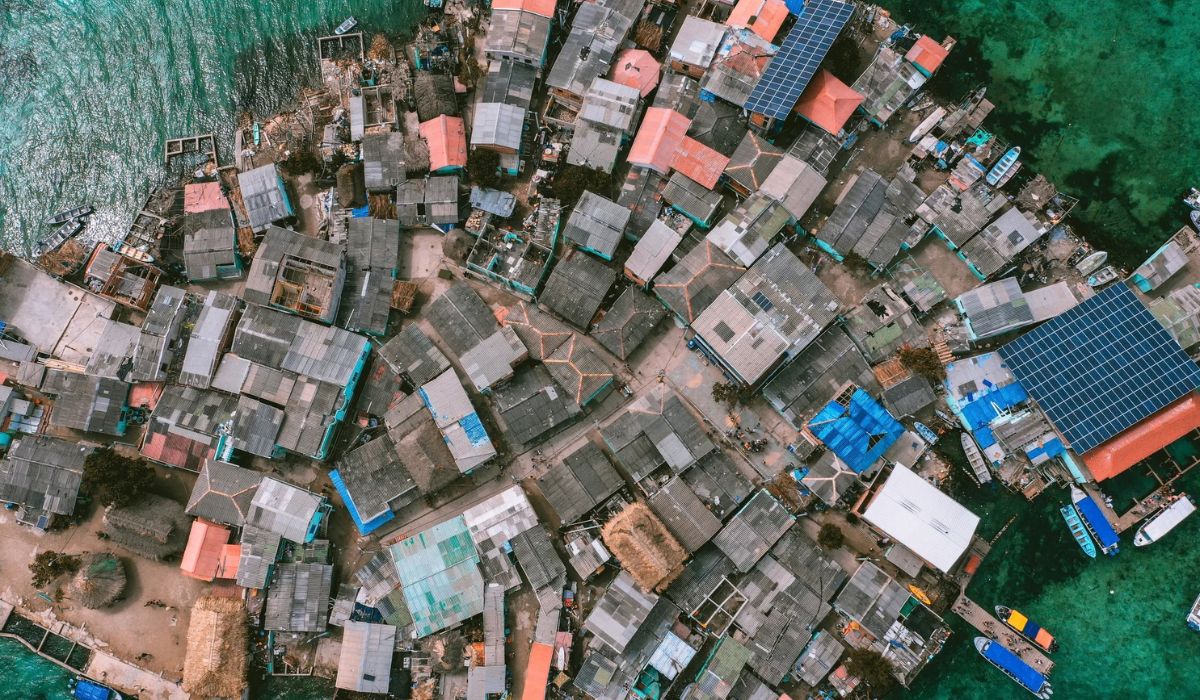
This physical limitation interferes in different aspects of daily life.
The island has no cemetery, and burials need to be done in neighboring areas.
There are also ongoing infrastructure restrictions related to sanitation, waste disposal, and the supply of basic services.
Due to the geographical isolation, the sea serves as the main means of transportation and connection with other islands and the mainland.
Lack of Drinking Water and Limited Energy
The lack of drinking water remains one of the main problems faced by residents.
Since there is no natural source of fresh water, the population depends on rainwater harvesting and supply from outside the island.
In dry periods, the situation becomes more sensitive, requiring savings on showers, cleaning, and general household use.
Journalistic and institutional records indicate that water management is part of the routine of practically all families.
In the case of electricity, the supply is also limited.
Reports from public agencies and articles mention the use of solar panels during part of the day and nighttime generation by a fuel-powered system.
Although there have been interventions to increase the supply, the service remains subject to restrictions, which influences the use of appliances, lighting, and food preservation.
Health and Access to Public Services on the Island
In the area of health, there have been advancements compared to periods of more precarious care, but the local structure remains restricted for more complex cases.
There is recent reference to the presence of a health center with a basic team, but boat removals remain necessary when a patient needs hospital assistance outside the island.


This factor weighs primarily in emergencies due to the dependence on maritime transport.
Safety, Coexistence, and Community Control
The perception of safety in Santa Cruz del Islote appears frequently in reports from residents and in articles about the community.
The close coexistence among relatives, old neighbors, and families who have known each other for decades helps explain this scenario.
In a limited territory, the circulation of information is swift, and everyday misunderstandings tend to gain collective dimensions in no time.
This scenario, however, does not permit claiming total absence of conflicts or crime.
There are journalistic records of alerts related to the actions of groups linked to micro-trafficking in the region and calls for greater public power presence.
Thus, the description of the island as a safe place needs to be understood within a specific context characterized by strong community control, but also by institutional limitations.
In this environment, mediation of conflicts by local leaders and more respected residents plays a significant role.
Instead of relying exclusively on formal structures, part of the misunderstandings is addressed within the community itself.
The cross that gives the islet its name also appears in accounts about the local identity and the religiosity of some residents, serving as a symbolic reference for the population.
Children, School, and Routine in Santa Cruz del Islote
The demographic composition helps to understand the daily life of the island.
Different reports indicate a significant presence of children and adolescents among the residents.
As a result, the circulation spaces also function as areas for coexistence, play, and socialization.
The routine mixes short displacements, activities related to fishing, local commerce, and frequent contact with visitors.
The educational offer, in turn, does not fully meet all stages of education within the island itself.
Depending on the grade and availability, students need to travel to other islands or to the mainland.
This situation reinforces a common characteristic of small island territories: part of the essential services depends on external connections and regular transportation.
Infrastructure, Isolation, and Daily Life at Sea
External visibility tends to focus on the contrast between the island’s small size and the number of residents.
In practice, this contrast translates into objective limitations such as controlled use of water, restricted energy supply, need for transportation to more complex services, and lack of space for basic equipment.
At the same time, the community’s permanence in the location demonstrates a form of social organization sustained by family ties, daily adaptation, and dependence on intermittent public support.
Santa Cruz del Islote gathers, in the same territory, issues of infrastructure, environmental pressure, geographical isolation, and strong community coexistence.
The case is often cited in reports and studies for condensing, in a minimal area, challenges related to housing, public services, and sustainability in an island context.
More than the image that circulates outside the island, the daily lives of the residents expose how the lack of space and structure directly interferes in the daily life of those who live surrounded by the sea.





Seja o primeiro a reagir!