





 Português
  Inglês
  Espanhol
  6 min de leitura
  0 comentários


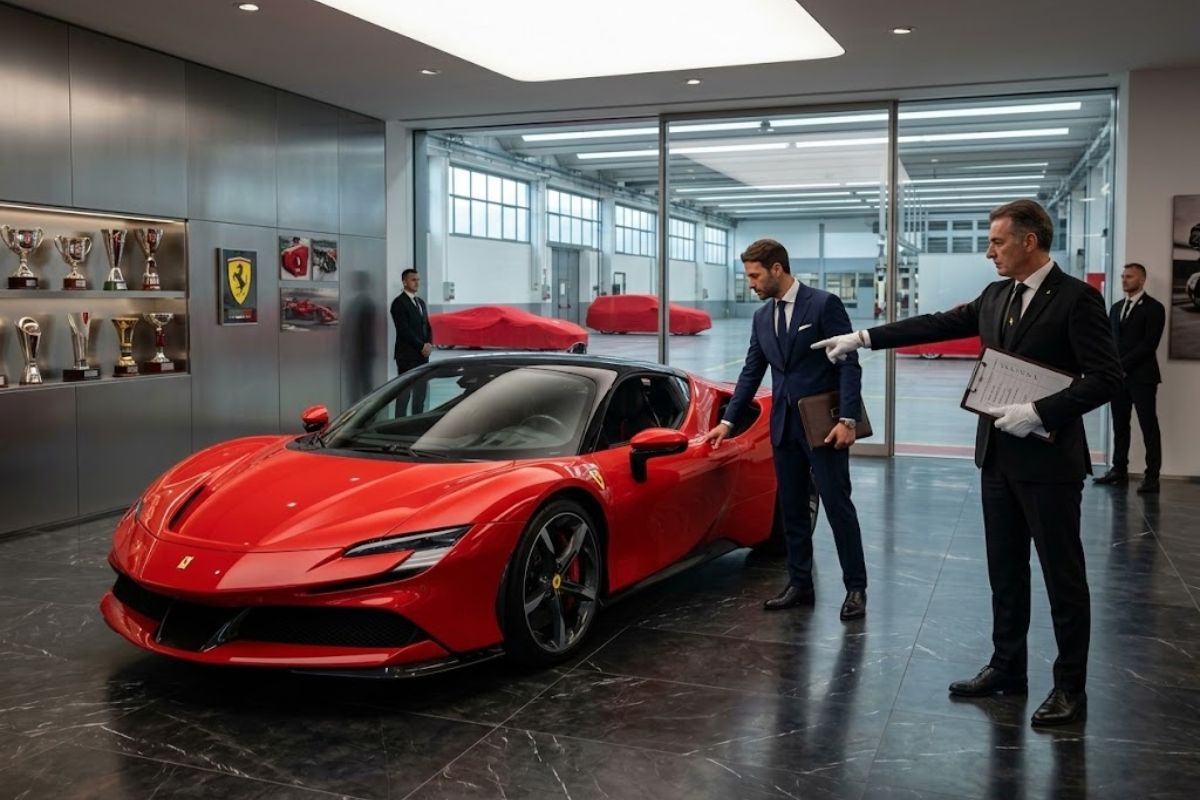
Ferrari Follows The Logic Created By Enzo Ferrari To Always Deliver One Car Less Than The Market Wants, Maintain Loyalty Queues, Limit Rare Models, And Transform Formula 1, Licensing, And Calculated Scarcity Into A Permanent System Of Status, Profit, And Collective Global Aspiration
The Ferrari does not operate like an ordinary car manufacturer. The company built its strength precisely by rejecting the logic of selling as much as possible to the largest number of buyers, preferring to restrict supply, select access, and fuel a desire that grows the further away the product seems to be.
This strategy helps explain why Ferrari has become one of the most profitable businesses in the automotive world. The brand’s value does not depend solely on speed, engine, or design. It Relies On How It Manages Scarcity, how it organizes wait times, and the ability to make those who will never own a car from the brand sustain the prestige of those who can buy one.
The Rule Of Producing One Car Less
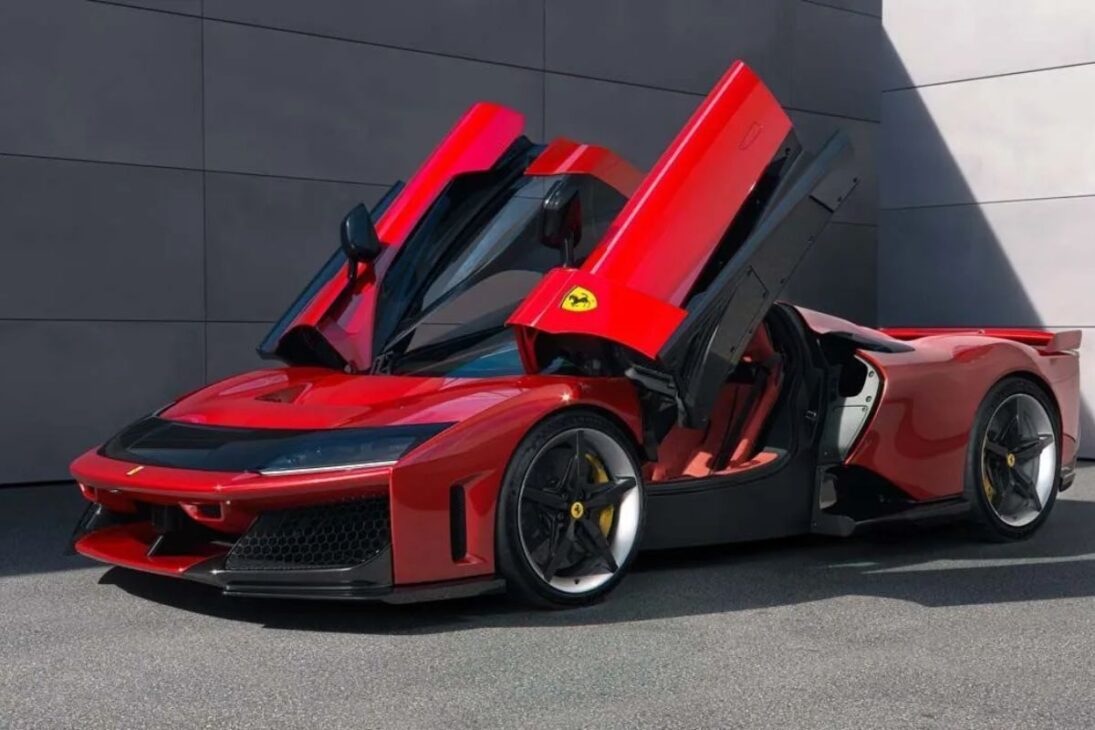
The most important phrase to understand the logic of Ferrari was attributed to Enzo Ferrari. He argued that the company should always produce one car less than the market wanted to buy.
-
With awards in various countries, the Jaecoo 7 is establishing itself globally and accelerating the expansion of Omoda & Jaecoo in the hybrid SUV market.
-
5 cheapest used cars than a Honda CG 160 Titan 0 km, with options starting at R$ 13,000 for those who want to trade their motorcycle for a car and escape the rain, sun, and risks of riding.

-
Around R$ 24,000: 4 used Ford SUVs with up to 253 hp, V6 engine, all-wheel drive, 7 airbags, panoramic sunroof, and a complete package that surprises with its price and performance in Brazil.
-
A brand new car starts at around R$ 75,000 in Brazil, but what stands out the most is seeing streets filled with SUVs and expensive sedans in a country where millions remain in debt.

This idea seems simple, but it functions like an operational manual for the brand to this day.
The direct consequence of this reasoning is clear. When an object remains out of reach, it grows in the imagination of those observing.
When it becomes too accessible, it loses some of its aura. Ferrari Does Not Restrict Production Because It Cannot Make More. It restricts because it knows that desire depends on the feeling of limitation.
The numbers presented in the data reinforce this model. In 2022, Ferrari produced about 13,000 cars worldwide.
The comparison with Toyota makes the decision even clearer, as the Japanese automaker produces more cars in a few hours than the Italian company delivers in an entire year.
This is not industrial incapacity. It is a strategic choice.
This decision has a powerful psychological effect. The buyer does not see merely an expensive car. They see an object that few people will ever get to touch.
And scarcity, when perceived as deliberate, stops seeming like a limitation and starts to feel like a privilege.
How Ferrari Profits Even With Those Who Will Never Buy A Car
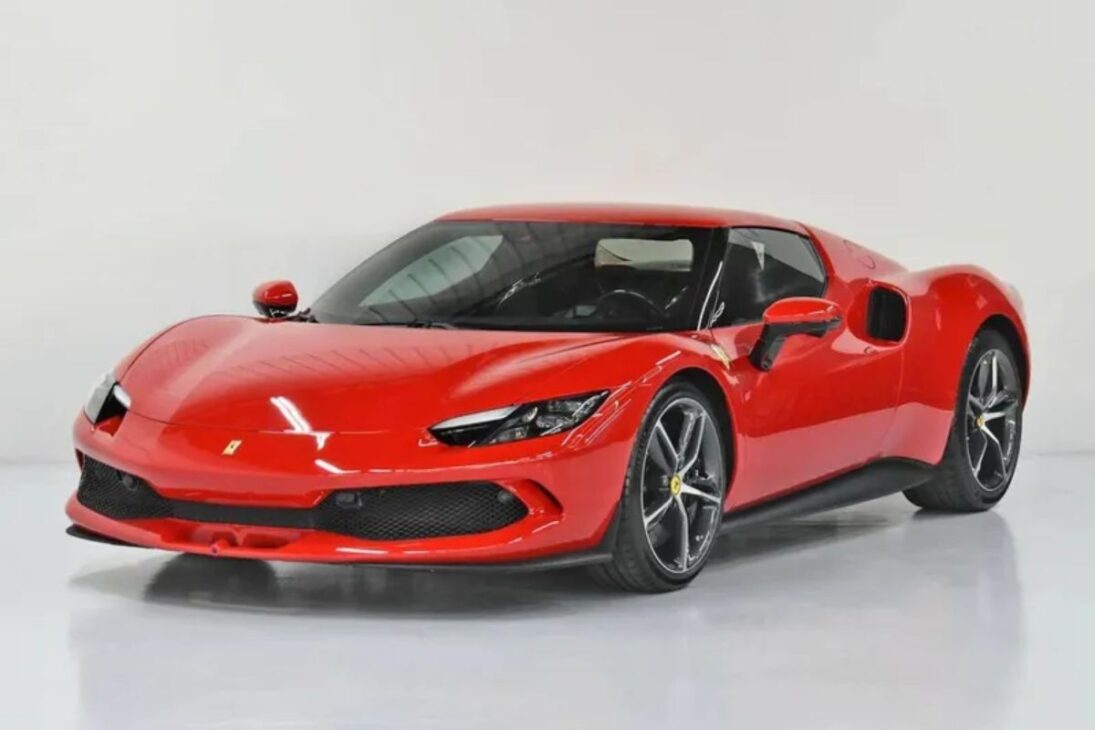
The strength of Ferrari is not limited to the customers who enter a dealership. The brand also profits from the vast majority of people who will never own one of its models.
According to the provided data, around 17% of total revenue comes from licensing, lifestyle products, and experiences related to the company’s name.
Caps, t-shirts, perfumes, accessories, and other items serve as a symbolic connection with the brand’s universe. Those who buy these products are not acquiring automotive performance.
They are buying an imaginary bond with something that the brain recognizes as rare, aspirational, and socially valuable.
That is why Ferrari operates with a system that extends beyond the automobile. The car is the most visible core, but it is not the only product.
The Brand Sells Belonging, sells cultural reference, and sells the feeling of being part of a reserved universe, even for those who are far from buying a million-dollar model.
This mechanism starts early and does not depend on a formal negotiation. It is born in posters, video games, races, movies, toys, and the visual repetition of the red car associated with speed and prestige.
Decades of exposure have created a collective emotional memory that prepares the ground for the brand to remain desired even among those excluded from actual consumption.
The Crisis With Ford And The Construction Of The Myth
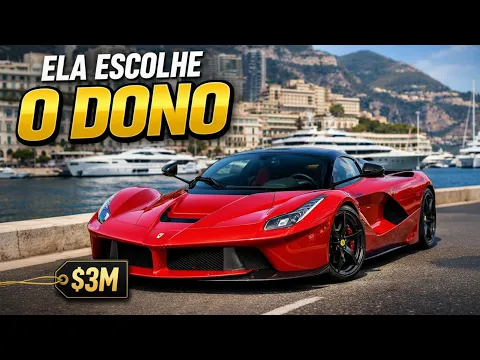

The story of Ferrari nearly took a different turn at the end of the 1960s.
In 1969, Enzo Ferrari, pressured by high costs, strikes, and company expansion, sold 50% of the company to Fiat for an amount that, in updated figures cited in the data, would be equivalent to around R$ 450 million.
In return, he maintained absolute control over the sports cars and racing division.
Before that, however, Enzo had negotiated with Ford. The deal progressed but collapsed when he realized that the American automaker wanted control over the racing operation.
For him, this division was not a marketing detail. It was the soul of the company. The break irritated Henry Ford II, who decided to create a car capable of defeating the rival at Le Mans.
The result came in 1966 when the Ford GT40 crossed the finish line in first, second, and third places.
This scene was a public humiliation for Ferrari, but it also reinforced a decisive point for the brand. Crises, rivalries, and defeats do not necessarily weaken a luxury symbol.
Often, they help to amplify the narrative around it.
This episode illustrates why Ferrari does not depend solely on objective victory to maintain value.
The company was able to transform tension, confrontation, and sports memory into symbolic capital. The story with Ford did not erase its aura. Quite the contrary.
It Helped Consolidate The Brand As A Central Character In An Industrial And Sports Mythology.
Formula 1, Exclusivity, And Loyalty Queue
The presence of Ferrari in Formula 1 helps sustain this symbolic edifice. The category functions as a permanent showcase of commitment, technique, and competitive seriousness.
Each race acts as public proof of performance, even when the final result does not yield a title.
The data reminds us that the company went from 2008 to 2022 without winning the Constructors’ Championship, a period too long for a team of its stature.
Yet, during this interval, sales grew, the waiting list expanded, and profit margins stayed strong. This reveals an important point.
In The Public’s Perception, Competing With Intensity And Consistency Can Be Almost As Powerful As Winning.
This logic is also evident in the purchase of the most exclusive models. To acquire certain cars from Ferrari, especially the limited ones, it’s not enough to have money.
One must have a history of relationship with the brand, previous purchases, and a position within an invisible hierarchy. The company transforms access into progressive rewards.
The effect of this is profound. The buyer does not acquire just an automobile. They enter a system where each previous purchase increases the chance of reaching the next coveted model. Exclusivity stops being a detail of the sale and becomes part of the product itself.
Ferrari Does Not Just Sell Rare Cars. It Sells Access To The Right To Continue Desiring Within The Brand’s Structure.
What Ferrari Reveals About Consumption And Status
In the end, Ferrari works because it understood something that many brands never manage to apply with the same precision.
Its value does not only depend on actual customers. It also relies on the millions of observers who immediately recognize the symbol, the color, the rearing horse, and everything that this ensemble represents.
This means that the majority excluded helps sustain the minority included. The more people admire from the outside, the more prestige exists for those who manage to enter.
The Distance Is Not A Flaw In The Ferrari System. It Is The Central Piece Of The System. Without Exclusion, The Brand Would Lose Part Of The Strength That Makes It So Profitable.
The Italian company transformed scarcity into method, loyalty into hierarchy, and admiration into a source of revenue.
Not by coincidence, it continues to be treated as something greater than a car manufacturer. It functions as a global symbol of status, desire, and social validation.
That is why Ferrari remains so powerful even without trying to reach everyone. It does not want to be common, abundant, or easily accessible.
It wants to continue being the car that reorganizes the attention of onlookers, the object that always seems a little distant, and the emblem that is worth more because it is not available to just anyone.
Ferrari Does Not Need To Sell To Everyone Because It Built A System Where Even Those Who Will Never Buy Help Maintain The Value Of Those Who Do.
In Your Opinion, What Most Sustains This Brand Strength: Calculated Scarcity, Formula 1, Or The Idea That Exclusivity Is Worth More Than Raw Performance?










-

-

2 pessoas reagiram a isso.