





 Portuguese
  English
  Spanish
  4 min of reading
  1 comment


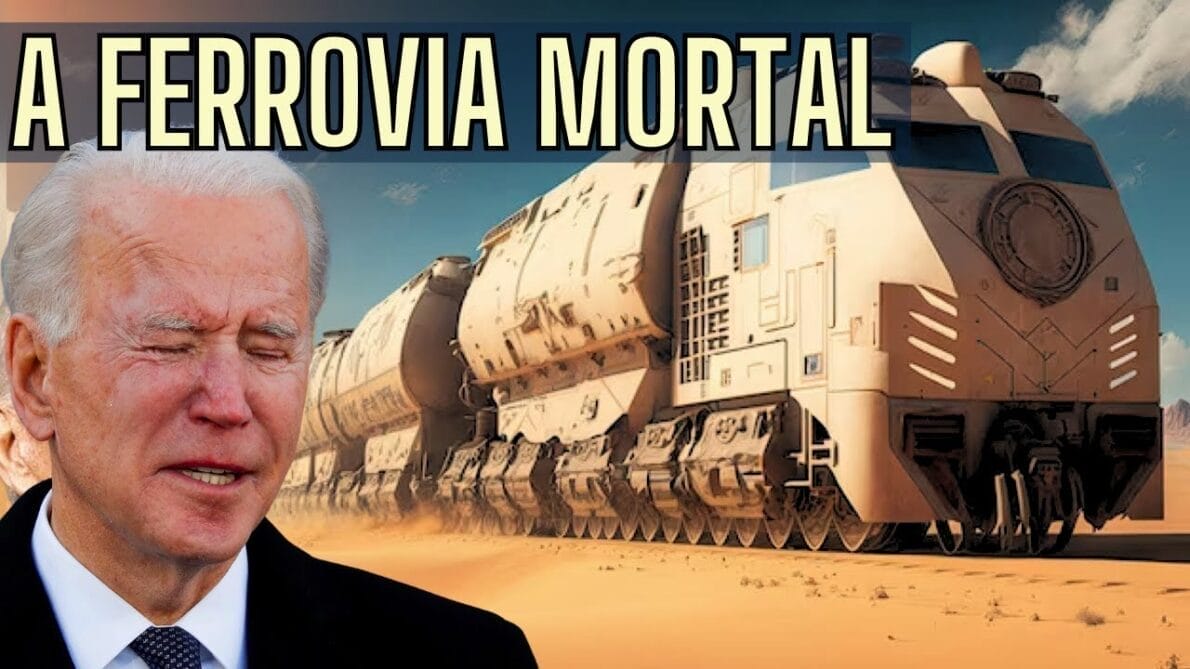


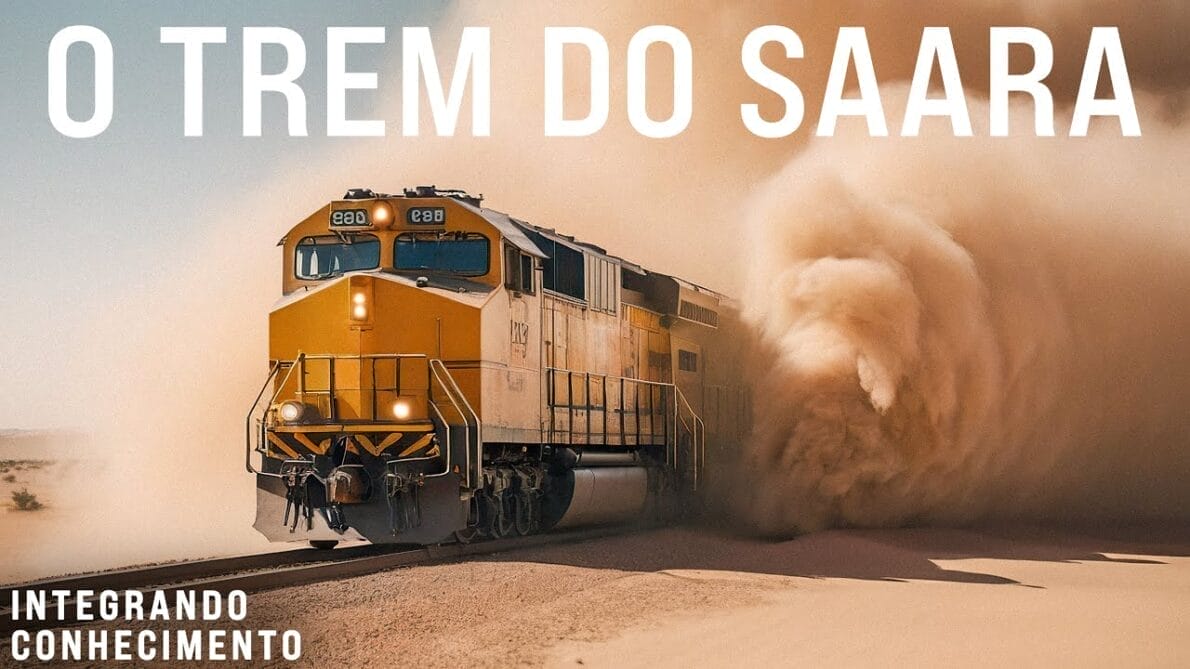
The Train That Crosses The Sahara Desert: Check Out All The Details Of The Long Journey On The Mauritania Railway And Why China Is Creating A Megaproject Over 6,000 Km Long In This Spot.
Railway Over 6,000 Km Long: With unbearable heat and dry desert winds that bring dust storms capable of burying an entire caravan, we are talking about the Sahara. Right in the heart of these desolate landscapes, reminiscent of lunar vistas, a lonely railway line runs through the hostile terrain. The Railway Over 6,000 Km In Mauritania is one of the most extreme routes in the world, resembling a post-apocalyptic road out of “Mad Max”. Let’s explore this fascinating journey and understand the reason behind why AFRICA conceals a $10 million project from THE WORLD.
Mauritania And Its Railway Over 6,000 Km Long That Could Change Everything
Mauritania is a developing Islamic country in West Africa, with a low standard of living. In 1963, mining companies established a unique railway route to connect the iron mines in Zouérat to the port of Nouadhibou. The iron ore mining in Mauritania was never particularly profitable until the advent of this railway, which made it possible to transport valuable minerals across the desert to the Atlantic for export.


Since 1963, this narrow-gauge railway has significantly contributed to Mauritania’s GDP. In 1974, both the mines and the railway were nationalized and transferred to SNIM (Société Nationale Industrielle et Minière).
-
If the USA were to go to war with Brazil, Washington’s greatest fear would not be the attack itself, but facing a vast territory, prolonged resistance, and a costly, chaotic, and unpredictable occupation.

-
In 2013, Nicaragua sold the concession for a canal to rival Panama to a Chinese billionaire who lost 85% of his fortune, disappeared, and was declared bankrupt. Now the project resurfaces with a new route, a new Chinese partner, and a cost of $64.5 billion.
-
The USA announces a mysterious billion-dollar vault project to store critical minerals, but what intrigues experts is not just the plan itself, but why Latin America, including Brazil, has entered the center of this global dispute against China.

-
Trump Announces Bombing of U.S. Military Targets on Iranian Island Responsible for About 90% of Iran’s Oil Exports, Warns of Further Attacks if Navigation in Strategic Strait of Hormuz Is Threatened


Today, the mining industry plays a crucial role in West Africa’s economy, with an annual freight traffic of about 15.6 million tons of iron ore for export.
China’s Ambitious Plan For Railway Construction In Africa
China is planning an ambitious railway infrastructure venture in Africa, involving the construction of over 6,000 kilometers of railway tracks. This project is part of the Belt and Road Initiative, aimed at strengthening trade and investment relations between China and African countries.
The project aims not only to improve connectivity among African nations but also to facilitate the transport of goods and people, boosting regional economic development. The new railway lines are expected to connect important economic centers, ports, and agricultural regions, promoting intra-African and global trade.
Expected Benefits
- Economic Growth: Improving the transport infrastructure is crucial for economic growth, enabling efficient distribution of agricultural and mineral products.
- Job Creation: The construction and maintenance of the railway lines are expected to generate thousands of direct and indirect jobs.
- Regional Integration: The new lines will facilitate the integration of African markets, making them more competitive and attractive for foreign investments.
The Extreme Route Of The Railway
The railway in Mauritania crosses the desert for 704 km, with trains that can stretch over 2 km. Three to four locomotives pull up to 250 open freight cars, each carrying over 80 tons of iron ore, totaling about 16,000 tons per trip. This challenging operation requires careful maneuvering to overcome inclines and maintain control of the train on descents.
This “desert ship” is the longest and slowest train in the world. It drags along the tracks at speeds below 50 km/h, with journeys that can last over 20 hours and sometimes even days. In addition to transporting iron ore, the train delivers water tanks to villages where water is as precious as gold.
The railway not only sustains Mauritania’s economy but also supports local communities. Bedouins and residents of remote villages rely on the train for supplies and provisions. Many Bedouins have settled along the tracks to work on the railway maintenance and monitor the tracks. A system with specialized wires is used to maintain the tracks, but due to sandstorms, human intervention is essential to clear dust and sand from the sensors.
A Tradition Of Solidarity
A peculiar tradition persists along the railway: the train’s engineer assistant throws pieces of bread out the window to approaching Bedouins. This custom, which no one knows for sure when it started, is an important source of food for the indigenous populations of the desert.
Traveling on the Mauritanian train is a true adventure. The open freight cars, mainly used for transporting iron ore, are also used by Bedouins and other passengers who prefer to travel for free, despite the danger. There are few passenger cars, which are rundown and lack electricity, offering only a minimum of comfort.
For those unwilling to spend money on a ticket, traveling in the freight cars is risky and uncomfortable. The journey can be long and fraught with setbacks, with the train making frequent stops and facing delays.
Challenging Travel Conditions
Passengers face extreme conditions during the journey. During the day, temperatures can reach 40 degrees Celsius, while at night it can get considerably cooler, with frosts in winter. Desert dust covers everything, and the journey is marked by jolts and collisions between the cars.
Despite the difficulties, the railway is a national pride for Mauritania. It is vital for the economy and the livelihood of local communities. Even depicted on the local currency, the railway in Mauritania is a symbol of resilience and perseverance.
The railway in Mauritania is one of the most extreme and dangerous railway routes in the world, resembling more of a survival challenge in the desert than a normal train journey. However, it represents a vital link for the economy and communities of Mauritania, as well as offering a unique and unforgettable experience for adventurers willing to face its challenges.








Os chineses estão desertificação seu País. Se me disserem que esse pode ser o início do fim do saara ou pelo menos parte dele, eu acredito.