





 Portuguese
  English
  Spanish
  4 min of reading
  16 comments


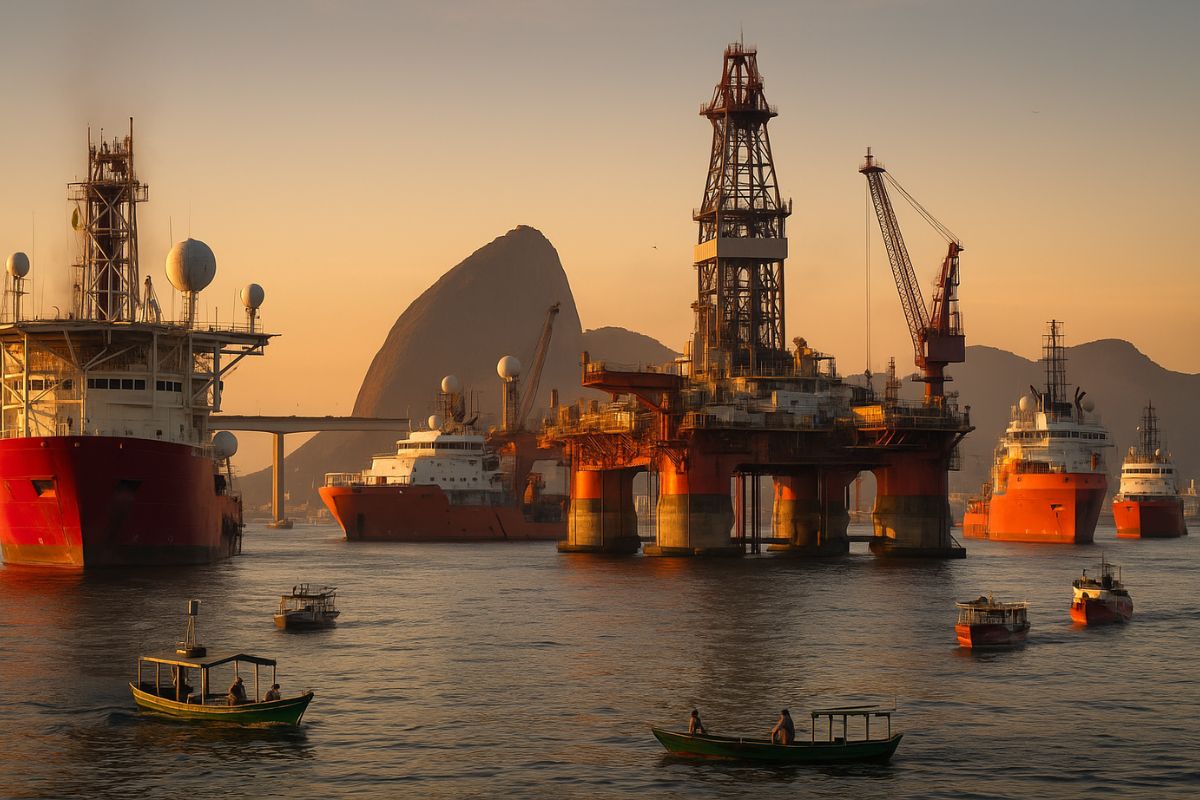


The Congestion of Dozens of Oil Tankers off the Coast of Rio de Janeiro Is a Symptom of the Success of Pre-salt Production, Which Exceeded the Capacity of the Country’s Port Infrastructure.
The image of a long line of oil tankers anchored in Guanabara Bay, waiting to load Brazilian oil, has become a common sight in Rio de Janeiro. This congestion, however, is not a sign of crisis, but rather a reflection of such great success that it has become a problem: record oil production, driven by the pre-salt, has exceeded the capacity of the country’s ports.
This new reality has transformed the bay into a massive logistics hub, where complex operations are carried out offshore to manage the volume. However, this intense activity also brings to light a debate about environmental risks, infrastructure challenges, and Brazil’s energy strategy for the coming years.
The Record Pre-salt Production That Exceeded Port Capacity in 2025
The main reason for the line of oil tankers is the volume of oil that Brazil is extracting. In February 2025, national oil production reached 3.488 million barrels per day, a 1.2% increase compared to the previous year.
-
Spain surprises the world by erecting 62 artificial dunes, mixing sand with natural remains of posidonia, and causing the structure to lose only 1.4% of its volume in 1 year.

-
With 16 Bulava missiles, improvements in acoustic stealth, and a design focused on silent patrols, Russia’s nuclear submarine was born to ensure Moscow’s invisible retaliation and has become one of the pillars of its maritime strength.

-
‘Populous’ city in Rio among the worst in Brazil in national ranking and exposes silent development crisis.
-
Couple buys house in the South Zone of São Paulo, opens a hidden door in the garage, and finds a secret wine cellar with dozens of old wines forgotten since the 1970s.

The source of this wealth is the pre-salt. The geological layer was responsible for 78.8% of all Brazilian production during the same period. Just the Tupi field, for example, produces more than 760,000 barrels per day—a volume that, by itself, would be enough to place this single field among the largest producers in the world if it were a country. With Petrobras accounting for almost 90% of the total volume, the result was an exponential increase in the need for exports, creating unprecedented pressure on logistics infrastructure.
Ship-to-Ship Operations as a Safety Valve for Exporting Oil
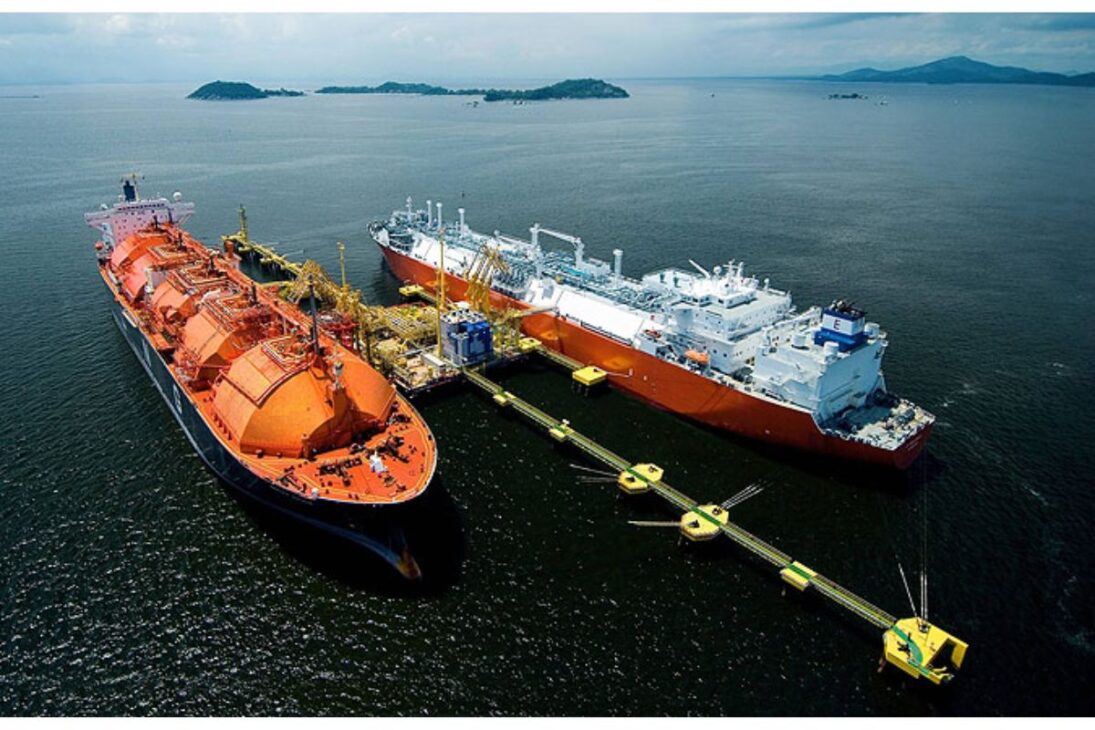
The port terminals in Guanabara Bay, operated by Transpetro, are essential but have limitations. The main one is the draft (depth), which prevents the largest supertankers in the world, the VLCCs, capable of carrying up to 2 million barrels, from docking.
To circumvent this bottleneck, the solution found was to move operations offshore. Ship-to-Ship (STS) transfers became the main safety valve. In this model, oil stored in the pre-salt FPSOs is taken by smaller ships to the bay, where it is transferred to the supertankers waiting anchored. This practice, regulated by ANP and IBAMA, grew nearly 40% in 2021 and has established itself as the crucial link in the export chain.
Pollution and the Danger of the “Abandoned Vessels Graveyard”
This intense industrial activity in an ecologically sensitive area creates a ‘perfect storm’ of risks. The threat of oil spills is constant, but the danger is exacerbated by a chronic problem in the bay: a true ‘graveyard of vessels.’ Dozens of abandoned hulls become ghostly obstacles, turning each maneuver of a supertanker into a high-risk operation, as evidenced by the dramatic collision of the São Luiz ship with the Rio-Niterói Bridge in 2022.
Intense Activity of Oil Tankers: Brazil Exports Crude Oil and Imports More Expensive Diesel
The intense activity of oil tankers in Guanabara Bay also exposes a contradiction in the Brazilian economy. In 2024, oil became the country’s main export product, generating revenue of US$ 44.8 billion. About 52% of all oil produced in Brazil was sold abroad.
However, the country continues to be a major importer of higher-value derivatives, such as diesel. This occurs because the national refining capacity has not kept pace with production growth. In practice, Brazil sells the ‘cake’ (crude oil) and buys the ‘slice’ (derivatives), a model that raises a debate about the country’s energy strategy.
Plans of Petrobras and Transpetro for the Coming Years
Projections indicate that the pressure on logistics will only increase, with oil production expected to grow even more. In light of this, Petrobras plans to invest US$ 111 billion by 2029, primarily focusing on further increasing production. To handle the output, its logistics subsidiary, Transpetro, announced a R$ 2.4 billion plan to renew its fleet. The question for the coming years is whether the race to modernize infrastructure can keep up with the accelerated pace of pre-salt production.







Exporta matéria prima e importa derivados, nitrogenados, gás natural etc de maior valor agregado. Subdesenvolvido
Sempre será assim, poderá extrair um bilhão de barris diariamente, que vamos continuar pagando valores elevados. Como exemplo, veja o fornecimento do gás de cozinha e o seu preço para o consumidor. Máfia por todos os lados, preços cartelizados e por aí segue.
Ja’ a questao do “cemiterio de navios obsoletos” que infestam os portos brasileiros e’ de fato uma VERGONHA. Caberia ao MPF declara-los “bens alienados pelo Estado” e promover o imediato leilao publico, transformando esses ativos em dinheiros depositado em conta judicial, incentivando o mercado de reciclagem de navios e plataformas obsoletas.
E o ex presidente que vendeu refinaria pela metade do preço,depois recebeu jóias, não vão falar nada.