





 Portuguese
  English
  Spanish
  4 min of reading
  4 comments


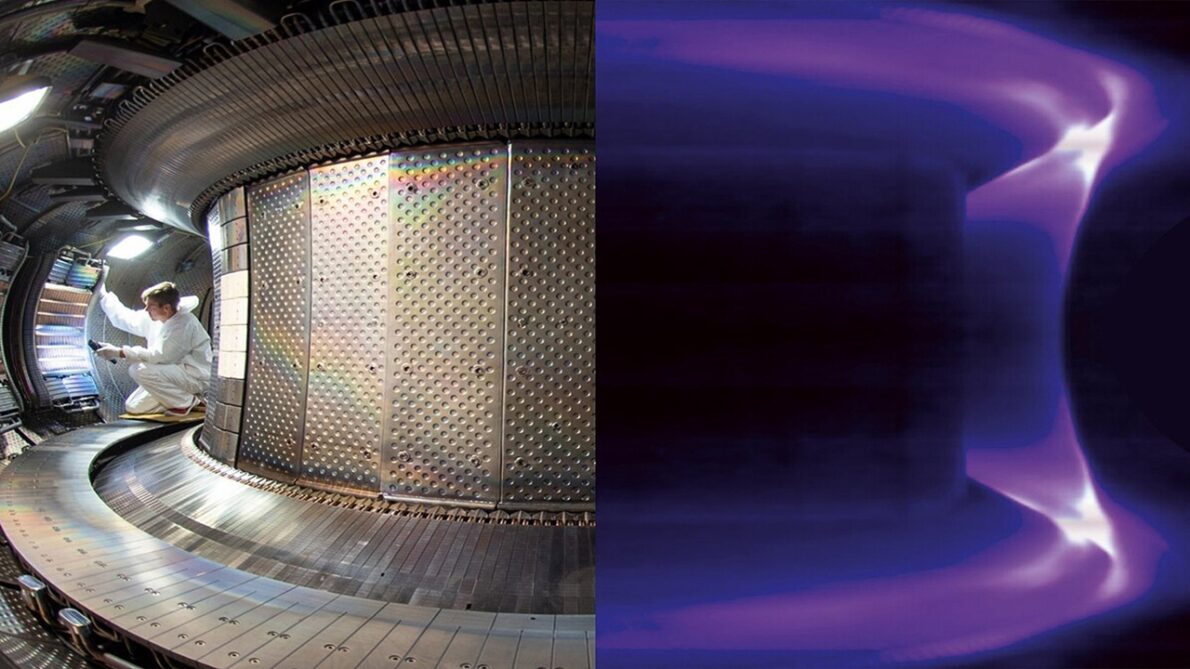


The Importance Of Tungsten In Nuclear Fusion: Get To Know The Metal That Could Secure The Success Of Future Commercial Power Plants
The arrival of the first power plants equipped with a nuclear fusion reactor will occur, if everything goes as planned, during the 1960s. This is, at least, what EUROfusion, the European consortium that promotes the development of fusion energy, claims. The challenges that need to be overcome for this milestone to be possible are numerous and, moreover, their complexity is intimidating. It is necessary to control, sustain, and stabilize the plasma; produce tritium within the reactor; remove the impurities resulting from the reaction.
The scientists involved in the development of magnetic confinement fusion energy are working to solve these challenges, and the innovations they are developing invite us to look to the future with reasonable and healthy optimism. However, there is one challenge that we have not yet addressed: for commercial fusion energy to be successful, it is essential to develop new materials capable of handling the rigors that this technology imposes.

As physicists and engineers involved in the development of nuclear fusion energy have come to better understand the reaction and behavior of the plasma, they have noticed something unsettling: the ideal materials for some of the reactor elements are not available but can be developed. This is precisely the main purpose of the IFMIF-DONES project, which has already started in Escúzar (Granada). Other materials are already available, but they need to be found and tested to verify whether they truly meet the reactor’s needs.
-
Researchers discover a possible hydrogen deposit of up to 46 million tons beneath an ancient coal basin, and the volume could exceed half of the entire global production.

-
While the world looks at oil, the war with Iran is already disrupting helium supply from Qatar, affecting car and iPhone chips, threatening AI expansion, and putting pressure on aluminum packaging at the highest value in four years.

-
Global warming will expose a treasure hidden under the ice of Antarctica and may spark an international dispute over gold and valuable minerals.

-
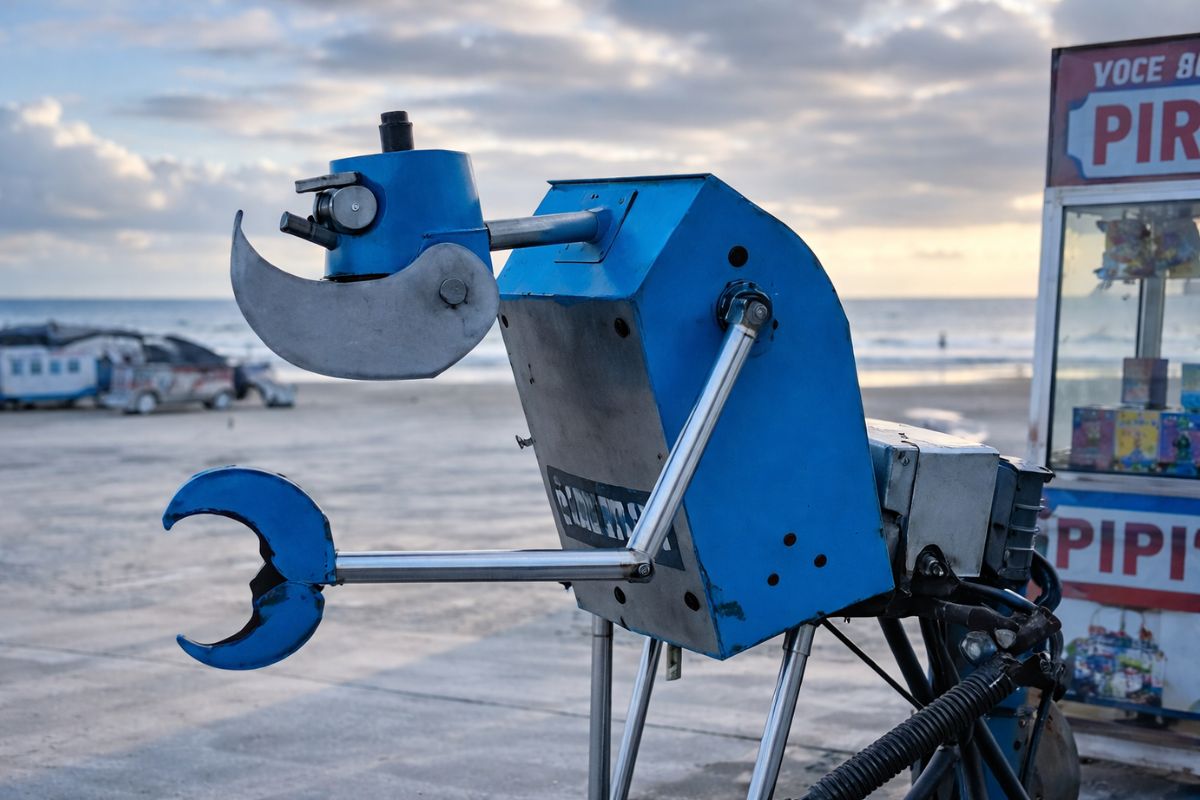
A street vendor from Praia Grande built a robot made of scrap from scooters and washing machines that pulls his popcorn cart on the beach, emits sounds, and interacts with customers, becoming an attraction on the coast of São Paulo.

What Tungsten Crystals Can Do For Nuclear Fusion
Tungsten or wolfram (W) is a relatively scarce metal in the Earth’s crust. It is very dense and extremely hard (understanding hardness as its resistance to being scratched), but its most exotic physicochemical property is having the highest melting point of all metals found in the periodic table of chemical elements (a staggering 3,422 °C). It has a wide range of applications, but, interestingly, since World War II, it has been highly valued for its suitability in configuring the armor of some vehicles and in manufacturing ammunition.
If we focus on its role both in the ITER (International Thermonuclear Experimental Reactor), the experimental nuclear fusion reactor being constructed by an international consortium in the French locality of Cadarache, and in future nuclear fusion machines, tungsten is a true gem. This is because, as we have just seen, in addition to having, the highest melting point of all metals, it has a high thermal conductivity index, is minimally activated when impacted by high-energy neutrons, and almost does not interact with the fuel used in fusion reactors.
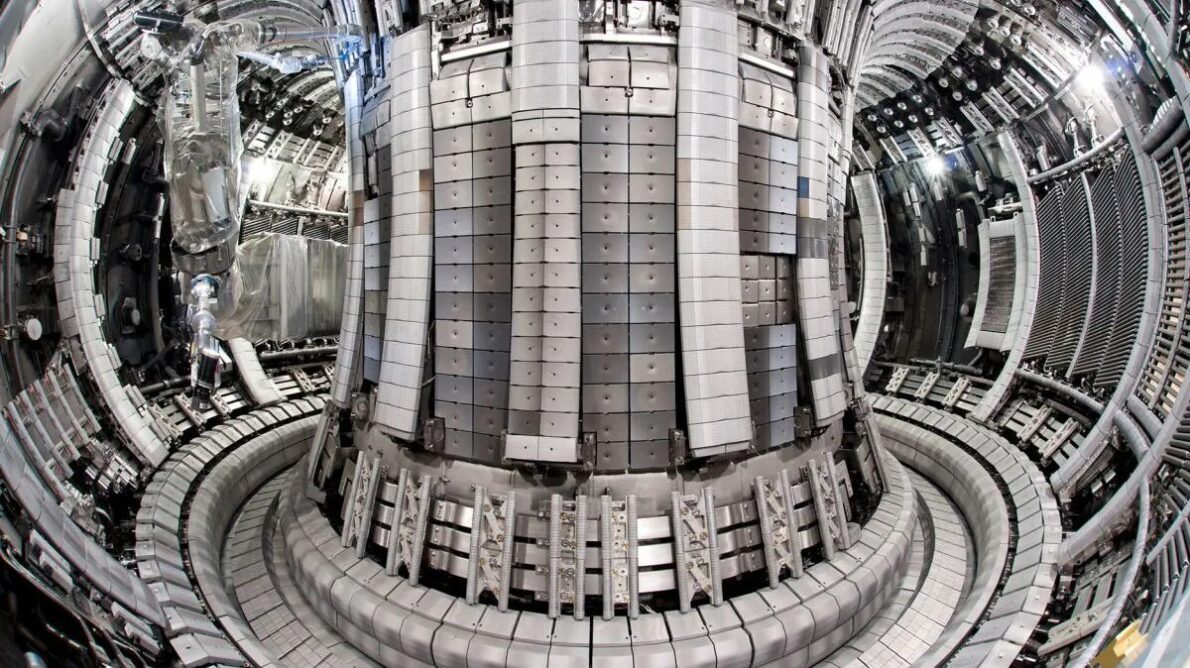
These properties make it ideal for coating the reactor components that are most exposed to the plasma, whose temperature reaches at least 150 million degrees Celsius. It is used, among other components, in the thermal shields of the inner lining of the reactor’s vacuum chamber, in diagnostic sensors, or in the divertor, which is, in some way, the “exhaust pipe” that allows the reactor to extract the ashes and impurities resulting from the interaction of the plasma with the most exposed layer of the mantle.
Everything we have seen so far seems great, but the use of tungsten presents a very significant challenge that we cannot overlook: its extreme hardness makes it difficult and very expensive to machine with a computer numerical control (CNC) cutting machine. Fortunately, the synthesis of tungsten from gas interaction and chemical deposition represents a great opportunity in the processes for manufacturing thermal shields, as it allows researchers to avoid the limitations of CNC machines. Tungsten has been a highly valued chemical element for over eight decades, and nuclear fusion is helping to cement its prominence and position it as one of the most coveted metals.
Image: ITER
Source: EUROfusion






1 metro ****bico de núcleo solar produz 1 terço da energia de corpos humanos em repouso. Pensa no tamanho necessário para conseguir produzir energia na escala que a sociedade moderna precisa? Fusão nunca será uma fonte de energia viável.
Mas China está muito perto. A China manda foguete para a lua, para coletar pedras da lua, e volta para a Terra. A pedra da lua serve fusão nuclear, e funcionará 100%.
Creio que a década de 60 está um tanto longe de nós…