





 Português
  Inglês
  Espanhol
  3 min de leitura
  0 comentários


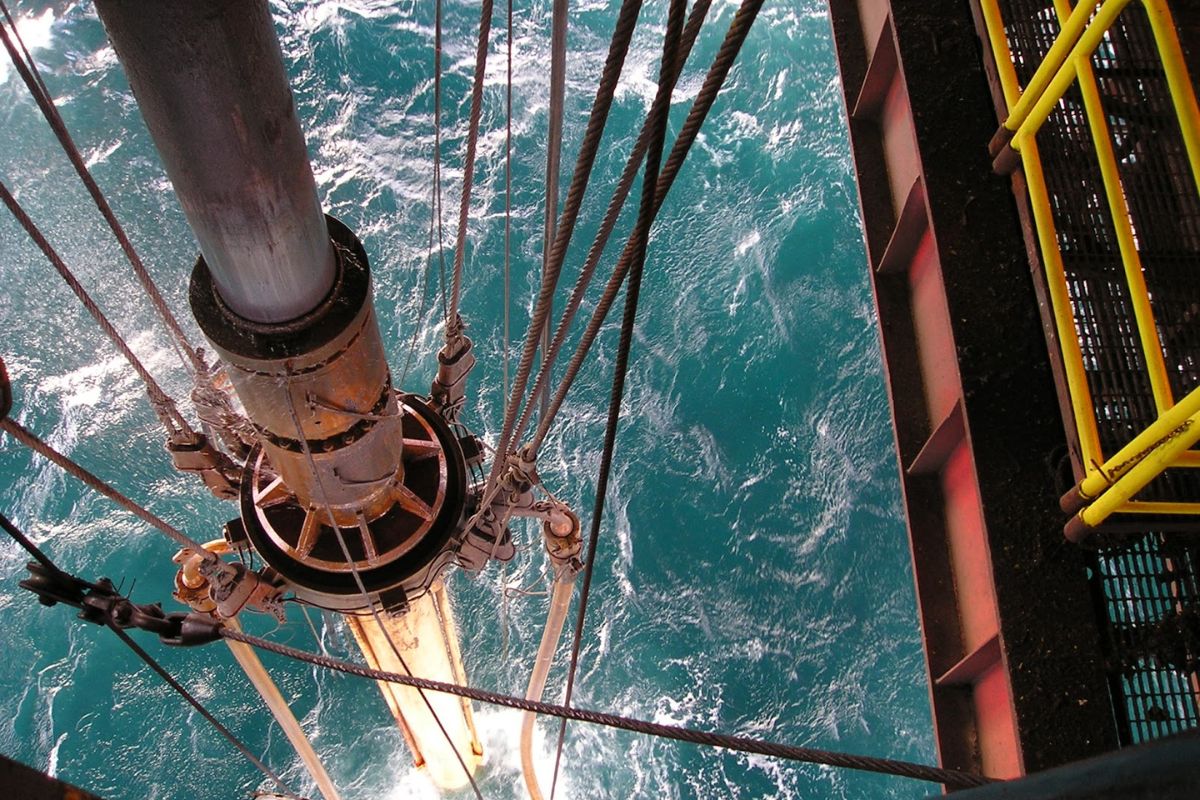
Meet the BOP, the Blowout Preventer, the Equipment That Is the Last Line of Defense in Oil Well Drilling and How the Deepwater Horizon Disaster in 2010 Changed Everything
At the bottom of the sea, in the drilling of pre-salt oil wells, there is a colossal safety device known as the BOP (Blowout Preventer). Weighing over 300 tons, its most drastic function earned it the nickname “guillotine”: it is a blowout preventer that cuts steel to seal a well and prevent an explosion.
This equipment is the last and most important line of defense against an environmental disaster. Its failure triggered the Deepwater Horizon tragedy in 2010, an event that led to a revolution in safety and drilling technology regulations worldwide, including much stricter oversight by IBAMA and ANP in Brazil.
What Is the Blowout Preventer and Why Is It the Last Line of Defense for an Oil Well?
The Blowout Preventer is a set of high-pressure valves and hydraulic pistons installed on the seabed, above the wellhead. Its main function is to contain pressure and seal the well in case of an uncontrolled influx of oil or gas, a dangerous event known as a “kick”.
-
The world’s first octopus farm wants to open in the Canary Islands and is already provoking an international reaction: the plan aims to produce 3,000 tons per year.

-
Drought may be creating stronger superbugs in the soil and helping antibiotic resistance reach hospitals, warns a study highlighting a problem that could grow alongside extreme weather.

-
The biggest scam in history: Napoleon’s France deceived the United States by selling them a territory that was Spanish.

-
Why is the Danakil Desert so dangerous? It has unstable terrain and how extreme temperatures and toxic gases turn the region into one of the most hostile environments on Earth.


If this “kick” is not contained, it can evolve into a “blowout”, an explosion with catastrophic consequences. This is when the guillotine function of the BOP comes into play. Its “shear rams” are activated to cut the drill pipe and close the well, as a final emergency measure.
The Force to Cut Steel, the Engineering Behind the Guillotine
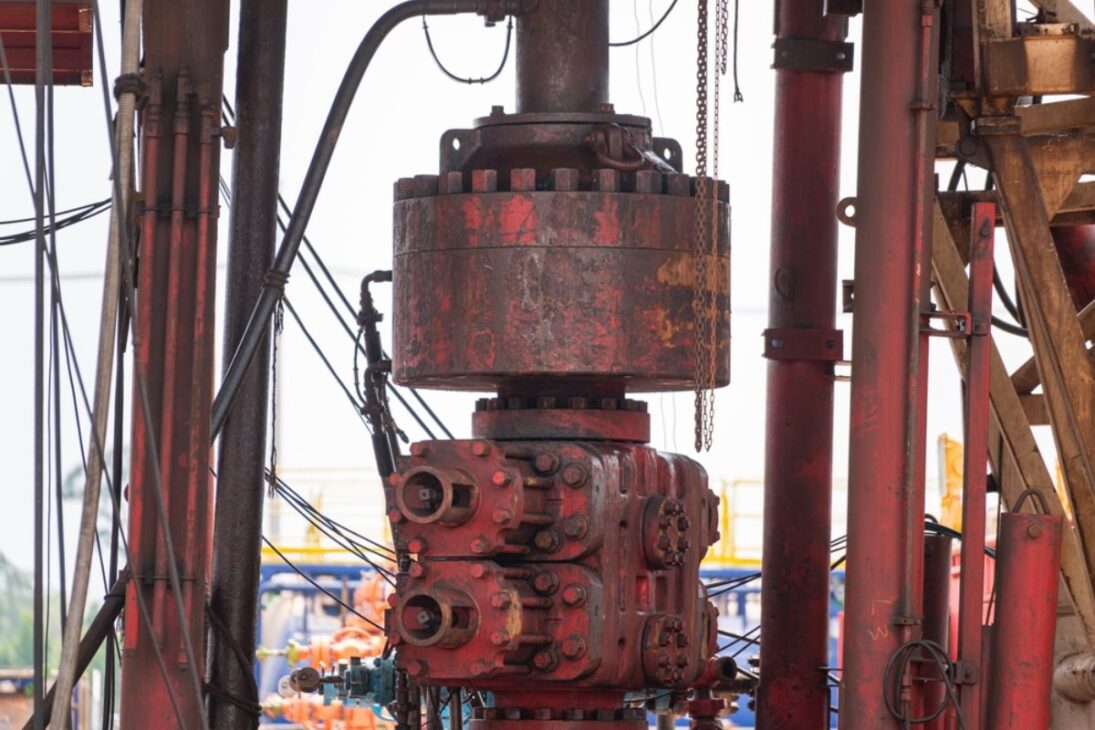
The cutting capacity of the BOP is impressive. Studies simulating the process indicate that the maximum force exerted by the shear ram blades to cut the drill pipe reaches 2.26 MegaNewtons. Converted, this corresponds to a force of approximately 254 tons.
This number confirms that the metaphor of the “300-ton guillotine” is an accurate description of the force required for the blowout preventer that cuts steel to function. The engineering behind this mechanism is constantly evolving, with new materials and designs to ensure that the BOP can cut increasingly stronger pipes used in modern drilling.
The Deepwater Horizon Disaster in 2010, the Failure That Changed History
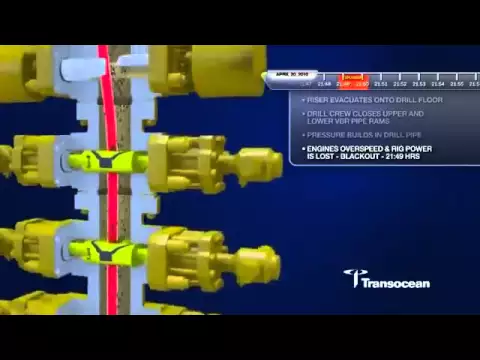
On April 20, 2010, the world witnessed the catastrophic failure of the BOP on the Deepwater Horizon platform in the Gulf of Mexico. The investigation revealed a cascade of errors: the cement barriers of the well failed, a pressure test was misinterpreted, and when the blowout began, the emergency functions of the BOP did not operate as expected.
A detailed investigation found that the drill pipe had deformed, preventing the BOP blades from cutting it cleanly. In addition, electrical failures were found, such as incorrect wiring and insufficiently charged batteries, which compromised the automatic activation systems of the equipment. The disaster, which claimed the lives of 11 workers, was a tragic milestone that exposed the vulnerabilities of the safety systems of the time.
The Brazilian Scenario Post-2010, Stricter Rules from ANP and IBAMA
The lessons learned from Deepwater Horizon led to a complete overhaul of offshore safety regulations worldwide. In Brazil, where pre-salt exploration occurs under extreme conditions, ANP (National Petroleum Agency) and IBAMA intensified oversight.
After 2010, much stricter protocols were adopted for the design, testing, certification, and maintenance of BOPs. Regulatory bodies began to require more frequent inspections and more robust well control systems, aligning Brazil with best international practices to ensure the safety of operations.
Technological Advancements for the Pre-Salt, Challenges of High Pressure and Temperature

The Brazilian pre-salt environment imposes unique challenges for the blowout preventer that cuts steel. Drilling occurs in ultra-deep waters and needs to penetrate a thick layer of salt, under extremely high-pressure (HPHT) conditions that can reach 20,000 psi, and temperatures exceeding 175°C.
To withstand these conditions, BOP technology has evolved significantly. Electrically actuated BOPs (E-BOPs) have emerged, which are faster and more precise than traditional hydraulic systems. Additionally, the industry has started using “smart BOPs” equipped with sensors that monitor the integrity of the equipment in real time and employ predictive analytics to anticipate failures, making drilling in the pre-salt safer and more efficient.








Seja o primeiro a reagir!