





 Portuguese
  English
  Spanish
  3 min of reading
  0 comments


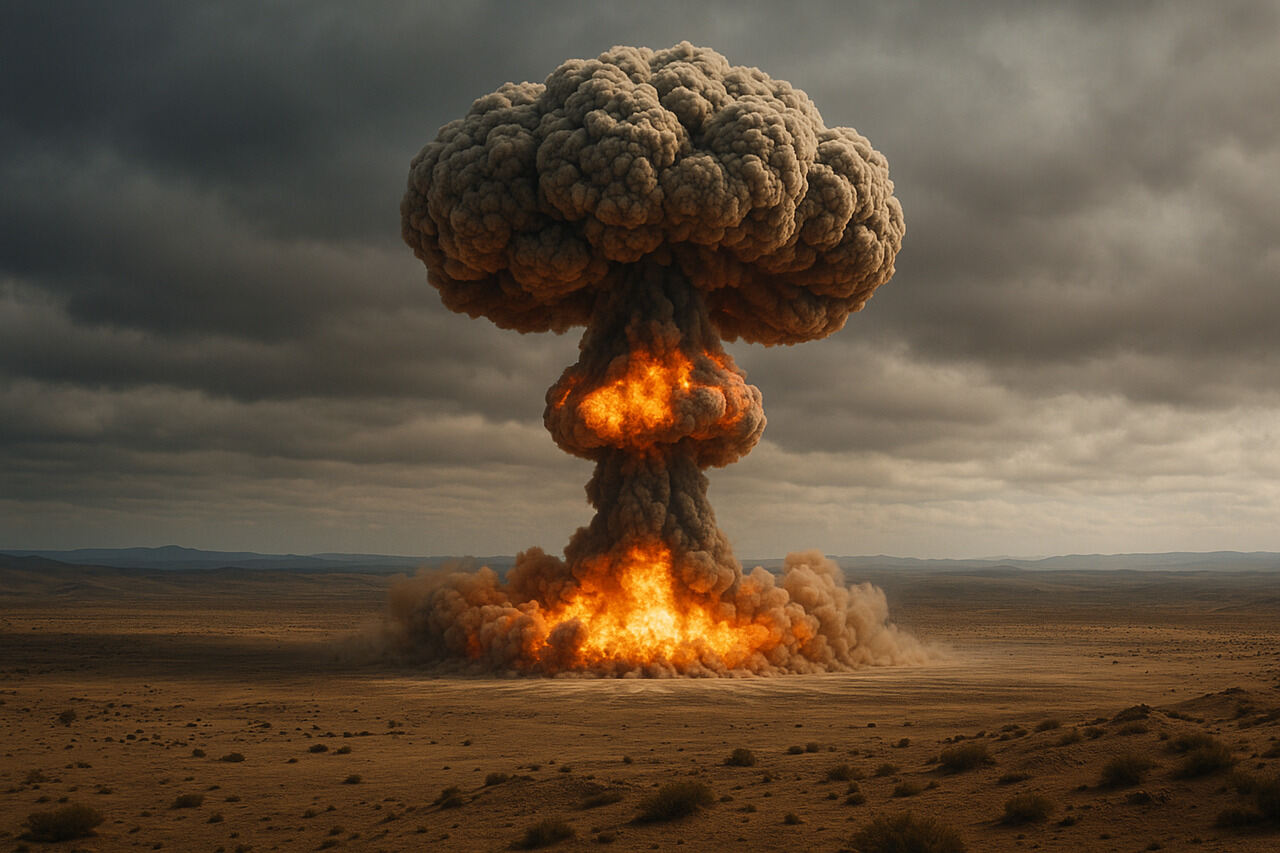
Combining Sensors And Advanced Science, The World Enhances The Detection Of Nuclear Tests And Strengthens Surveillance Against Invisible Threats
The detection of nuclear tests is one of the priorities of global security. Even when conducted in remote locations, the physical traces left by these explosions are becoming easier to identify. This is due to the combined use of technologies such as seismology, infrasound, spectrometry, and remote sensing.
In January 2016, for example, a nuclear explosion in North Korea generated a 5.1 magnitude earthquake.
The tremor was detected even in Tocantins, on the other side of the planet. For geology experts, the intensity was moderate. For political analysts, the message was clear: a warning to the world.
-
Friends have been building a small “town” for 30 years to grow old together, with compact houses, a common area, nature surrounding it, and a collective life project designed for friendship, coexistence, and simplicity.

-
This small town in Germany created its own currency 24 years ago, today it circulates millions per year, is accepted in over 300 stores, and the German government allowed all of this to happen under one condition.

-
Curitiba is shrinking and is expected to lose 97,000 residents by 2050, while inland cities in Paraná such as Sarandi, Araucária, and Toledo are experiencing accelerated growth that is changing the entire state’s map.

-
Tourists were poisoned on Everest in a million-dollar fraud scheme involving helicopters that diverted over $19 million and shocked international authorities.


Technology Against Silence
Brazilian physicist Luciano Ricco, a postdoctoral researcher at the University of Reykjavík in Iceland, explained how nuclear tests can be detected. According to him, it is practically impossible to hide such an explosion these days.
“Nowadays, it’s very difficult to go unnoticed with a nuclear test because physics leaves its traces through distinct mechanisms, such as seismic waves, infrasound, and radioactive particles,” Ricco said in an interview with TechTudo.
He also highlighted the advances being made in this field and pointed out the importance of combining different technologies.
Global Surveillance Network
Since the signing of the Comprehensive Nuclear-Test-Ban Treaty (CTBT) in 1996, the world has mobilized to create a global monitoring structure.
The body responsible for this, the CTBTO, maintains a network of over 300 stations spread across the planet.
These stations use four main detection methods: seismic, infrasonic, hydroacoustic, and radionuclide.
The combination of these techniques not only allows for the detection of explosions but also confirms their origin with a high degree of precision.
The International Atomic Energy Agency (IAEA) also participates in the process, verifying technical data related to nuclear programs, both civilian and military.
“The use of physical models and the combination of different technologies allows for the identification of nuclear explosions with a very high level of confidence,” explained Ricco.
Nuclear Tests: The Sound Of The Subsoil
Underground nuclear explosions emit seismic waves. They spread differently than natural earthquakes.
While earthquakes release energy laterally, nuclear explosions produce waves that spread in all directions.
“In the case of an earthquake, you have a geological rupture that releases energy in the form of lateral waves. A subterranean nuclear explosion, on the other hand, produces radial spreading, like a stone thrown into water,” the physicist explained.
With high-precision seismographic stations, it’s possible to detect vibrations thousands of kilometers away. This allows for differentiating between natural events and nuclear explosions quite rapidly.
The Sound That No One Hears
In the case of atmospheric explosions, infrasound is key. This type of sound wave has a very low frequency and cannot be heard by humans.
But extremely sensitive microbarometers can capture it accurately.
“Infrasound is effective because its waves can travel through obstacles like mountains and buildings without losing intensity,” Ricco noted.
The shape of these pressure waves is unique, allowing for the distinction of nuclear explosions from other phenomena, such as meteors or storms.
With well-placed sensors and data cross-referencing, detection becomes even more reliable. This global system, according to experts, continues to evolve. And surveillance over nuclear tests becomes increasingly precise.
With information from Tech Tudo.









Seja o primeiro a reagir!