





 Portuguese
  English
  Spanish
  4 min of reading
  1 comment


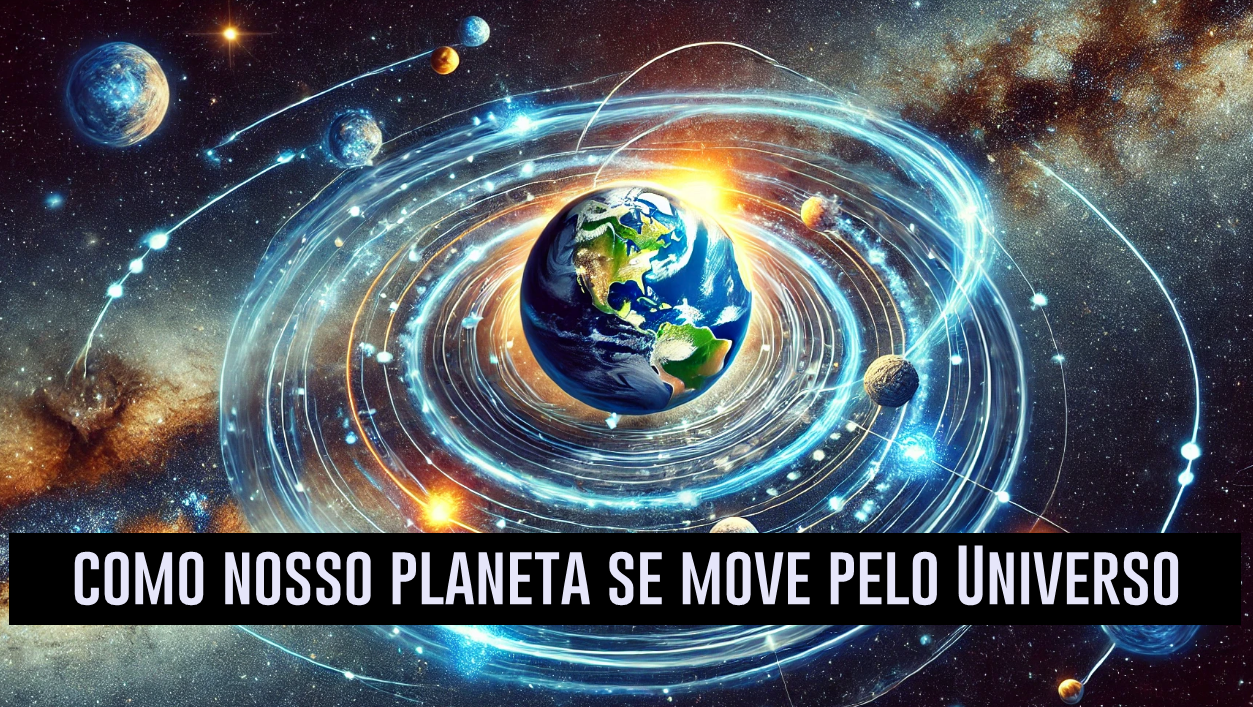


Discover How the Earth Moves Through the Universe, from Rotations to Movements Within Galaxies and Beyond
The movement of our planet Earth in the universe is fascinating and goes far beyond simple rotations around the Sun. It is an intricate set of movements that includes the rotation of our planet, the orbit around the Sun, the movement of the Solar System within the Milky Way, and additionally, the position of our galaxy toward the Andromeda galaxy.
All of this combined creates a complex and uninterrupted cosmic dance that places humanity in a position of constant and extraordinarily rapid movement.
The Earth and Its Own Movement
The Earth performs several fundamental movements for our daily life, from a rotation around its own axis to the orbit around the Sun.
-
Remains with battle wounds of over 100 soldiers from the Roman Empire are found beneath a football field in Vienna, leaving everyone surprised.

-
Elon Musk notes Brazil and lowers the price of his internet, Starlink, promising to connect all corners of the country with affordable plans, 10,000 satellites, and 1 million active users in the national territory!

-
Man creates an infinite source of FREE electricity at home with a PVC wind turbine using a repurposed motor.
-
An aquatic seed consumed for centuries in Asia is going viral in the West after studies highlighted its antioxidant compounds and potential anti-inflammatory properties. It pops like popcorn, has low fat content, and is already being called the new functional snack.


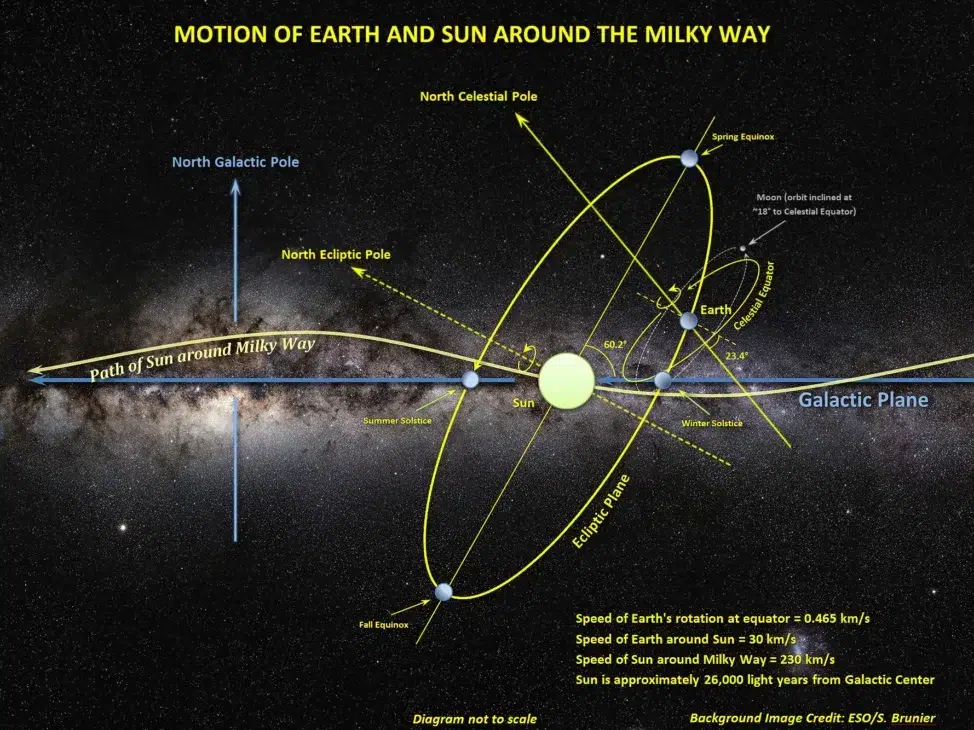
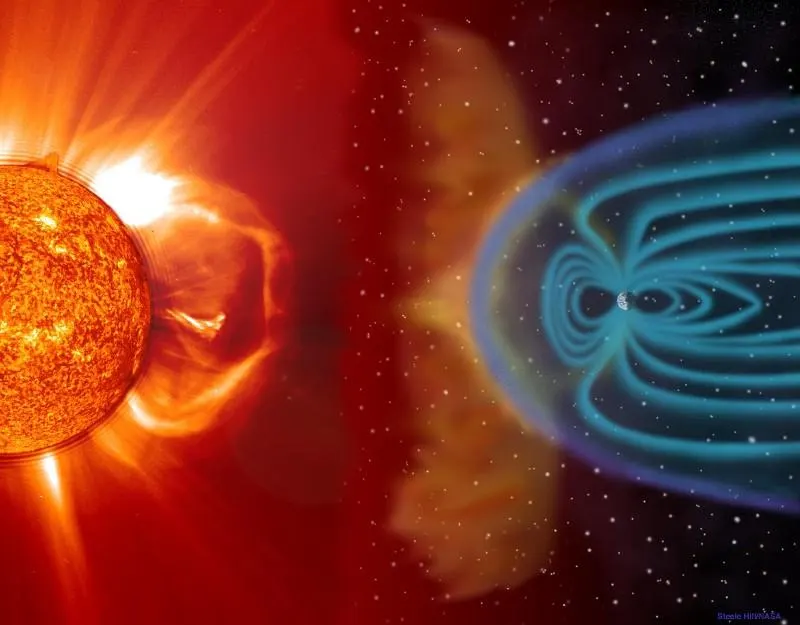
- Earth’s Rotation: The rotation of our planet on its axis creates day and night, along with specific influences such as the waves at the equator and the formation of the Earth’s magnetic field. This magnetic field, in turn, is essential for protecting life on Earth from cosmic rays and solar wind. In terms of speed, the Earth’s rotation is about 1700 km/h for someone at the equator.
- Orbit Around the Sun: The Earth not only spins on its axis but also orbits the Sun at an average speed of approximately 30 km/s. This orbital movement defines the Earth year and stabilizes the Earth’s position within the Solar System.
The Sun and the Solar System at the Heart of the Milky Way
The Sun, along with all the planets that orbit around it, is also in continuous motion within our galaxy, the Milky Way.
- Movement Around the Center of the Milky Way: The Milky Way is a massive galaxy filled with stars, planets, dark matter, and more. The Sun rotates around the center of the Milky Way at a speed of approximately 200-220 km/s, completing one rotation every 220 to 250 million years. This galactic movement occurs in an elliptical trajectory and is accompanied by the movement of all celestial bodies in the Solar System.
- Impact of Galactic Gravity: Although our galaxy is a structure with immense mass, it is not stationary. The Milky Way itself is in motion, attracted by the gravity of other cosmic structures around.
Cosmic Attraction and Repulsion: The Collision Course with Andromeda
In addition to moving internally, the Milky Way is on a cosmic journey toward other galaxies, with a particular destination: the Andromeda galaxy.
- Toward Andromeda: The Milky Way and Andromeda are on a collision course, moving toward each other at a speed of about 109 km/s. This effect is the result of mutual gravitational attraction between these massive galaxies. In the distant future, both will merge, forming a larger new galaxy.
- Galactic Groups and Gravitational Attraction: The galaxies in our local group, including Andromeda, are under the influence of a gravitational force that attracts and repels according to their densities. Our local group moves at approximately 627 km/s relative to the cosmic microwave background, the CMB (Cosmic Microwave Background).
The Influence of Universal Structures and the Role of Cosmic Voids
The movement of the Milky Way is impacted not only by the attraction of other galaxies but also by low-density regions known as “cosmic voids.”
- Attraction of Superclusters: Around the Milky Way, there are superclusters and clusters of galaxies that exert a gravitational pull. These high-density regions influence the movement of our galaxy and all other structures in nearby space.
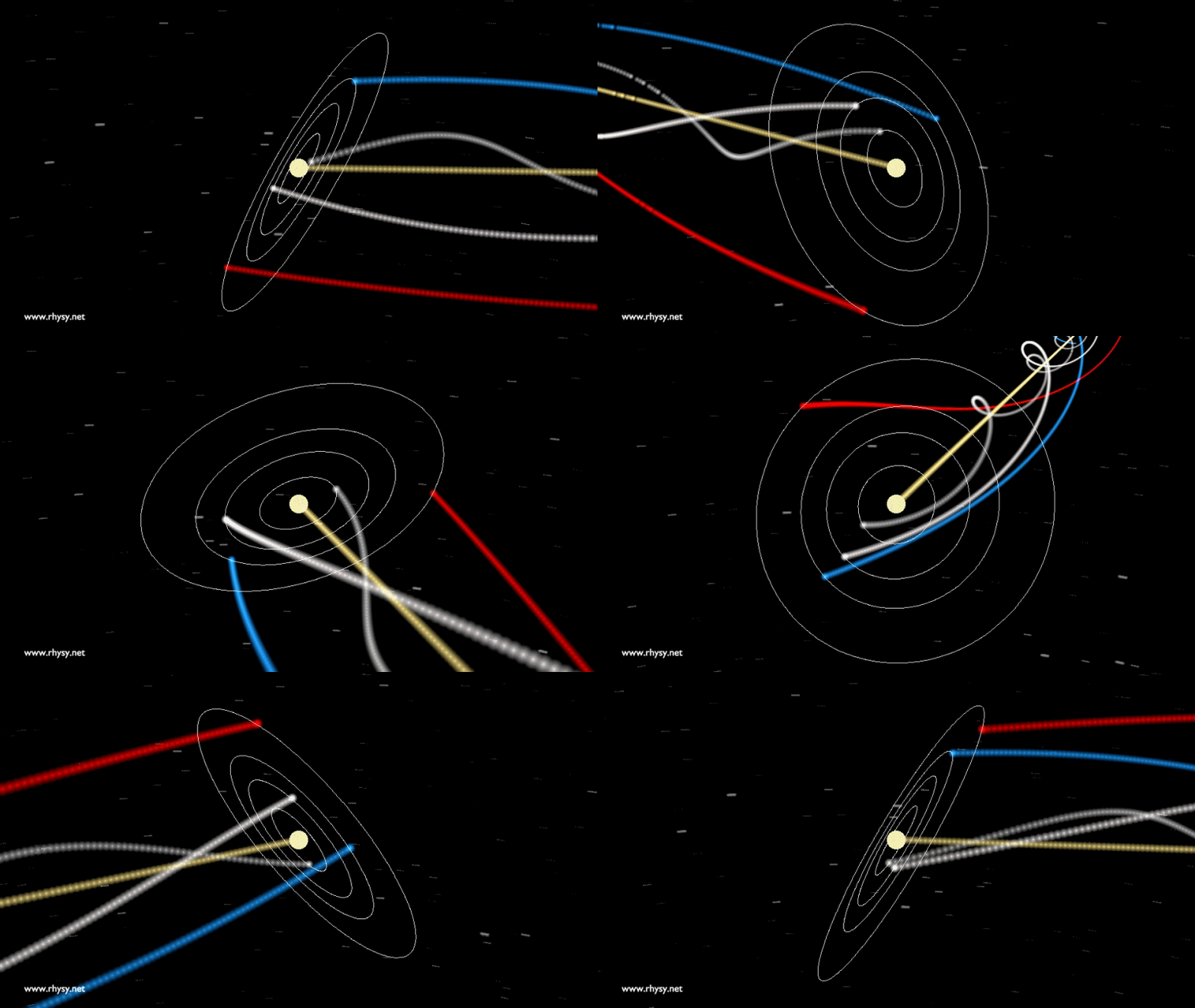
- Repulsion from Cosmic Voids: In contrast to superclusters, cosmic voids are regions of space with low matter density. In a characteristic known as “gravitational repulsion,” these voids cause nearby galaxies to be “pushed” for long periods, creating a repulsive force that adds a new layer of complexity to galactic movement.
Conclusion: The Total Movement of Earth and Its Galaxy in the Universe
When summing up all the movements – the Earth’s rotation, its orbit around the Sun, the movement of the Solar System within the Milky Way, and the displacement of the galaxy itself – our planet is in constant and accelerated motion through the cosmos.
The final movement in relation to the CMB reaches approximately 627 km/s, demonstrating how resonant and filled with forces and interactions our universe is.
This understanding has been made possible by scientific and technological advancements that allowed detailed observation and measurement of cosmic movements.
We now know that, even on a gigantic scale, the forces of attraction and repulsion shape the universe, creating a complex and fascinating structure that we observe today.





Maravilhoso texto e interessantíssimo modo como os astros se movimentam.