





 Portuguese
  English
  Spanish
  4 min of reading
  0 comments


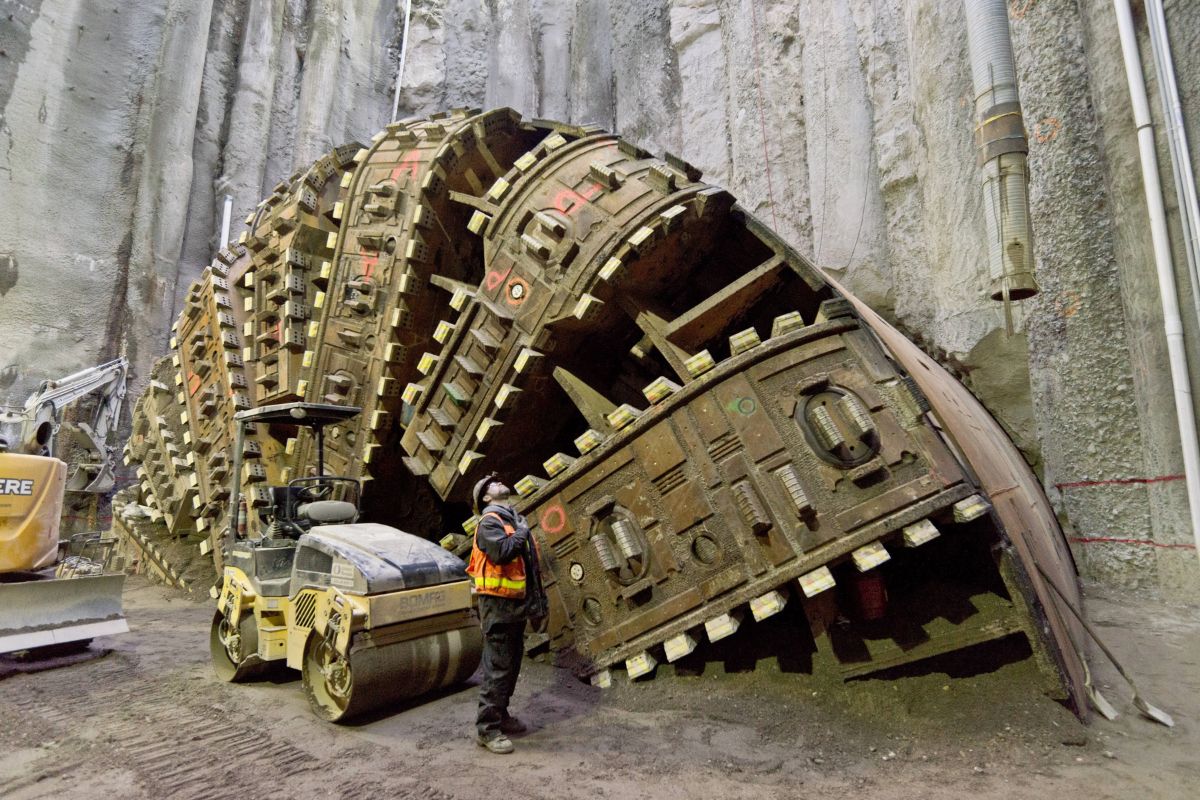
With More Than 10 Meters in Diameter and High-Strength Cutting Discs, the Gigantic Blade of a ‘Tatuzão’ Was Essential for Building the New Line 6-Orange of the Metro.
Under the busy streets of São Paulo, a monumental engineering project paved the way for the future of mobility in the city. The main tool for this transformation was a gigantic machine, commonly known as a “tatuzão”. The most important part of this machine is its front, the blade of a ‘tatuzão’, a giant rotating disc designed to crush earth and rock with impressive force.
Learn how this impressive technology worked in practice. Let’s explore the anatomy of these colossal machines, the journey they undertook beneath the city, the challenges they faced, and how, in February 2025, they completed the mission of excavating the 15.3 kilometers of tunnels of the Line 6-Orange Metro.
How the 10.61-Meter Diameter and 2,000-Ton Tatuzão Works
The “tatuzão” used on Line 6-Orange is technically a Tunnel Boring Machine (TBM) of the Earth Pressure Balance (EPB) type. This technology was chosen for being ideal for São Paulo’s unstable underground, which mixes clay, soft soil, and hard rocks. The machine uses the excavated material itself to maintain pressure at the tunnel face, preventing collapses on the surface.
-
How to build a floating island from scratch with reeds, giant blocks, and stakes in the lake in a process that needs to be repeated almost every day.

-
New CCR concrete paving technology promises roads up to 3x more durable, less maintenance, and cost reduction in Brazil.

-
A forgotten cord on the floor of a basement in Vienna leads a plumber to a box containing 30 kilograms of gold with Mozart’s face, hidden before World War II. The treasure, worth 2.3 million euros, was just centimeters away from a worker who ignored the sign a day earlier.
-
Made from recycled plastic, plastic wood is gaining space in the construction industry because it does not rot, resists moisture, and reduces maintenance costs over the years.


The specifications are impressive:
- Excavation Diameter: 10.61 meters.
- Total Length: 109 meters.
- Total Weight: 2,000 tons.
Inside each tatuzão, a true mobile factory operated 24 hours a day. About 50 professionals worked aboard in three shifts, equipped with a cafeteria, nursing station, and a control cabin. Interestingly, the machines have an international origin: designed in France (NFM Technologies), they were manufactured in China and, before operation, were completely updated and commissioned by the German company Herrenknecht, a strategic maneuver by the construction company Acciona to ensure maximum reliability.
The Start of the Excavation of the “Maria Leopoldina” and “Norte” Tatuzões Starting in 2021
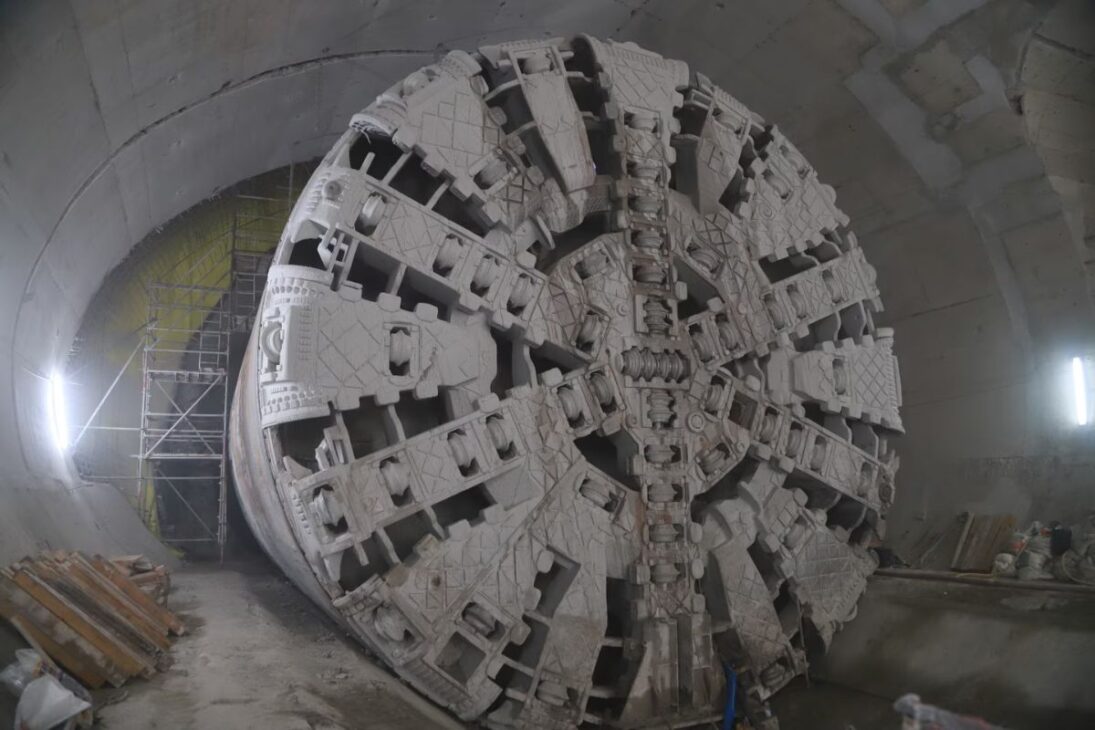
To accelerate the construction of Line 6-Orange, the project by the concessionaire Linha Uni utilized two identical machines working simultaneously in opposite directions.
The first, named “Maria Leopoldina”, began its excavation on December 16, 2021. Departing from the VSE Tietê pit, it was tasked with drilling about 10 kilometers of the southern section, an area primarily comprising clayey soil.
The second machine, known as “Tatuzão Norte”, started its journey in November 2022, departing from the Freguesia do Ó region. Its challenge was to drill 5.3 kilometers in a harder underground, with a significant presence of rock formations, which made its daily progress slower.
The Incident of February 1, 2022 That Halted Construction for Seven Months
The project faced its biggest challenge on February 1, 2022. Just weeks after starting its work, a sewage pipe burst next to the construction site and flooded the tunnel where the “Maria Leopoldina” tatuzão was located.
The consequences were severe. The excavation of the southern section was completely halted for seven months. The recovery was a complex engineering operation to pump out the water and mud, stabilize the area, and, most critically, clean and repair the gigantic 2,000-ton machine. Excavation officially resumed on August 31, 2022, a milestone that demonstrated the project’s resilience.
The Technology of the Blade of a ‘Tatuzão’ in Full Action
The component that does the heavy lifting is the cutterhead, the famous blade of a ‘tatuzão’. This rotating metal disc, with its 10.61 meters in diameter, is the face of the machine that has direct contact with the São Paulo underground.
Equipped with a series of specialized tools, the blade was designed to handle the city’s mixed geology:
- Cutting Discs: made from high-strength materials, these discs rotate and press against the rock until it fractures into smaller pieces.
- Scrapers: tools used to efficiently remove softer soils and clay.
The ability to switch between these materials without needing to stop was the main advantage of EPB technology. The blade of a ‘tatuzão’ advanced, crushing everything in front, while an internal conveyor belt removed the debris to the back of the tunnel in a continuous and safe process.
The Conclusion of the Excavation of the 15.3-Kilometer Tunnel
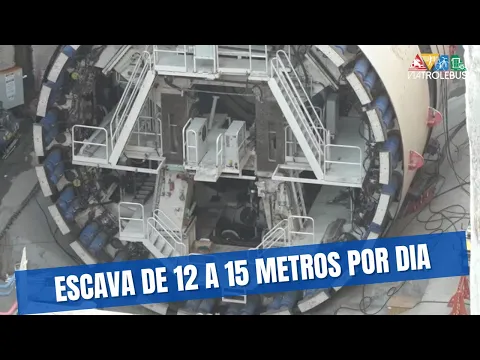

After years of uninterrupted work, the drilling phase came to an end. On February 4, 2025, the “Tatuzão Norte” completed its journey of 5.3 km by reaching the Brasilândia Station. A few days later, on February 9, 2025, it was the turn of the “Maria Leopoldina” to complete its nearly 10 km journey, finishing the southern section.
With the arrival of both machines at their destinations, the excavation of the 15.3 kilometers of tunnel was officially completed, physically connecting all 15 future stations of Line 6-Orange. The end of the tatuzões’ journey marked the conclusion of a critical stage of the project, which now enters the finishing phase of the stations, track installation, and systems for the inauguration, scheduled to occur in phases starting in 2026.






-

Uma pessoa reagiu a isso.