





 Portuguese
  English
  Spanish
  4 min of reading
  0 comments


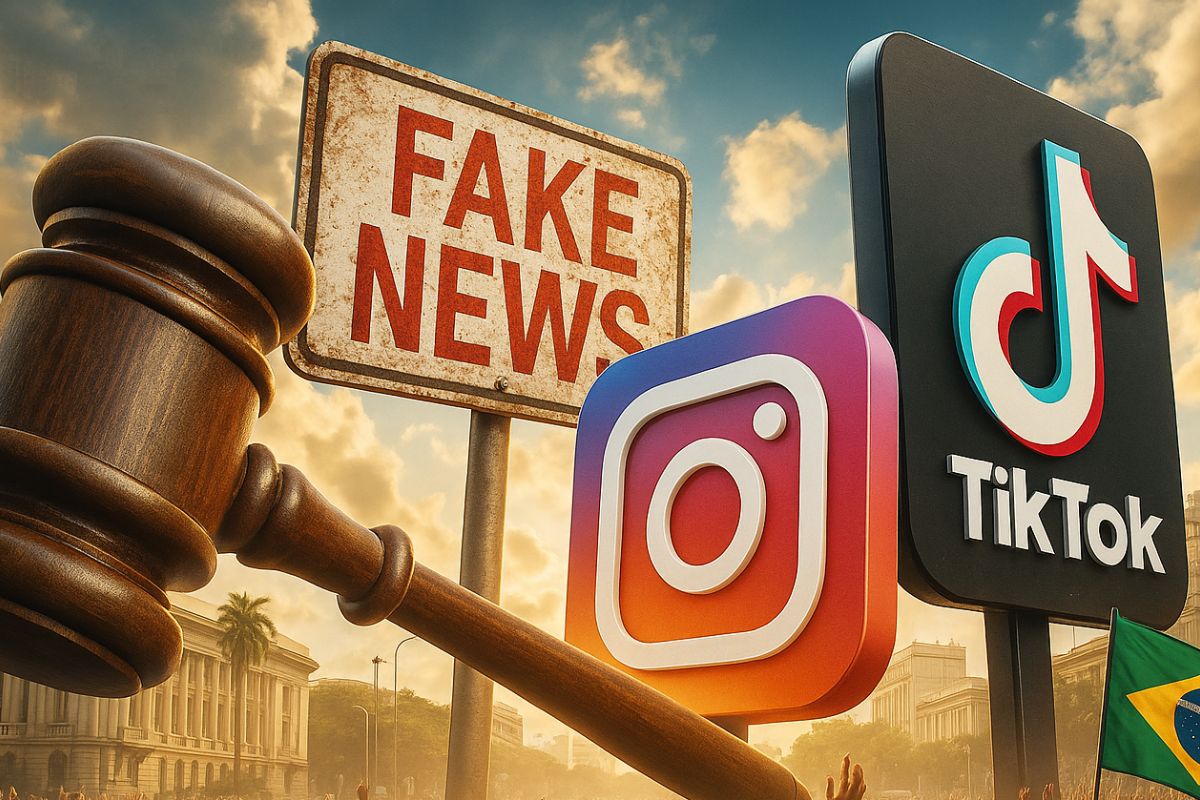
The Fake News Law, if approved, will require social media platforms like Instagram and TikTok to moderate content and compensate journalism, rekindling the national debate on freedom of expression, digital responsibility, and the growing power of large technology platforms
The Fake News Law (PL 2630/2020) is stalled in the Chamber of Deputies, but has returned to the center of political and social discussions in Brazil. The project, already approved in the Senate, aims to hold digital platforms accountable for illegal content, impose transparency rules on moderation, and require companies like Instagram, TikTok, and YouTube to compensate professional journalism for the use of news content.
According to the portal Senado notícias, the proposal has, however, turned into a divisive issue. While supporters see the initiative as essential to curb the dissemination of misinformation and hate speech, critics argue that the text opens the door for censorship, government interference, and harm to freedom of expression. The impasse has turned the project into a symbol of the tension between technology, politics, and democracy.
What the Fake News Law Aims to Change
The PL 2630/2020 seeks to modernize the regulatory framework of the internet in the country by creating direct obligations for social networks, messaging apps, and search engines.
-
The new Civil Code could revolutionize marriages in Brazil with “express divorce” and changes that could exclude spouses from inheritance.

-
Banco do Brasil sues famous influencer for million-dollar debt and intensifies debate on delinquency, risks of seizure, and direct impact on Gkay’s credibility.

-
The Senate approves a bill that criminalizes misogyny, hatred, or aversion towards women, and includes the crime in the Racism Law with a penalty of up to 5 years.

-
Chamber Approves Bill That Allows Pepper Spray for Women Over 16 and Imposes Strict Rules for Purchase, Possession, and Use as Self-Defense


The text establishes that platforms must be accountable for criminal content when they fail to act after being notified, requiring transparency reports on moderation and combating misinformation.
Another central point is the mandatory compensation for journalism, a model similar to that discussed in countries like Australia and Canada.
The measure aims to balance economic power between Big Techs and media outlets, which today produce content without a proportional return in revenue.
The project also prohibits targeted advertising for minors and requires the immediate removal of illegal content involving children and adolescents, reinforcing digital protection.
Arguments Supporting the Political Impasse
Supporters of the Fake News Law claim that regulation is essential to protect society from manipulation and the criminal use of networks.
They point out that the absence of clear rules encourages the spread of lies that influence elections, incite violence, and undermine trust in institutions.
On the other hand, opponents argue that the project could result in prior censorship and state control over information.
The text does not clearly define who will decide what is false, which, according to experts, could lead platforms to remove legitimate content out of precaution.
Furthermore, technology companies argue that the obligation to compensate media outlets is vague and could create economic distortions.
The Role of Big Techs and Pressure in Congress
The progress of the PL has been halted by a combination of Big Tech lobbying and political resistance.
During the height of the debate, companies like Google and Telegram aired messages against the project, associating it with censorship and government control.
The campaign generated a reaction from authorities and contributed to delaying the vote.
Meanwhile, religious sectors and the opposition reinforced the discourse against the PL, claiming it would threaten freedom of expression and manifestations of faith.
The pressure resulted in the creation of a working group in the Chamber, which has yet to reach a consensus. According to experts, the lack of political agreement keeps Brazil in a digital regulatory limbo.
STF and the Update of the Internet Civil Framework
While the Legislative is divided, the Supreme Federal Court (STF) has filled the normative void by defining the responsibility of platforms for illegal content.
In recent decisions, the court determined that companies can be held accountable when they fail to act in the face of serious complaints, which aligns part of the jurisprudence with the guidelines of PL 2630.
However, these decisions do not guarantee compensation to users in cases of unjustified removals, which creates legal uncertainty and encourages the preventive removal of legitimate posts.
Experts argue that the Internet Civil Framework, created in 2014, needs to be updated to address challenges such as organized misinformation, hate speech, and generative artificial intelligence.
The International Scenario and Brazil’s Delay
The European Union already implements the Digital Services Act (DSA), which imposes transparency, public reporting, and digital security rules.
Germany, in turn, adopts the NetzDG, which mandates the swift removal of hate speech and extremist content. In both cases, there are defined oversight structures and clear penalties.
Brazil, however, still lacks a specific regulatory body. The PL 2630 is more comprehensive than the European model by including compensation for journalism but still lacks clear mechanisms for enforcement and oversight.
This uncertainty keeps the country lagging behind international practices and increases the discretionary power of the platforms themselves.
What Is at Stake If the Project Is Not Voted
If Congress does not approve the Fake News Law, Brazil will continue to rely on isolated judicial decisions and internal policies of technology companies, which vary according to their commercial interests.
This creates regulatory instability and weakens user protection against abuse and misinformation.
On the other hand, a rushed approval without technical debate could generate excessive blocking, self-censorship, and harm to freedom of expression, especially on political and social issues.
The challenge is to find a balance between freedom and responsibility, ensuring transparency, safety, and the preservation of public debate.
Do you believe that Brazil needs to approve the Fake News Law, or are you concerned that it may open space for censorship and control of networks? Leave your opinion in the comments; we want to hear from those closely following this debate.









Seja o primeiro a reagir!