





 Português
  Inglês
  Espanhol
  3 min de leitura
  0 comentários


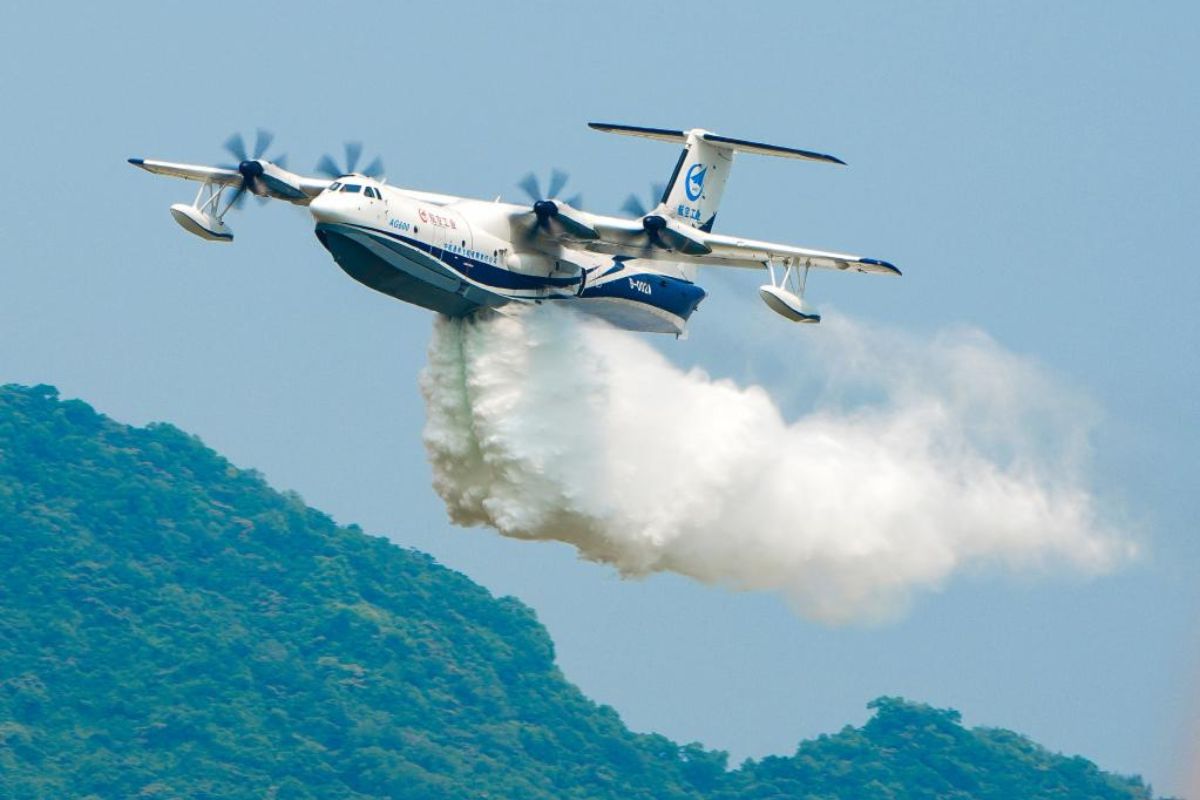
With the ability to collect 12 tons of water in 20 seconds, the largest amphibious aircraft in the world, China’s AG600, was designed to combat forest fires and perform rescues, but also has an important strategic role.
After a long journey of 16 years of development and testing, the AG600 from China, also known as Kunlong or “Water Dragon”, is finally ready. In 2025, the largest modern amphibious aircraft in the world received its final certification for mass production, establishing itself as a pillar of Chinese strategic aviation, alongside the Y-20 transport aircraft and the C919 passenger jet.
Publicly, its mission is noble: to combat fires and save lives at sea. However, its specifications reveal a second, perhaps primary, purpose: to be a powerful tool for Beijing’s geopolitical ambitions. This is the story of engineering, challenges, and the dual purpose of this giant of the skies and seas.
The Strategic Importance of the AG600 Project from China
The AG600 project was initiated in 2009 as part of a Chinese government effort to dominate the development of large, complex aircraft. The goal was to create a self-sufficient national industrial ecosystem, reducing dependence on foreign technology.
-
The world’s first octopus farm wants to open in the Canary Islands and is already provoking an international reaction: the plan aims to produce 3,000 tons per year.

-
Drought may be creating stronger superbugs in the soil and helping antibiotic resistance reach hospitals, warns a study highlighting a problem that could grow alongside extreme weather.

-
The biggest scam in history: Napoleon’s France deceived the United States by selling them a territory that was Spanish.

-
Why is the Danakil Desert so dangerous? It has unstable terrain and how extreme temperatures and toxic gases turn the region into one of the most hostile environments on Earth.

Officially, the justification for the billion-dollar investment was the need for a national emergency rescue system. In practice, its specifications make it a “gray zone” tool, perfect for supporting China’s strategic ambitions in the South China Sea. Its range of 4,500 km allows it to cover the entire region from continental bases.
Amphibious Engineering: The Design of the “Flying Boat” and Its Propulsion
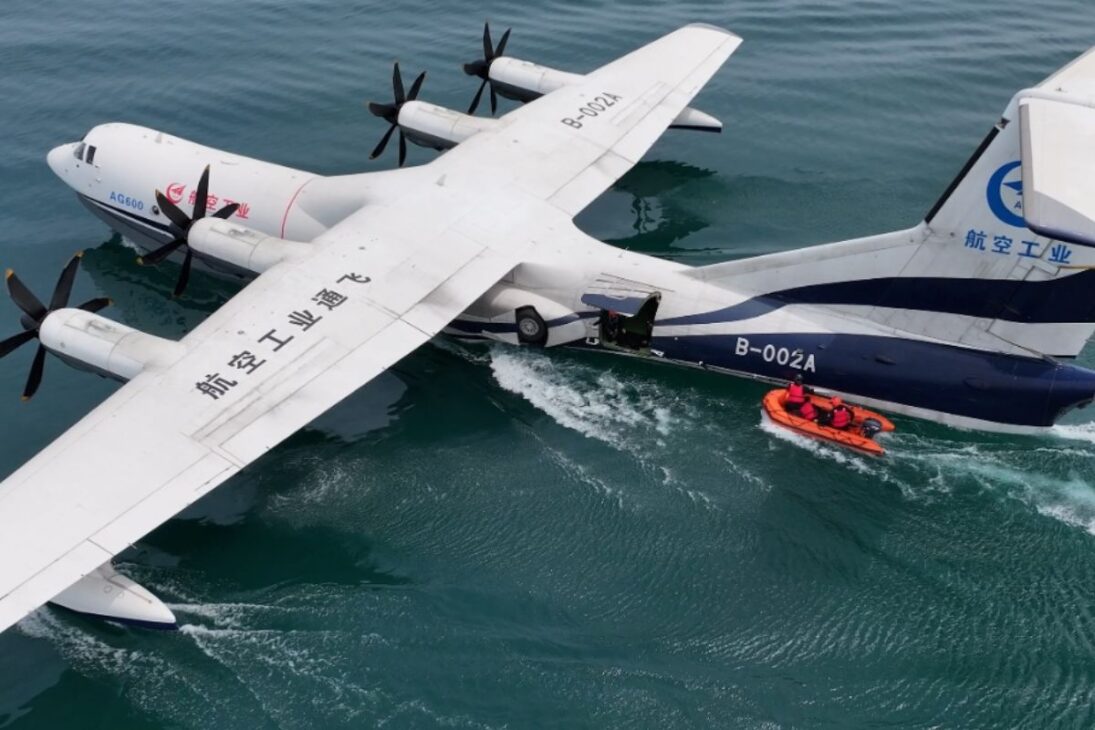
The AG600 from China is an engineering feat that balances the needs of flight and water operation. Its structure is a fusion: the top is like an airplane, with a high wing and a “T” tail, and the bottom is the hull of a boat.
The aircraft measures 36.9 meters in length and has a wingspan of 38.8 meters. It is powered by four WJ-6 turboprop engines, a Chinese technology derived from a Soviet design, ensuring the self-sufficiency of the program. Its design is intended for open sea operations, capable of withstanding waves of up to 2 meters high.
The Capabilities of Collecting 12 Tons of Water and Rescuing 50 People
The AG600 from China was designed with two main civil missions.
Firefighting: its most impressive capability is to collect 12 tons of water in just 20 seconds while skimming over the surface of a lake or the sea. This load can be released over an area of 4,000 square meters, providing a quick and efficient response to forest fires.
Search and Rescue (SAR): in maritime rescue missions, the AG600 can transport and rescue up to 50 people at once, with a range of 1,500 km, covering vast ocean areas.
The AG600 from China Against Its Rivals from Japan and Russia
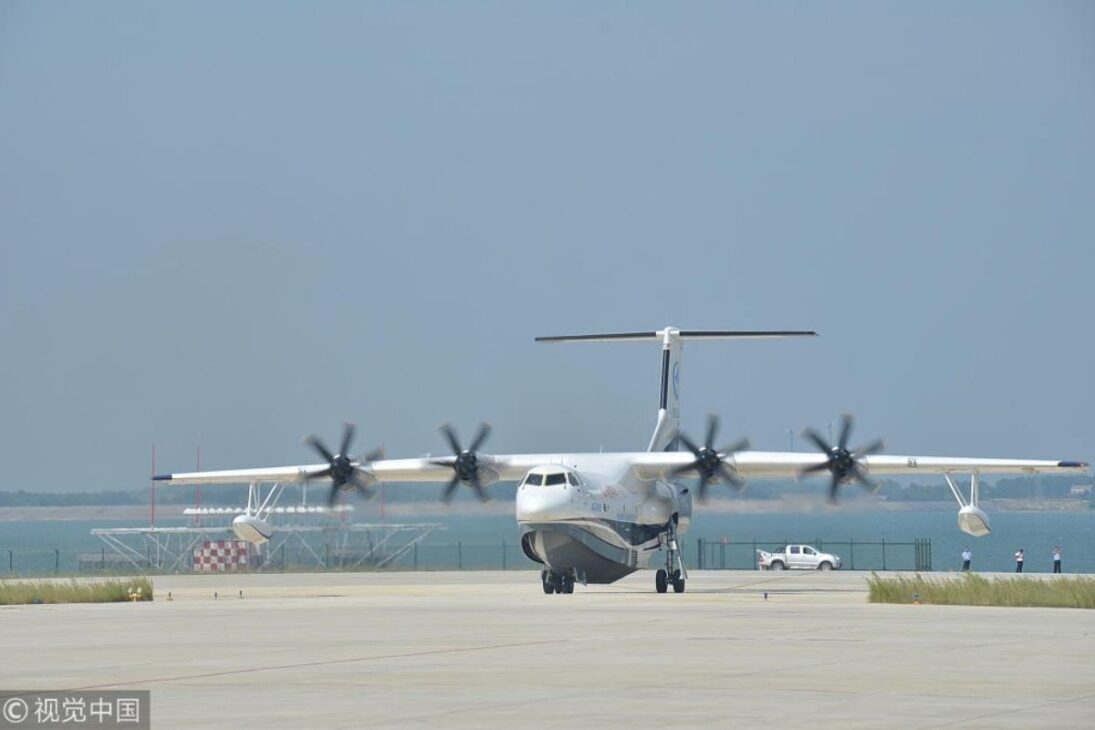
The AG600 from China enters a market niche with two other notable competitors, each with a different design philosophy.
Against the ShinMaywa US-2 (Japan): the battle here is about agility. The Japanese aircraft is known for its short takeoff and landing capability (STOL), requiring only 280 meters of water to operate. The AG600, on the other hand, requires a ‘runway’ of 1,500 meters, limiting its flexibility in rougher seas.
Against the Beriev Be-200 (Russia): the competition here is between speed and endurance. The Be-200, a jet aircraft, is much faster, ideal for immediate fire response. The AG600, a turboprop, is slower but has greater range and can operate in harsher sea conditions, making it a long-range ‘marathon runner’.
The Certification for Mass Production and Its Role in the South China Sea
The 16-year journey of the AG600 culminated in 2025. In April 2025, it received its Type Certificate from the Chinese civil aviation authority (CAAC). In June 2025, the Production Certificate followed, officially authorizing the start of mass manufacturing.
With certification in hand, the ‘Water Dragon’ is ready to fulfill its dual mission. Officially, it will be integrated into emergency fleets to protect Chinese territory. Unofficially, its ability to land anywhere in the South China Sea makes it a strategic chess piece for Beijing, a guardian for its people and a sentinel for its seas.








-

2 pessoas reagiram a isso.