





 Portuguese
  English
  Spanish
  4 min of reading
  0 comments


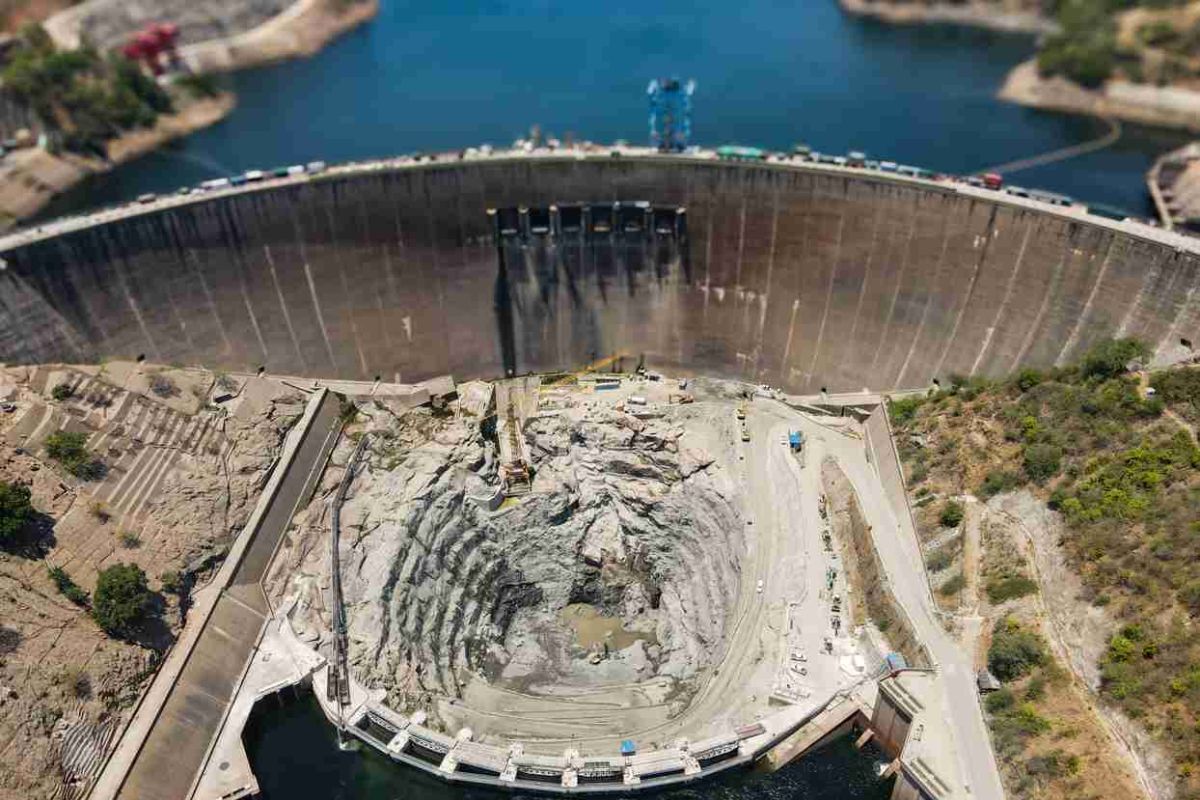
Get To Know The Kariba Dam And Lake Kariba, The Largest Artificial Reservoir In The World By Volume, A Monumental Engineering Marvel With Vast Socioeconomic And Environmental Impacts In Southern Africa.
The Kariba Dam, an imposing structure on the Zambezi River, is a true landmark of global hydraulic engineering. Its gigantic artificial lake establishes it as the largest dam in the world by reservoir volume ever created by humans.
This article explores the grandeur of the Kariba Dam. We will discuss its history, from its conception and the challenges of construction to its power generation capacity, the profound socioeconomic and environmental impacts, and current efforts to ensure its future and safety.
Kariba Dam: The Title Of The Largest Artificial Reservoir In The World Confirmed
The Kariba Dam is indeed remarkable for the volume of water its reservoir, Lake Kariba, holds. This volume is estimated to be between 180.6 and 185 cubic kilometers (km³). To give you an idea of the magnitude, the reservoir of Lake Kariba is approximately four times larger in volume than that of the famous Three Gorges Dam in China.
-
Abandoned house for 15 years disappears in the woods, shocks owner with unrecognizable scenery and is reborn in an intense transformation after almost 90 hours of work in just 10 days.
-
In just three hours, a natural stone floor transforms the entrance of the house with an organic effect, immediate drainage, and a sophisticated non-slip finish that doesn’t puddle water, dries quickly, and impresses with the final result.
-
‘Interlocking brick’ made of earth arrives in the construction industry with cost reductions of up to 40% on the project.

-
Espírito Santo will receive the largest engineering project in its history with the duplication of BR 262, which will have 50 viaducts, 28 bridges, and 2-kilometer tunnels cutting through the most challenging mountainous region of the entire state.

The dam itself is a double-curvature arch structure made of concrete. It stands 128 meters tall and has a crest length of about 617 meters. The lake formed by it, Lake Kariba, extends over a surface area of approximately 5,580 km², with a length that can reach 280 km and a maximum depth of 97 meters.
The Construction Of A Giant On The Zambezi River
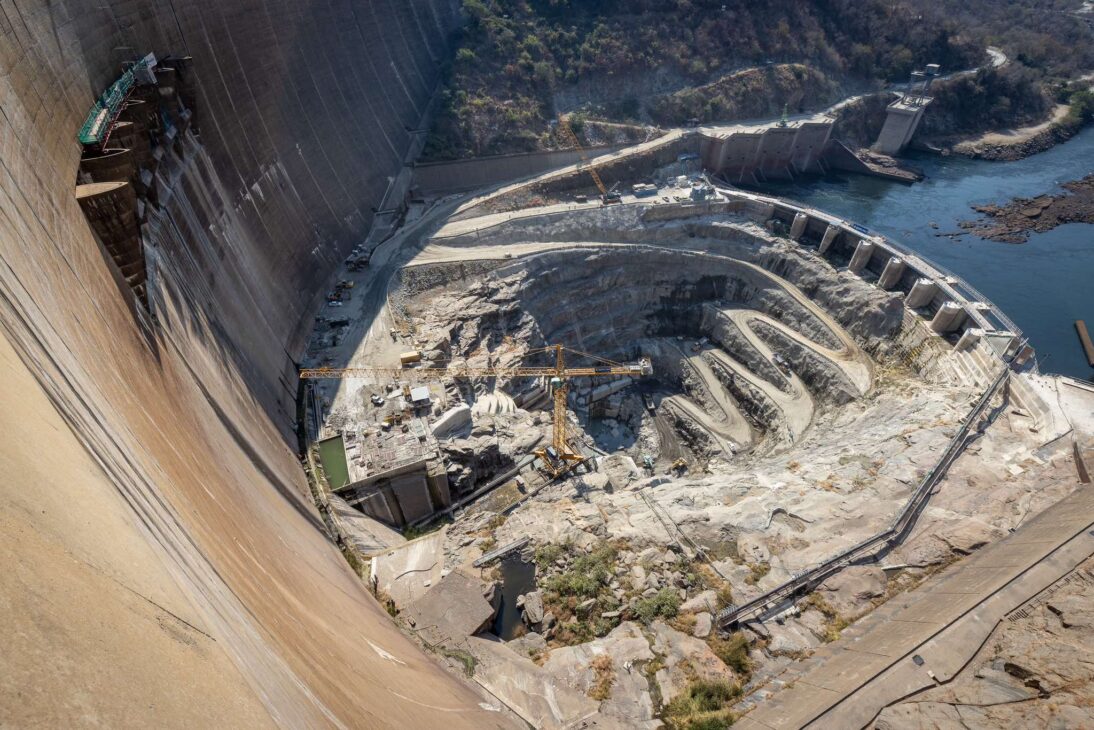
The construction of the Kariba Dam occurred during a period of significant developmental momentum. In the 1950s, there was an urgent need for electricity for the industries of Zambia (then Northern Rhodesia) and Zimbabwe (then Southern Rhodesia), especially for the mining sector.
Raising this colossal structure, between 1955 and 1959, was a task filled with challenges. The remote location, rugged terrain, complex logistics for transporting materials, and unprecedented floods of the Zambezi River caused significant delays. Unfortunately, the difficult working conditions also resulted in the loss of 86 lives during construction. The dam was officially inaugurated in 1960.
The Legacy Of Kariba: Energy, Social Impacts, And Environmental Transformations
The primary objective of the Kariba Dam has been achieved: hydropower generation. Currently, its installed capacity is approximately 2,130 megawatts (MW), providing vital electricity to the economies of Zambia and Zimbabwe. However, this development came at a severe social cost. About 57,000 people from the Tonga people were forcibly displaced from their ancestral lands, losing their traditional means of livelihood.
During the filling of the reservoir, “Operation Noah” rescued about 6,000 wild animals. The environmental impacts were also profound. The region experienced increased seismic activity. The flow regime of the Zambezi River was altered, affecting sediment dynamics and aquatic biodiversity. On the other hand, the lake boosted new local economies, such as a thriving Kapenta sardine fishery and tourism.
The Kariba Dam Rehabilitation Project (KDRP)
Over the decades, serious concerns have emerged regarding the safety of the Kariba Dam. Ongoing erosion of the stilling basin (the area just after the dam where discharged water loses energy) threatened the foundations of the structure. Additionally, the spillway gates were affected by Alkali-Aggregate Reaction (AAR), a chemical process that causes the concrete to expand and crack.
A catastrophic failure of the dam would endanger about 3.5 million people downstream and cause economic losses exceeding $20 billion. To mitigate these risks, the Kariba Dam Rehabilitation Project (KDRP) was launched. Its main objectives are to improve the safety and reliability of the dam, involving the redesign of the stilling basin and the refurbishment of the spillway, with international funding.
Kariba: Lessons From A Megadam For The Future


The Kariba Dam remains a superlative example of engineering, holding the title of largest artificial reservoir in the world by volume. Its legacy, however, is complex. It demonstrates the benefits of large-scale energy generation, but also the profound and lasting social and environmental impacts that such projects can entail.
The need for the Kariba Dam Rehabilitation Project (KDRP) underscores the critical importance of ongoing management, maintenance, and major reforms for aging infrastructures. The story of Kariba offers valuable lessons for the planning and development of future megadams, emphasizing the need for more comprehensive impact assessments and a commitment to sustainability and social equity in the long term.










-

Uma pessoa reagiu a isso.