





 Portuguese
  English
  Spanish
  3 min of reading
  18 comments


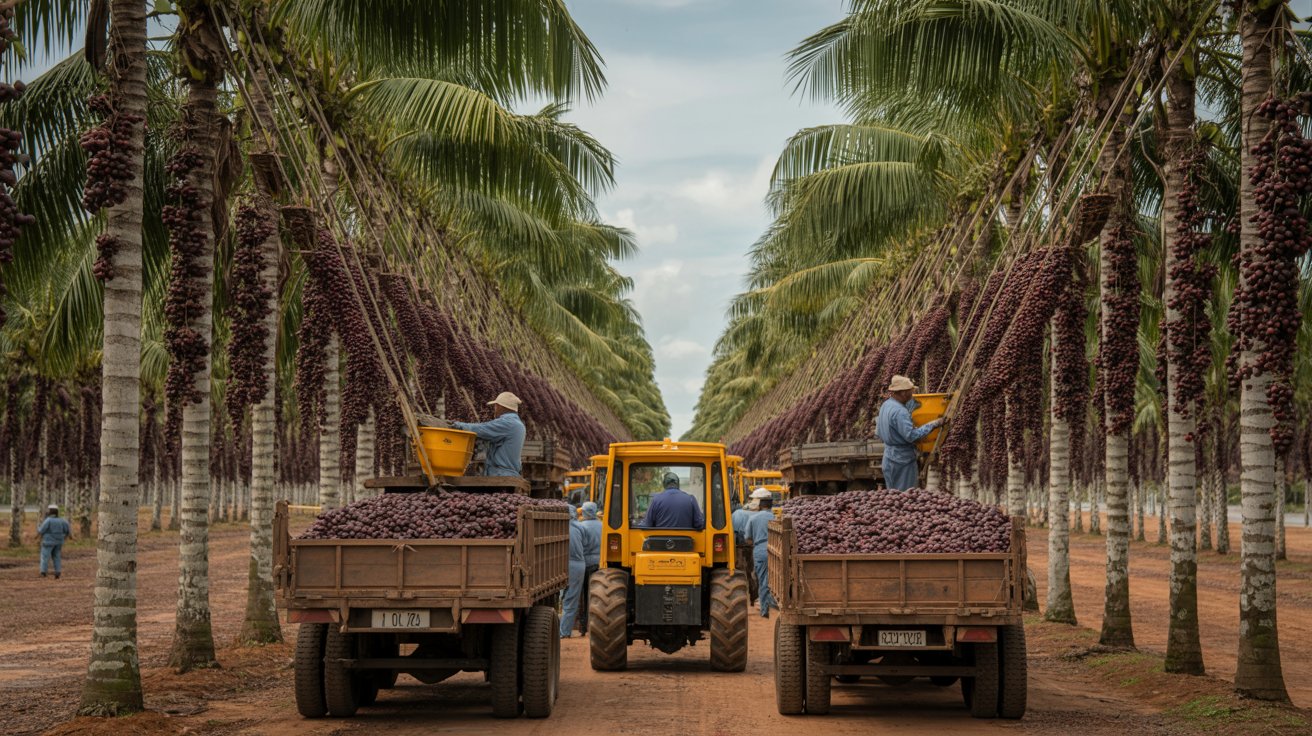


With 1,400 Hectares in the Heart of the Amazon Rainforest, Own Nurseries, Automated Irrigation, Bees for Pollination, and a Futuristic Industry with Storage at -27°C, Açaí Amazonas Shows Why It Is a Global Reference in Sustainable Açaí Cultivation.
It all started in 2002 when Eloi Luiz Vacaro traveled to Pará in search of corn seeds. Along the way, he became enchanted with açaí and envisioned a new future. After five years of study and agricultural testing in the Santarém region, Açaí Amazonas was born, the first to implement irrigated, large-scale cultivation of the fruit. With experience in agribusiness and a focus on sustainability, the company embraced the challenge and heavily invested in technology.
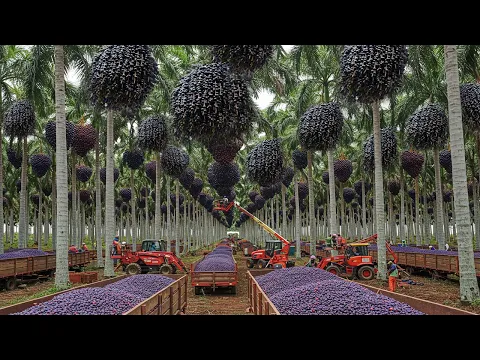
Today, the company has two large farms: Macupis (970 ha) and Mangal (430 ha), totaling 1,400 hectares. Of these, 100 hectares are dedicated exclusively to the production of irrigated açaí. The cultivation is supported by own nurseries, where the seedlings undergo a rigorous selection process before being transplanted to the field.
-
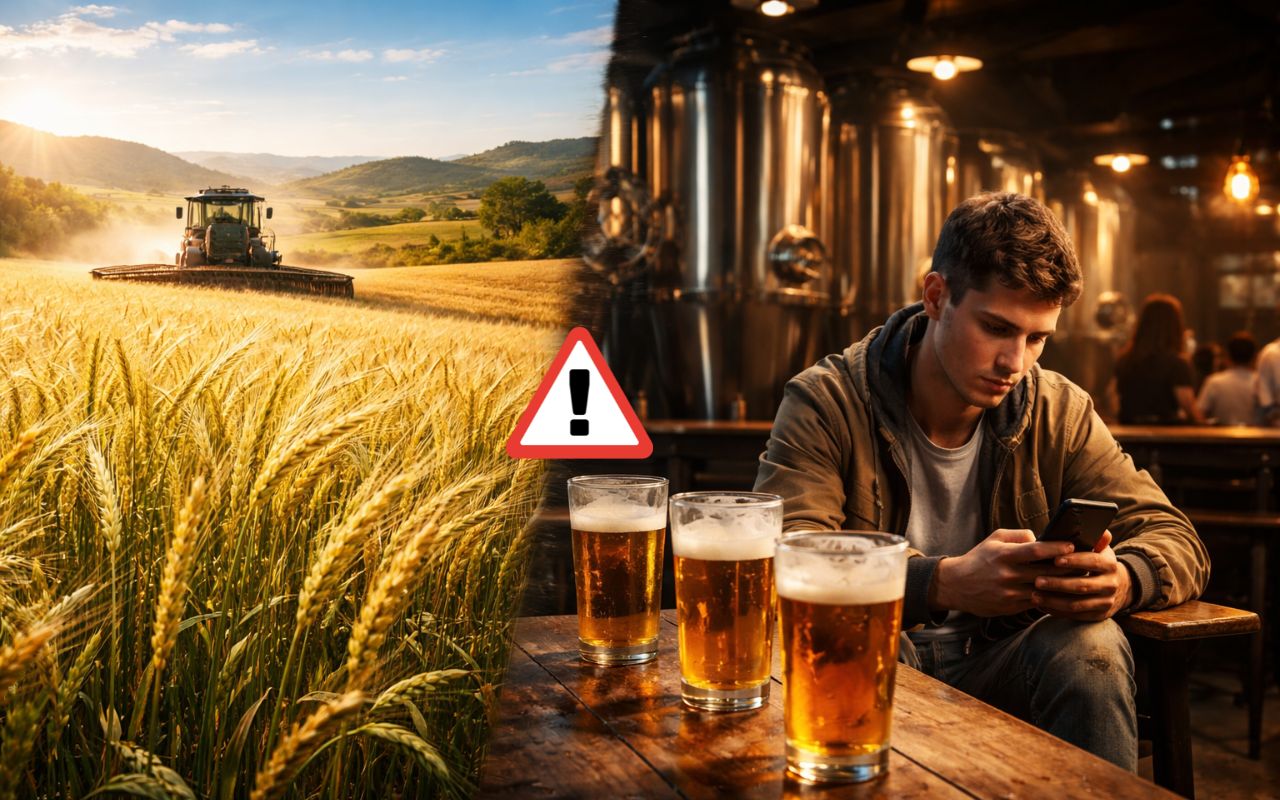
With nearly 500 thousand tons per year, barley production is growing in Brazil, while a decline in beer consumption among Generation Z raises alarms in the sector.
-
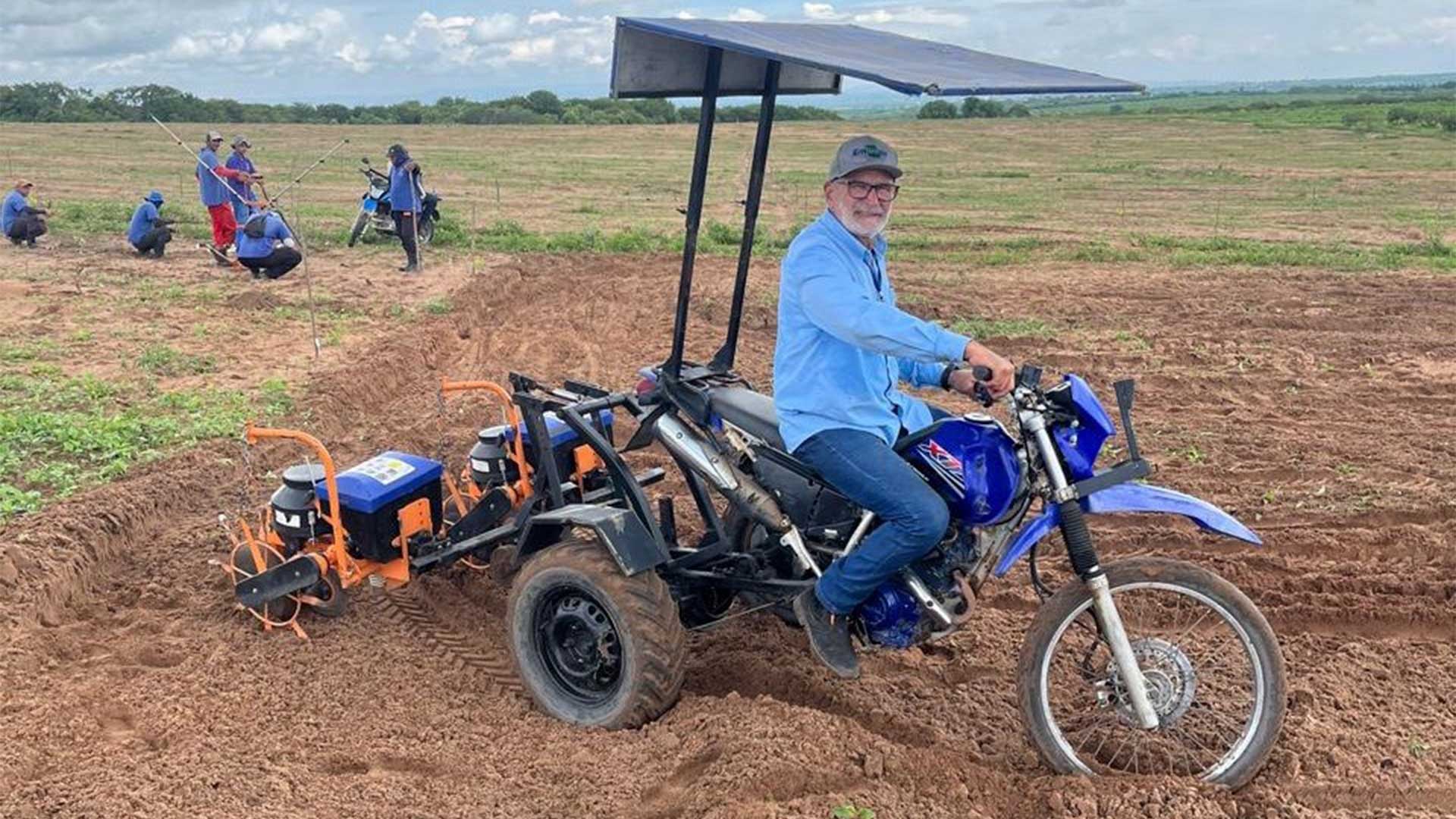
With tractors out of reach for small producers, a tricycle created by Embrapa Algodão becomes a cheap and efficient solution and gains national prominence.
-
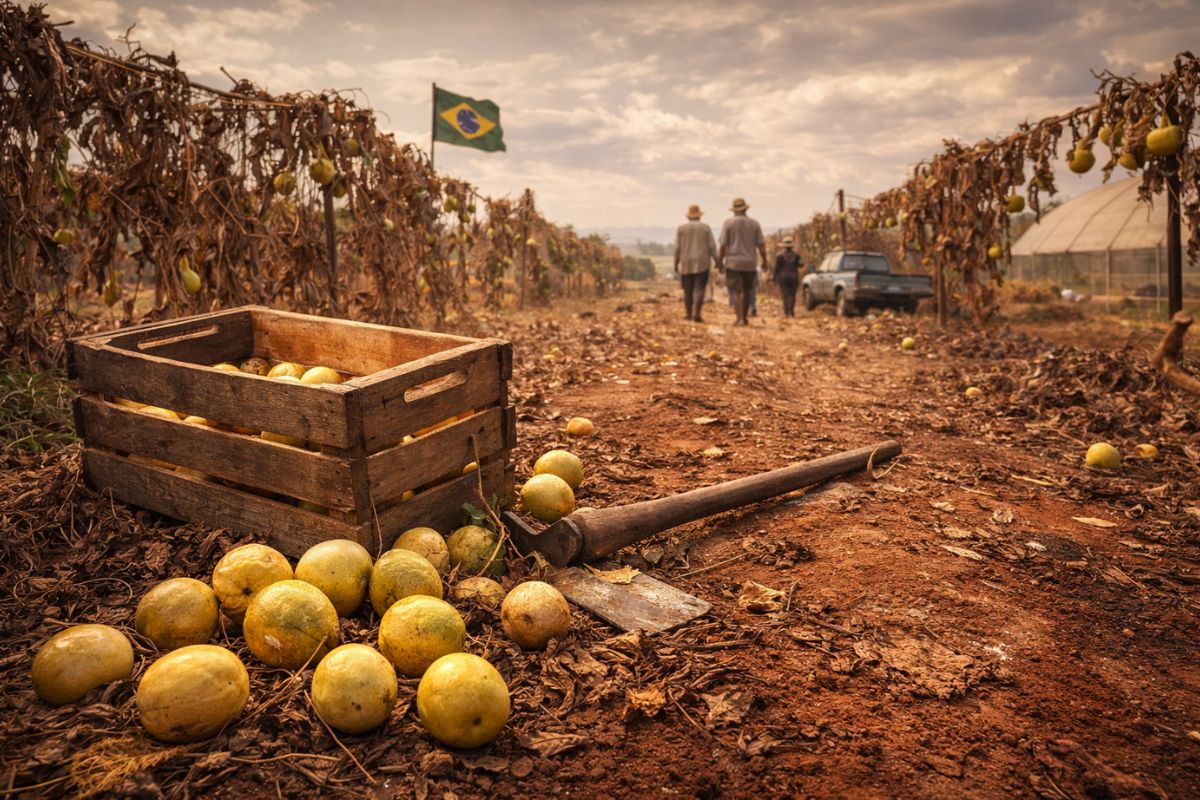
From 130 producers in the year 2000 to just 15 today: the dramatic decline of passion fruit in Araguari shows how the lack of labor in the Brazilian countryside is killing a decades-old agricultural tradition, even with Brazil being the largest producer in the world.
-
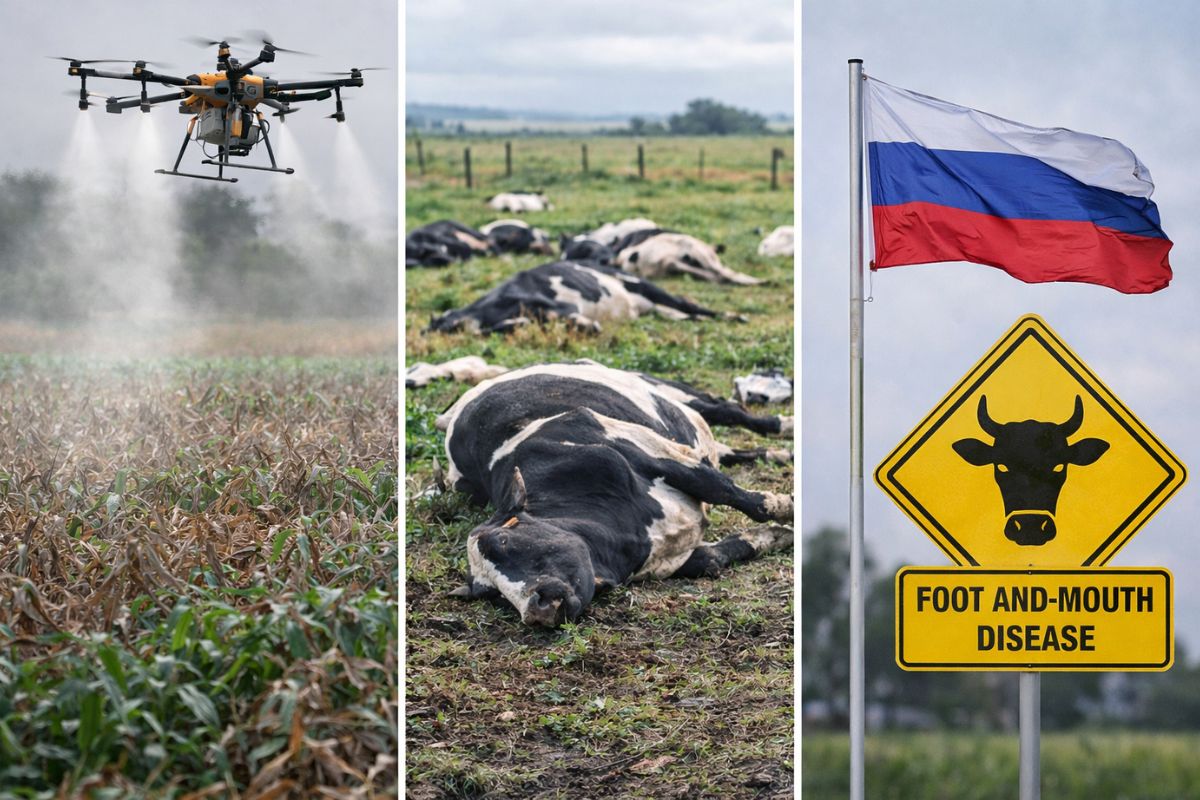
Agricultural drone sprayed poison into the air and destroyed the neighbor’s crops, causing 1 million in damages; 48 cows died from nitrite poisoning in the pasture, and Russia is hiding a possible outbreak of foot-and-mouth disease: the week was brutal for the rural sector.
The structure resembles that of the largest apple farm in Brazil, located in the south of the country, which also stands out for quality control at every stage, from the nursery to packaging. Both demonstrate how Brazil leads in high-performance agriculture.
Protected Soil, Precision Irrigation, and Bees in the Production Line
To maintain the fertility of the soil, the company plants mombaça grass between the rows of açaí. Every 30 days, a machine called a knife roller transforms this grass into organic matter, which protects and naturally nourishes the soil. The irrigation system is fully automated, using drip irrigation to deliver water and nutrients directly to the root of the plants.
Beehives scattered throughout the land ensure efficient pollination of the flowers, increasing productivity and strengthening the local ecosystem. This is the type of solution that combines technology with natural intelligence.
From Forest to Industry in Record Time
After four years of growth, the açaí trees are ready to produce. The harvest is still done traditionally, using sticks and boxes that hold up to 530 kg. The fruit is immediately sent to the industry located in Óbidos (PA), where the process is 100% automated.
Each batch goes through a control center overseen by chemical engineers, who ensure purity and flavor. The crown jewel is the steam refraction machine, the only one in Brazil, which dries the pulp with filtered air at room temperature, without direct heat or cold, keeping the nutrients intact.

State-of-the-Art Storage and Year-Round Supply
With two wind tunnels that freeze 78 tons each, the company can currently store up to 100 tons of açaí, but the facility is designed to reach 7,200 tons soon, all preserved at -27ºC. This capacity allows for the supply of açaí year-round, even outside of harvest season.
Traceability, Export, and Global Impact
Each batch can be traced from the seedling in the nursery to the final packaging, in a control system that meets the most demanding international market standards. The company’s açaí is exported to North America, Europe, South America, and Asia.
The big highlight is the RWD açaí powder, which preserves 100% of the nutrients and can be used in foods, supplements, and cosmetics.
A Superfood with Unlimited Potential
Rich in fiber, iron, calcium, phosphorus, vitamins B1, B2, C, and antioxidants, açaí contributes to cardiovascular and immune health and also has a rejuvenating effect. Moreover, the entire plant is utilized: leaves for roofing, branches for crafts, clusters for brooms, and much more.

Açaí Amazonas is not just a farm: it is a technological, scientific, and ecological hub that showcases to the world how to produce with respect for the rainforest and the consumer. A national pride at the top of the global açaí chain.
With all this technology, structure, and impact, the question remains: what is missing for Brazil to also become a global reference in other Amazonian superfoods?
Source: Dori do Agro








So pra começar essa foto não é de açaizeiro e sim de Murutizeito, e a reportagem não condiz com o direcionamento dessa lavoura, o texto e o título em questão está errado…
Não cita Alenquer, município no qual era localizado a fazenda
que matéria em? a imagem, não corresponde, o município ninguém sabe, o estado ninguém sabe. mas esperar o que? ola o currículo do escritor