





 Portuguese
  English
  Spanish
  3 min of reading
  9 comments


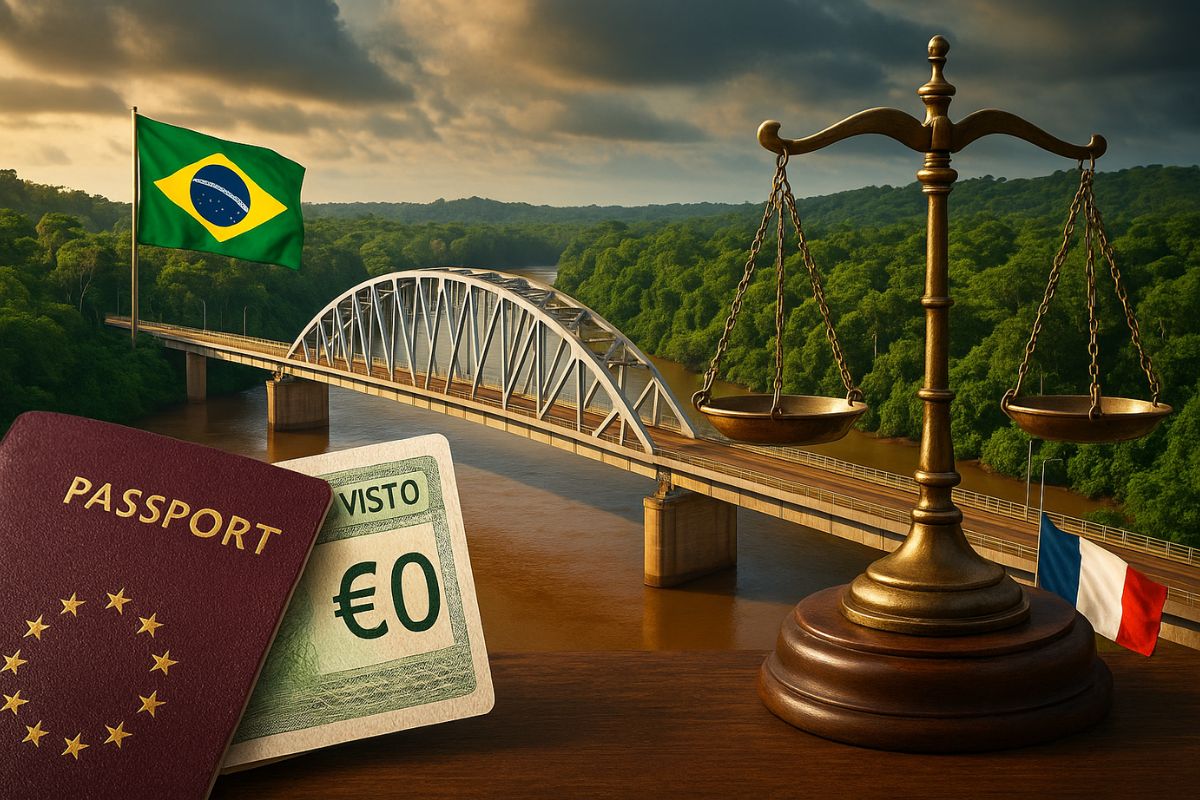


France In The Amazon: Largest French Land Border Is With Brazil; R$ 130M Bridge (1997–2017), 60 Euro Visa, And 1900 Decision Shape Oiapoque.
The largest “French” border is not with Germany, Spain, or Belgium. It is in the Amazon and connects Brazil to French Guiana, an overseas territory that functions as a direct extension of the European Union. In practice, this strip of land is a European gateway within the forest, with costs, visas, and rules that impact thousands of Brazilians.
According to researcher and advocate Matheus Boa Sorte, who documented the local reality, the border is marked by inequalities and integrations at the same time: while Brazilians have to pay 60 euros for a visa and additional vehicle fees, the French enter Brazil without significant bureaucracy.
Where Is The Largest “French” Border
The municipality of Oiapoque, in Amapá, is the Brazilian point of this unique connection.
-
Rigid bags with their days numbered: new trend prioritizes comfort in 2026.

-
YouTuber creates an excavator equipped with a giant 4.5-meter sword to challenge his brother to a rematch, and the invention quickly goes viral on social media.

-
The U.S. Army surprises the world by presenting the UH-60MX Black Hawk helicopter capable of flying without pilots, controlled by a tablet, featuring the MATRIX system, smart sensors, and full autonomy in real combat and rescue missions.

-
Heineken’s factory in Brazil produces 300 million beer cans in just 4 months, reaches 1 million hectoliters, received R$ 2.5 billion, and is already projecting an annual capacity of 5 million with sustainable technology.

Crossing the Oiapoque River is the French city of Saint-Georges.
There, signs in French share space with Portuguese, and the commerce depends almost 100% on the presence of tourists and consumers from the European Union.
BR-156, the road that connects Macapá to Oiapoque, is described by Boa Sorte as “an asphalt that appears and disappears,” reflecting the logistical difficulties of the region.
It’s a journey of 578 km, of which 158 km still lack paving, hindering integration.
How Much It Costs To Cross This Border
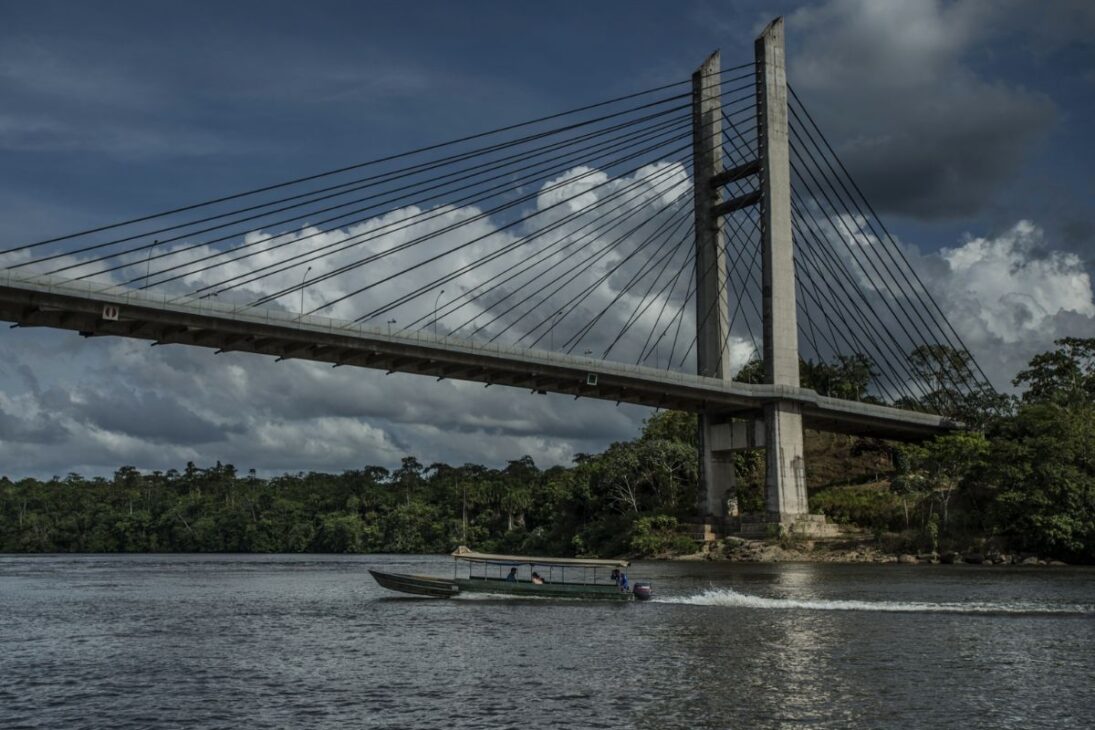
Boa Sorte notes that the binational bridge over the Oiapoque River cost about R$ 130 million and only became operational in 2017, after two decades of delays.
The use of the bridge is asymmetrical: the French cross freely, while Brazilians face 60 euro visas and insurance starting at 95 euros for vehicles.
Unable to pay, many rely on the “catraeiros,” who maintain daily canoe crossings between Oiapoque and Saint-Georges.
The price is around 4 euros, about R$ 30 round trip, which keeps alive a tradition that persists even in the face of the international bridge.
Who Lives And Works In The Border Area
The Itamaraty estimates that about 91,500 Brazilians live in French Guiana, which corresponds to approximately 30% of the territory’s population.
Many work in construction, commerce, and services, drawn by salaries that can exceed 1,700 euros monthly.
On the other side, the French cross over to take advantage of lower prices on food, restaurants, and leisure in Oiapoque.
This contrasting economy maintains constant circulation between the two countries, reinforcing cross-border interdependence.
Why This Border Is Strategic
French Guiana is more than an isolated territory: it houses the Kourou space base, a key asset for the European Union in billion-dollar launches.
Additionally, it concentrates natural resources like gold, bauxite, and globally significant forest areas.
Historically, the current boundary was established in 1900, following a territorial dispute known as the Amapá Conflict.
The arbitral decision in Switzerland granted Brazil control over the Oiapoque River, defining the border that remains to this day.
Is It Worth Knowing Oiapoque And The Region?
For Boa Sorte, the region offers unique experiences.
Ecotourism is strong, with the Cabo Orange National Park, Tumucumaque Mountains Park, and attractions like Grã-Rochê waterfall (Maripá).
The bioeconomy of cacao also stands out, with artisanal chocolates exploring Amazonian flavors like cumaru.
Despite logistical difficulties, Oiapoque has become a showcase of the Brazil-France cultural mix, where euros and reais circulate side by side, and Amazonian traditions coexist with European customs.
The largest “French” border is also one of the most peculiar in the world: it unites the European Union with Brazil in the Amazon but creates barriers that impact the wallet and lives of those who depend on this crossing.
Amidst expensive visas, higher salaries on the European side and lower prices on the Brazilian side, inequality and integration go hand in hand.
And you, were you already aware of this reality of the largest “French” border? Do you think it’s fair that Brazilians pay high visas and fees while the French enter barrier-free?
Leave your opinion in the comments—we want to hear from those who live or have experienced this.





Onde está a Lei de Reciprocidade???
Eu moro em Oiapoque e também em Kourou, as travessias de catraia que duram cerca de 15 minutos não é 30 reais e sim 50 reais ou 10 euros tanto a ida quando a volta, recentemente houve um acordo dos dois países para os brasileiros não precisarem de visto pra entrar na Guyana, mas até agora não tivemos esse direito, pra conseguir um visto é uma dificuldade porque a burocracia é grande e eles dificultam o máximo pro brasileiro não entrar, tem sempre barreiras na estrada de Saint Georges para Cayenne e se eles pegarem sem documentos dão logo a expulsão de no mínimo 03 anos, cerca de 80% dos brasileiros aprontam muito aqui na Guyana, assaltos, roubos, brigas, ****, badernas, tudo isso de peso que os brasileiros fazem e reflete em todos os brasileiros que não tem nada haver com quem apronta, por isso somos muitos má vistos, já os franceses quando eles atravessam para o Oiapoque eles sabem que vão e voltam, fazem o dinheiro girar na região, eles não vão com intenção de morar no Brasil ou fazer badernas, eles vão pra passeio, pra conhecer os pontos turísticos, a gastronomia, etc… e os banheiros quando conseguem entrar na Guyana eles não vão pra turistar e sim morar, então por isso que o acesso é difícil.
O Itamarati deveria promover a igualdade de tratamento na entrada e saída dessa fronteira. As agências de turismo não exploram nas grandes capitais brasileira uma propaganda e incentivo de visita, o que é lamentável.